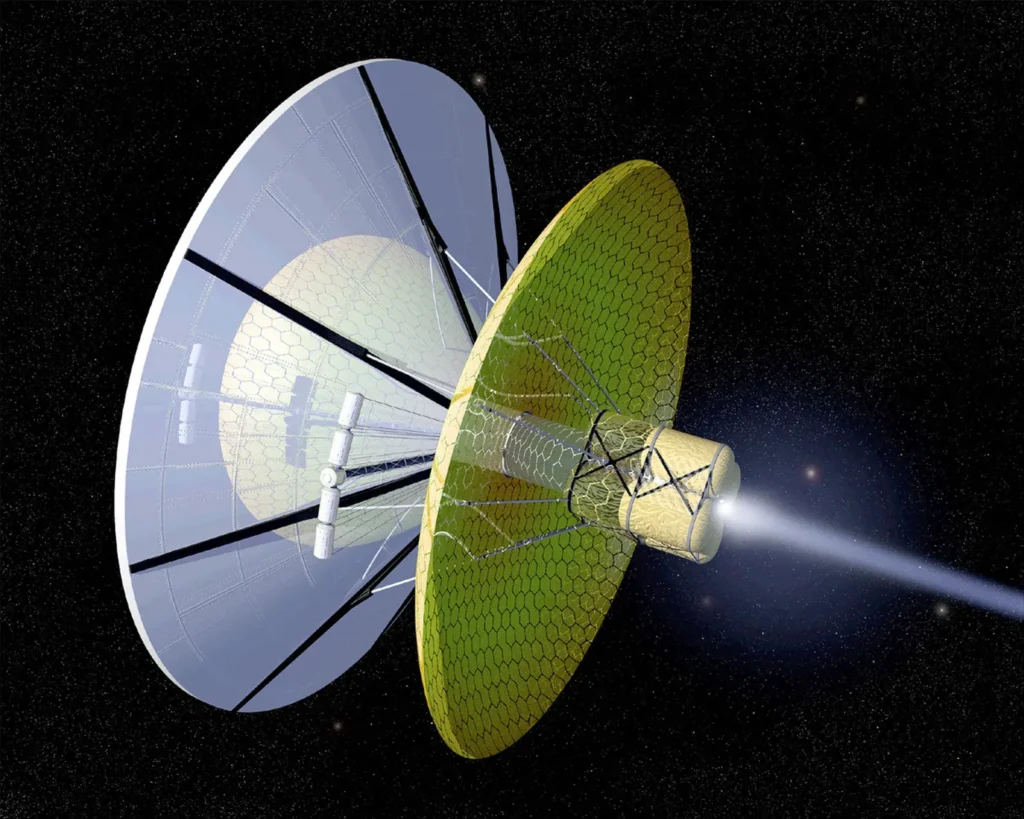
Imagine sitting quietly on a clear night, staring up at the stars, and suddenly realizing that some of those twinkling lights are not just shining – they are actively transmitting. Not in any Hollywood, sci-fi kind of way, but through pulses of radio energy, patterns of light, and bursts of electromagnetic radiation that carry encoded information about the universe’s most extreme environments. The cosmos, it turns out, has been whispering all along. We just hadn’t built the right ears to listen.
Right now, in 2026, astronomers are closer than ever to cracking what you might call the cosmic code. From binary star systems sending out pulsating radio signals to interstellar visitors analyzed for alien technosignatures, the science of reading messages from distant star systems has exploded into something genuinely extraordinary. Buckle up, because what researchers have uncovered is more fascinating than any science fiction script ever dreamed up. Let’s dive in.
The Radio Pulse Phenomenon: When Star Systems Speak
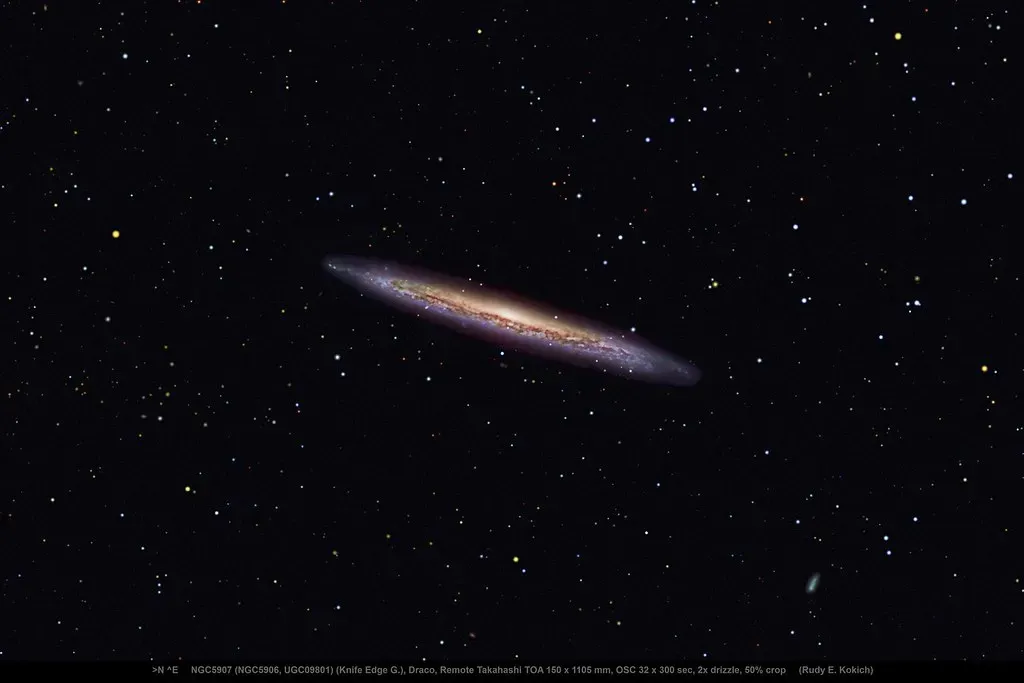
There is something quietly thrilling about the idea that ordinary stars, not black holes or neutron stars, might be generating the universe’s most baffling radio signals. In the vast expanse of our universe, astronomers have long been intrigued by mysterious radio signals emanating from deep space – enigmatic emissions that have often puzzled scientists and sparked heated debates about their origin. For decades, these signals were attributed to exotic objects like neutron stars or pulsars. The reality turned out to be far stranger.
A groundbreaking discovery has shed light on these mysterious emissions, tracing them back to an unexpected source: a binary star system comprising a white dwarf and a red dwarf. Think of it like receiving a mysterious Morse code signal and discovering it’s being broadcast from two neighbors who have been quietly orbiting each other for billions of years. For decades, astronomers have detected sporadic radio signals from space, often referred to as “cosmic Morse code” due to their pulsating nature – signals known as long-period radio transients, exhibiting pulses lasting from minutes to hours, far slower than typical pulsars.
The LOFAR Breakthrough: Pinpointing the Source

The key breakthrough in solving this puzzle came when astronomers using the LOFAR (Low-Frequency Array) radio telescope detected a new long-period transient, designated ILTJ1101+5521. This detection was a turning point. Honestly, it’s hard to overstate how significant it was to finally match one of these slow, strange pulses to an actual, identifiable star system.
ILTJ1101 was observed emitting radio pulses every 125.5 minutes – a significantly slower rate than conventional pulsars. Unlike fast radio bursts or rapidly rotating neutron stars, this system demonstrated extremely slow pulsation cycles. To confirm its true identity, astronomers used a technique called spectroscopy, which allows scientists to study how light is emitted from stars at different wavelengths. By analyzing the Doppler shifts in light from the red dwarf, astronomers noticed a telltale pattern: the star was moving toward and away from Earth in a consistent cycle. It’s like detecting the presence of a hidden dance partner purely from the rhythm of someone’s footsteps.
Fast Radio Bursts: The Galaxy’s Most Explosive Transmissions
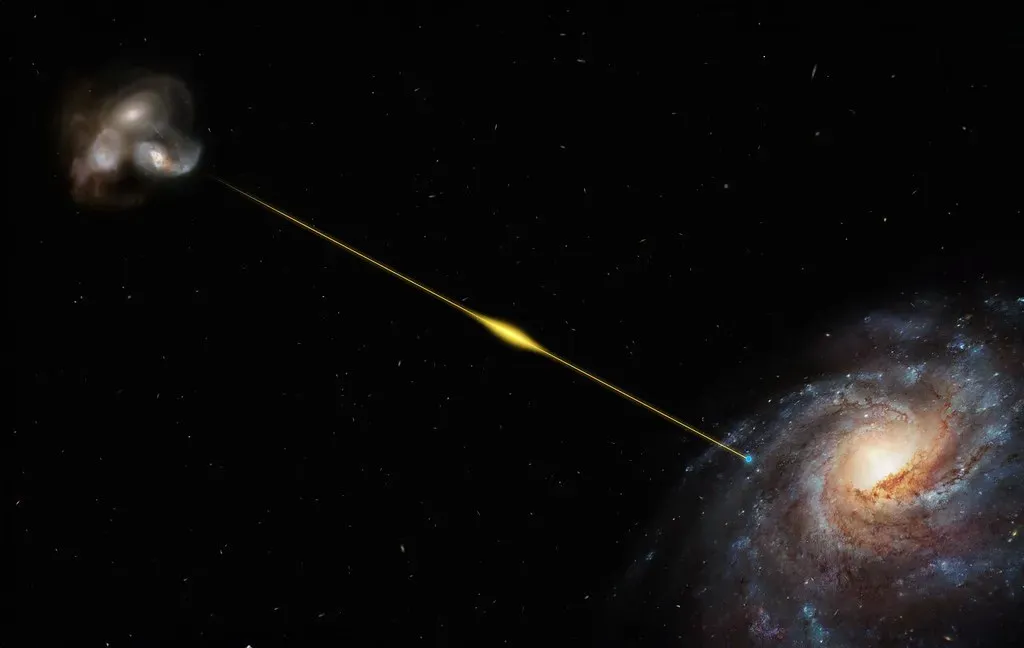
Fast radio bursts, or FRBs, are powerful, millisecond-long flashes of radio waves from space – and until recently, astronomers had been unable to determine the exact origin of any of them. That changed in a spectacular way in 2025. A spectacularly bright FRB was detected from the direction of the Big Dipper by a transcontinental array of radio telescopes spanning North America, and the team behind the discovery nicknamed it “RBFLOAT,” short for “Radio Brightest FLash Of All Time.” This allowed the identification of an exact point of origin using only a radio telescope – a genuine first.
Here’s the thing: these bursts are almost incomprehensibly energetic. Astronomers estimate the average FRB releases as much energy in a millisecond as the Sun puts out in three days. Now imagine trying to analyze something that blinks in and out of existence faster than a human sneeze. Modern telescopes no longer simply observe distant stars and galaxies – they intercept brief, powerful, and often inexplicable signals that arrive from billions of light-years away. Some last only milliseconds, others pulse with eerie regularity, and a few originate from epochs when the universe itself was still young. These signals challenge our understanding of physics, stellar evolution, and the behavior of matter under extreme conditions.
Binary Stars and the Hidden Origin of Repeating Bursts
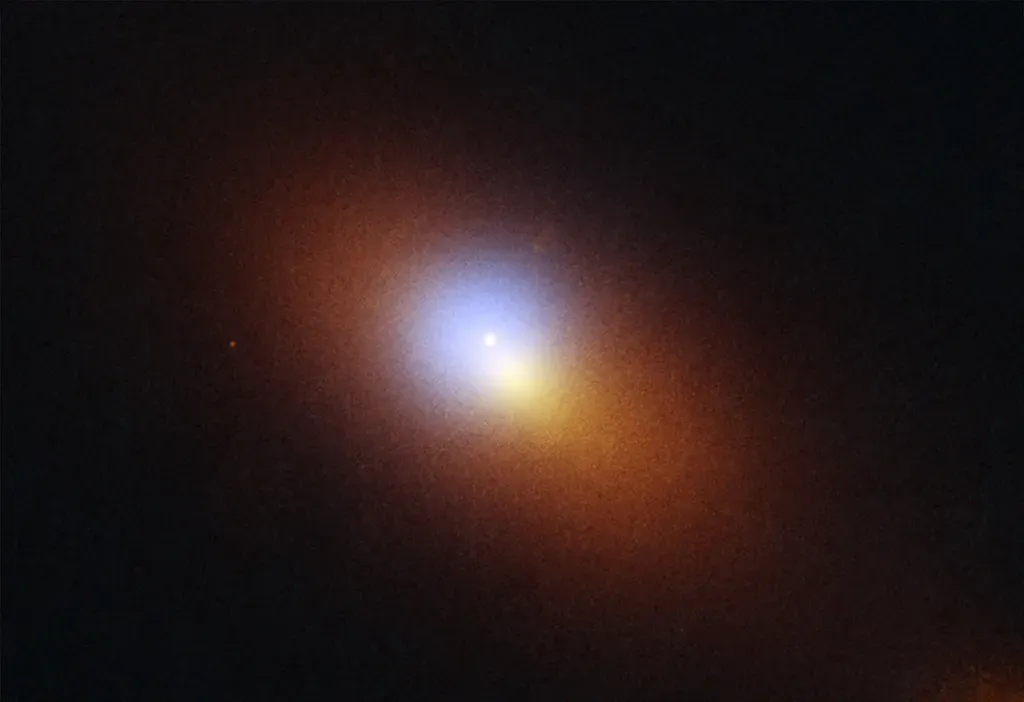
For years, the assumption was that fast radio bursts came from single, isolated objects. That assumption has now been dramatically overturned. An international research team found the clearest evidence so far that some fast radio bursts originate in binary star systems. Fast radio bursts are extremely powerful flashes of radio waves that last only milliseconds and come from distant galaxies. Until now, these signals were widely thought to come from single, isolated stars – but the new findings show that at least some FRB sources are part of stellar pairs, with two stars orbiting one another.
The team made the breakthrough using the Five-hundred-meter Aperture Spherical Telescope (FAST) in Guizhou, widely known as the “China Sky Eye.” While observing a repeating FRB roughly 2.5 billion light-years from Earth, researchers detected a unique signal that pointed to the presence of a nearby companion star. The results, published in Science, are based on nearly 20 months of detailed monitoring. That is extraordinary patience – nearly two years of watching, waiting, and listening before the universe finally gave up its secret. During their observations, the team detected an unusual event known as an “RM flare” – a sudden and dramatic shift in the polarization properties of the radio signal, believed to be caused by a coronal mass ejection from a companion star.
Interstellar Visitors and the Search for Technosignatures
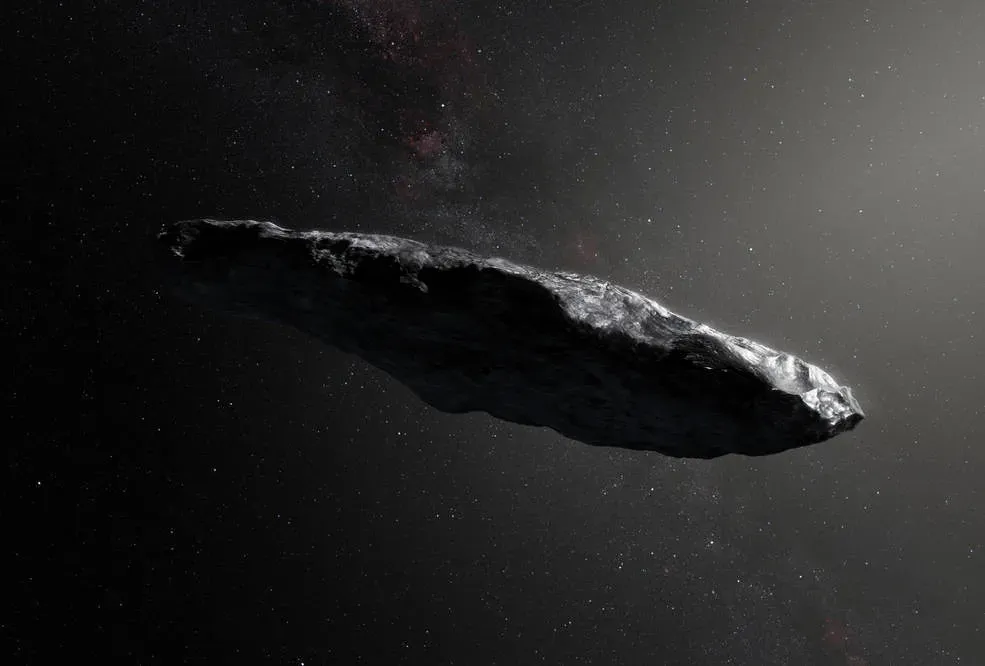
It would be irresponsible to talk about cosmic messages without mentioning the elephant – or rather, the comet – in the room. In the summer of 2025, astronomers observed a unique phenomenon: comet 3I/ATLAS swept through the Solar System, becoming only the third interstellar object ever detected near Earth. You can imagine the excitement. Something from another star system had just waltzed through our cosmic backyard, and scientists immediately wanted to know: was it natural, or was it something else?
To set the record straight, astronomers recently conducted a “technosignature search” of the interstellar object, essentially scanning it for artificial radio signals. The study found no credible detections of narrowband radio technosignatures originating from 3I/ATLAS. Still, the object itself was scientifically remarkable. 3I/ATLAS is only the third interstellar object ever discovered, and astronomers found evidence to suggest it’s vastly different from the two that came before it. This comet is significantly older, larger, and faster than its predecessors and exhibits unique chemical and physical properties. No alien signals, sure – but a window into a completely foreign star system? Absolutely worth every sleepless night at the telescope.
The Galactic Internet: Could There Be a Hidden Network?
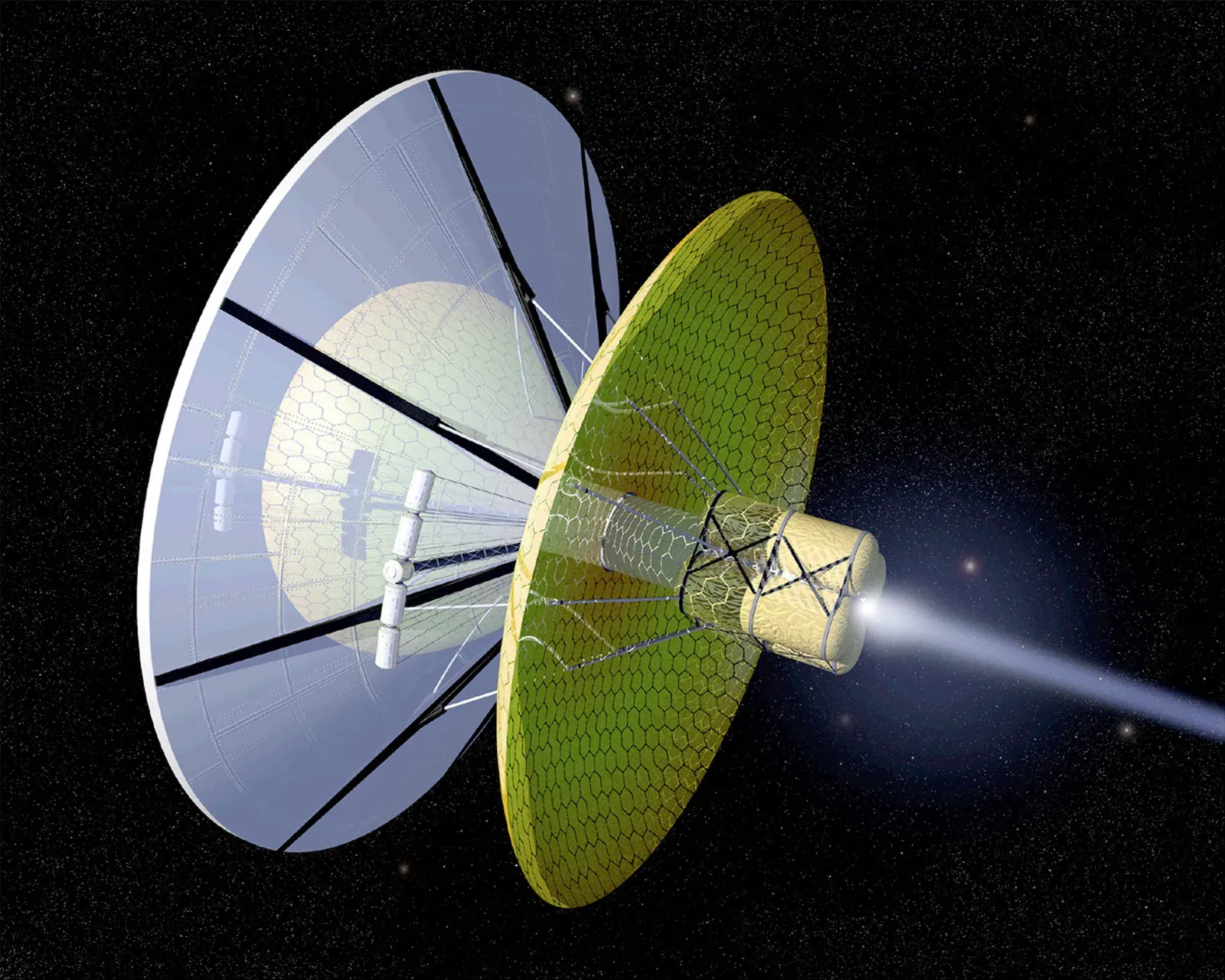
Here is where things get genuinely mind-bending. A counter-theory gaining traction among astronomers and SETI researchers suggests that maybe the galaxy isn’t silent – maybe it’s just whispering on a private network we haven’t plugged into yet. Instead of broadcasting radio waves into the void like a megaphone, advanced civilizations might be using a highly efficient, laser-based “Galactic Internet.” Think of it as the difference between shouting across a football field and sending a precision-targeted fiber optic message to one specific address.
Interstellar communication is the transmission of signals between planetary systems, and sending interstellar messages is potentially much easier than interstellar travel, being possible with technologies and equipment that are currently available. The real challenge is not sending, but listening at the right frequency, at the right time, in the right direction. LaserSETI continues deploying its optical detection stations, expanding coverage across much of the northern sky, searching for brief laser pulses that could indicate technosignatures. It’s a bit like trying to catch someone winking at you from across an ocean – possible, but requiring extraordinary precision.
AI and the Revolution in Signal Detection

If there is one development that has truly supercharged humanity’s ability to decode the cosmic code, it is artificial intelligence. The sheer volume of data that modern radio telescopes generate every single day would make any human analyst weep. Fortunately, machines don’t get tired. Researchers at the Breakthrough Listen initiative, in partnership with NVIDIA, achieved a groundbreaking advancement in the search for Fast Radio Bursts, developing an artificial intelligence system that dramatically outperforms existing detection methods while operating at unprecedented speeds.
The current state-of-the-art pipeline at the Allen Telescope Array previously required approximately 59 seconds to process 16.3 seconds of observational data. The new end-to-end AI system processes the same data 600 times faster, enabling it to operate over 160 times faster than real-time constraints. That is a staggering leap. The SETI Institute announced that it will incorporate the new NVIDIA IGX Thor platform to enhance its real-time search for signals from space at the Allen Telescope Array in Northern California, bringing cutting-edge AI technology into radio astronomy for the first time at this scale. In other words, the search for cosmic messages just got a monumental upgrade – and the universe’s secrets may now be decoded faster than ever before.
Conclusion: The Universe Is Talking. Are You Listening?
What we are witnessing right now, in 2026, is nothing short of a new golden age of cosmic listening. Binary star systems are broadcasting pulses that rewrite our understanding of stellar physics. Fast radio bursts from binary companions are revealing secrets buried 2.5 billion light-years away. An interstellar comet from a foreign star system paid our solar system a visit and gave scientists a rare, direct sample of chemistry from beyond our cosmic neighborhood. AI systems are now scanning the sky hundreds of times faster than any human team ever could.
The universe, it seems, has always been broadcasting. We are only now building the instruments sensitive enough, and the minds creative enough, to begin reading what it says. Whether the cosmic code ultimately points to natural physics or something more profound, the act of listening is itself an extraordinary achievement of human curiosity. Every signal decoded is another letter in a language older than Earth itself.
The real question isn’t whether the universe is sending messages. It is whether we are paying close enough attention to understand them. What do you think – are we ready for what we might find? Share your thoughts in the comments below.