
There’s a strange kind of thrill in realizing you can’t trust your own eyes. You stare at a perfectly still image that seems to move, or you’re sure two colors are different when they’re actually the same. In those moments, it’s not the picture that’s broken – it’s your brain doing exactly what it’s designed to do.
Illusions feel like bugs in the system, but they’re really features: shortcuts, guesses, and filters your mind uses to keep you alive in a world that’s way too complex to process pixel by pixel. These nine illusions pull back the curtain a little, revealing how your brain bends reality, fills in gaps, and sometimes straight up lies to you… all in the name of helping you survive the day.
The Müller-Lyer Illusion: Why Arrows Trick Your Sense of Size
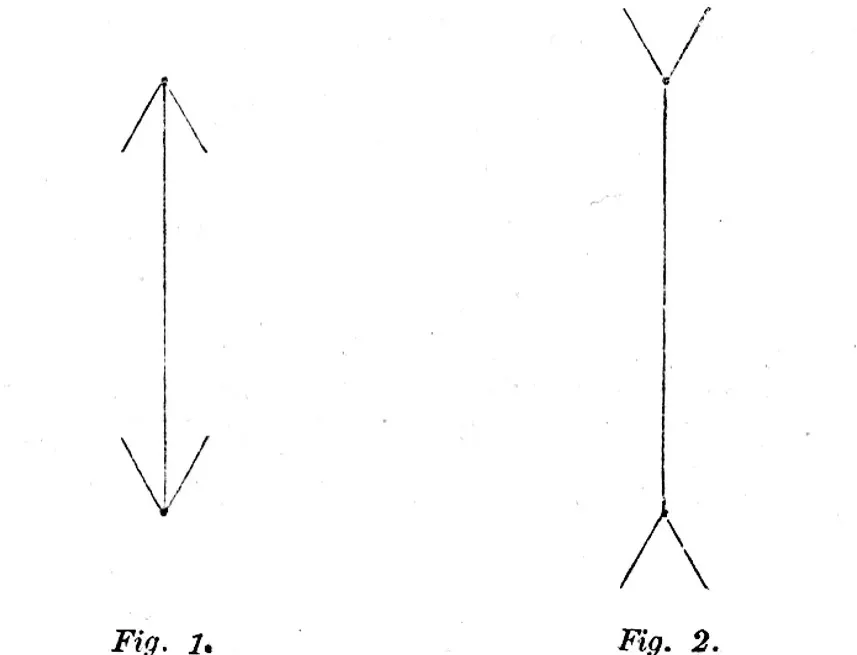
If you’ve ever seen two lines with little arrows at the ends and sworn one was longer, when they’re actually identical, you’ve fallen for the Müller-Lyer illusion. Two straight lines, same length, but one has arrowheads pointing in, and the other has arrow tails pointing out. The one with the outward tails almost always looks longer, even when you measure it and prove to yourself they match.
Researchers think this illusion taps into how we use depth cues in the real world. Our brains are used to reading corners in rooms and edges of buildings, so certain angles suggest “farther away” or “closer.” The line that looks like the inside corner of a room is interpreted as being farther from us, so our brain compensates by making it feel longer. It’s your visual system trying to be clever about distance and space – and getting fooled by a simple drawing.
The Ponzo Illusion: When Perspective Hijacks Your Judgment
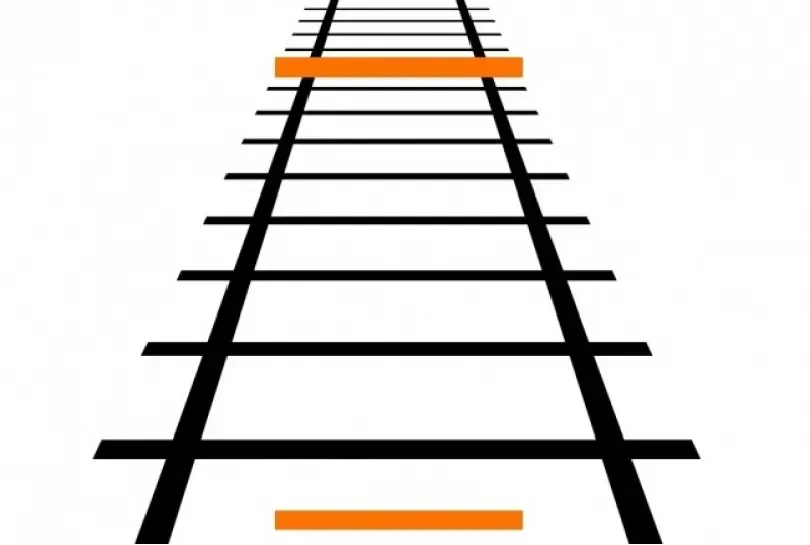
Picture two identical horizontal bars placed between what looks like train tracks converging in the distance. The top bar, sitting higher between the tracks where they appear closer together, looks bigger than the lower bar, even though they’re the same size. That’s the Ponzo illusion, and it’s a brutal reminder of how easily perspective can hijack your judgment.
Your brain has learned that things higher up in a scene, sitting inside converging lines like roads or rails, are usually farther away. So when something far away gives off the same retinal image size as something closer, your brain decides it must be bigger in real life. It’s like your mind is constantly doing 3D math behind your back, trying to decode depth from 2D images – and illusions like Ponzo expose the shortcuts and assumptions built into that process.
The Checker Shadow Illusion: How Context Changes Color and Light
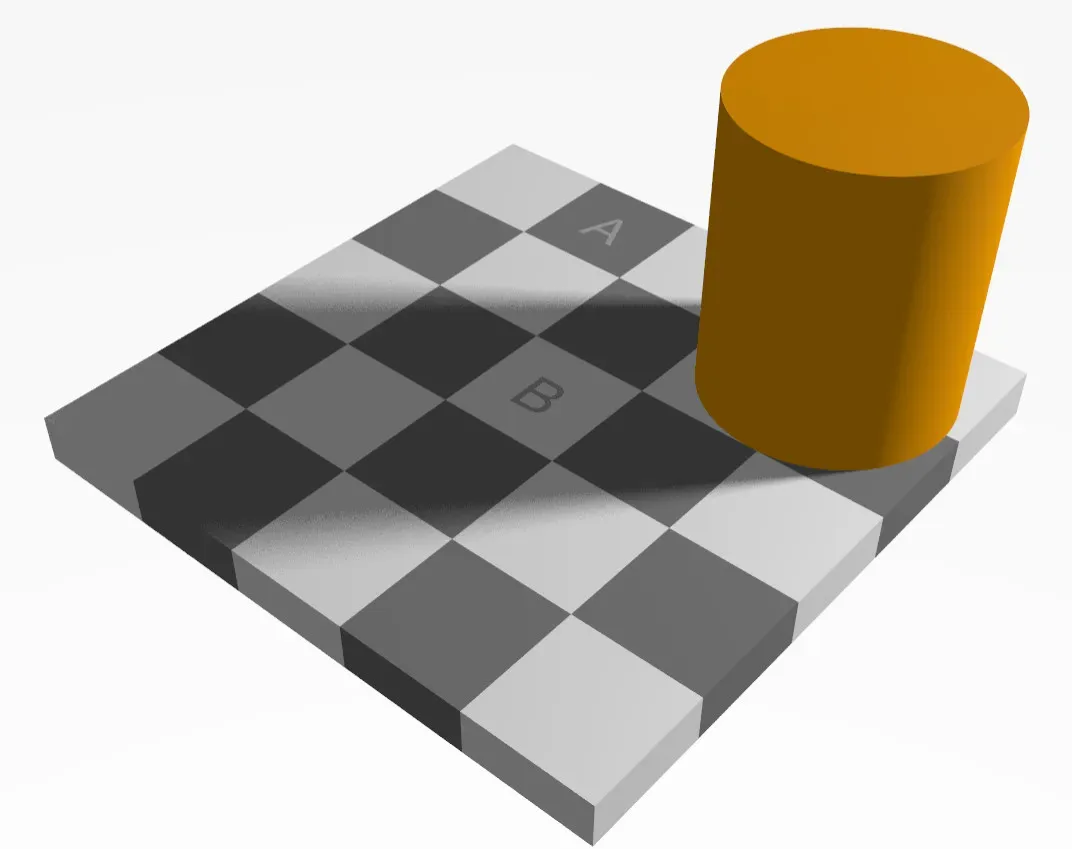
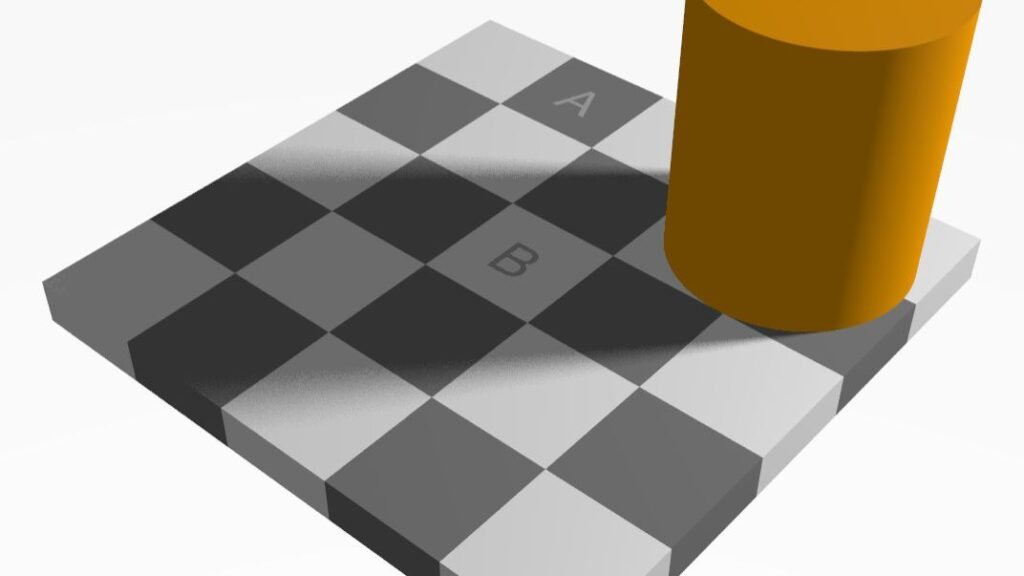
This one is almost infuriating. In the checker shadow illusion, you see a checkerboard with a cylinder casting a shadow over part of it. A light square in the shadow and a dark square outside it look completely different in shade – but they’re actually the exact same color. If you isolate the two squares or use a color picker, the truth hits you like a slap.
What’s happening is that your brain is constantly correcting for lighting conditions. It “understands” that a square in shadow should be darker, so it brightens its perceived color to keep surfaces more consistent. You’re not seeing raw pixels; you’re seeing your brain’s interpretation of what color objects probably are in the real world. This is incredibly useful when you’re walking around in changing light – just wildly misleading when you stare at a clever drawing on a screen.
The Kanizsa Triangle: Seeing Shapes That Aren’t Really There
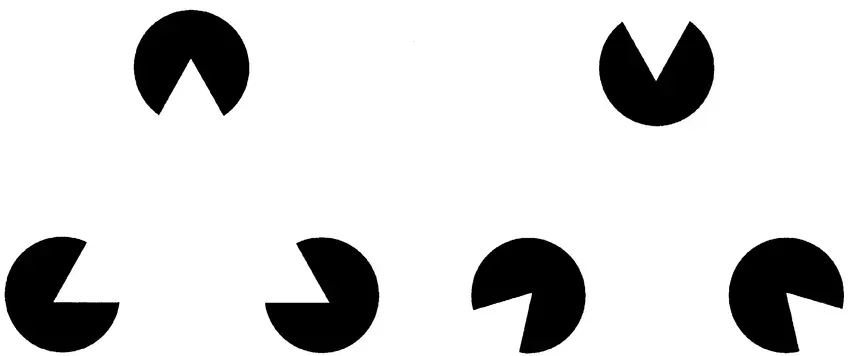
This happens because your visual system hates randomness. It’s constantly trying to organize chaos into simple, familiar shapes – lines, edges, and objects. When it sees partial hints of a triangle, it fills in the missing contours and acts like the triangle is really there. It’s the same basic trick your mind uses to recognize faces in clouds or animals in wood grain: a blend of pattern detection and overenthusiasm that can be eerily convincing.
The Blind Spot: How Your Brain Edits Out a Piece of Reality
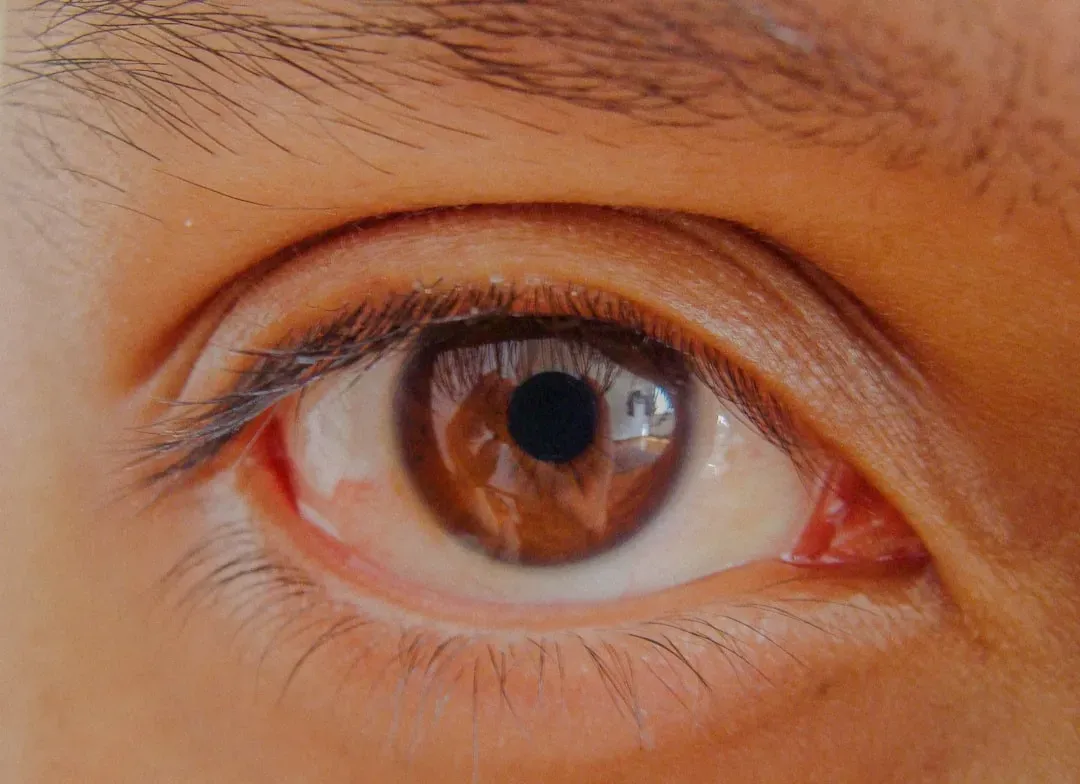
Every one of us walks around with a literal hole in our vision and barely notices. There’s a spot on your retina where the optic nerve exits the eye, and that area can’t detect light at all. That means a small circular region of every eye’s visual field is completely blind. Yet you never see a black dot hovering in your view, which already sounds like a magic trick.
Your brain quietly patches this blind spot by filling it in with surrounding details, as if copying and pasting pixels from the edges. If there’s a pattern, it extends the pattern. If there’s a color, it stretches the color. You can run simple tests where an object vanishes as it passes through your blind spot, and it’s honestly a bit unsettling the first time it happens. It’s proof that what you “see” isn’t a direct feed from reality – it’s a carefully edited montage.
The Rubber Hand Illusion: How Easily the Brain Rewrites Your Body
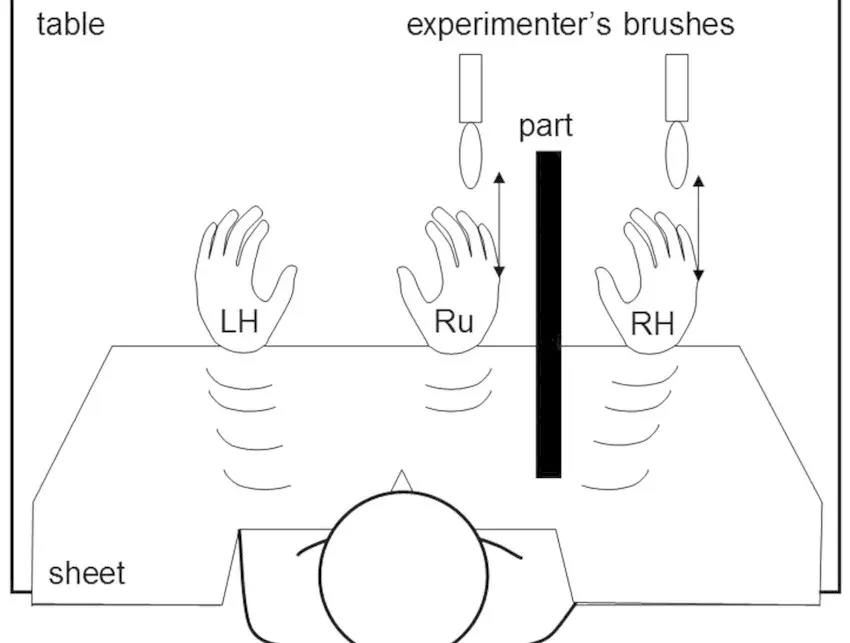
In a classic experiment, a person’s real hand is hidden from view, and a fake rubber hand is placed in front of them. Both the real and fake hand are stroked in sync with a brush. After a short while, many people start to feel as if the rubber hand is their own. If the fake hand is suddenly “injured,” they often react with genuine fear or flinch hard, even though they know, logically, it’s not real.
This illusion shows how your sense of body ownership is a construction, not a given. Your brain combines what you see, what you feel, and when those signals line up in time, it decides, “Yep, that’s my body.” It’s the same kind of integration that lets you adapt to using tools or prosthetics, almost absorbing them into your sense of self. The rubber hand illusion just makes that normally invisible process feel shockingly obvious – and a little creepy.
The McGurk Effect: When Your Ears Believe Your Eyes

This one messed with me the first time I saw it. You hear a syllable, like “ba,” over and over. Then you watch a video of someone’s mouth clearly forming a different syllable, like “fa,” while the original sound keeps playing. Suddenly, many people stop hearing “ba” and swear they hear “fa” instead, even though the audio never changed. That’s the McGurk effect in action.
Your brain doesn’t treat hearing and vision as separate channels; it fuses them into one best guess about what’s going on. When the mouth movements and sounds conflict, the brain tries to “solve” the mismatch by creating a new perception that sort of fits both. It’s the same sensory teamwork that normally helps you understand speech in a noisy room, but in this case, it exposes just how little of your experience is purely about the ears or eyes alone.
Change Blindness: Why We Miss the Obvious Right in Front of Us

We like to think we take in every detail around us, but in reality our brains track only a slim summary: general layout, key objects, rough positions. As long as the overall structure feels stable, we usually don’t detect differences. It’s efficient and usually good enough for everyday life, but illusions of change blindness expose the cost of that efficiency. You’re not storing crystal-clear snapshots of the world; you’re keeping a sketch and trusting that it’s accurate.
Illusions as Windows Into the Mind
These illusions feel like little pranks the universe plays on us, but they’re really windows into how perception works. Each one shows a different mental shortcut: guessing depth, correcting for lighting, filling in gaps, fusing senses, or saving energy by tracking only what seems important. Taken together, they paint a picture of a brain that cares far more about usefulness than accuracy.
Once you see that, it’s hard to unsee it. You start to wonder how many of your daily “obvious truths” are really just well-practiced illusions your mind never questions. And that might be the most mind-boggling illusion of all: the feeling that you see the world as it is, instead of as your brain decides it should be.