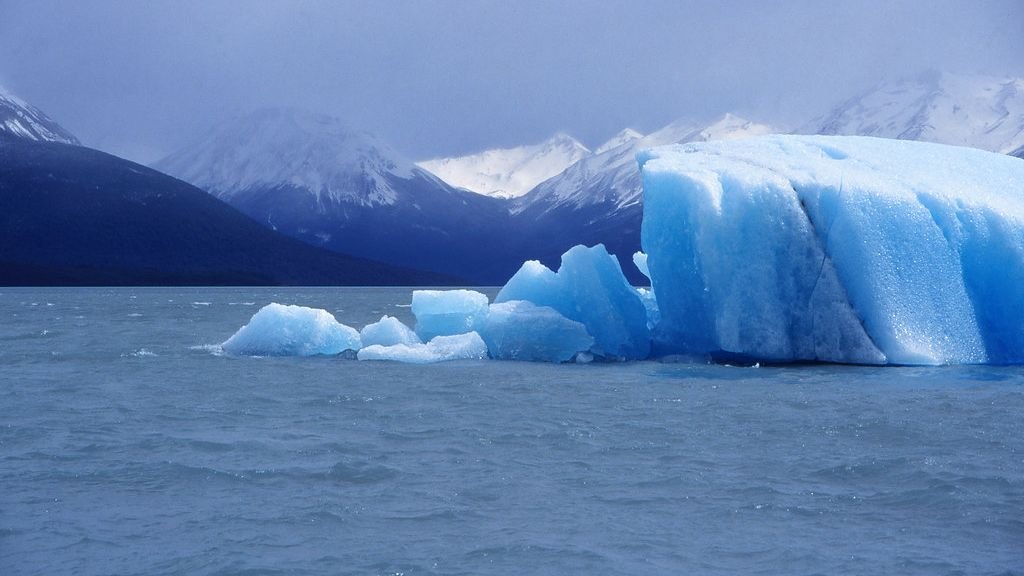
Something scientists thought they understood about glaciers for decades is now being seriously questioned. New research is poking holes in one of the most fundamental assumptions in climate science, and honestly, it’s the kind of finding that makes you stop and think about how fragile our models of the natural world really are.
Glaciers have long been treated as straightforward indicators of climate change. More warmth, less ice. Simple enough, right? Except it turns out that story may be far more complicated, and the implications stretch well beyond the ice fields themselves. Let’s dive in.
The Assumption That Guided Decades of Research
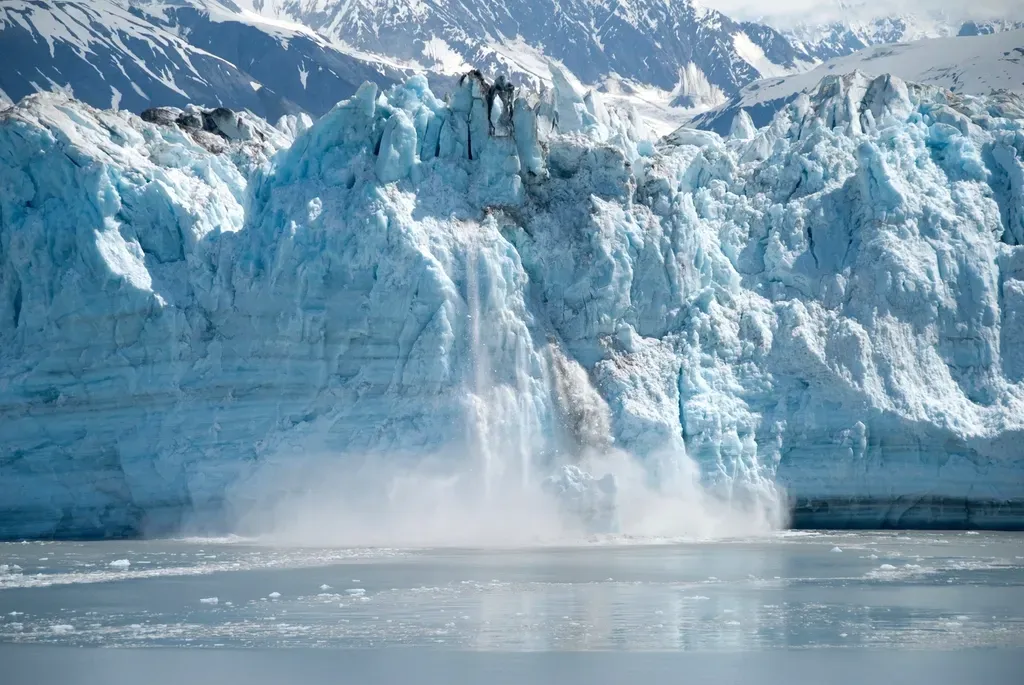
For a long time, the dominant theory in glaciology rested on a seemingly obvious logic: glaciers advance and retreat in direct, predictable response to temperature and precipitation changes. Scientists built entire climate models on that assumption. Decades of research, policy recommendations, and even international climate negotiations leaned on it.
Here’s the thing though. That core assumption may have been too clean, too convenient. Nature, as it tends to do, is proving far messier than the textbooks suggested. New findings are now raising uncomfortable questions about whether the climate signals we thought glaciers were sending us are actually as reliable as we believed.
What the New Research Actually Found
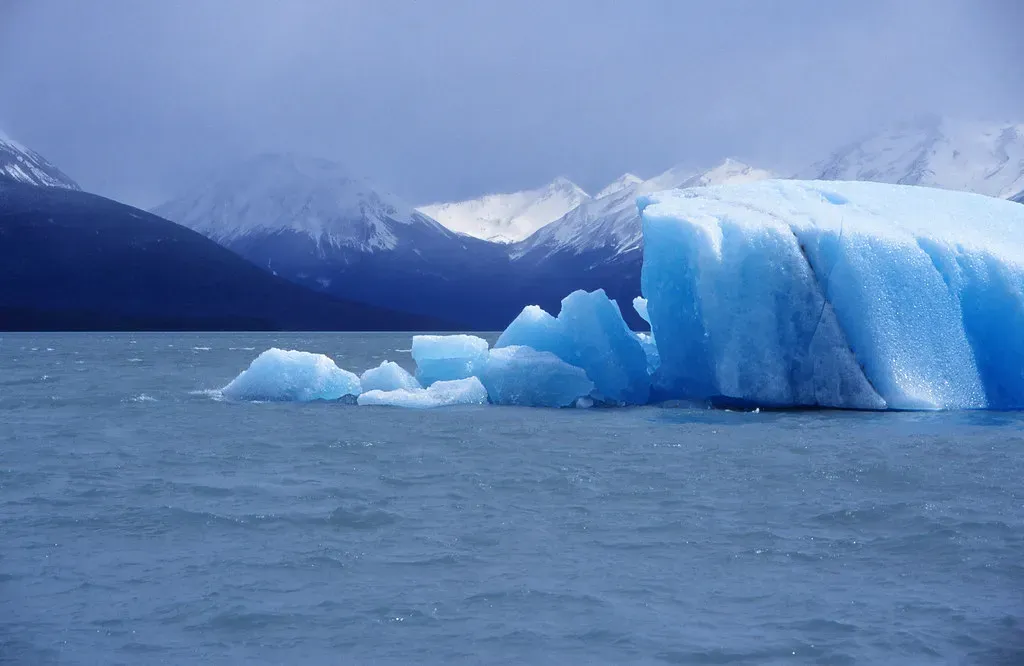
The research, emerging from detailed analyses of glacier behavior, suggests that local geological and topographical factors play a far more powerful role in glacier dynamics than previously credited. In other words, the ground beneath a glacier, its shape, its slope, and the bedrock underneath, can dramatically influence how that glacier behaves regardless of what the climate above is doing.
This is almost like discovering that a thermometer gives wildly different readings depending on what shelf you put it on. The instrument itself isn’t wrong, but its placement changes everything. Scientists are now recognizing that treating all glaciers as equivalent climate proxies may have led to some seriously misleading conclusions about historical climate patterns.
Why the Prevailing Theory Is Now on Shaky Ground
The prevailing model assumed a relatively uniform climate response across glaciated regions. That uniformity is what made global comparisons possible and made glacier retreat such a compelling visual symbol of warming. But when researchers dug deeper into the data, the uniformity started to fall apart.
Some glaciers were found to be behaving in ways that simply don’t match the expected climate-driven patterns. A few are advancing in areas where warming should theoretically be causing retreat. Others are losing mass far faster than temperature records alone would predict. These inconsistencies aren’t small statistical noise. They’re significant enough to challenge the entire framework.
The Role of Ice Dynamics Nobody Was Talking About
One of the more fascinating revelations involves internal ice dynamics, specifically the way ice deforms, slides, and responds to pressure at its base. These mechanical processes have been somewhat underappreciated in the broader climate conversation. Scientists are now finding that they can dominate a glacier’s behavior to a degree that overshadows atmospheric forcing.
Think of it like this. Imagine two identical rubber balls dropped from the same height but onto different surfaces. One hits soft sand, the other hits concrete. The outcome looks completely different even though the input was identical. Glacier behavior, it turns out, works on a surprisingly similar logic. The “surface” the glacier interacts with matters enormously.
What This Means for Climate Reconstructions
Historically, scientists have used glacier records to reconstruct past climates going back thousands of years. Moraines, which are the piles of debris left behind by advancing glaciers, have been used as a kind of prehistoric thermometer. If those records are now understood to carry more local noise than previously thought, some past climate reconstructions could be in need of serious revision.
This is not a comfortable realization for the scientific community, and I think it’s worth acknowledging that openly. It doesn’t mean climate change isn’t real or that warming isn’t happening. It means the evidentiary picture is more nuanced than a single theory allowed for. Science correcting itself is actually a sign of health, not weakness, though it does demand humility from everyone involved.
How Scientists Are Responding to the Challenge
Rather than dismissing the findings, the broader glaciological community appears to be leaning into the challenge with renewed fieldwork and more sophisticated modeling. Researchers are beginning to incorporate bedrock topography, subglacial hydrology, and ice viscosity into their models in ways that were previously too computationally intensive to attempt at scale.
Advances in satellite monitoring and machine learning are making it possible to track individual glacier behaviors with extraordinary precision. That granular data is giving scientists the tools to separate local mechanical effects from true climate signals. It’s slow, painstaking work. Roughly speaking, it’s the scientific equivalent of untangling a very long piece of knotted string one loop at a time. Tedious, but essential.
A Broader Lesson About Scientific Certainty
Perhaps the most important takeaway here isn’t about glaciers at all. It’s about the danger of treating any scientific model as settled simply because it has been widely accepted for a long time. The history of science is littered with confident consensus positions that eventually gave way to more complex truths.
That doesn’t make science untrustworthy. It makes it the most reliable self-correcting system humanity has ever developed. What these glacier findings remind us is that the natural world doesn’t care about our models. It just does what it does, and our job is to keep looking more closely, keep questioning, and keep revising. The glaciers were never trying to tell a simple story. We just assumed they were.
So what do you think? Does it unsettle you to learn that one of our most iconic climate indicators might be far harder to read than we thought? The comments are open.