Chasing a Sustainable Launch Rhythm (Image Credits: Cdn.mos.cms.futurecdn.net)
NASA revealed sweeping changes to its Artemis initiative on February 27, redirecting efforts to prioritize safety, accelerate launches, and mirror the incremental successes of the Apollo era.[1][2]
Chasing a Sustainable Launch Rhythm
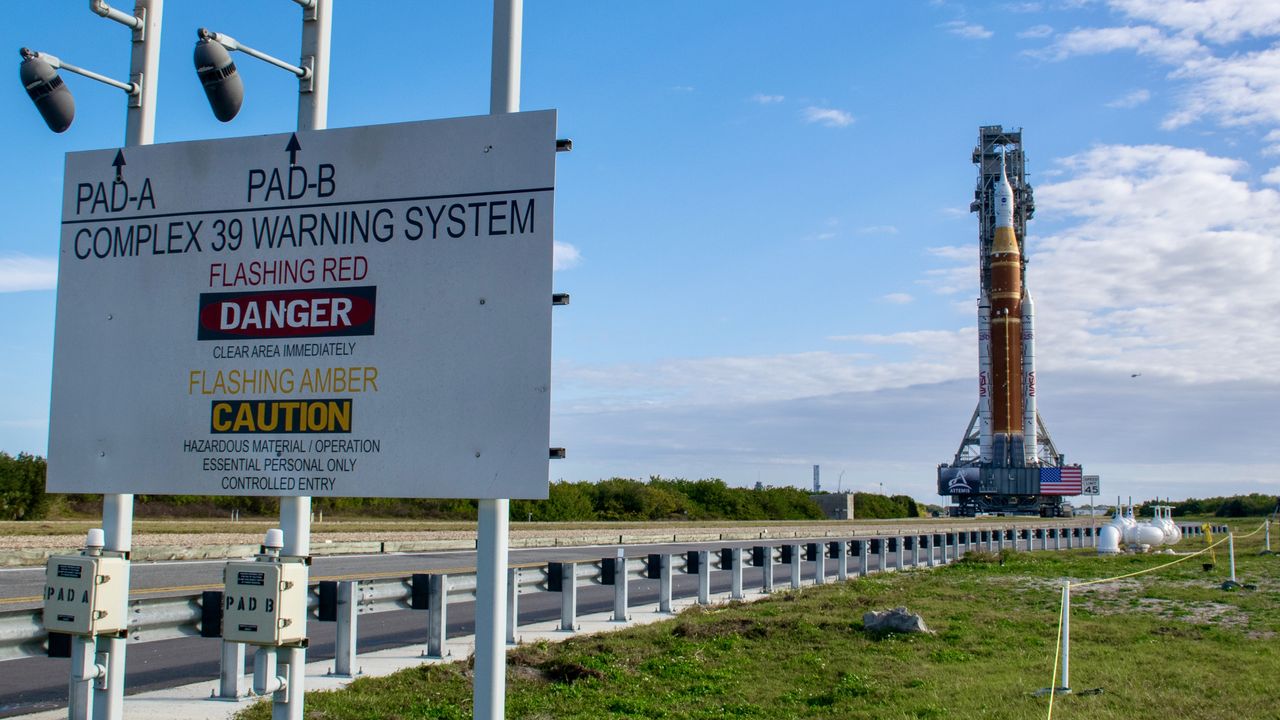
The agency highlighted persistent challenges with its Space Launch System rocket, including hydrogen leaks and helium pressurization failures during recent Artemis 2 preparations.[1] These setbacks underscored a core issue: launches spaced three years apart eroded engineering expertise and heightened risks.
New Administrator Jared Isaacman described the prior approach bluntly. “This is just not the right pathway forward,” he stated, advocating for a cadence closer to every 10 months.[1] Standardization of the SLS design, without costly upgrades like the Block 1B configuration, will streamline production and rebuild workforce skills.[2]
Officials drew parallels to Apollo, where frequent missions – from Mercury through early Apollo flights – built reliability before the historic Apollo 11 landing.[3]
Artemis 3 Transforms into Orbital Proving Ground
Under the revised blueprint, Artemis 3 shifts from its ambitious lunar landing goal to a mid-2027 demonstration in low Earth orbit.[4] Astronauts aboard the Orion spacecraft will rendezvous and dock with uncrewed Human Landing Systems from SpaceX’s Starship or Blue Origin’s Blue Moon – or both if ready.
Key tests will cover cryogenic fuel transfer, propulsion, life support, navigation, and a new Axiom Space spacesuit in microgravity.[2] This setup echoes Apollo 9’s Earth-orbit trials of the lunar module, de-risking future operations far from home.
Isaacman emphasized the logic. “Going right to the moon … is not a pathway to success,” he said, noting the Aerospace Safety Advisory Panel’s warnings on unproven technologies.[1]
Delays Reshape Near-Term Timeline
Artemis 2, the first crewed Orion flight with astronauts Reid Wiseman, Victor Glover, Christina Koch, and Jeremy Hansen, now eyes an April 2026 launch window after repairs at Kennedy Space Center.[1] The 10-day mission will loop around the moon without landing.
Here is the updated schedule:
- Artemis 2: Crewed lunar flyby, no later than April 2026.
- Artemis 3: LEO docking and lander tests, mid-2027.
- Artemis 4: First crewed lunar landing, early 2028.
- Artemis 5: Potential second landing, late 2028.
Such sequencing allows NASA to validate partners’ landers – Starship after 11 suborbital tests, Blue Moon’s pathfinder under evaluation – before committing crews to the surface.[1]
Risks Reduced, Ambitions Intact
The overhaul scraps SLS enhancements post-Artemis 3, favoring a “near Block 1” setup to cut complexity and costs while sustaining momentum.[2] NASA plans workforce expansion to recapture lost competencies amid competition from China’s lunar ambitions.
Isaacman framed the pivot optimistically. “We need to chunk it into achievable objectives,” he remarked, positioning the changes to outpace rivals by 2030.[3]
Key Takeaways
- Artemis 3 prioritizes orbital safety tests over lunar descent.
- SLS standardization targets annual launches for skill retention.
- 2028 holds promise for one or two historic moonwalks.
This recalibrated strategy promises a steadier march to sustained lunar presence, learning from past stumbles to secure future victories. How will these adjustments impact the race to the moon? Share your thoughts in the comments.