
Imagine waking up one morning and finding out your clock has been lying to you your whole life. Not because it’s broken, but because time itself doesn’t tick the same way everywhere in the universe. That’s essentially what Einstein showed the world: time is not a rigid, universal rhythm; it’s stretchy, bendy, and deeply connected to gravity.
This sounds like science fiction, but it’s about as real as your phone’s GPS or the sunlight hitting your face. Once you accept that time can speed up or slow down depending on where you are and how you move, everything from black holes to aging astronauts starts to make a strange kind of sense. Let’s walk through it step by step, without the heavy math, and see why gravity bending time might be one of the wildest true stories in science.
What Einstein Changed About Space, Time, And Gravity
For centuries, people thought of time as a giant, invisible clock in the sky, ticking away the same for everyone, everywhere. Space was just an empty stage where planets, stars, and you and I moved around, and gravity was a mysterious pulling force that made things fall. This view worked well enough for everyday life, but it started to fall apart when scientists looked closely at planets, light, and very fast-moving things.
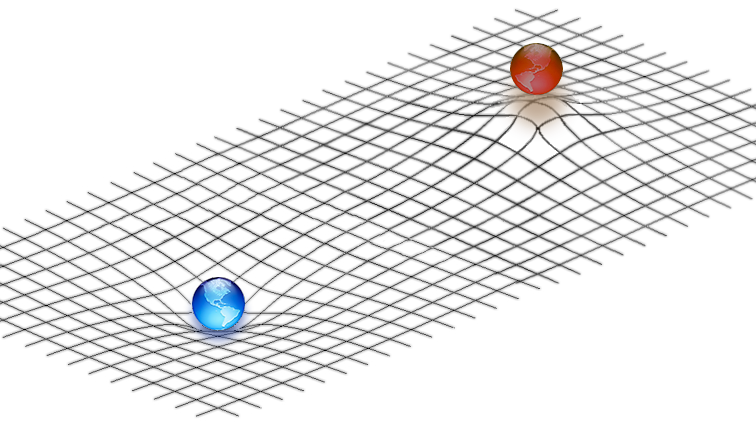
Einstein turned this old picture upside down. He suggested that space and time are actually woven together into a single “fabric” called spacetime, and that gravity isn’t really a pull but a bending of this fabric by anything with mass or energy. Instead of objects being yanked by some invisible hand, they’re simply following the curves in this warped spacetime. Once you accept that, the idea that time itself gets stretched or squeezed near massive objects stops sounding crazy and starts sounding like the only thing that fits the evidence.
Spacetime: The Invisible Fabric That Shapes Reality
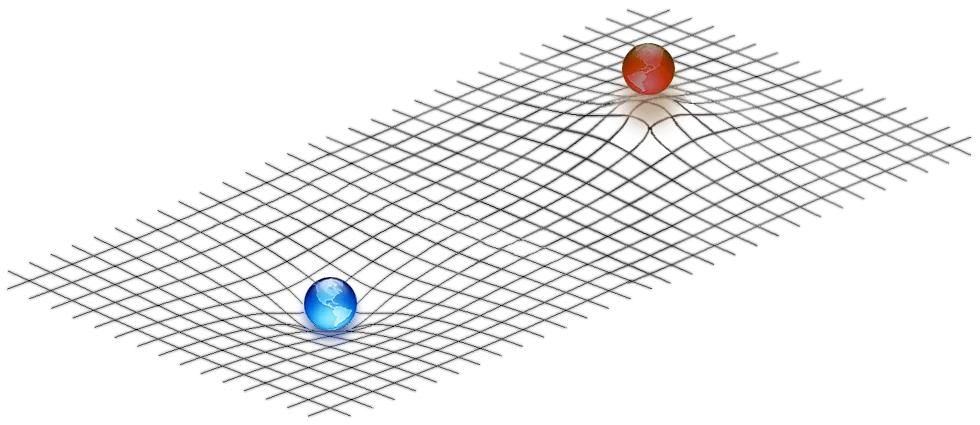
To picture spacetime, think of a trampoline with a bowling ball in the middle. The surface sags under the ball, and if you roll a smaller ball nearby, it spirals inward, not because the bowling ball “pulls” it, but because the surface is curved. Einstein’s big insight was that something similar is happening in three dimensions of space plus one dimension of time, all combined into a single structure. Mass and energy tell spacetime how to curve; that curve tells objects how to move.
Now, here’s the twist that really blows people’s minds: that curvature doesn’t just affect where you go, it affects how your time flows. The deeper you sit in a gravitational “dent” in spacetime, the more your clock slows down compared with someone far away from big masses. So gravity is not just shaping your path; it’s quietly stretching and compressing your personal experience of time, whether you notice it or not.
How Gravity Actually Slows Down Time
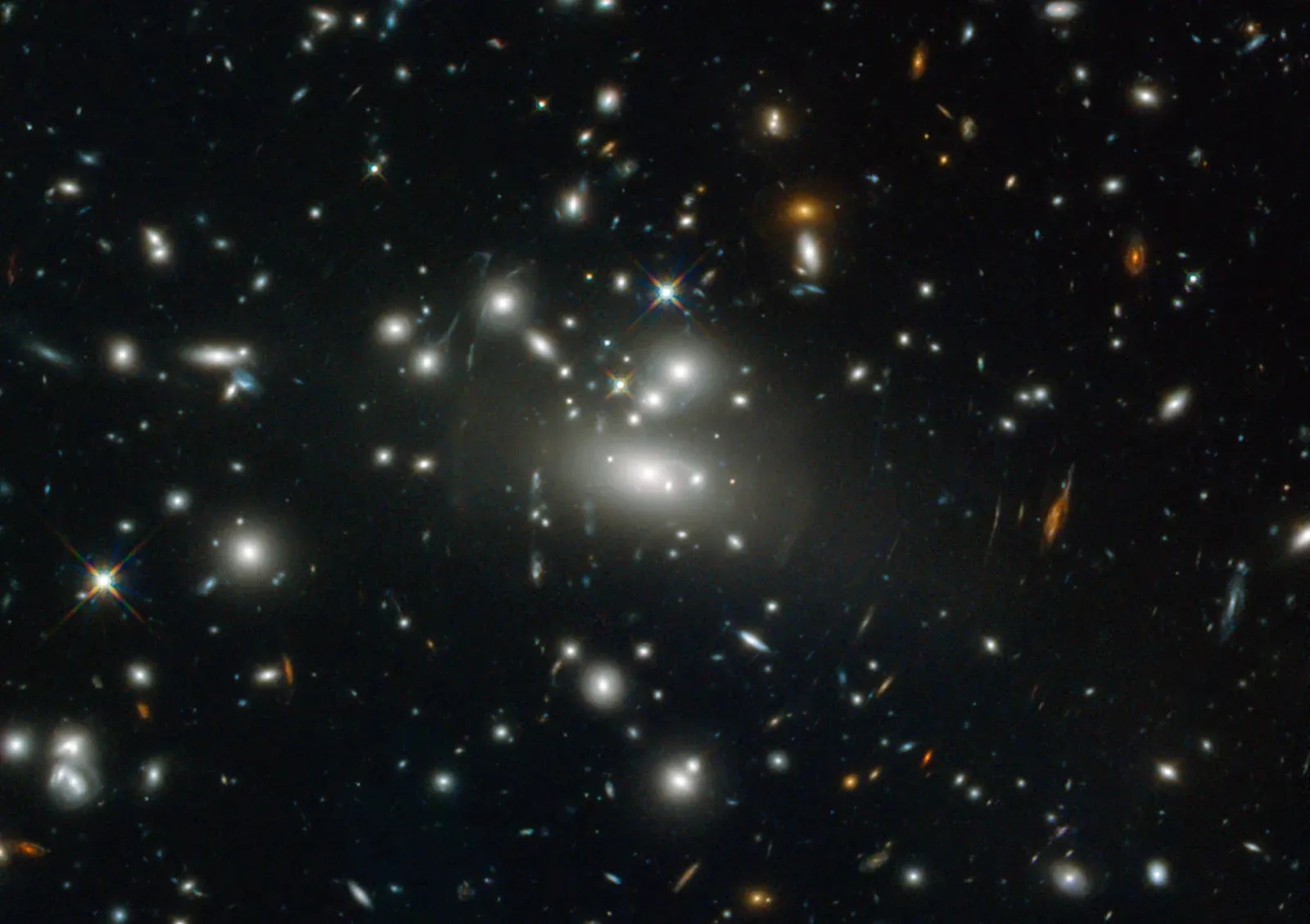
“Gravity bends time” can sound poetic, but it’s a cold, hard physical fact. If you put a clock on the ground and another one on top of a tall mountain, the mountain clock will tick ever so slightly faster. Down near Earth’s surface, deeper in Earth’s gravitational well, time runs a tiny bit slower. The effect is minuscule over human distances, but it’s not zero, and with very precise instruments, scientists have actually measured it.
What this really means is that time is local. There is no single, universal “now” that everyone shares in exactly the same way. Your “seconds” depend on where you are and how strong gravity is around you. Near something extremely massive, like a neutron star or a black hole, this slowing becomes so extreme that an hour for you could match years for someone far away. It sounds like a plot device from a movie, but it comes straight out of Einstein’s equations and the experiments that have confirmed them again and again.
Real-World Proof: GPS Satellites And Everyday Time Warps
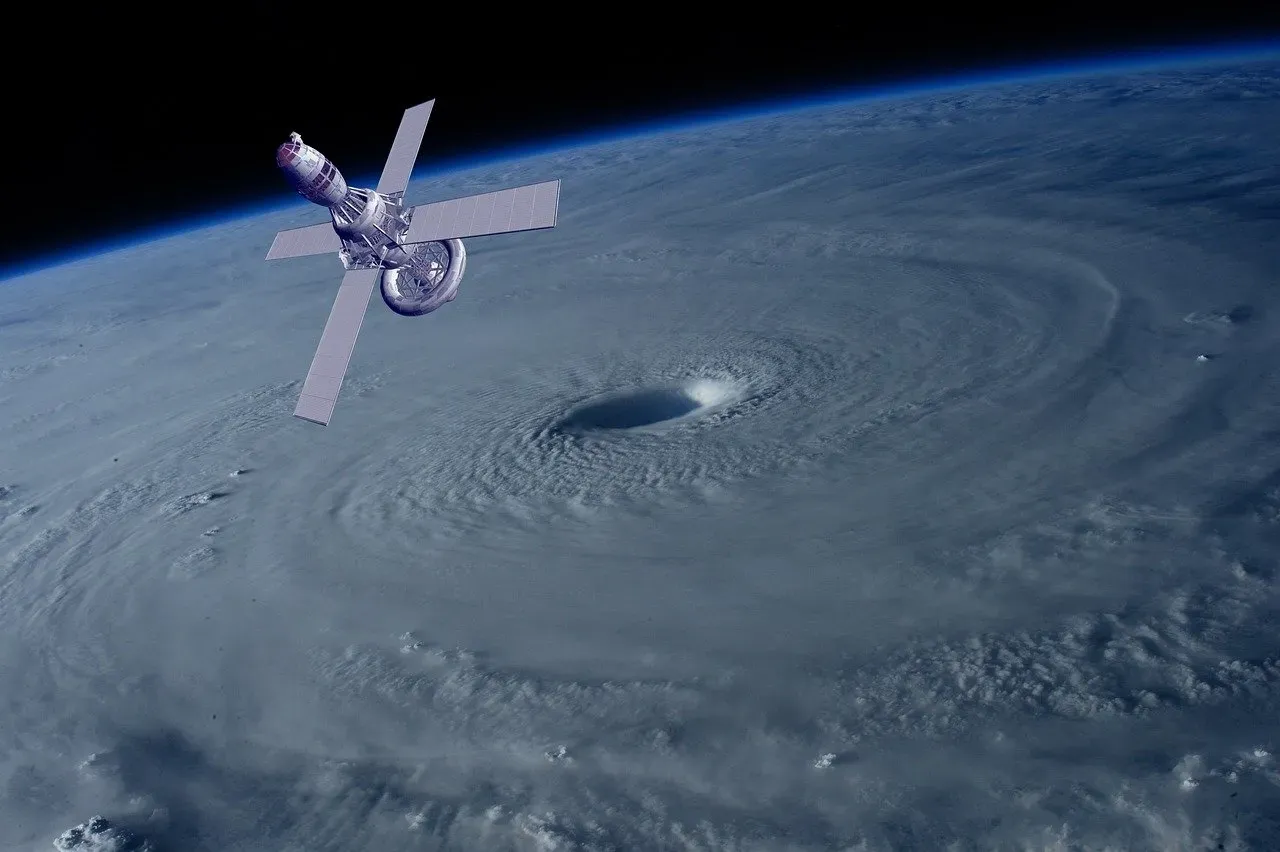
This all might feel abstract until you realize your phone depends on it. GPS satellites orbit high above Earth, where gravity is slightly weaker and time runs a bit faster than down here on the ground. At the same time, those satellites are moving very fast, and motion in special relativity causes their clocks to tick a bit slower. Both effects matter, and engineers have to correct for them, or your GPS location would drift by kilometers every day.
In other words, if we ignored Einstein and assumed time was the same everywhere, navigation systems would slowly become useless. Atomic clocks on planes, mountains, and satellites have repeatedly confirmed that clocks at different heights and speeds really do tick at different rates. We live inside a gentle time warp all the time, but we only notice it when we push our technology to the point where those tiny differences become important. That’s not philosophy; that’s practical engineering forced to bow to curved spacetime.
Black Holes: Where Time Practically Stops
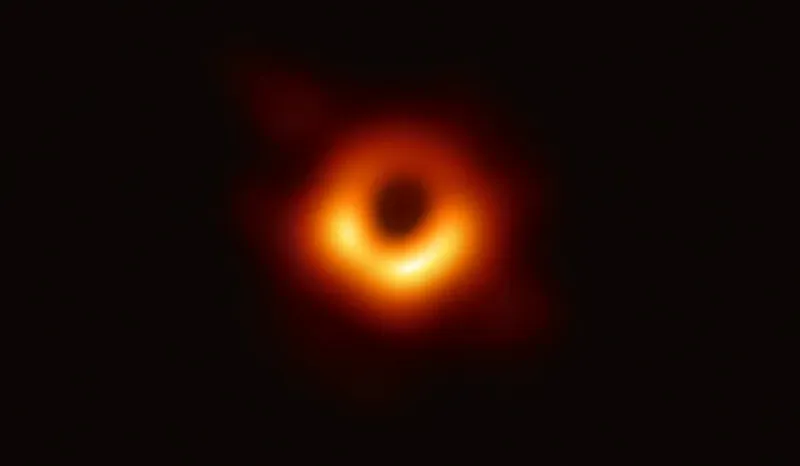
If gravity near Earth nudges time just a little, black holes are where things go completely off the rails. A black hole is a region where so much mass is crammed into such a small space that spacetime is curved to an extreme. As you approach the edge, called the event horizon, the stretching of time becomes wild. To a distant observer watching you fall in, you appear to slow down more and more, your clock ticking almost to a standstill as you near the horizon.
From your own point of view, though, your personal time feels normal; it’s everyone else who seems strange. This mismatch is not a trick of perspective but a built-in feature of spacetime geometry when gravity becomes incredibly strong. Black holes are like nature’s laboratories for testing the limits of Einstein’s ideas, and so far, everything about how light, stars, and gas behave near them has lined up with the prediction that gravity can tear time into radically different flows for different observers.
Time Dilation And Human Aging: Would You Come Back Younger?
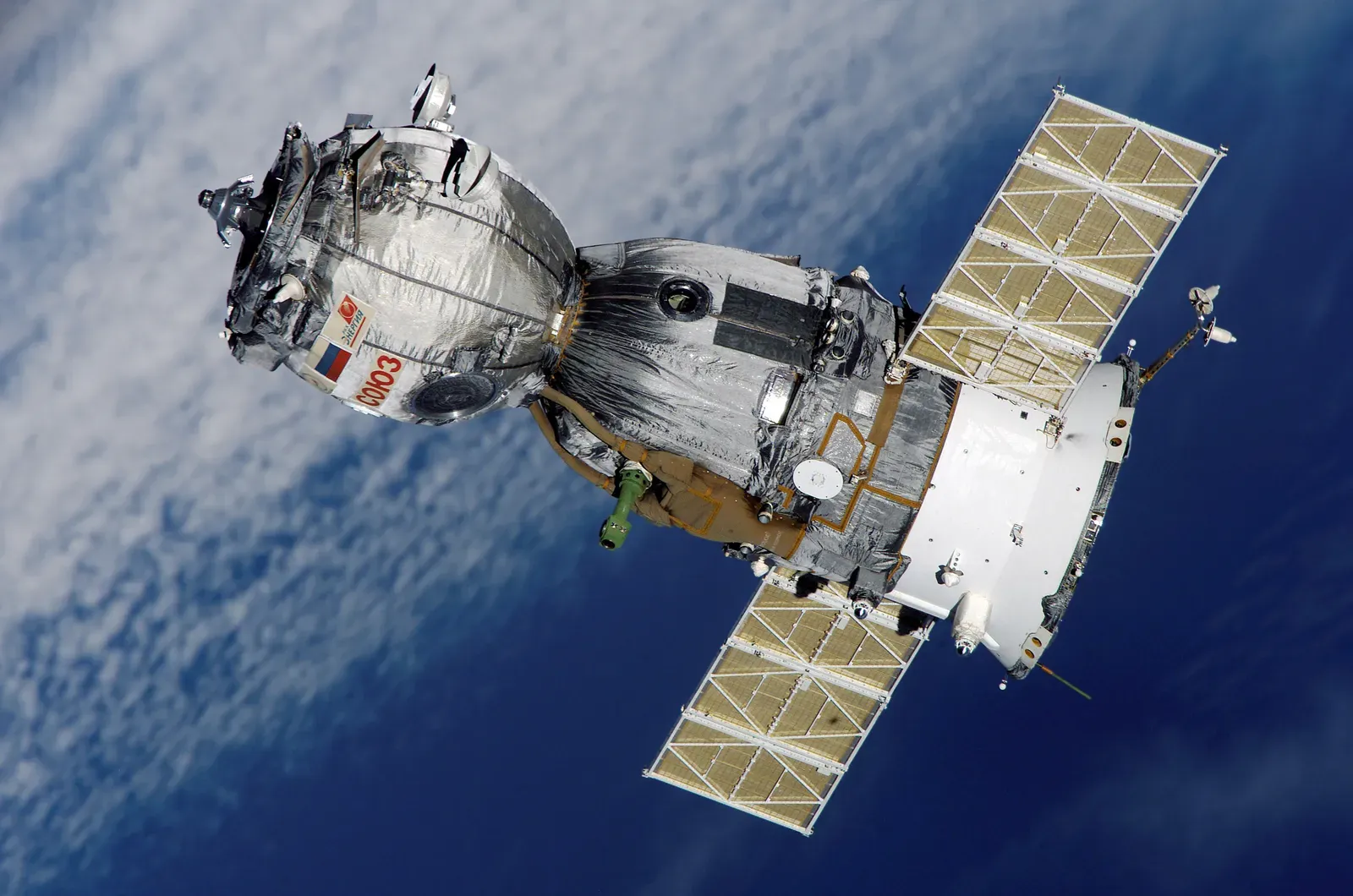
There’s a classic thought experiment where one twin stays on Earth while the other goes on a fast spaceship or hangs out near a black hole, then comes back younger than their sibling. This is not some philosophical puzzle; it’s what relativity actually predicts. Time dilation from high speed and strong gravity means that two people can start at the same age, reunite years later, and honestly have experienced different amounts of time passing. One might literally have lived fewer heartbeats.
In reality today, astronauts on the International Space Station experience tiny amounts of time dilation due to both their speed and their distance from Earth’s gravity. The effect is small, more like fractions of a second over many months, but it’s measurable. To get dramatic “come back younger” differences, you’d need much more extreme situations than we can manage right now, like velocities close to the speed of light or parking yourself carefully near a very massive object. Still, the fact that your age isn’t just “how long you’ve been alive” but also “how you moved through spacetime” is a quietly shocking idea.
Does Time Have A Direction… Or Is That An Illusion?
Once you get used to the idea that time can speed up and slow down, it’s natural to ask why time seems to only go forward. We remember yesterday but not tomorrow, glasses shatter but never reassemble themselves, and we grow older but not younger. Einstein’s equations allow time to be treated almost like another dimension, but our daily experience insists there is an arrow, a clear direction from past to future. That tension is one of the deepest puzzles in physics.
Part of the current thinking is that the “arrow of time” has a lot to do with entropy, or the natural tendency of systems to move from order to disorder. The universe started in a very orderly, low-entropy state and has been increasing in messiness ever since, giving us a sense of direction. Gravity plays a part here too, helping clump matter into stars, galaxies, and black holes as the overall cosmic story unfolds. So while Einstein showed that local time can be bent, stretched, and twisted, the grand cosmic flow still seems to have a one-way push that shapes our memories, our aging, and our sense of history.
Why Einstein’s Bending Time Still Matters Today
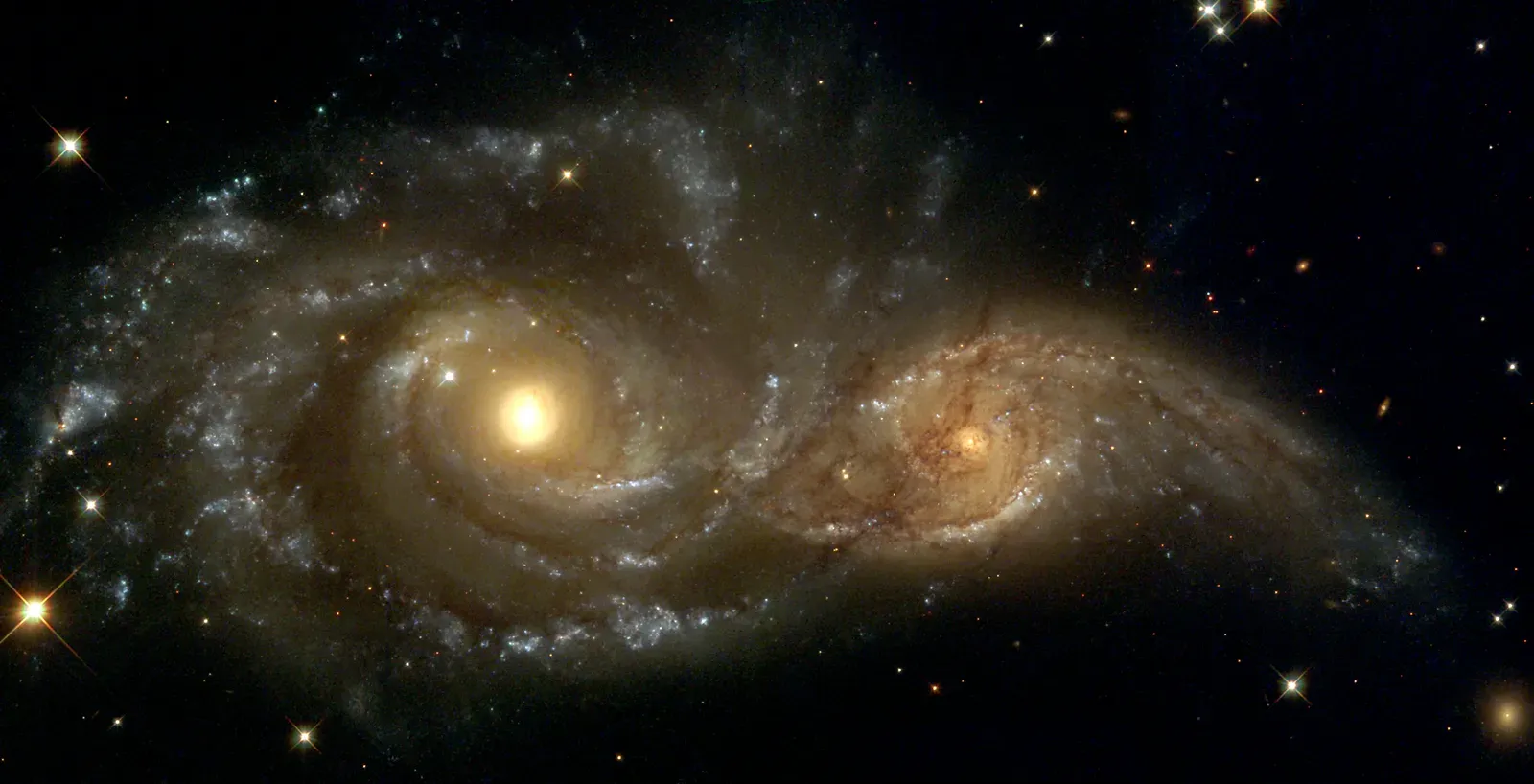
Einstein’s theory can sound like a distant, abstract masterpiece, but it quietly sits underneath a surprising amount of modern life. It guides GPS, helps physicists interpret signals from colliding black holes, and shapes how we model the entire history and future of the universe. When telescopes pick up ripples in spacetime from faraway cosmic crashes, they’re listening directly to the dynamics of this curved spacetime fabric that Einstein described over a century ago. The theory has been tested so many different ways that its basic picture of gravity bending time has become one of the most trusted pillars in physics.
On a more personal note, the idea that your time is not identical to mine, that our paths through spacetime are unique, makes reality feel strangely intimate. Each of us carries our own tiny, curved timeline, shaped by where we’ve been and how we’ve moved. We like to think we’re all living in the same “now,” but Einstein showed that “now” is more slippery than it feels. In a universe where gravity bends time itself, every life is literally its own journey through a warped, dynamic cosmos – what path will yours trace?