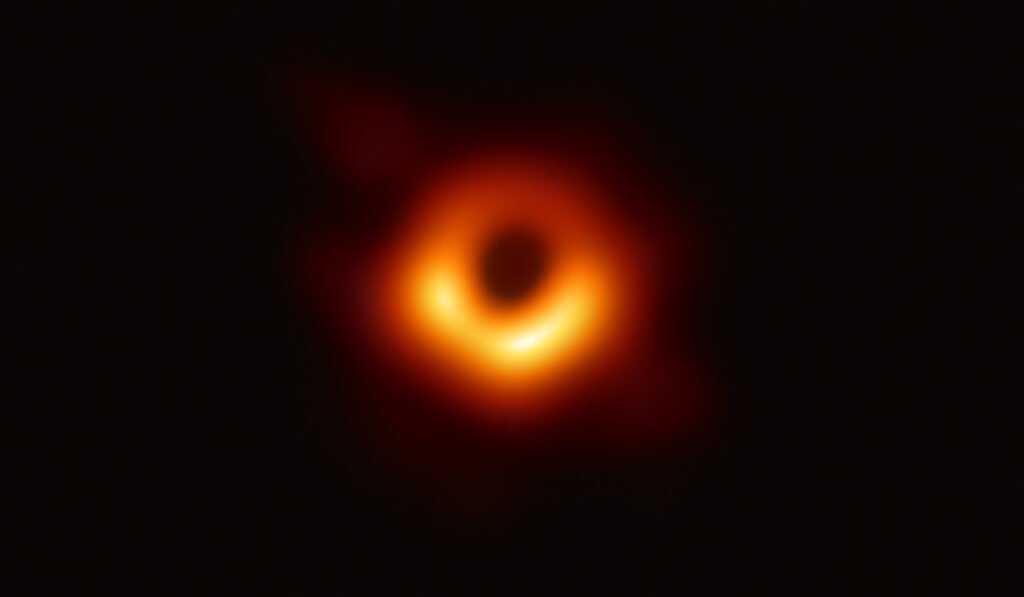
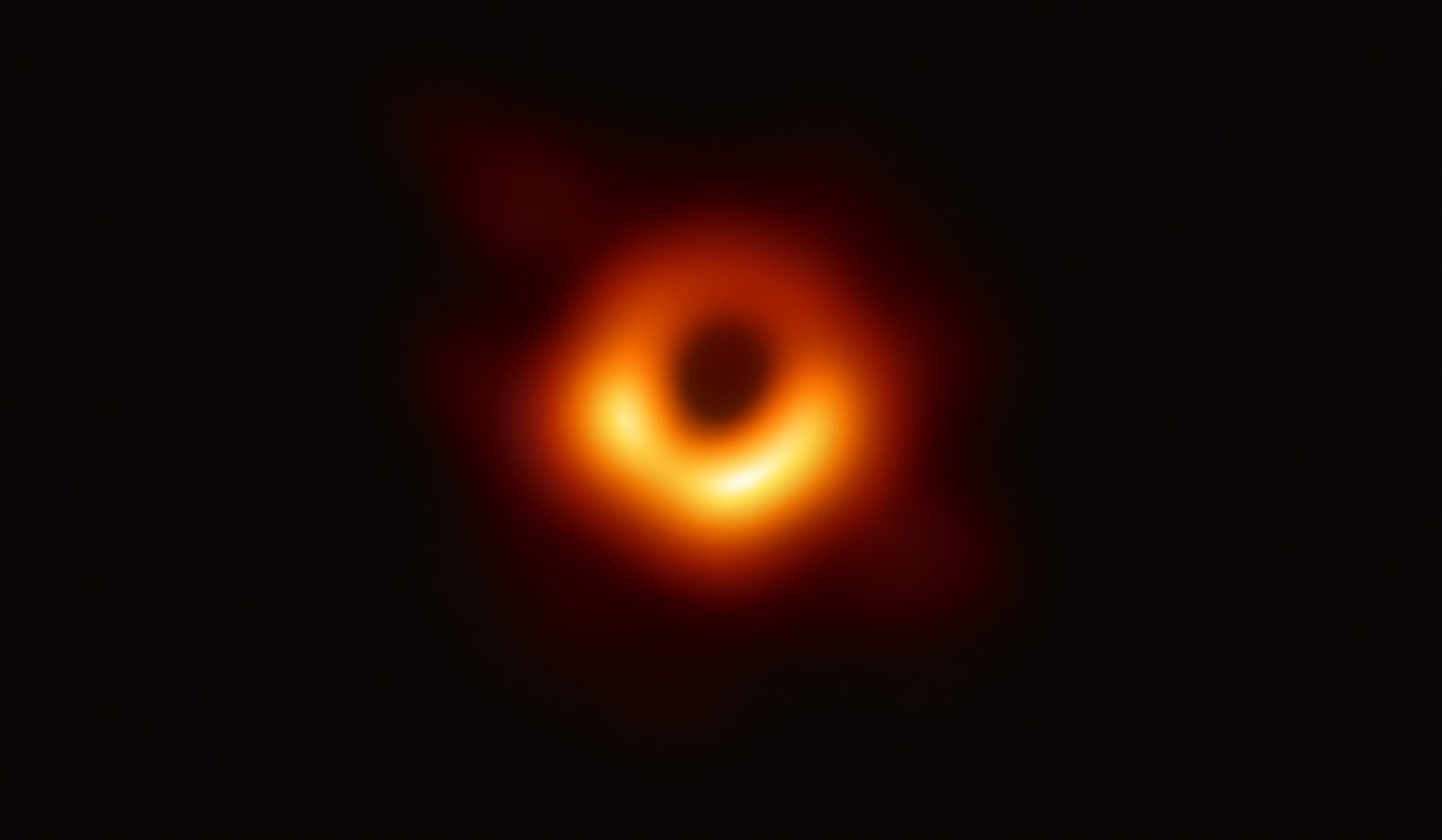
Decade-Long Effort Yields Unprecedented Detail (Image Credits: Upload.wikimedia.org)
London – An international collaboration released the LOFAR Two-metre Sky Survey Data Release 3 on February 23, 2026, presenting the most detailed low-frequency radio map of the northern sky and an extensive inventory of actively growing supermassive black holes.[1][2]
Decade-Long Effort Yields Unprecedented Detail
Astronomers celebrated a major milestone after more than ten years of observations and data processing. The Low Frequency Array, spanning stations across Europe, captured radio waves at 120 to 168 MHz over 12,950 hours. This effort produced images covering 88 percent of the northern sky, or 19,035 square degrees.[3][4]
Lead author Dr. Timothy Shimwell of ASTRON and Leiden University highlighted the scale. “This data release brings together more than a decade of observations, large-scale data processing and scientific analysis by an international research team,” he stated.[2] The team processed 18.6 petabytes of data, consuming over 20 million core hours on high-performance computers. Advanced algorithms corrected for ionospheric distortions, achieving a median sensitivity of 92 microJansky per beam and 6-arcsecond resolution.
Supermassive Black Holes Dominate the View
The survey delivered the most complete census to date of growing supermassive black holes. These monsters power radio jets and lobes that stretch millions of light-years, visible as bright structures amid fainter points.[1] Researchers identified millions of such sources, many previously undetected at radio wavelengths.
Prof. Martin Hardcastle of the University of Hertfordshire explained the insights. “We can study a diverse population of supermassive black holes and their radio jets at different stages of their evolution,” he noted, linking properties to host galaxies and environments.[4] The map traces relativistic particles spiraling in magnetic fields, revealing how black holes influence cosmic evolution across time.
Cosmic Phenomena Beyond Black Holes
Besides black holes, the images exposed a wealth of energetic events. Merging galaxy clusters showed giant shocks and turbulence amplifying magnetic fields over vast distances. Faint supernova remnants and flaring stars appeared alongside regions of extreme star formation.[2]
Dr. Andrea Botteon of INAF in Bologna pointed to surprises in clusters. “Giant shocks and turbulence drive particle acceleration and strengthen magnetic fields across millions of light-years, something we now see to be happening far more than previously anticipated,” he said.[1] The catalog lists 13,664,379 sources, enabling studies of transients, old radio galaxies, and even exoplanet-star interactions.
- Colliding galaxy clusters with amplified magnetic fields.
- Unknown supernova remnants and bubbles.
- Powerful jets from distant galaxies.
- Variable radio sources from stars and planets.
- Diffuse emission from star-forming rings in nearby galaxies like Andromeda.
Technical Feats Pave Way for Future Science
Overcoming challenges like variable ionosphere demanded innovative calibration pipelines. Dr. Cyril Tasse of the Paris Observatory led software development for sharp, large-scale images. The result supports hundreds of studies on particle acceleration, cosmic magnetism, and structure formation.
All data, including mosaics, catalogues, and polarization products, stand publicly available. This openness fuels ongoing research. Dr. Wendy Williams of the Square Kilometre Array Observatory called it a milestone, with upgrades like LOFAR2.0 promising even deeper views.[2]
Key Takeaways
- 13.7 million sources cataloged, 88% northern sky coverage.
- Premier census of growing black holes and their jets.
- Public data enables global studies of cosmic energies.
This survey reshapes our grasp of the universe’s dynamic underbelly, where invisible radio waves unveil hidden violence. What cosmic secrets will the next maps reveal? Tell us in the comments.