
You probably think you know gravity. It holds your feet on the ground, keeps the moon in orbit, and made Isaac Newton pause under a famous apple tree. Simple enough, right? Well, here is the thing – what physicists now understand about gravity goes so far beyond any of that, it is almost disorienting. The deeper you look, the more it becomes clear that gravity is not just a force. It is the architect of reality itself.
From reshaping the fabric of spacetime to potentially explaining the universe’s accelerating expansion, gravity continues to reveal layer after layer of jaw-dropping complexity. Scientists in 2026 are not just studying gravity – they are actively rediscovering it. So let’s dive in.
Gravity Is Not a Force – It Is the Shape of Space Itself
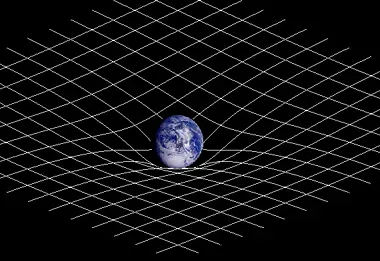
Most of us grew up thinking of gravity as a pulling force, something invisible that drags objects toward each other. Newton’s model was brilliant for its time and still useful today. However, Einstein turned the entire concept on its head in 1915 with his general theory of relativity. Gravity is described by the general theory of relativity, proposed by Albert Einstein in 1915, which describes gravity in terms of the curvature of spacetime, caused by the uneven distribution of mass. Think of spacetime as an enormous cosmic trampoline. Place a bowling ball on it and the fabric dips. Roll a marble nearby, and it curves toward the depression – not because something is pulling it, but because it is simply following the shape of the surface.
According to Einstein’s theory of general relativity, spacetime can be visualized as a rubber sheet which gets deformed by any object which has mass or energy. This deformation is called curvature of spacetime. What makes this extraordinary is that gravity, in Einstein’s framework, is not a force at all in the traditional sense. Phenomena that in classical mechanics are ascribed to the action of the force of gravity, such as free-fall, orbital motion, and spacecraft trajectories, correspond to inertial motion within a curved geometry of spacetime in general relativity. Instead, gravity corresponds to changes in the properties of space and time, which in turn changes the straightest-possible paths that objects will naturally follow. That is a profoundly different way of seeing the universe.
Black Holes: Where Gravity Breaks All the Rules
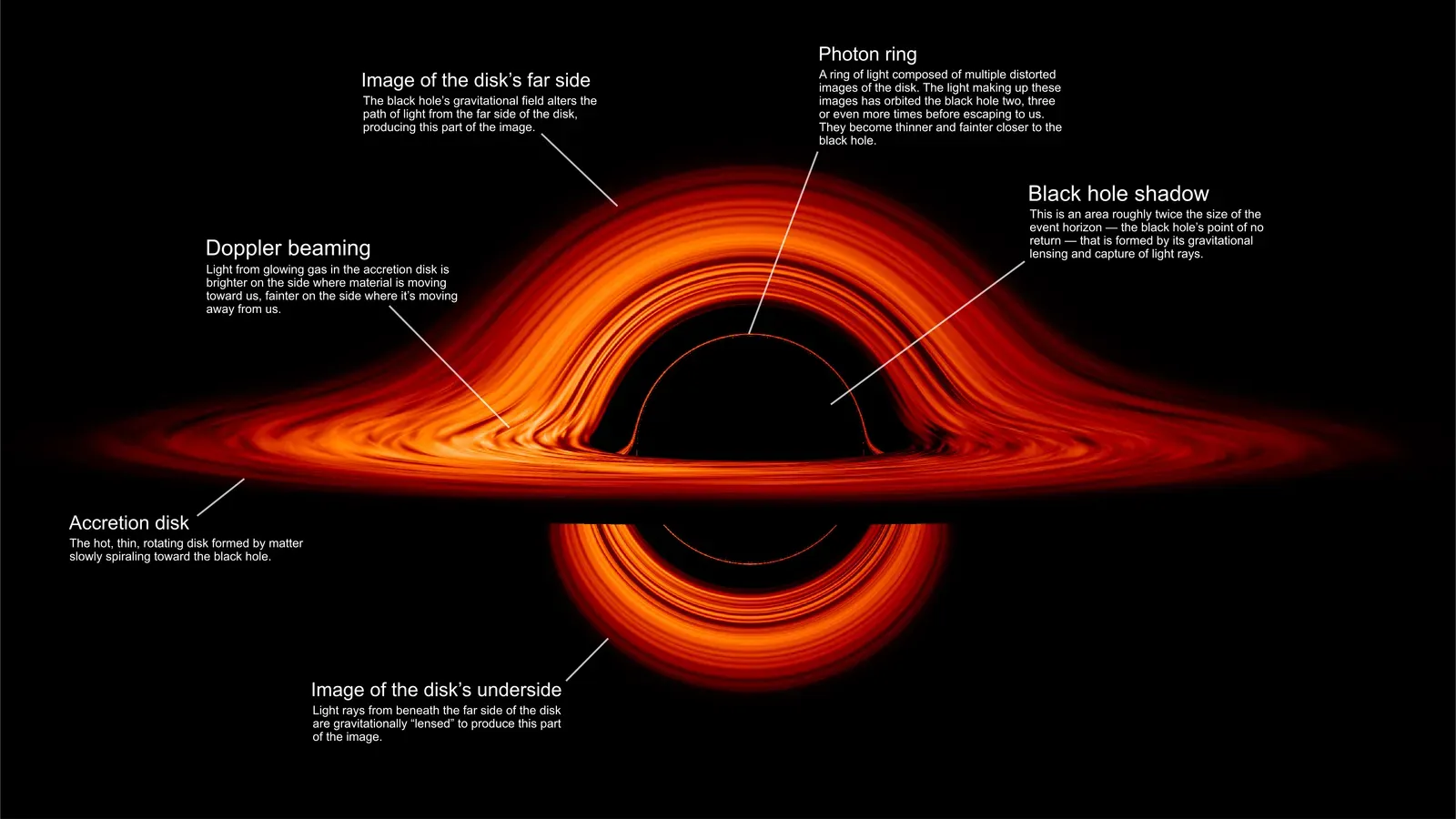
If you want to see gravity pushed to the absolute extreme, look no further than black holes. They are not just incredibly dense objects – they are places where the geometry of spacetime becomes so warped that not even light can find an exit. A black hole forms when a massive star collapses under its own gravity or when dense stellar remnants and compact objects merge, concentrating mass into a tiny volume. The result is an extreme curvature of spacetime, where gravity no longer behaves like a simple force but as a consequence of warped geometry. That distinction matters enormously for how scientists model these objects.
Black holes are one of the most astonishing predictions of Einstein’s theory of general relativity. Inside black holes, Einstein’s theory posits that the curvature of space-time diverges, forming singularities that signal the potential breakdown of space-time itself and delineate the edge of our physical understanding. Honestly, that is where things get philosophically unsettling. A gravitational singularity is a theoretical condition in which gravity is predicted to be so intense that spacetime itself would break down catastrophically. As such, a singularity is by definition no longer part of the regular spacetime and cannot be determined by “where” or “when.” Gravitational singularities exist at a junction between general relativity and quantum mechanics; therefore, the properties of the singularity cannot be described without an established theory of quantum gravity. We are literally talking about the edge of what physics can describe.
Gravitational Waves: Listening to the Universe’s Loudest Screams
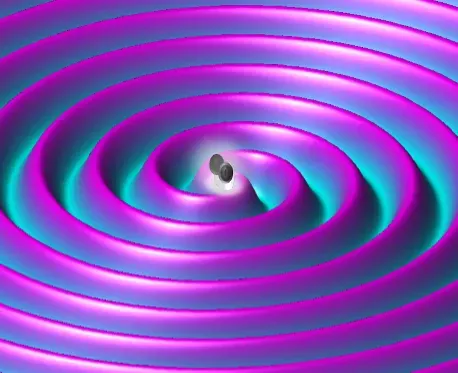
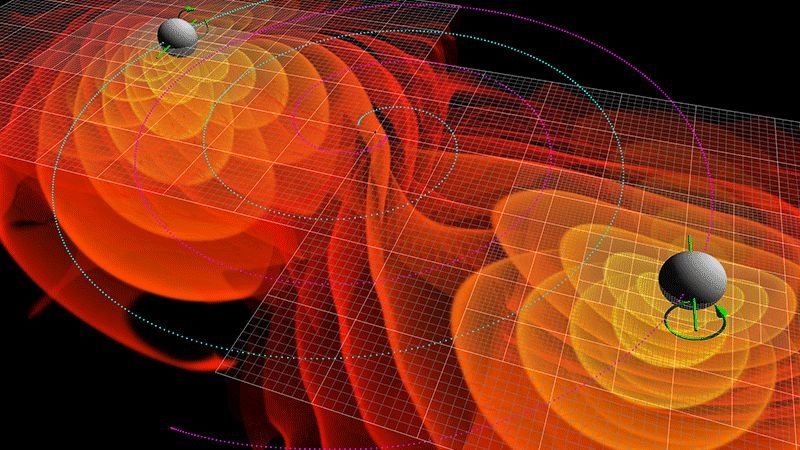
One of the most stunning scientific achievements in recent history was the direct detection of gravitational waves – ripples in the fabric of spacetime itself. On September 14, 2015, a signal arrived on Earth, carrying information about a pair of remote black holes that had spiraled together and merged. The signal had traveled about 1.3 billion years to reach us at the speed of light – but it was not made of light. It was a different kind of signal: a quivering of space-time called gravitational waves first predicted by Albert Einstein 100 years prior. The poetry of that moment is hard to overstate.
Since then, detectors have only gotten sharper and the discoveries more dramatic. Today, the collaborating LIGO, Virgo, and Kagra detectors have captured about 300 black hole mergers, including a new event that provides the best observational evidence yet of Stephen Hawking’s black hole area theorem. Most recently, the gravitational wave known as GW250114 raised the bar even further. It is the clearest gravitational wave signal ever recorded from a pair of merging black holes, giving researchers an unusually sharp tool for testing Albert Einstein’s theory of gravity, called general relativity. Each new detection teaches us more about gravity’s raw power in its most violent form.
Could Gravity Alone Explain the Universe’s Accelerating Expansion?
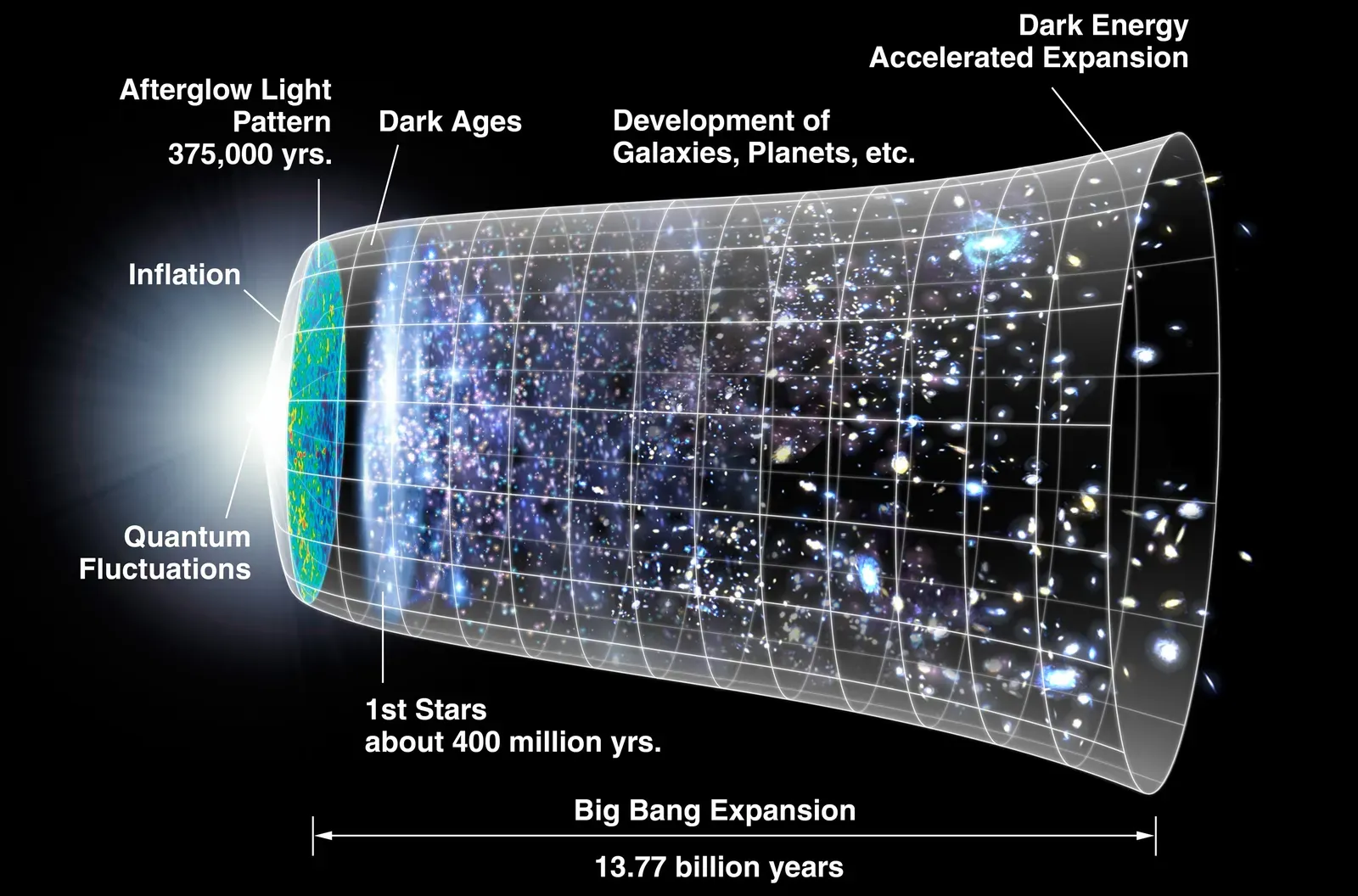
Here is where things get genuinely revolutionary. For decades, cosmologists believed a mysterious force called dark energy was responsible for the universe accelerating outward at an ever-increasing pace. The universe’s accelerating expansion has long puzzled physicists. For decades, dark energy, an unseen force thought to make up nearly 70% of the cosmos, has been the leading explanation. However, a new study published in the Journal of Cosmology and Astroparticle Physics suggests that this mysterious ingredient might not be necessary at all. That is a jaw-dropping possibility to sit with.
Using an extended version of Einstein’s gravity, researchers found that cosmic acceleration can arise naturally from a more general geometry of spacetime. The result hints at a radical new way to understand why the universe keeps speeding up. This framework, called Finsler gravity, rethinks the very geometry underlying Einstein’s equations. Removing the need for dark energy would mean revising the ΛCDM model, which currently serves as the standard description of the universe. Such a paradigm shift would have profound implications for cosmic evolution, the fate of the universe, and our understanding of gravity itself. We are not talking about a minor tweak here – we are talking about a potential rewrite of the cosmological rulebook.
Gravity and the Quest for a Theory of Everything
Perhaps the greatest unsolved problem in physics is reconciling gravity with the quantum world. Every other fundamental force – electromagnetism, the strong nuclear force, the weak nuclear force – fits neatly into the Standard Model of particle physics. Gravity stubbornly refuses to play along. A unified theory combining gravity with the other fundamental forces – electromagnetism and the strong and weak nuclear forces – is within reach. Bringing gravity into the fold has been the goal of generations of physicists, who have struggled to reconcile the incompatibility of two cornerstones of modern physics: quantum field theory and Einstein’s theory of gravity. It is a bit like having a beautiful jigsaw puzzle where one crucial piece refuses to fit no matter how you turn it.
Excitingly, real progress is being made. Researchers have developed a new quantum theory of gravity which describes gravity in a way that’s compatible with the Standard Model of particle physics, opening the door to an improved understanding of how the universe began. Additionally, some theorists are suggesting an even wilder angle. A new study argues that gravity may not be a fundamental force but an emergent property of a universe running like a computer – compressing data, conserving processing power and self-organizing toward simpler informational states. Whether you find that concept thrilling or unsettling probably depends on how comfortable you are with the universe being stranger than you imagined.
Gravity’s Role in Shaping Galaxies, Stars, and Cosmic Structure
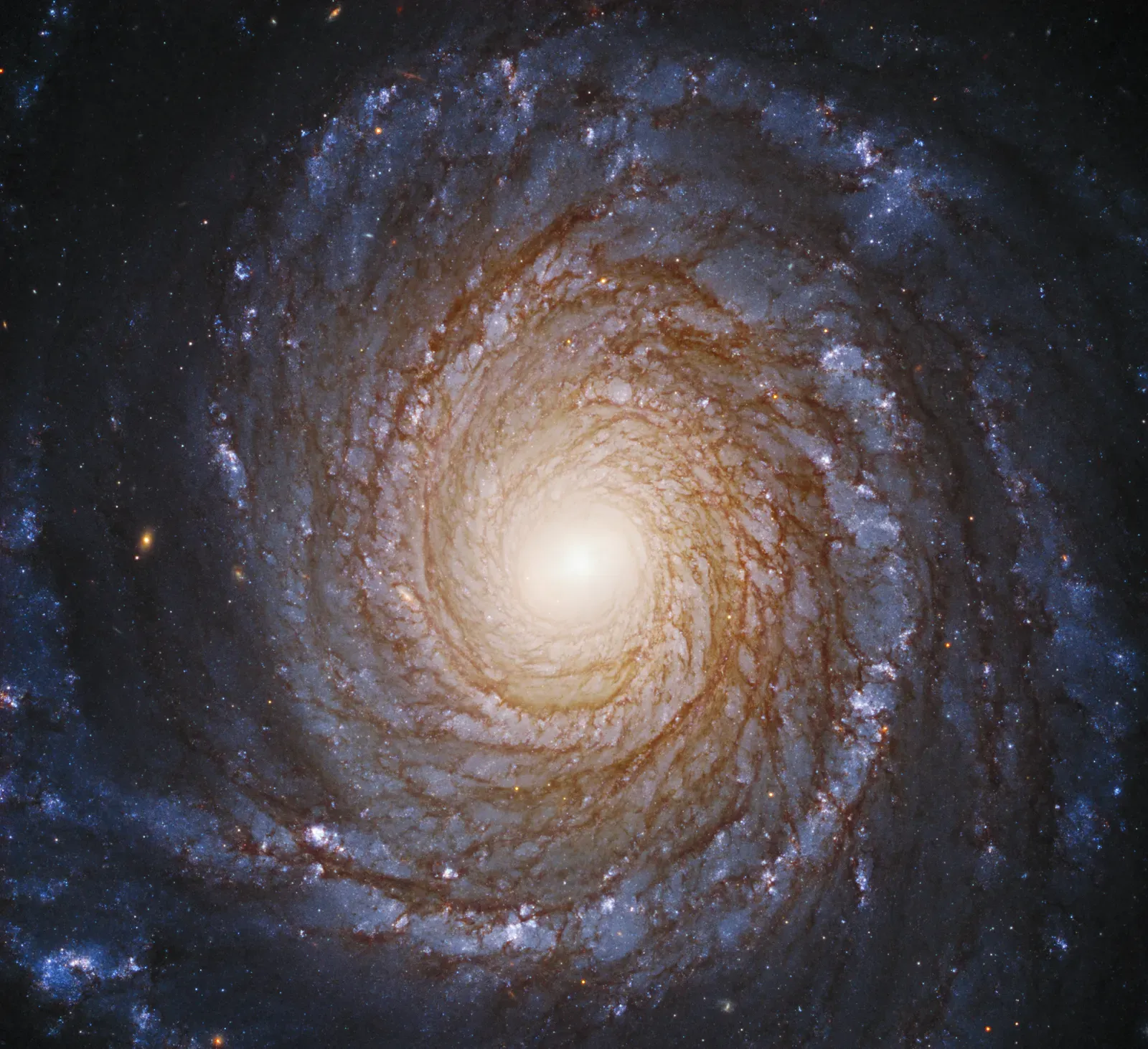
Zoom out far enough and you start to see gravity not just as a local phenomenon, but as the ultimate sculptor of the cosmos. The gravitational attraction between clouds of primordial hydrogen and clumps of dark matter in the early universe caused the hydrogen gas to coalesce, eventually condensing and fusing to form stars. At larger scales this resulted in galaxies and clusters, so gravity is a primary driver for the large-scale structures in the universe. Every galaxy you see in the night sky is gravity’s artwork – billions of years of slow, inevitable assembly.
Gravity’s range means that over time, even small distant masses attract each other and coalesce into larger masses. This attracts even more mass, creating stars and planets, galaxies, and superclusters over the history of our universe. There is something almost poetic about that – gravity patiently, quietly working across billions of light-years and billions of years, building the entire cosmic landscape one gravitational tug at a time. At the cosmological scale, gravity is a dominant player. Without it, the universe would be an unstructured, cold soup of particles going nowhere.
The Future of Gravity Science: Record Detections and New Frontiers
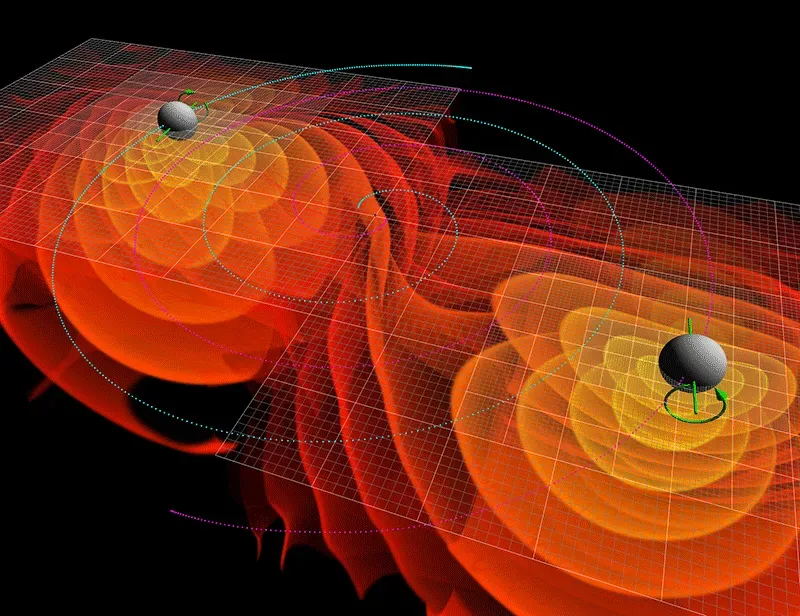
The science of gravity is not slowing down. If anything, 2025 and early 2026 brought some of the most exciting developments in the field in years. The LIGO-Virgo-KAGRA Collaboration has detected the merger of the most massive black holes ever observed with gravitational waves. The powerful merger produced a final black hole approximately 225 times the mass of our Sun. That is the mass of 225 suns collapsing together in a cosmic instant. To put that in perspective, our entire solar system revolves around a star that weighs one solar mass – and these black holes shattered every previous record.
Since 2015, observatories like LIGO have opened a new window on the universe. Plans for future upgrades to the 4-kilometer LIGO detectors and the construction of a next-generation 40-kilometer observatory, Cosmic Explorer, aim to push the gravitational-wave detection horizon to the earliest times in the history of the universe, before the first stars formed. Meanwhile, new techniques are expanding what scientists can “hear.” University of Colorado Boulder astrophysicist Jeremy Darling is pursuing a new way of measuring the universe’s gravitational wave background – the constant flow of waves that churn through the cosmos, warping the very fabric of space and time. The research could one day help to unlock some of the universe’s deepest mysteries, including how gravity works at its most fundamental level. The horizon of discovery has never looked broader.
Conclusion: Gravity Is Just Getting Started

Gravity has been shaping the universe since the first moments after the Big Bang – and it has been reshaping our understanding of physics ever since Newton first put numbers to it. What we have learned, especially in recent years, is that this force is far more strange, far more powerful, and far more consequential than any of us were taught in school. It warps spacetime. It births black holes. It may be driving the universe’s expansion. It might even be an emergent phenomenon of a deeper computational reality.
I think what is most humbling about all of this is how much remains unknown. For every gravitational wave detected, for every new theory proposed, the universe seems to respond with an even deeper mystery. Science is not running out of questions – it is just getting better at asking them. Gravity, it turns out, is not just a force that keeps you grounded. It is the force that holds everything together, tears galaxies apart, and keeps physicists working through the night. What part of gravity’s story surprises you most? Drop your thoughts in the comments – the conversation is just warming up.
Hi, I’m Andrew, and I come from India. Experienced content specialist with a passion for writing. My forte includes health and wellness, Travel, Animals, and Nature. A nature nomad, I am obsessed with mountains and love high-altitude trekking. I have been on several Himalayan treks in India including the Everest Base Camp in Nepal, a profound experience.