
If you’ve ever tripped over something and turned it into a win, you’re in good company with some of history’s greatest inventors. A surprising number of world‑changing ideas didn’t come from carefully planned experiments or brilliant “lightbulb” moments, but from spilled chemicals, broken tools, and problems nobody meant to solve. It’s a little unsettling and a little comforting: the modern world is partly built on happy mistakes.
What makes these accidental inventions so fascinating isn’t just the randomness, but how someone noticed that a “failed” experiment was actually useful. Plenty of people have accidents; only a few turn them into penicillin, microwaves, or safety glass. As you read these stories, it’s hard not to wonder how many life‑changing ideas are sitting right now in someone’s trash can or lab notebook, mislabeled as a disaster.
1. Penicillin: The Mold That Saved Millions
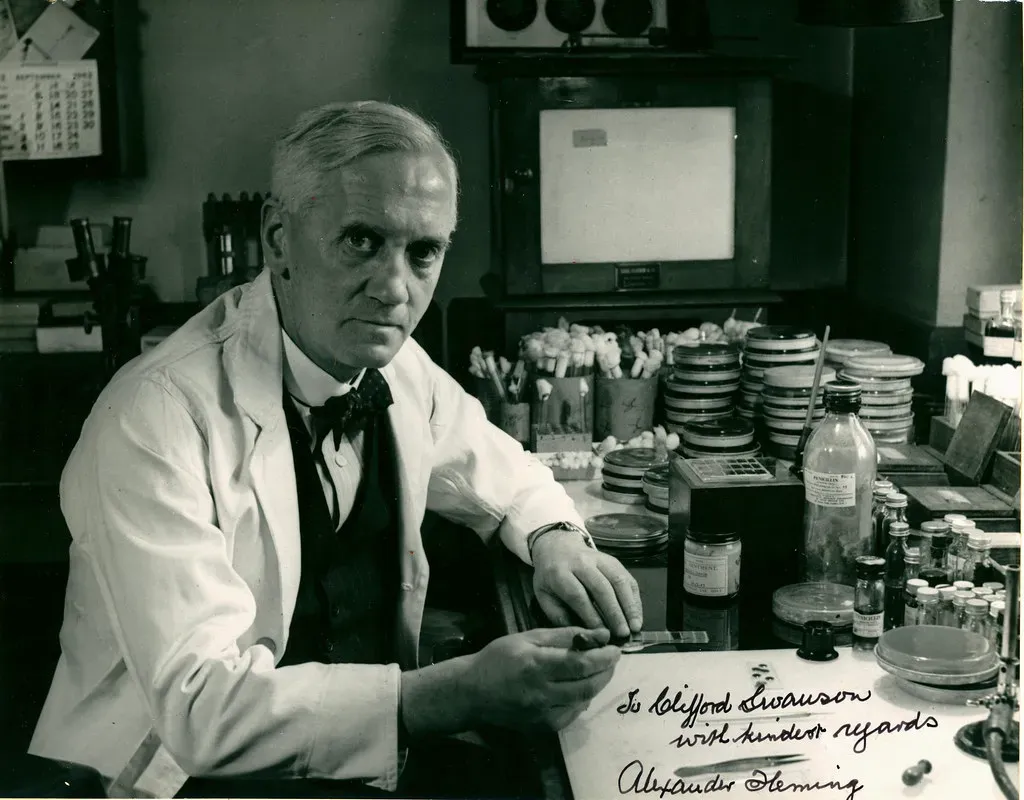
Imagine leaving your workbench a mess, going on vacation, and coming back to find mold growing everywhere… and that mess ends up changing medicine forever. That’s essentially what happened when a Scottish bacteriologist returned to his lab in the late 1920s and noticed that a mysterious mold had contaminated one of his petri dishes. Instead of just tossing it out, he saw something strange: bacteria weren’t growing near the mold. The “ruined” sample was actually doing something powerful.
That simple observation turned an accident into the world’s first true antibiotic. Development took years and the work of many teams to make it stable and mass‑produced, but it ultimately transformed once‑deadly infections into treatable conditions. Before antibiotics, a small cut or routine surgery could be life‑threatening; after penicillin, survival rates shifted dramatically. It’s chilling to think how easily that dish could have been thrown away and how many lives might have been lost if one person hadn’t been just a little curious about a patch of mold.
2. Microwave Ovens: A Melted Candy Bar in a Scientist’s Pocket

Of all the ways to discover a new cooking method, having your snack suddenly melt in your pocket has to be one of the strangest. In the mid‑twentieth century, an engineer working with radar equipment noticed that a chocolate bar he was carrying had softened unexpectedly while he stood near a powerful magnetron tube. Most people would be annoyed and blame the machine; he got curious instead. If it could melt chocolate from the inside, what else could it heat?
He began experimenting with popcorn kernels and eggs, watching them pop and even explode under the invisible waves. Those chaotic little tests became the seed of the first microwave oven, which at first was enormous and expensive but gradually shrank into the appliance we now barely notice in our kitchens. Today, people reheat leftovers, thaw frozen food, and make late‑night snacks using a technology born from a ruined candy bar. It’s a perfect reminder that irritation can quietly hide an opportunity if you’re paying attention.
3. X‑Rays: A Glowing Screen in a Darkened Lab

Picture a dim lab, glass tubes, strange electrical equipment, and suddenly a screen across the room starts glowing for no obvious reason. A physicist studying mysterious electrical rays in the late nineteenth century covered his apparatus to block visible light and noticed that a nearby fluorescent screen still lit up. Something unseen was passing through the cover and hitting the screen. Instead of shrugging it off as a glitch, he spent weeks in near isolation experimenting with this invisible radiation.
When he placed his hand between the source and a photographic plate, he saw the shadow of his bones captured in ghostly detail. That eerie image marked the birth of X‑ray imaging and opened an entirely new window into the human body. Surgeons could suddenly see broken bones and swallowed objects without cutting people open, and medicine was never the same again. There were serious missteps along the way with radiation safety, but the basic discovery came from the simple shock of seeing a screen glow when it absolutely shouldn’t have.
4. Safety Glass: A Dropped Flask That Refused to Shatter

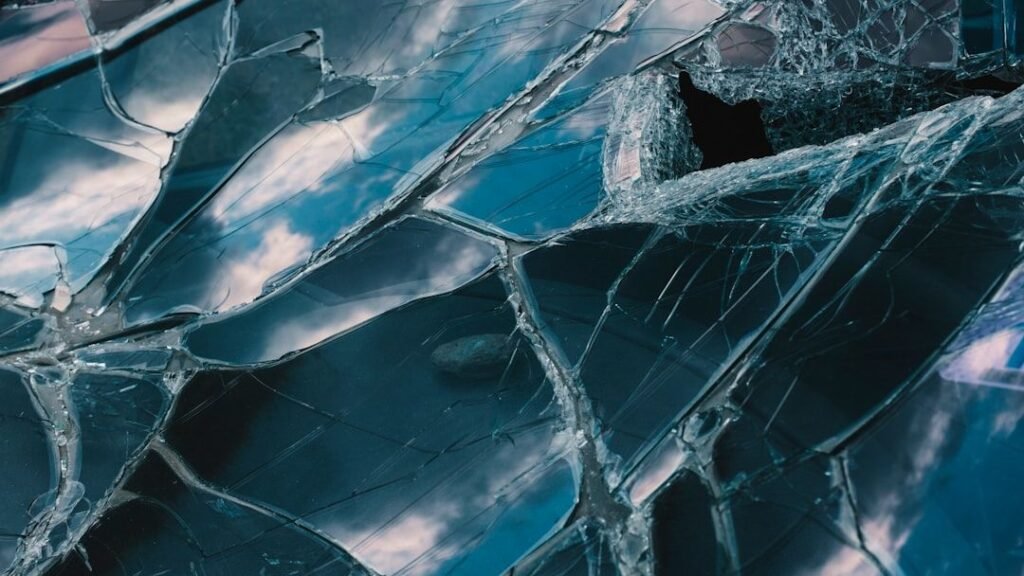
Sometimes the most important feature of a material is discovered only when you break it. An early twentieth‑century chemist reportedly dropped a glass flask that had once held a liquid plastic solution, expecting it to shatter into dangerous shards. Instead, the glass cracked but held together, its surface reinforced by a thin invisible film left behind by the dried plastic. In a normal lab, this might have been nothing more than lucky cleanup; in this case, it sparked an idea.
The realization that a transparent layer could keep glass from splintering led to the development of laminated safety glass. Over time, manufacturers refined the technique into the layered glass used in car windshields and countless other applications. When a rock hits your windshield and it stars instead of exploding inward, you’re seeing a direct descendant of that “failed” flask. It’s a quiet example of how a close call can push someone to rethink a familiar material in a completely new way.
5. Post‑it Notes: Glue That Was Too Weak to Be Useful

In a world that worships strength and durability, it’s almost funny that one of the most iconic office products came from an adhesive that was basically too weak to do its job. A researcher trying to create a powerful new glue ended up with the opposite: a sticky substance that would cling lightly but could be peeled off easily without leaving a mess. At first, it seemed like a total failure. Who needed a glue that didn’t really “hold” anything?
The twist came when a colleague, frustrated with paper bookmarks slipping out of his church hymnal, realized that this gentle, reusable stickiness might be perfect for notes that needed to stay put but not forever. That small leap turned a lab mistake into a global staple on desks, fridges, and screens everywhere. Those little pastel squares are a daily reminder that sometimes the thing nobody asked for ends up being exactly what the world didn’t know it needed.
6. Teflon: A Gas Cylinder That Wouldn’t Empty

If you’ve ever slid an egg across a frying pan without it gluing itself to the surface, you’ve benefited from a chemist’s confusing problem: a gas that had apparently vanished. While experimenting with refrigerant gases in the late 1930s, a researcher noticed that a cylinder that should have been full under pressure no longer released anything when opened. Instead of discarding it, he had the container cut open. Inside, the gas had transformed into a smooth, waxy solid lining the metal.
This unexpected substance turned out to be incredibly slippery, chemically resistant, and stable at high temperatures. Over time it was developed into the nonstick coating used on cookware, as well as in aerospace, electronics, and countless industrial applications. The path wasn’t flawless, especially as concerns later arose about some chemicals used in older manufacturing processes, but the core discovery still came from noticing that something “wrong” had happened and digging into why. A stubborn gas cylinder quietly became the start of a material that changed how we cook and build.
When you look at these stories side by side, a pattern appears: the accidents weren’t enough on their own. What really mattered was that someone paused, got curious, and investigated instead of tossing the mistake aside. That mix of luck and attention is a powerful combination in a world where we’re usually rushing past little anomalies and annoyances. Who knows what life‑changing idea might be hiding in the next thing you’re tempted to label as a failure and throw away?