
Some plants don’t just survive; they cheat, steal, trap, explode, and even “play dead” to make it through another season. When you start looking closely, the plant world stops being a quiet green backdrop and starts to feel more like a strange sci‑fi universe hiding in plain sight. A few of these species are so extreme that if they showed up in a movie, people would roll their eyes and say the writers went too far.
Yet every one of these bizarre strategies is real, tested by millions of years of evolution, and still unfolding right now in deserts, swamps, mountaintops, and maybe even on your windowsill. As someone who once killed a cactus by overwatering it, I still find it almost unsettling how ruthlessly smart some plants can be. Let’s dive into ten of the strangest survivors on Earth and see how far life will go when the only rule is: stay alive, no matter what.
1. Corpse Flower (Amorphophallus titanum): Surviving With the Stench of Death
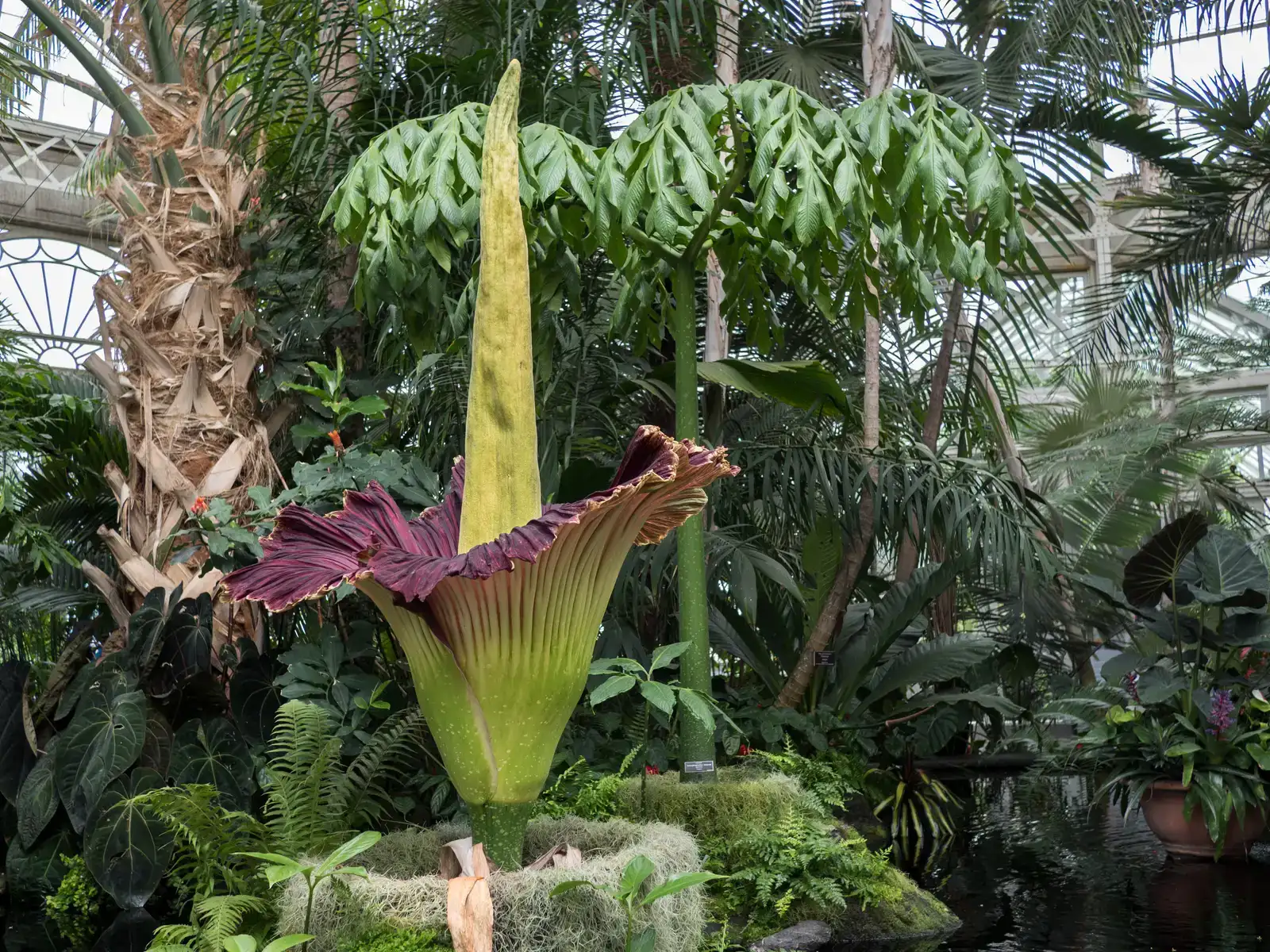
The corpse flower is infamous for smelling like a rotting animal, but that disgusting odor is one of the cleverest survival tools in the plant world. Native to the rainforests of Sumatra, it has to attract pollinators in a dense jungle where everyone is competing for attention. Instead of sweet floral perfume, it mimics the smell of a fresh carcass, drawing in carrion-loving insects like flies and beetles that usually feed and breed on dead animals.
To complete the illusion, the plant even heats itself up, making the central spike slightly warmer than the surrounding air, just like real decomposing flesh. This self-warming trick helps spread the smell farther and fools insects into thinking they’ve hit the jackpot. Since blooming takes so much energy, a single plant may wait years or even over a decade between each massive bloom, hoarding resources in its huge underground tuber. When it finally flowers, it has one frantic window to reproduce before the stink fades and the jungle moves on.
2. Welwitschia (Welwitschia mirabilis): The Desert Relic That Refuses to Die
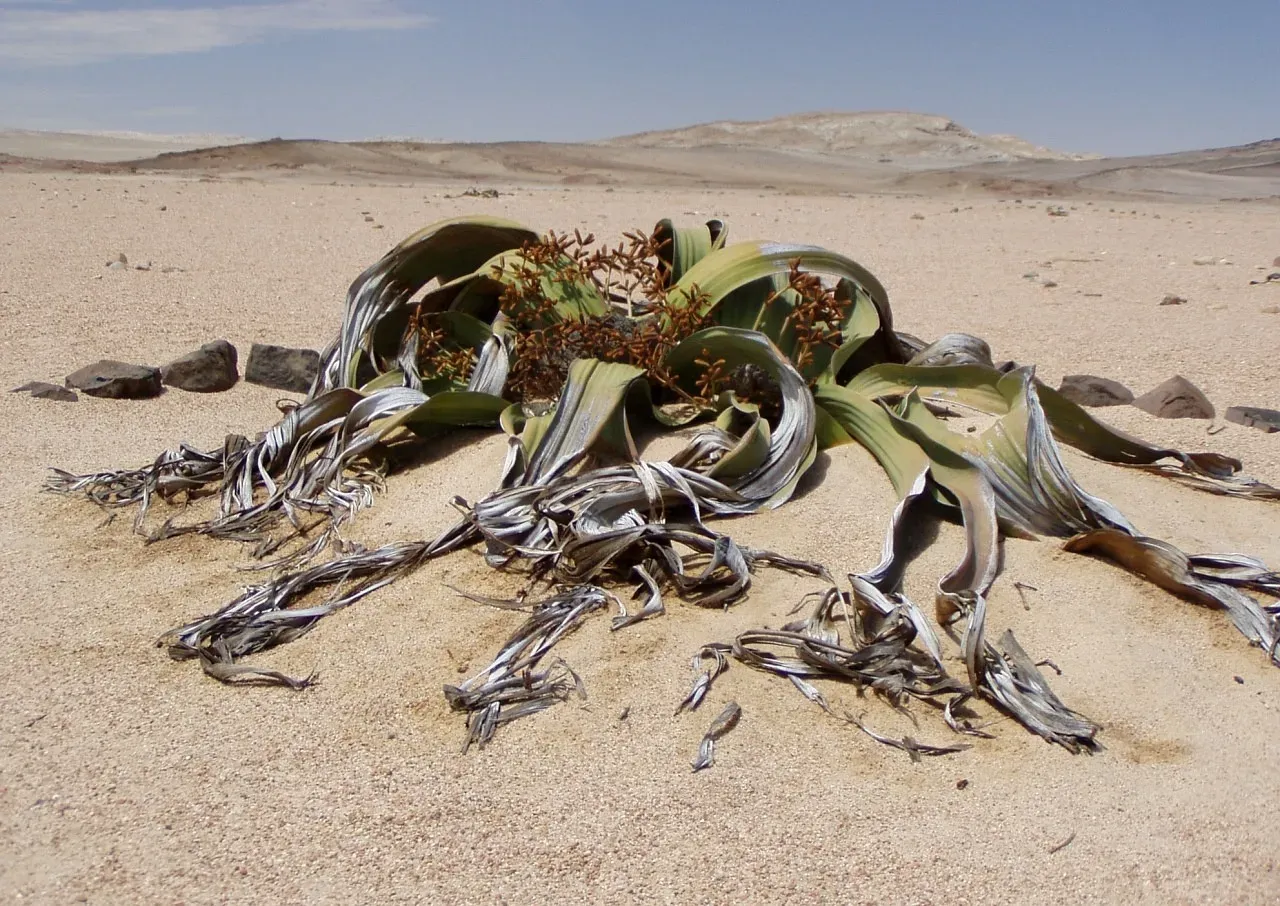
Welwitschia looks like a pile of tattered, melted plastic dumped in the Namib Desert, but it’s very much alive and absurdly persistent. This plant grows only two leaves in its entire lifetime, and those two leaves never stop growing, becoming long ribbons that twist, split, and shred in the harsh desert winds. Some individual plants are believed to be many hundreds of years old, with a few possibly pushing close to a millennium.
To survive in one of the driest places on Earth, Welwitschia pulls water from deep underground with its roots and also absorbs moisture from coastal fog that rolls in from the Atlantic. Its thick leaves reduce water loss, and it grows incredibly slowly, almost like it’s operating in slow motion compared to other plants. Rather than trying to escape the desert, it has become a specialist in enduring it, turning extreme stability and patience into its main survival strategy.
3. Resurrection Plants (Selaginella and Others): Playing Dead to Beat the Drought
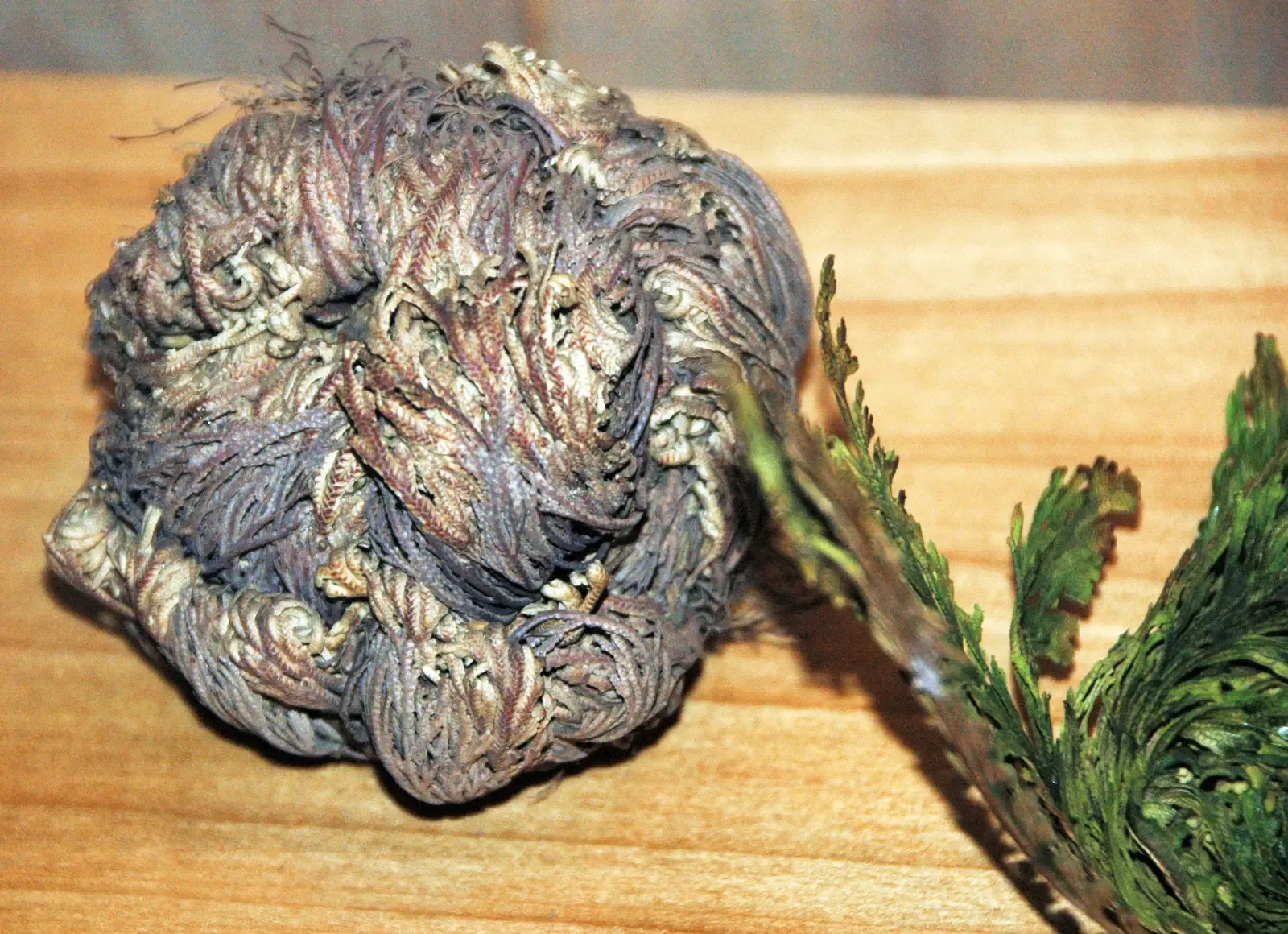
Resurrection plants, often sold as “rose of Jericho” or “dinosaur plants,” look like something already dead and forgotten when they’re dry. In drought, their stems curl inward into a tight ball, turning brittle and brown, as if they’ve completely given up. But when water returns, they unfurl within hours or days, turning green again and resuming photosynthesis like nothing happened.
The secret lies in their cellular structure and special sugars that protect tissues from damage when they completely dry out. Many plants would be permanently destroyed by that level of dehydration, but resurrection plants stabilize their cells in a kind of suspended animation. This strategy is perfect for desert and semi-desert environments where it might not rain for long stretches, and trying to stay “active” would be suicidal. Instead of resisting dryness, they embrace it, essentially pausing life until conditions improve.
4. Venus Flytrap (Dionaea muscipula): The Plant That Counts to Catch Its Prey
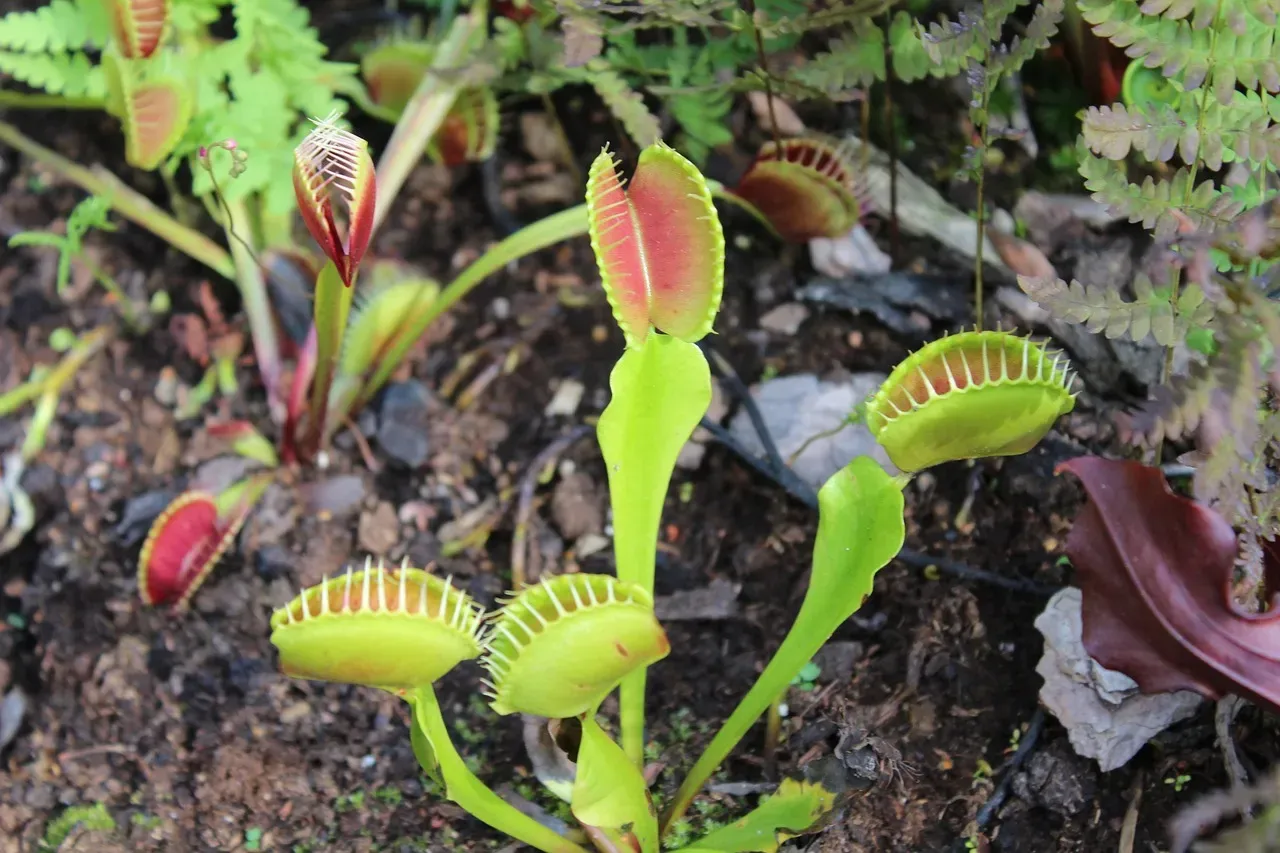
The Venus flytrap has become the poster child for carnivorous plants, but the weirdest part isn’t that it eats insects; it’s how precisely it does it. Each trap is lined with tiny trigger hairs, and the plant “waits” for two touches within a short time window before snapping shut. That means it’s not reacting blindly to every raindrop or bit of wind; it’s effectively counting touches to decide if the effort of closing is worth it.
After the trap closes, further movements by the struggling insect stimulate more signals, telling the plant it has captured something alive and juicy. Then it seals the trap completely and releases digestive fluids to break down the prey, absorbing precious nitrogen and other nutrients that are scarce in the poor, acidic soils where it lives. Once digestion is over, the trap reopens, leaving behind only the indigestible exoskeleton like an empty shell. It’s a slow-motion predator, using patience and minimal energy to make sure every bite counts.
5. Rafflesia (Rafflesia arnoldii): The Parasitic Giant With No Leaves, No Roots, No Shame
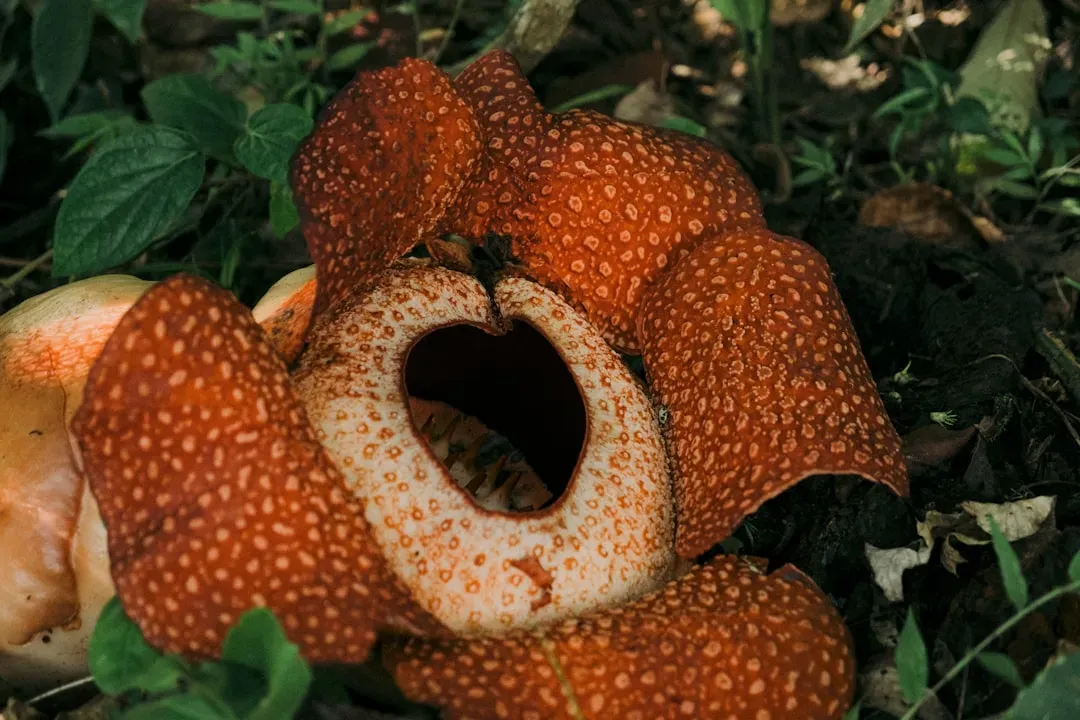
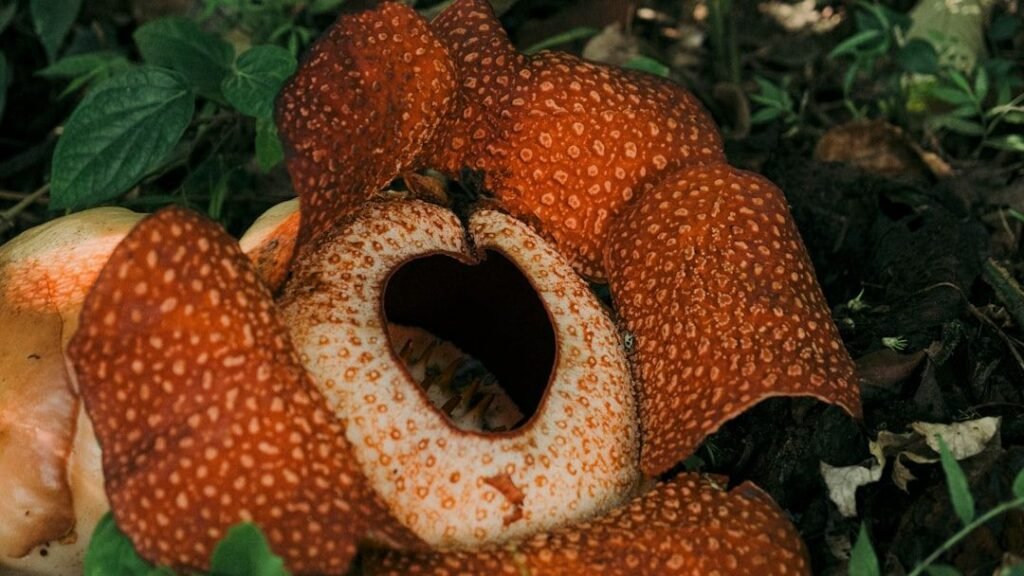
Rafflesia is one of the strangest plants on Earth because, at first glance, it hardly looks like a plant at all. It has no leaves, no stems, and no roots of its own; instead, it lives entirely inside the tissue of a host vine, stealing water and nutrients. For most of its life, it is basically invisible, a network of threads buried in another plant, doing nothing flashy at all.
Then, seemingly out of nowhere, it bursts through the host and forms the largest individual flower known, which can span more than a meter across and weigh as much as a small dog. Like the corpse flower, it smells like rotten meat to attract carrion-loving insects that will spread its pollen from one plant to another. This strategy is brutally efficient: why waste energy growing a full plant body when you can hijack another and only invest when it’s time to reproduce? It’s the botanical equivalent of a long-con artist quietly draining its host, then throwing one massive, foul-smelling party.
6. Sandbox Tree (Hura crepitans): The Exploding Seed Bomb Specialist
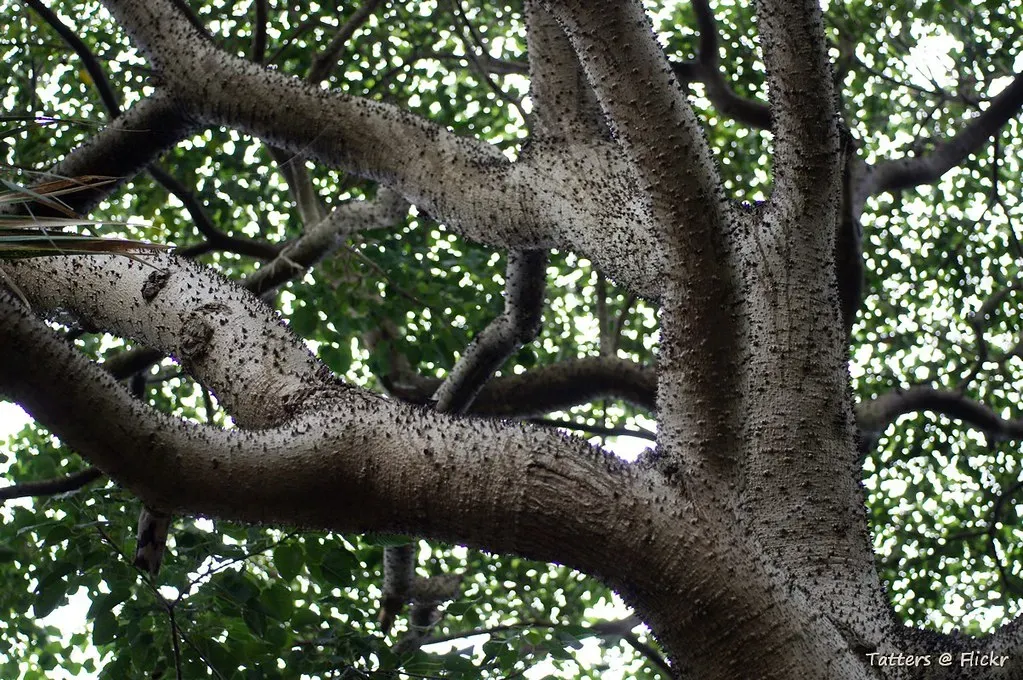
The sandbox tree looks innocent enough at first glance, but it has one of the most violent seed dispersal systems in the plant kingdom. Its pumpkin-like seed pods dry out under the hot tropical sun and build tension like a coiled spring. When that tension finally releases, the pod explodes with a loud crack, flinging seeds at high speeds that can seriously injure anything unlucky enough to be close.
This explosive strategy allows the plant to spread its offspring far from the parent tree without relying on animals or wind alone. The rest of the tree is just as unfriendly: its sap is poisonous and can cause severe skin irritation, and the trunk is covered with sharp spines. It’s as if this tree has decided the best defense is an aggressive offense, making itself a nightmare to touch and turning reproduction into controlled shrapnel. In dense forests where space is competitive, a little controlled chaos goes a long way.
7. Dodder (Cuscuta): The Vampire Vine That Sniffs Out Its Victims
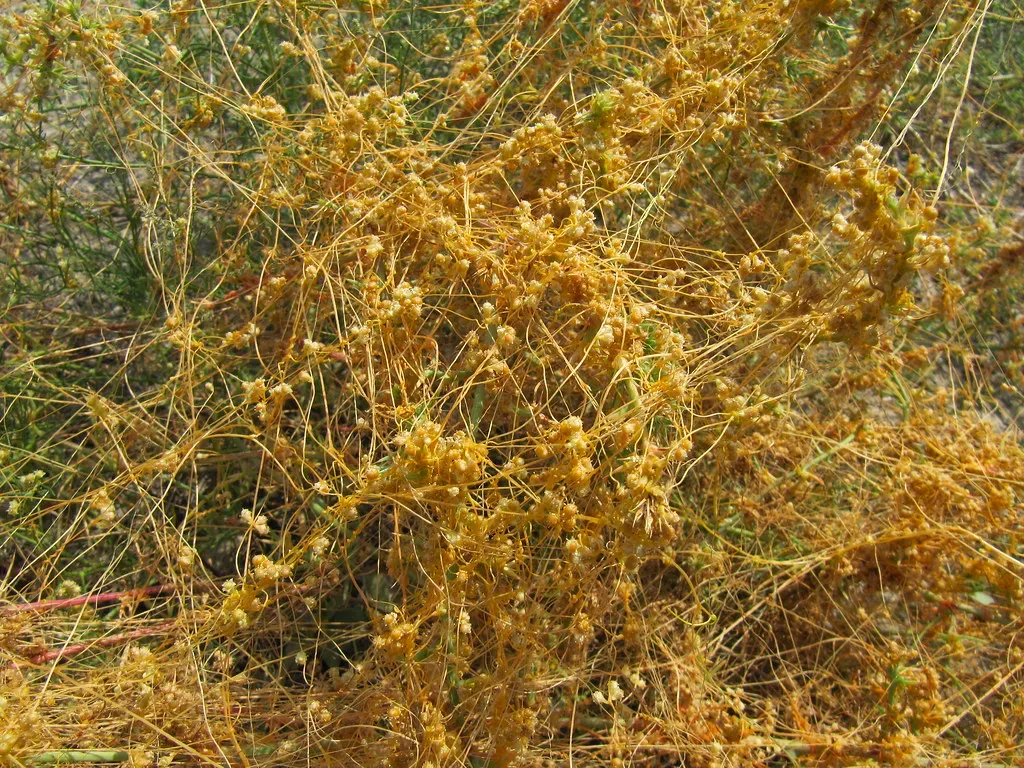
Dodder is a parasitic vine that takes freeloading to a creepy new level. When its seeds germinate, the tiny seedlings don’t waste time growing roots and leaves like normal plants. Instead, they “sniff” the air for chemical scents released by nearby hosts, such as tomatoes, clover, or other herbaceous plants, and grow toward the most promising target.
Once dodder reaches a host, it wraps around the stems and inserts specialized structures called haustoria into the victim’s tissue, siphoning off water and nutrients. After it’s securely attached, it often abandons its own root entirely, living purely as a thief riding on someone else’s hard work. Some studies have shown that dodder can even detect differences between potential hosts and choose the better-quality one, like a picky diner scanning a menu. It survives not by standing on its own, but by turning itself into a living, spreading tap.
8. Lithops (Living Stones): Disappearing in Plain Sight
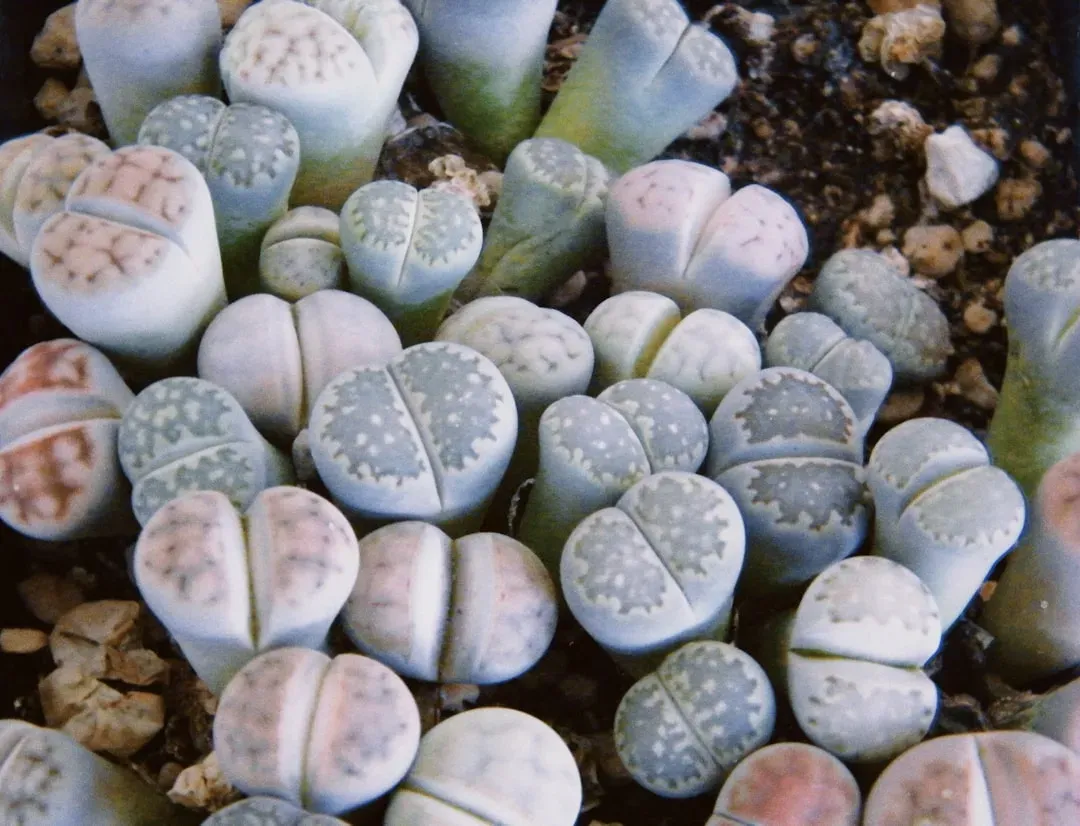
Lithops, often called living stones, survive by pretending not to be plants at all. Native to rocky, arid regions of southern Africa, they are shaped and colored almost exactly like the small pebbles that surround them. When you see them growing in the wild, it’s genuinely hard to pick them out from the actual stones unless they’re flowering.
Their leaves are thick and fused into a pair of fleshy lobes, with most of the plant body hidden underground to reduce water loss and sun damage. A translucent window on the top lets sunlight penetrate into the buried tissues where most of the photosynthesis happens, like a skylight for a plant that refuses to stick its head out. By blending in so completely, lithops avoid being eaten by herbivores looking for tender green snacks in a harsh environment. Camouflage, more than toughness or speed, becomes their main shield against extinction.
9. Sensitive Plant (Mimosa pudica): The Drama Queen That Plays Defense
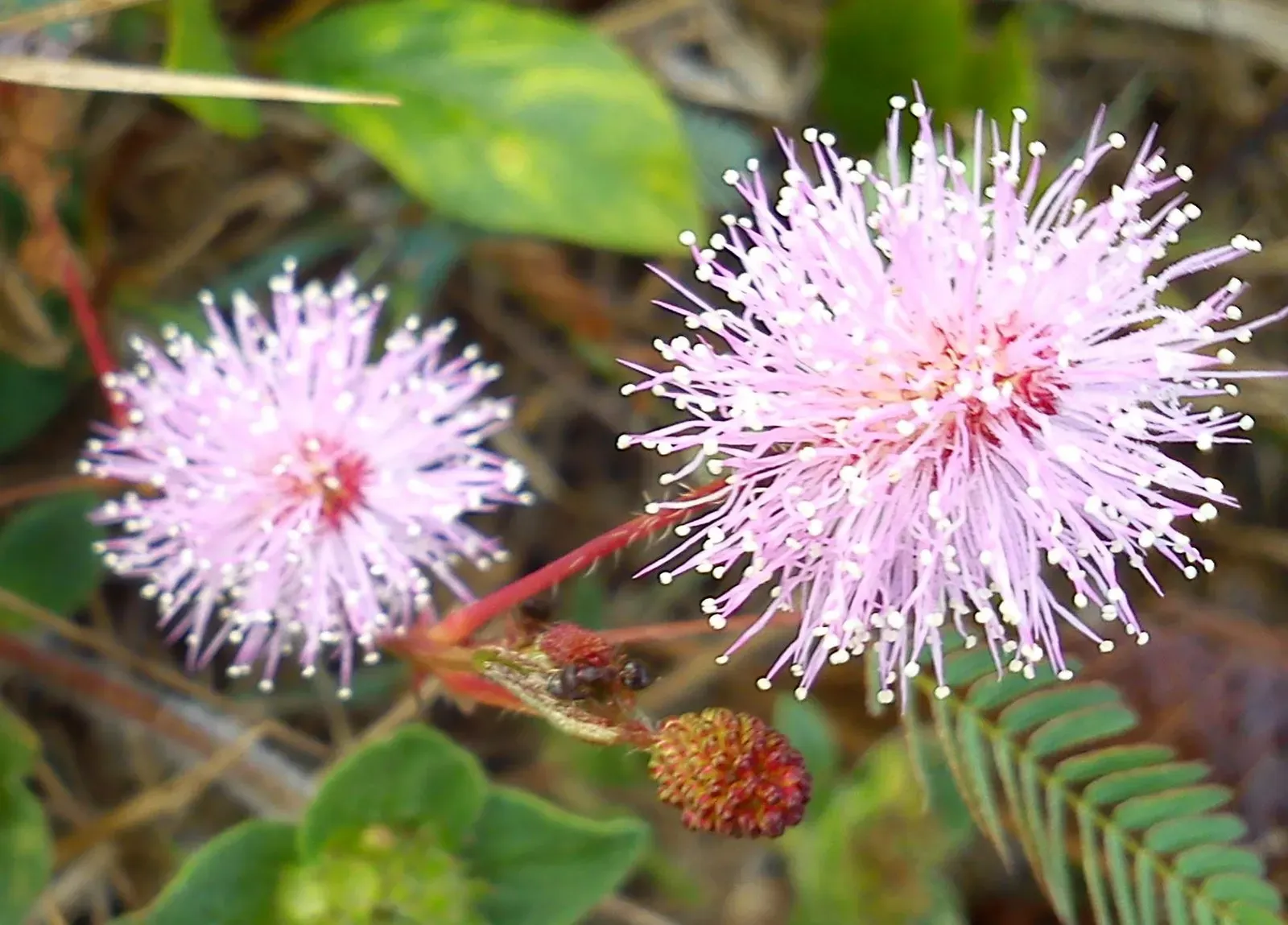
The sensitive plant is famous for collapsing its leaves the moment you touch it, like a shy performer ducking behind the curtain. When its leaflets are stimulated by touch, heat, or even vibration, they rapidly fold up and the entire leaf droops. The movement happens much faster than most plant responses, making it feel strangely alive in a way people don’t expect from something rooted to the ground.
This dramatic reaction is more than just a party trick; it likely helps deter herbivores by making the plant look wilted, less appetizing, or suddenly unfamiliar. Closing up may also reduce the surface area exposed to potential insect damage or sudden environmental stress. Inside the plant, shifts in water pressure within cells drive the movement, like tiny hydraulic systems reacting to a trigger. It’s an energy-intensive response, so the plant doesn’t do it for fun; it’s calculated risk management in a dangerous world.
10. Coconut Palm (Cocos nucifera): The Ocean Voyager With a Built-In Life Raft
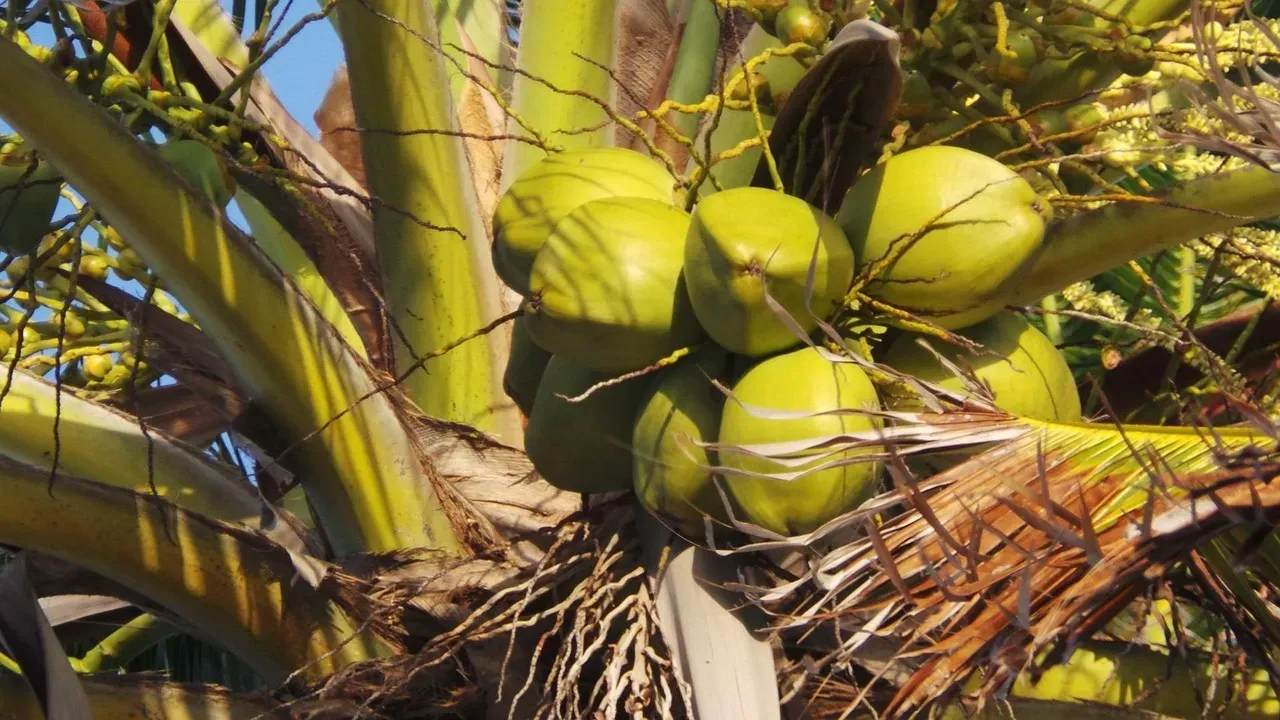
The coconut palm has turned its seeds into long-distance travelers, built to survive journeys across open oceans. Each coconut is a tough, fibrous package with an air-filled husk and a hard inner shell that protects the embryo and stores nutrient-rich “meat” and water. This design makes the seed buoyant and surprisingly resistant to saltwater, allowing it to drift for weeks or even months without losing viability.
When a coconut finally washes up on a suitable beach, it can sprout right where it lands and grow into a new palm tree, effectively colonizing coastlines and islands far from the parent plant. This strategy has helped coconut palms spread across tropical shores around the world, following currents instead of relying on animals or wind alone. It’s like sending thousands of tiny, self-contained survival capsules out into the sea and trusting that enough of them will find land. In terms of sheer reach, few plants have mastered global expansion as elegantly as the humble coconut.
The Strange Genius of Staying Alive
From corpse flowers that reek of death to vampire vines that sniff out victims, these plants show that survival is often stranger than fiction. Instead of just growing quietly and hoping for the best, they manipulate insects, hijack other plants, fling seeds like bullets, play dead, or sail across oceans. Each strategy looks bizarre on the surface, but underneath the weirdness is a precise solution to a brutal problem: how to stay alive and reproduce when the world is not on your side.
Once you see how far these species are willing to go, a simple houseplant suddenly feels a lot less boring, and a walk through any garden or forest becomes a search for hidden strategies. The next time you pass a seemingly ordinary plant, you might wonder what quiet, ruthless tricks it’s using to survive. Which of these bizarre strategies surprised you the most?