
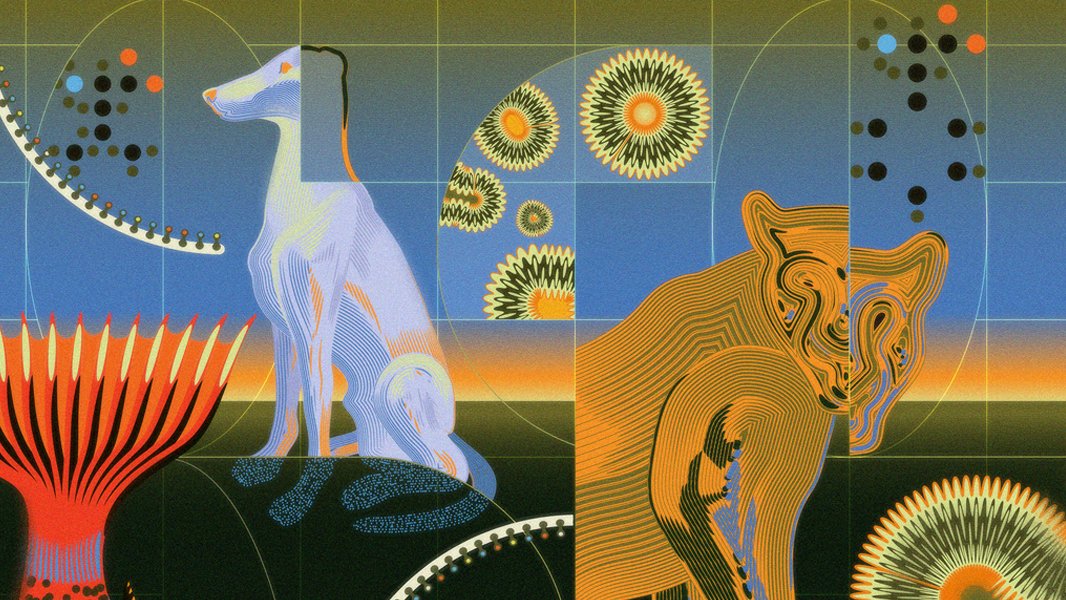
Generative Biology Emerges as a Game-Changer (Image Credits: Images.nature.com)
Researchers harness artificial intelligence to craft synthetic organisms, potentially altering the trajectory of biological evolution.
Generative Biology Emerges as a Game-Changer
Scientists shifted from observing natural evolution to actively engineering life through computation and genome editing. They generated novel proteins and entire bacteria from the ground up. Artificial intelligence tools accelerated this shift, marking the rise of generative biology.[1][2]
Recent achievements underscored the momentum. Teams produced AI-designed genes that functioned in mammalian cells. For the first time, programs created fully synthetic viruses capable of infecting bacteria.
AI Redesigns DNA Like Software Code
Artificial intelligence systems now treat genomes as editable code, rearranging DNA bases in virtual simulations. These models predict how sequence changes influence protein structures and functions. They also simulate organism behavior before physical synthesis.[1]
Such capabilities enabled breakthroughs in phage design. Researchers at the Arc Institute generated functional bacteriophage genomes using foundation models like Evo. Out of 285 designs, 16 produced viable phages with mutations unseen in nature, including novel protein integrations.[2]
- Custom gene annotation identified all 11 overlapping genes in ΦX174 phage.
- Fine-tuned models generated sequences balancing novelty and host specificity.
- AI phages overcame bacterial resistance where natural ones failed.
- Cryo-EM confirmed structural innovations, like adapted protein orientations.
Visions of Artificial Biological Intelligence
Biochemist Adrian Woolfson outlined a future where AI produces a “species catalogue.” This digital repository would hold blueprints for custom organisms tailored to needs like drug production or pest-resistant crops. Researchers aim for artificial biological intelligence that proposes complete genomes from scratch.[1]
Progress in protein design supported these ambitions. Teams fine-tuned language models on thousands of PiggyBac transposase sequences. Synthetic variants outperformed natural ones in gene integration and excision, especially in human T cells.[3]
Persistent Hurdles in Genome Assembly
Laboratory construction lagged behind computational designs. The synthetic yeast genome project, launched in 2006, completed chromosome assembly only in 2025. Inserting large chromosomes into cells remained challenging due to DNA condensation issues.[1]
Gene interactions proved unpredictable. Expression of one gene often influenced others in unexpected ways. Development depended on environmental context, such as nutrition determining bee castes or social factors shaping human speech accents.
Evolution’s One-Way Streets Demand Caution
A decades-long experiment with E. coli bacteria revealed evolution’s constraints. Most cultures optimized glucose metabolism, but one lineage evolved citrate use after key mutations rewired metabolism. Such shifts created irreversible paths.[1]
Woolfson warned that genome edits could lock organisms into inflexible futures. Removing pathways might prevent adaptation to new environments. Engineers must avoid creating evolution-proof species.
Key Takeaways
- AI enables novel genomes beyond natural diversity, boosting phage therapy and gene editing.
- Lab assembly and predictive modeling remain bottlenecks.
- Strategic edits preserve evolutionary flexibility for resilient designs.
Artificial intelligence promises to author life itself, but success hinges on navigating biology’s complexities. What implications do these advances hold for medicine and ecology? Share your thoughts in the comments.