
Science has a habit of drawing firm lines in the sand, only for the universe to quietly step right over them. For decades, physicists operated under the confident assumption that certain quantum states simply could not exist under specific conditions. Those assumptions now need to be rewritten.
In early 2026, researchers confirmed something that shocked the physics community: a quantum state of matter emerged exactly where theory insisted it was forbidden. It showed up without invitation, bending the rules that have governed our understanding of electrons, topology, and the very nature of matter itself. If you think quantum physics was already mind-bending, buckle up.
The Discovery That Rewrote the Rules
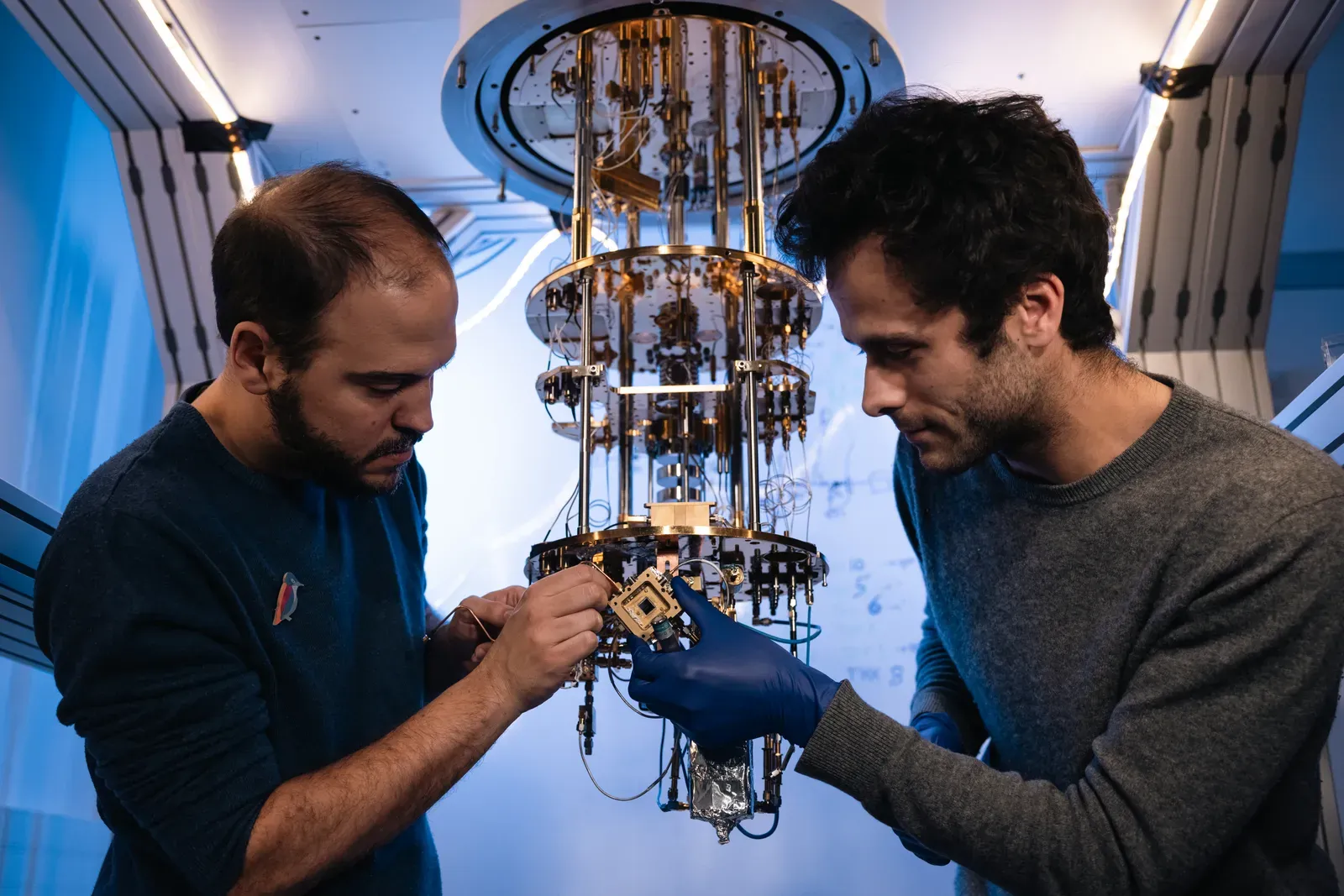
A quantum state of matter appeared in a material where physicists thought it would be impossible, forcing a rethink on the conditions that govern the behaviors of electrons in certain materials. That is not a small thing. That is the scientific equivalent of watching a fire burn underwater and having to accept that the rule book was wrong.
Scientists uncovered a previously unthinkable state of matter that challenges decades of assumptions about how electrons behave, opening novel possibilities for quantum computing, sensing, and advanced materials. The discovery was achieved by researchers at Vienna University of Technology (TU Wien) in Austria, who worked together with theorists at Rice University in Texas. Two continents, one groundbreaking result.
What Is the “Impossible” State and Why Does It Matter?
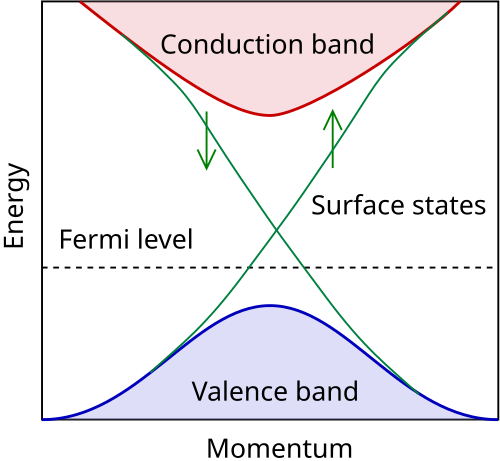
The state, described as a topological semimetal phase, was theoretically predicted to appear at low temperatures in a material composed of cerium, ruthenium, and tin, before experiments verified its existence. Think of it like a ghost that everyone said couldn’t haunt a particular house, and then it showed up anyway, rattling every door.
It showed that topological states can form even when electrons no longer behave like well-defined particles, contrary to long-held scientific beliefs. Topology, which is a concept borrowed from mathematics, describes properties that remain unchanged despite distortions. In physics, topological materials are prized because their electronic behavior is unusually robust, making them attractive for low-power electronics and quantum technologies. The implications stretch far beyond the lab bench.
The Crystal at the Heart of It All

Electric current suddenly flows sideways without any magnetic field, even though the electrons inside no longer act like normal particles. Less than one degree above absolute zero, the new study found a sideways voltage in CeRu4Sn6, a crystal made of cerium, ruthenium, and tin that belongs to a class of strongly interacting metals known as heavy-fermion materials. A single exotic crystal, cooled to the edge of nothingness, is where the impossible became real.
Near absolute zero, the material exhibits a specific type of quantum-critical behavior, and the material fluctuates between two different states, as if it cannot decide which one it wants to adopt. In this fluctuating regime, the quasiparticle picture is thought to lose its meaning. Honestly, that description gives the whole thing a kind of haunted, restless energy. The material is, in a sense, perpetually in the middle of making a decision it never quite makes.
When Electrons Stop Playing by the Rules
Quantum physics tells us that particles behave like waves and, therefore, their position in space is unknown. Yet in many situations, it still works remarkably well to think of particles in a classical way, as tiny objects that move from place to place with a certain velocity. When physicists describe how electric current flows through metals, for example, they imagine electrons racing through the material and being accelerated or deflected by electromagnetic fields. That is the comfortable, familiar picture. This discovery tears it apart.
A quantum material exhibiting quantum-critical behavior, where the particle-like description of electrons fails, was found to display robust topological states, evidenced by a spontaneous Hall effect at low temperatures. This demonstrates that topological properties can exist without well-defined quasiparticles, indicating that the definition of topological states should be generalized beyond the conventional particle picture. In simpler terms: the rulebook for what makes a topological state possible needs a complete revision.
The Shocking Hall Effect Without a Magnetic Field
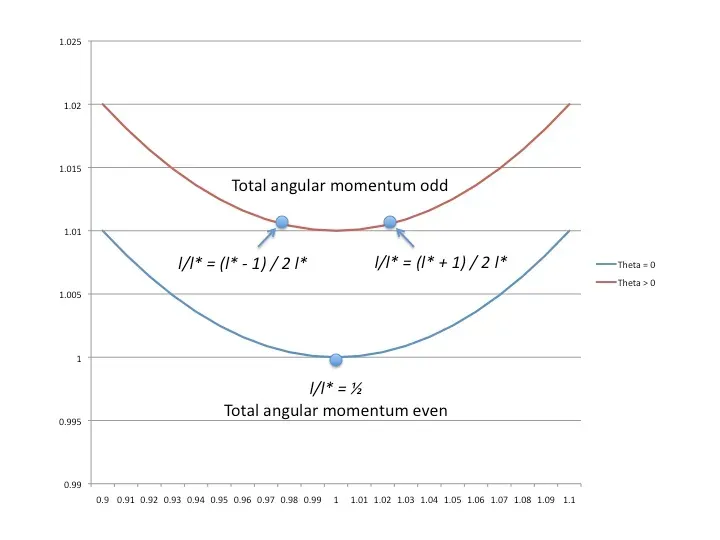
When the researchers chilled CeRu4Sn6 to near absolute zero and applied an electric charge, they observed a phenomenon known as the Hall effect in the electrons carrying current through the material. Essentially, the current bent sideways. According to the researchers, this was a clear signal of topological effects. The Hall effect usually requires a magnetic field to deflect the electrons, but no magnetic field was present in this case. Instead, the path of the current was being shaped by something inherent in the material.
What’s more, the scientists found that where the material was most unstable in terms of its electron patterns, that’s where the topological effect was strongest; the quantum critical fluctuations actually stabilized the newly discovered phase. It’s a beautiful paradox. Instability, it turns out, is exactly what holds this strange new state together. That is the kind of twist that makes physics endlessly fascinating.
A New Wave of Quantum States Being Discovered
This discovery from TU Wien and Rice University did not arrive in isolation. Simultaneously, other teams around the world have been pulling back curtains on equally startling new quantum phases. Researchers at the University of California, Irvine discovered a new state of quantum matter existing within a material that the team reports could lead to a new era of self-charging computers and ones capable of withstanding the challenges of deep space travel.
A UC Irvine team uncovered a never-before-seen quantum phase formed when electrons and holes pair up and spin in unison, creating a glowing, liquid-like state of matter. Separately, at the edge of two exotic materials, scientists discovered a new state of matter called a “quantum liquid crystal” that behaves unlike anything previously seen. When a conductive Weyl semimetal and a magnetic spin ice meet under a powerful magnetic field, strange and exciting quantum behavior emerges, with electrons flowing in odd directions and breaking traditional symmetry. We are living through an extraordinary period of discovery.
What This Means for the Future of Technology

Scientists have discovered a new quantum state of matter that connects two significant areas of physics, potentially leading to advancements in computing, sensing, and materials science. Those are not small domains. Computing and sensing underpin nearly every piece of modern technology you rely on daily, from your smartphone to medical diagnostics to space exploration hardware.
The relationship between quantum criticality and topology could transform quantum technology. Researchers could use it to develop highly sensitive and durable devices, with qualities vital to computing, sensing, and low-power electronics. Researchers think that this hybrid state could be very valuable for managing quantum behavior; both effects are associated with superconductivity and extreme sensitivity to external signals. I think it is fair to say this isn’t just a physics story. It’s a story about the next generation of how humans build things and solve problems.
Conclusion: The Universe Still Has Surprises Left
Here’s the thing about physics: every time scientists think they’ve mapped the territory, the universe reveals a room no one knew existed. This discovery provides a road map for identifying or designing new materials that incorporate these quantum properties, with the research team’s approach suggesting looking for materials situated at a quantum critical point that also hold potential for topological structures.
The state appeared only near absolute zero, so practical hardware will depend on finding similar behavior at warmer temperatures. A single material has forced physicists to separate topology from the particle picture, and that change opens a clearer theory. Future work will test other quantum-critical metals and determine whether pressure, strain, or chemistry can bring the same response to practical temperatures. The road ahead is long, but the direction is now clearer than ever.
Science just proved that “impossible” is often just a placeholder for “not yet discovered.” You have to wonder: how many other so-called impossibilities are quietly waiting to be found? What do you think about it? Tell us in the comments.