

Walk into any forest, meadow, or garden, and everything looks still. Peaceful. Silent. You might even think nothing much is happening beyond photosynthesis and the slow creep of roots through soil. But you’d be spectacularly wrong. Beneath your feet, above your head, and all around you, plants are engaged in a constant, complex, and almost unbelievably sophisticated exchange of information.
It sounds like science fiction, honestly. Yet decades of research have confirmed that the plant kingdom has developed an entire hidden language, one built on chemistry, electricity, underground fungal highways, and even acoustic signals. You just can’t hear it without knowing where to look. So let’s dive in.
The Wood-Wide Web: Nature’s Original Internet
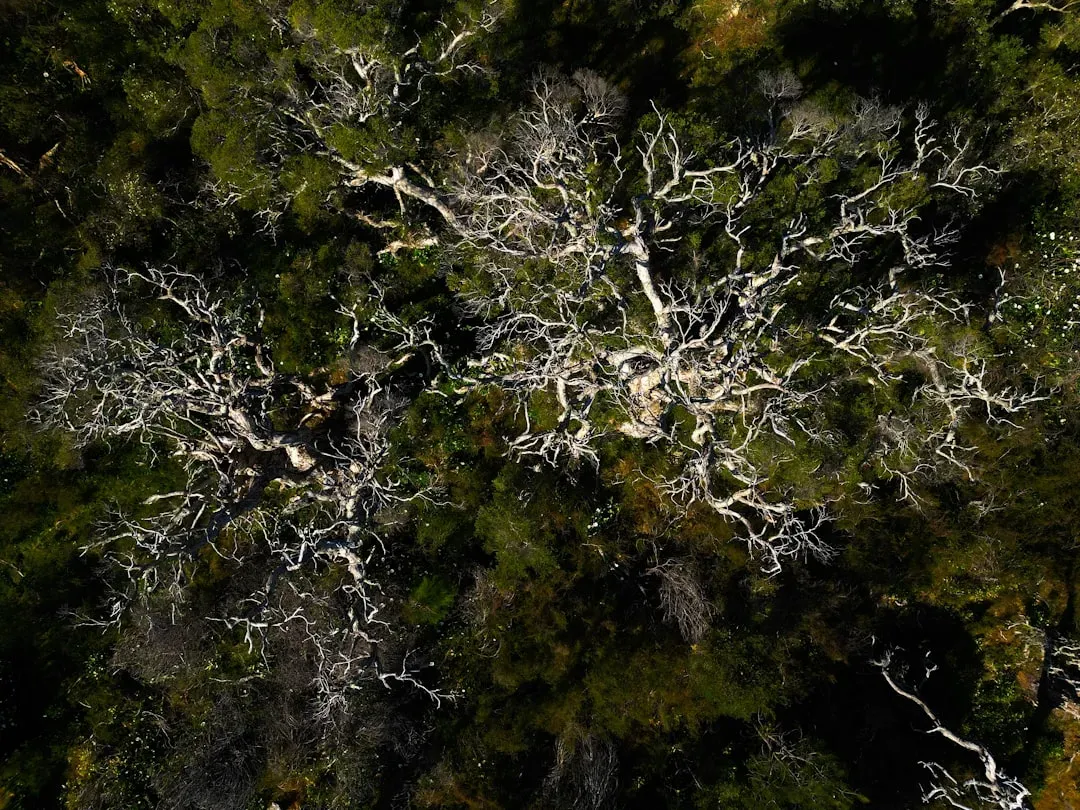
Mycorrhizal fungi can form hyphal connections between the root systems of two or more host plants, creating what are popularly referred to as “common mycorrhizal networks,” or CMNs, below ground between multiple plants. Think of it like a biological version of the internet, except this one was operating millions of years before humans ever thought to connect computers. It is breathtaking in its scope and elegance.
Mycelium composes what’s called a mycorrhizal network, which connects individual plants together to transfer water, nitrogen, carbon, and other minerals. This network is created by the hyphae of mycorrhizal fungi joining with plant roots, and it connects individual plants together. What looks like a standalone tree in a forest is almost certainly a node in a much larger living network.
Mycorrhizal networks were discovered in 1997 by Suzanne Simard, professor of forest ecology at the University of British Columbia in Canada. Her field studies revealed that trees are linked to neighboring trees by an underground network of fungi that resembles the neural networks in the brain. That parallel to the human brain is not just poetic. It’s scientifically provocative.
These mycorrhizal networks are effectively an information highway, with recent studies demonstrating the exchange of nutritional resources, defense signals, and allelochemicals. Sensing and responding to networked signals elicits complex behavioral responses in plants, and this ability to communicate is a foundational process in forest ecosystems.
Volatile Organic Compounds: Plants That Talk Through Scent

Here’s something that might genuinely surprise you. That fresh, green smell when you cut grass? It is not just a pleasant odor. When grass is cut, it releases gaseous chemicals, a fragrant distress signal. You have been smelling plant communication this whole time without ever realizing it.
Plants have developed a communication system to transmit information based on volatile organic compounds, or VOCs, as a way to adjust their physiological state in response to, or in preparation for, threats to their well-being and survival. Plants emit VOCs as a means to warn other plants of impending danger, and nearby plants exposed to the induced VOCs prepare their own defense weapons in response.
Plants can “eavesdrop” on volatile chemical cues from their stressed neighbors and have adapted to use these airborne signals to prepare for impending danger without having to experience the actual stress themselves. It is essentially like hearing your neighbor yell “watch out!” before the threat ever reaches your door. This phenomenon of airborne communication among plants through VOCs was first documented in 1983 and has since been observed in more than 30 different plant species.
Plants communicate through a host of volatile organic compounds that can be separated into four broad categories, each the product of distinct chemical pathways: fatty acid derivatives, phenylpropanoids and benzenoids, amino acid derivatives, and terpenoids. There is increasing evidence that VOCs work as blends in plant-plant communication, meaning plants don’t just send a single word. They send whole sentences.
Electrical Signals: Plants Have Their Own Nervous System

If you think plants communicating through scent is strange, wait until you hear this. Plants also send electrical signals. Not metaphorically. Literally. Plants generate electrical signals similar to action potentials in animals, propagating from injury sites to other parts of the plant, and these electrical pulses coordinate responses like leaf folding, sap flow, or hormone release, helping plants react quickly to threats.
When a plant responds to stimuli, sometimes the response time is nearly instantaneous, which is much faster than chemical signals are able to travel, and current research suggests that electrical signaling may be responsible. Two major types of long-distance electrical signals have been described in plants, action potentials and variation potentials. The former are induced by voltage depolarization, exhibit a threshold potential, follow an all-or-nothing principle, and travel at constant velocity and amplitude, very much like those observed in the animal kingdom.
Research has revealed a new type of plant-to-plant aboveground direct communication involving electrical signaling detected at the surface of leaves. A foliar electrical signal induced by wounding or high light stress applied to a single dandelion leaf can be transmitted to a neighboring plant that is in direct contact with the stimulated plant, resulting in systemic photosynthetic, oxidative, molecular, and physiological changes in both plants.
In summary, electric signaling in plants is a powerful tool of communication and controls a plant’s response to dangerous stimuli like herbivory. Research from 2025 has advanced understanding of how hydraulic pressure mediates long-distance signaling in plants, with scientists proposing a unified model showing that changes in negative pressure within plant vasculature transmit both mechanical and chemical stress signals, and clarifying how plants coordinate whole-organism reactions to drought, wounding, and other stressors.
Mother Trees and the Art of Nurturing Kin

Let’s be real. When most people hear the phrase “mother tree,” they might roll their eyes just a little. It sounds like something from a children’s book. Yet the science here is genuinely astonishing. A linchpin in the tree-fungi networks are hub trees, also referred to as “mother trees,” which are the older, more seasoned trees in a forest. Typically, they have the most fungal connections, and their roots are established in deeper soil, where they can reach deeper sources of water to pass on to younger saplings.
The mother trees are able to detect distress signals from neighboring younger trees and send them the necessary substances, and this is one of the main reasons why the destruction of old-growth trees has a disproportionately negative effect on ecosystems. Cutting down an old tree is not just removing wood. It is dismantling a communication hub that younger trees depend on to survive.
Using seedlings, researchers have shown that related pairs of trees recognize the root tips of their kin, among the root tips of unrelated seedlings, and seem to favor them with carbon sent through the mycorrhizal networks. Several studies show that Paper Birch trees, being deciduous and therefore losing their foliage seasonally, cannot photosynthesize in the season when they are without foliage, and during these periods they are supported through the fungal web by Douglas fir coniferous trees that are evergreens. That right there is cross-species generosity operating underground, invisible to us, but very real.
Chemical Warfare and Defense Signaling Below Ground
The plant world is not all cooperation and nurturing. There is a fierce, chemical warfare happening just below the surface too. There are three main types of infochemicals shown to act as response-inducing signals in plants in mycorrhizal networks: allelochemicals, defensive chemicals, and nutrients. Allelopathy is the process by which plants produce secondary metabolites known as allelochemicals, which can interfere with the development of other plants or organisms.
Besides water and nourishment, mycorrhizal networks also convey biochemical signals when a plant is under the attack of a plague or parasite. This signaling triggers a behavioral response in foliar defense chemistry or pest resistance, as discovered when a plant of broad beans connected to a network is attacked by aphids, it sends a message to neighboring plants, which respond by producing methyl salicylate, to cause repellency to the attackers and attraction to aphid enemies like parasitoids.
The networks function as a communication line between plants, which send stress-induced amino acids to neighboring plants when damaged or infected, giving other plants notice to ramp up their defenses. Recent work has shown that mycorrhizal networks can transport signals produced by plants in response to herbivore and pathogen infestation to neighboring plants before they are themselves attacked, and the speed of transfer to uninfested plants is such that the mechanism is likely to have measurable benefits for plant protection. Plants, it turns out, are extraordinary early warning systems.
Root Exudates: The Quiet Conversation Happening Underground

You might think of roots as simple anchors that suck up water. Think again. Roots are remarkably sophisticated communication organs in their own right. Root exudates play a key role in plant communication, distinguishing kin from strangers. Imagine a plant being able to recognize whether a neighboring root belongs to its own offspring or to a stranger. That is precisely what research suggests.
Unstressed plants demonstrated the ability to sense and respond to stress cues emitted from the roots of osmotically stressed plants, and the unstressed plants were even able to send additional stress cues to other neighboring unstressed plants in order to relay the signal. A cascade effect of stomatal closure was observed in neighboring unstressed plants that shared their rooting system but was not observed in the unstressed plants that did not share their rooting system. Therefore, neighboring plants demonstrate the ability to sense, integrate, and respond to stress cues transmitted through roots.
Plants can also detect kin versus non-kin using volatiles and change their behavior accordingly. For example, plants will detect their offspring and help them grow instead of competing with them for resources. Plant roots synthesize and release a wide array of organic compounds including solutes and volatiles such as terpenes, and root-emitted molecules have the potential to induce physiological responses in neighboring plants either directly or indirectly by modifying the soil chemistry. The soil, it turns out, is not just dirt. It is a message board.
Hormones and Internal Signaling: How Plants Talk to Themselves
Before a plant can broadcast a warning to its neighbors, it first has to send an internal message from the point of damage to the rest of its own body. This inner communication system is just as remarkable. When there’s an urgent threat, like predation from insects, the plant must react quickly or be entirely consumed. Many plants under this kind of stress send out the hormone jasmonic acid, which tells the plant to start producing a toxin to defend itself.
The phytohormones methyl salicylate and ethylene are also volatiles involved in defense. Methyl salicylate is emitted from the locally infected region to induce systemic acquired resistance in the emitter itself and in receivers, while ethylene, known to enhance maturation of various fruits, particularly underlies plant disease response. I think what’s most staggering here is how coordinated this is. A plant under attack doesn’t just panic. It executes a sophisticated, multi-hormone response plan.
Land plants can communicate at the level of cells, tissues, and organs, using the flow of electric signals and hydraulic waves as physical signals, as well as phytohormones, reactive oxygen species, calcium, peptides, and micro-RNAs as chemical signals. Chemicals, including hormones, also travel within a plant, and a hormone called auxin is produced at the top of a plant and travels downwards, telling a sprout trying to break through the soil’s surface which way is up. That is navigation and internal communication rolled into one elegant molecular message.
What Plant Communication Means for Agriculture and Our Future
All of this is fascinating on a purely scientific level, of course. But it also carries enormous practical implications. Plant communication offers a new perspective on ecosystem management and agricultural practices. By recognizing chemical, electrical, and acoustic signals, farmers can optimize planting patterns, reduce pesticide use, and improve crop resilience.
Given that mycorrhizal-network-based plant-plant signals warn plants before the pest attack, there may be scope for developing these signals as part of the toolkit in the fight against agricultural pests and disease. Exploring the potential of natural volatile organic compounds emitted by plants as an eco-sustainable strategy to implement future smart agricultural practices is an active area of research. As airborne signals, VOCs allow quick defense signaling between distant plant organs and between plants, and VOCs can also prime the defense system of plants for enhanced resistance to an upcoming stress.
Forest management and conservation efforts benefit from understanding underground fungal networks and cross-species signaling. Coordinated responses to drought, herbivory, and pathogens suggest that protecting plant communication pathways is crucial for long-term ecosystem stability and biodiversity. In a world facing rapid climate change, this understanding is not optional. It may be essential.
Conclusion: The Language Was Always There

The natural world has never been quiet. It has been extraordinarily loud in ways that human senses simply aren’t tuned to detect. Plants, those seemingly passive and immobile residents of forest and field, have been exchanging signals, warnings, resources, and even acts of generosity since long before the first human walked the Earth.
What makes this all so humbling is that this hidden language was operating perfectly for millions of years before we ever thought to look for it. The wood-wide web was always there. The airborne chemical messages were always drifting through the air. The electrical pulses were always traveling between leaves and roots. We simply didn’t know to listen.
As science continues to decode this remarkable system, it challenges us to reconsider what we think we know about intelligence, community, and communication. Perhaps the most profound realization of all is that “community” and “cooperation” are not uniquely human inventions. The forest figured that out long before we did.
So the next time you walk through a quiet forest or step into your garden, know this: it is anything but silent. What do you think changes when you realize the natural world has been communicating all along, right beneath your feet?