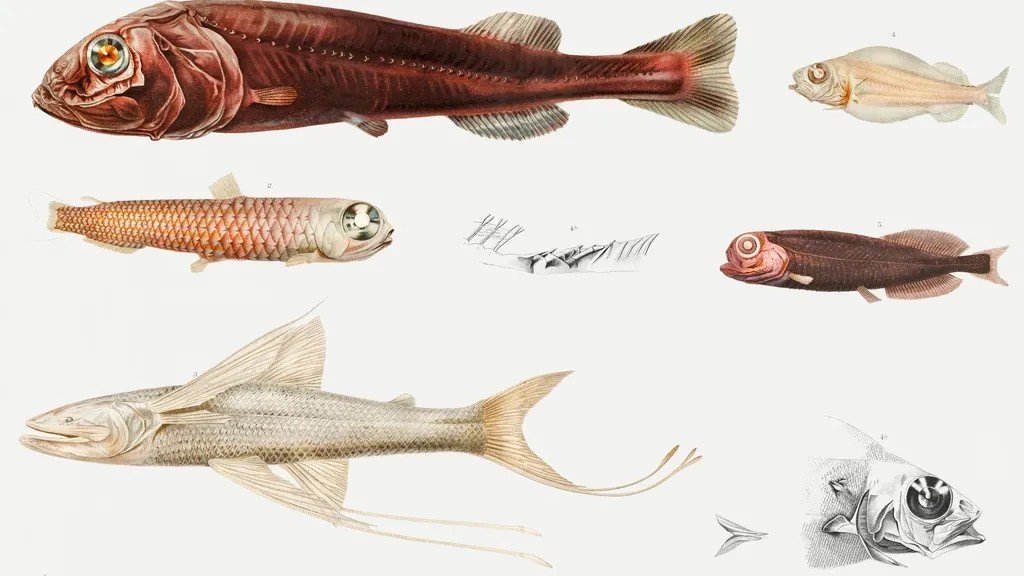

You might think you know what Earth’s wildest places look like. Dense jungles, erupting volcanoes, scorching deserts. But honestly, the strangest frontier on this entire planet isn’t on land at all. It’s somewhere beneath your feet, thousands of meters below the ocean’s surface, in a world of crushing pressure, total darkness, and near-freezing cold.
Scientists define the deep sea as encompassing all ocean waters below 656 feet. In these regions, sunlight from above begins to dwindle, giving way to a realm of complete darkness, frigid temperatures, and crushing pressure. What lives down there, you ask? Things that make your imagination look lazy. Let’s dive in.
The Frilled Shark: A Living Nightmare From 80 Million Years Ago
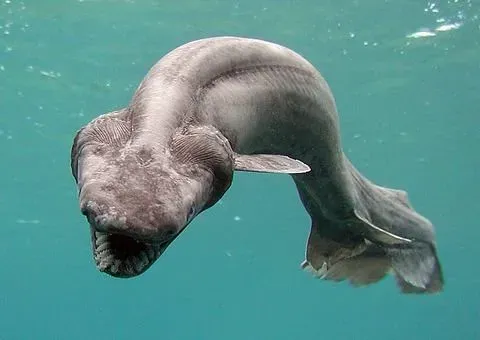
Here’s the thing about evolution: sometimes it gets it right so early that it just never bothers to change. The frilled shark is the perfect proof of that idea. Often described as a “living fossil,” the Frilled Shark has remained virtually unchanged for 80 million years, making it one of the most primitive shark species still in existence. When you see one, you’re essentially staring into prehistoric time.
With its elongated, eel-like body that can grow up to 6.6 feet in length, ruffled gills, and mouth positioned at the front of its head rather than underneath, the Frilled Shark bears little resemblance to its contemporary relatives. Its most distinctive feature is the arrangement of 300 trident-shaped teeth aligned in 25 rows, creating a trap-like mouth perfectly designed to seize soft-bodied prey like squid. I know it sounds crazy, but those teeth are so perfectly designed that nature didn’t see any reason to update the blueprint across dozens of millions of years.
The frilled shark hunts by lunging forward and swallowing prey whole, using its many backward-facing teeth arranged in rows. It can strike with incredible speed despite its sluggish appearance, capturing fish and squid that drift too close. Looks slow, hunts fast. It’s the deep sea’s ultimate deception.
The Goblin Shark: The Face That Launched a Thousand Nightmares
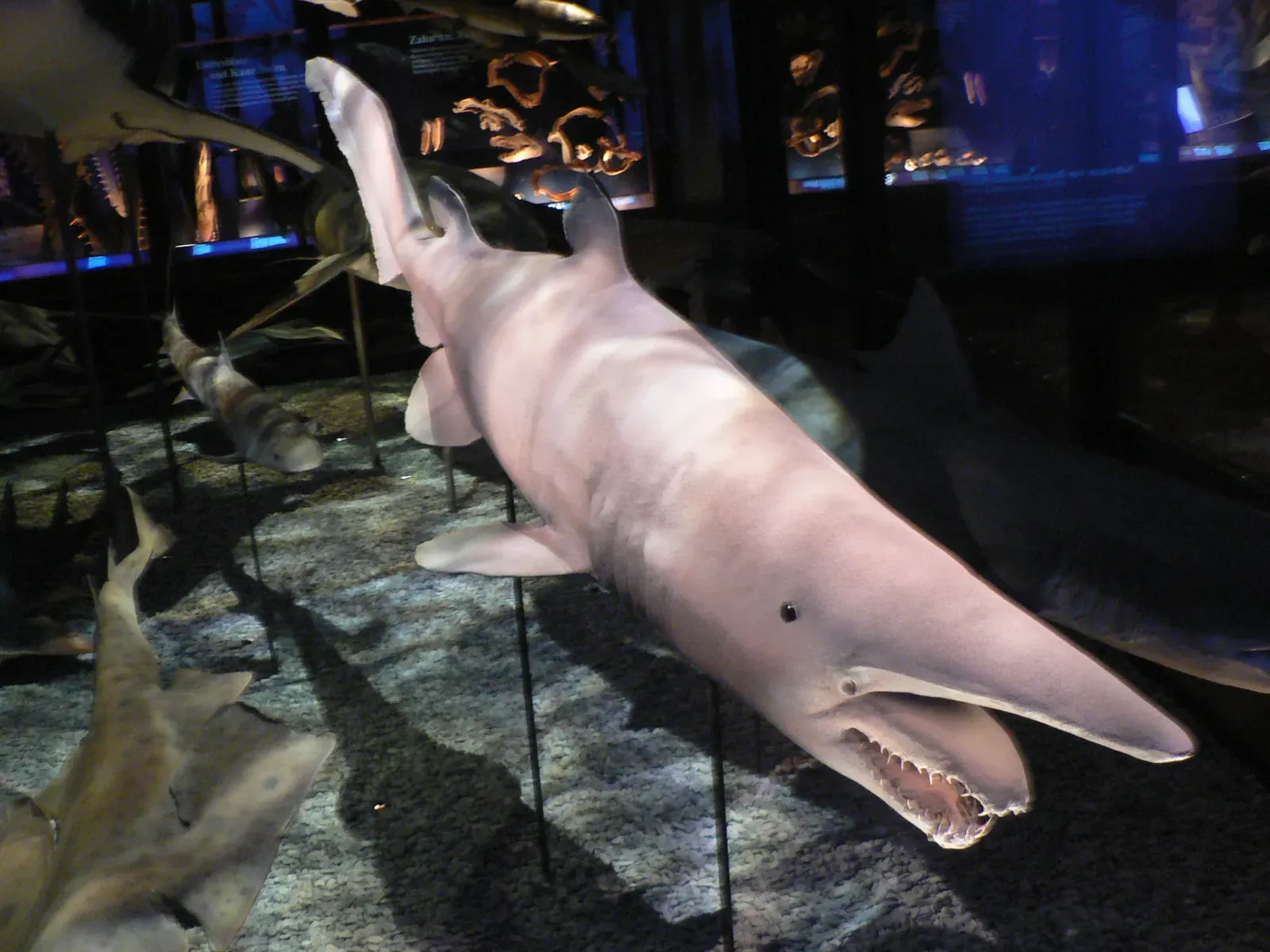
If you thought sharks were already terrifying enough, wait until you meet the goblin shark. The goblin shark is a rare species of deep-sea shark, sometimes called a “living fossil.” It is the only surviving representative of the family Mitsukurinidae, a lineage some 125 million years old. That means it was swimming around when dinosaurs were just getting started, and it still looks the part.
Its most striking feature is its jaw, a slingshot mechanism that can thrust forward faster than the blink of an eye to snatch prey. When it attacks, its entire face transforms, the jaw jutting out like a monstrous trap. Due to the depths and darkness at which it lives, the goblin shark does not rely on eyesight as much to find prey, instead likely relying on smell, sound, and special organs called ampullae of Lorenzini, which can sense electric fields produced by other animals. It’s basically a living radar dish with a spring-loaded face.
Very few live goblin sharks have been observed in the wild, and most of what is known about these mysterious sharks comes from individuals caught accidentally as bycatch in deepwater trawling nets, longlines, or deep-set gill nets. The first-ever live sighting of a goblin shark in the Canary Islands occurred in 2026, proving the species is more than just a scary story. So yes, in 2026, we are still learning the very basics about this ancient creature.
The Giant Isopod: Your Backyard Roly-Poly’s Terrifying Ocean Cousin
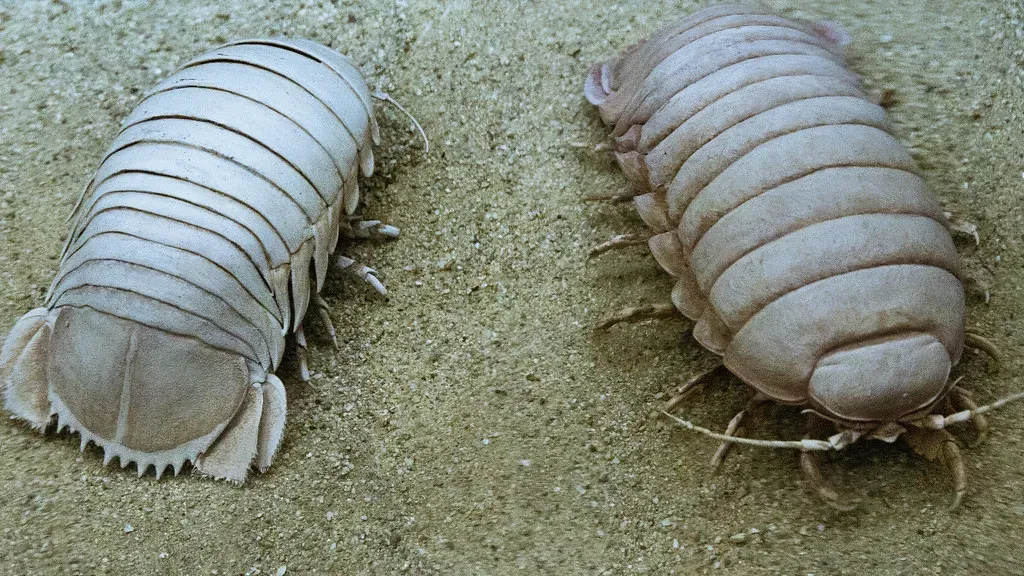
Imagine the little pill bug you might find under a rock in your garden. Now scale it up to the size of a large house cat, give it 14 legs and four sets of jaws, and drop it into pitch-black ocean depths. That is the giant isopod, and it is every bit as unsettling as it sounds. Giant isopods are the largest known member of the isopod family, a group of crustaceans closely related to shrimp and crabs. They are also related to Armadillidium vulgare, the pillbug or roly-poly you may have seen in your garden.
The enormous size of giant isopods is a result of a phenomenon called deep-sea gigantism, the tendency of deep-sea animals to reach much larger sizes than similar species in shallower waters. Food is extremely scarce at these great depths, so the isopod eats whatever happens to fall from above, such as the bodies of dead whales, fish, squid, crabs, and shrimp. Think of them as the ocean floor’s cleanup crew, slow, armored, and absolutely relentless.
One giant isopod kept in an aquarium went four years without eating. Dwelling between 500 and 7,000 feet below the surface, giant isopods are far beyond the viewing reach of recreational scuba divers, but they are occasionally caught by fishermen. While they are generally scavengers, one baited camera captured a hungry giant isopod capturing a larger dogfish shark and easily devouring its face. Let’s be real, a creature that can go four years without food and then casually eat a shark’s face is nothing short of extraordinary.
The Blobfish: The Ugliest Animal in the Ocean (That Deserves a Second Chance)
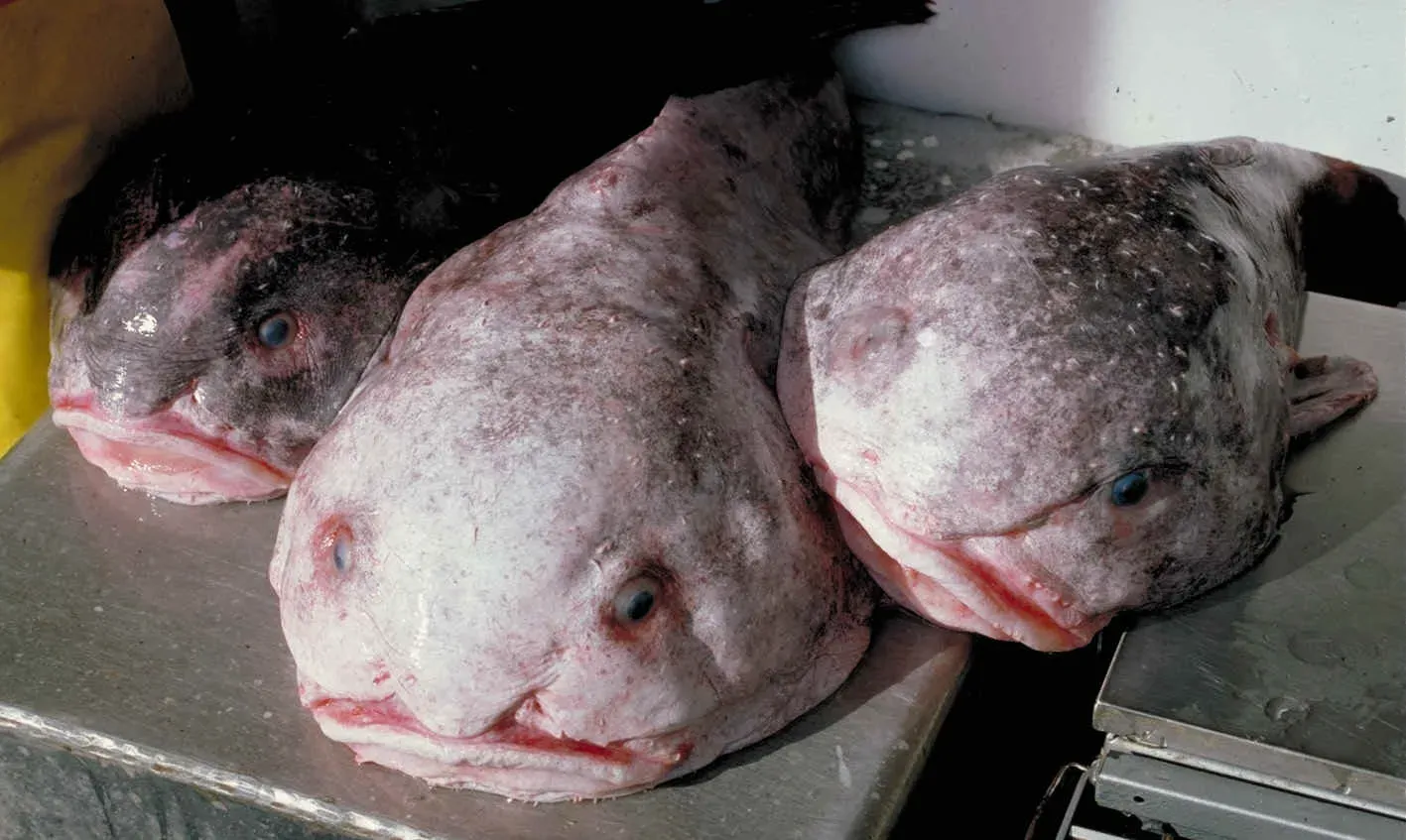
You’ve almost certainly seen it. That sad, droopy, gelatinous face staring back at you from internet memes, voted the world’s ugliest animal by the public back in 2013. But here’s a twist most people never hear: the blobfish is actually a victim of circumstance, not genuinely ugly in its natural home. The infamous photos showing a sad, gelatinous blob with a large nose actually depict a fish suffering from severe decompression damage. In its natural habitat, depths of 2,000 to 3,900 feet off the coasts of Australia and New Zealand, the blobfish looks much more like a conventional fish with firmer features.
The blobfish’s unusual biology is actually a clever adaptation to extreme deep-sea conditions. Rather than having a gas-filled swim bladder like many fish, which would collapse under deep-sea pressure, the blobfish’s body consists of a gelatinous mass with a density slightly less than water. This allows it to float above the seafloor with minimal energy expenditure, an important advantage in a food-scarce environment.
The fish is an ambush predator, floating motionless as it waits for edible matter to drift within range. Despite its internet notoriety, scientists know relatively little about blobfish behavior and biology due to the challenges of studying creatures in such extreme depths. It’s hard not to feel a little sympathy for an animal whose biggest claim to fame is a photo taken completely out of its natural context.
The Dumbo Octopus: Impossibly Cute at Impossible Depths
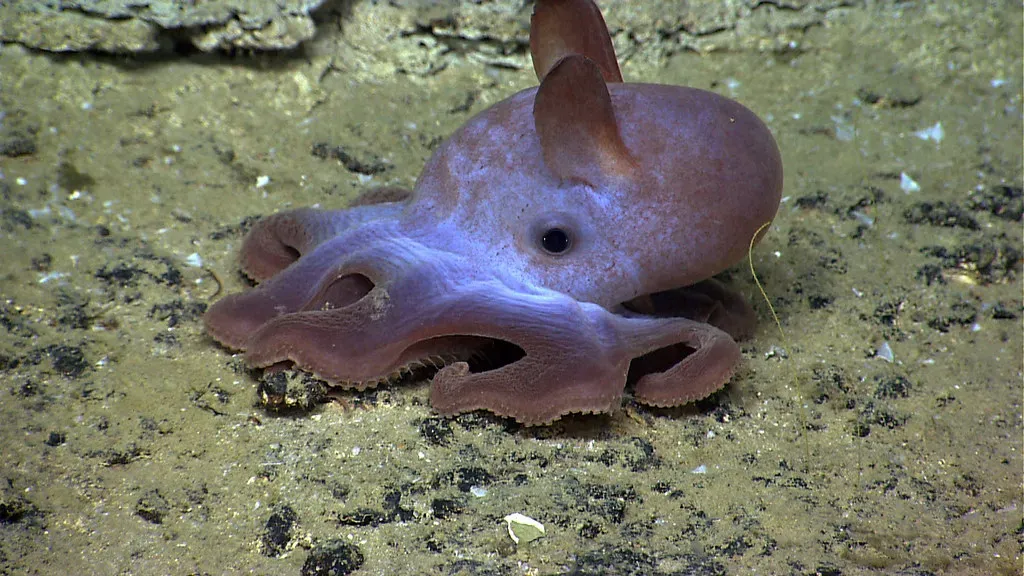
Not every deep-sea creature looks like it crawled out of a horror film. Sometimes evolution produces something so impossibly charming that you’ll wonder how it ended up in the abyss. Living in the twilight zone, the Dumbo Octopus is utterly captivating. It is semi-translucent and features prominent fins on its bell-shaped body, which resemble the ears of Disney’s Dumbo. It also has a single line of about 65 to 68 suckers along each arm.
Dumbo octopuses live between 9,800 and 13,000 feet below the surface. These creatures only grow to about 8 inches tall, but the two fins on top of their heads make them stand out from any other octopus on the planet. Its gelatinous body allows it to withstand extreme pressure, and interestingly, it lacks an ink sac, as there are very few predators in its deep-sea habitat. Think about that: it lives so deep that it has no real predators, so it simply gave up one of the ocean’s classic defense mechanisms.
Researchers reported the discovery of a brand new species of Dumbo octopus, nicknamed “Emperor Dumbo.” They discovered the adorable creature in 2016 when they accidentally dragged it to the surface in a net while aboard the German research vessel Sonne during an expedition of the Aleutian Islands in the Bering Sea. Accidental discoveries like this are a perfect reminder of how little we’ve really mapped in the deep.
The “Death-Ball” Sponge: A Carnivorous Ball of Horrors From the Southern Ocean
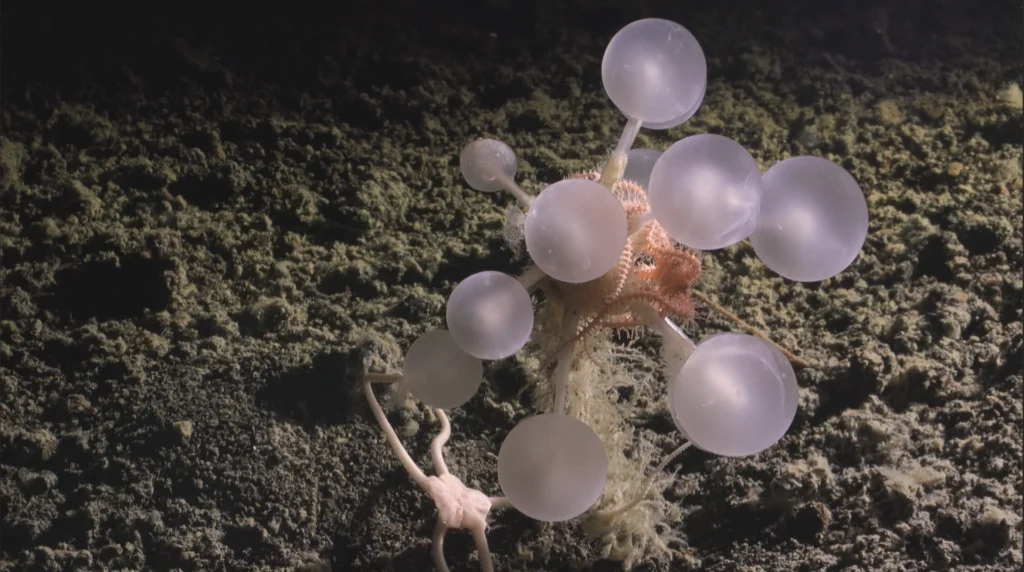
When most people think of sponges, they picture something passive and soft filtering tiny food particles from the water. The death-ball sponge did not get that memo. An expedition to the Southern Ocean uncovered this carnivorous sponge. Unlike most sponges that gently filter food from the water, this spherical species is covered in tiny hooks that trap prey. It’s roughly the underwater equivalent of a living flytrap, except it doesn’t grow in a swamp, it grows in one of the most remote ocean environments on Earth.
Researchers discovered 30 previously unknown deep-sea species in the remote ocean surrounding Antarctica, an achievement highlighting just how little humanity knows about some of the deepest regions of the planet. Other exciting finds include new hydrothermal vents over 2,000 feet deep, coral gardens, traces of explosive undersea volcanism, and the first confirmed footage of a juvenile colossal squid. The death-ball sponge was among the standout creatures from these discoveries, and honestly, the name alone earns it a spot on this list.
The research team was the first to study the environment revealed when the iceberg A-84 split from the George VI Ice Shelf in January, giving the first glimpse of an ocean world once hidden beneath 500 feet of ice. The expeditions were challenging; the Southern Ocean is so remote that during the expeditions, the closest humans were in the International Space Station. That level of isolation puts into perspective just how untouched these deep southern waters really are.
Ferreiraella Populi: The Deep-Sea Chiton Named by the Internet
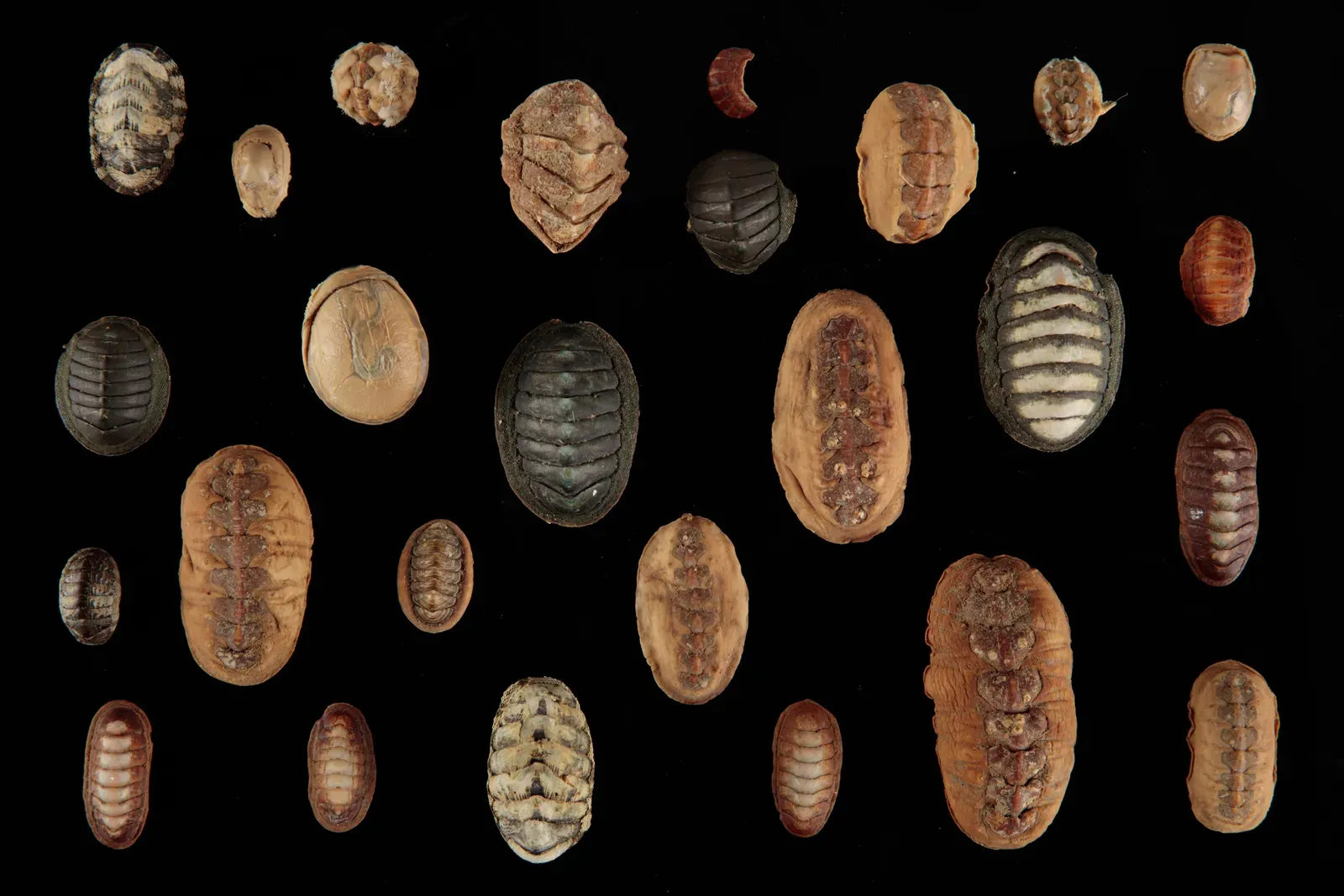
This one has a story that feels almost too modern to be true. A rare, armor-plated mollusk found nearly three miles beneath the ocean’s surface went viral on YouTube, and then the entire internet helped name it. A newly discovered deep-sea creature became an unlikely internet star. After appearing in a popular YouTube video, a rare chiton found nearly three miles beneath the ocean surface sparked a global naming effort, drawing more than 8,000 suggestions from people around the world. Scientists ultimately chose the name Ferreiraella populi, meaning “of the people,” honoring the public that helped bring it into the scientific record.
The species was first found in 2024 in the Izu-Ogasawara Trench at a depth of 5,500 meters. Ferreiraella populi belongs to the genus Ferreiraella, a rare group of mollusks known for living only on sunken wood in the deep sea. Chitons are often described as resembling a mix between a snail and a beetle. Unlike most mollusks, which have a single shell, chitons have eight separate shell plates. This structure allows them to curl into a tight ball for protection or grip uneven surfaces such as deep-sea wood-falls.
The discovery adds to a lineage of chitons that has received little scientific attention so far and supports growing evidence that deep-sea wood-fall ecosystems host highly specialized communities that remain largely unknown. After reviewing more than 8,000 name ideas submitted through social media, the research team chose the name Ferreiraella populi. The species name comes from Latin and means “of the people,” notably with 11 different participants independently suggesting the same name during the online naming effort. It’s hard not to find something genuinely moving about a creature discovered in the darkest corner of the planet being named by everyday people scrolling through their phones.
Conclusion: The Deep Sea Is a Mirror We’ve Barely Looked Into
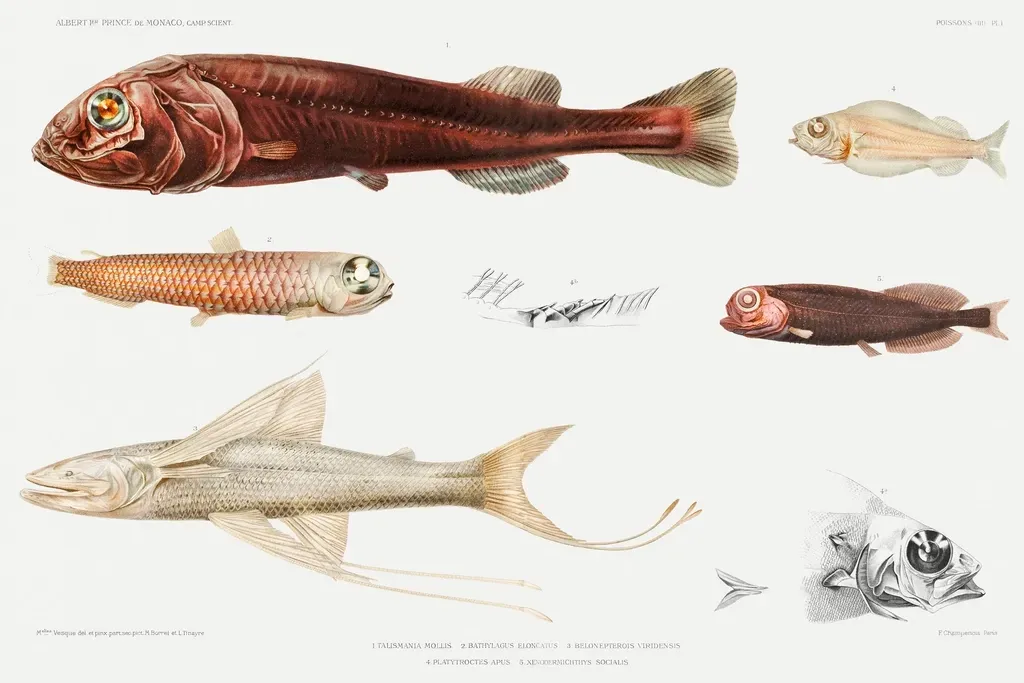
One million species live in the sea, but we’ve only discovered about one third of them, because they live in deep parts of the ocean that are hard to explore. Many of them have been seen only a handful of times. That number is staggering when you think about it. We have better maps of the surface of Mars than we do of our own ocean floor.
In this vast abyss lie creatures so strange, so hauntingly beautiful and bizarre, that they seem like inhabitants of another planet. The deep ocean is a living gallery of evolution’s wildest imagination, where survival demands ingenuity, and beauty takes forms that defy our expectations. Every new expedition seems to overturn something we thought we knew about life on Earth.
The seven creatures on this list are not exceptions. They’re invitations. Invitations to keep looking, keep exploring, and keep respecting an environment that holds more secrets than we will likely uncover in our lifetimes. I think the most humbling realization is simply this: the ocean isn’t hiding these creatures from us on purpose. We just haven’t looked hard enough yet. What creature from this list surprised you the most?