Deep beneath your feet, far below the crust and mantle, there’s a hidden world that never sleeps. For decades, school diagrams made Earth’s core look like a static metal ball, quietly sitting at the center of the planet. But over the last few years, a wave of new research has revealed something far more dramatic: the core is restless, changing, and unexpectedly alive with activity.
These discoveries are forcing scientists to rewrite what they thought they knew about how Earth works from the inside out. The core is shaping our magnetic field, influencing the length of our day, and maybe even nudging the rhythm of earthquakes and volcanoes. The wildest part? We’ll never see it directly. Everything we know comes from listening to how our planet rings and trembles – like trying to understand an engine just by hearing it through the hood.
The Surprising Signs Hidden in Earthquake Waves
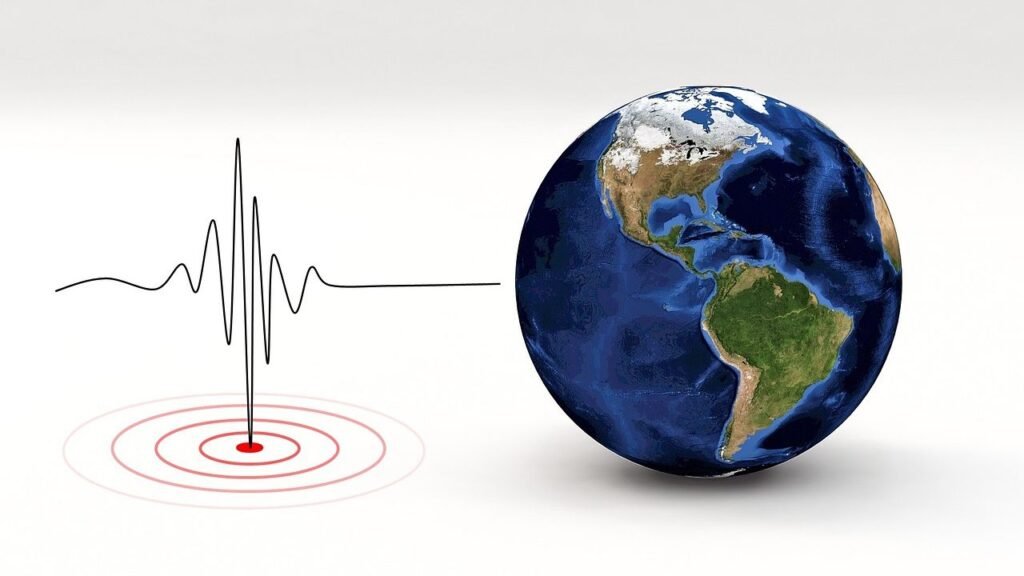
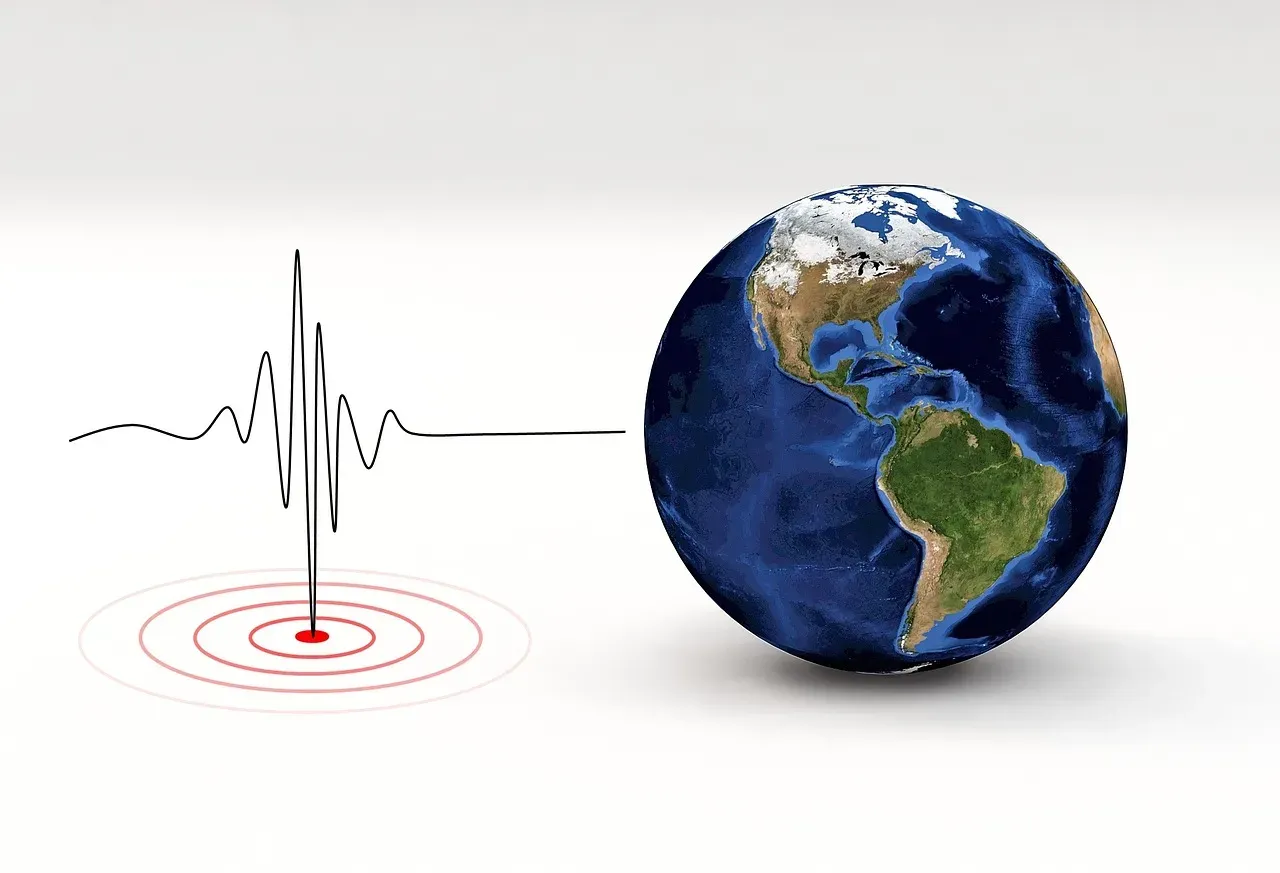
What really shook scientists (pun intended) was not an earthquake itself, but the echoes it sent through the planet. Seismic waves generated by large quakes travel through Earth’s interior and bend, slow, or speed up depending on what they pass through. Over the last two decades, more precise global seismometer networks have revealed subtle but persistent changes in how these waves pass through the core.
Those changes suggest the inner core is not a perfectly uniform ball of iron, but a patchy, evolving structure, with some regions where waves move faster and others where they slow down. In some studies, researchers even saw hints that seismic waves traveling one year behaved slightly differently when passing through similar paths in later years. That’s a quiet but strong clue: something in the core is shifting on human timescales, not just over hundreds of millions of years.
A Spinning Core That Doesn’t Always Keep Pace
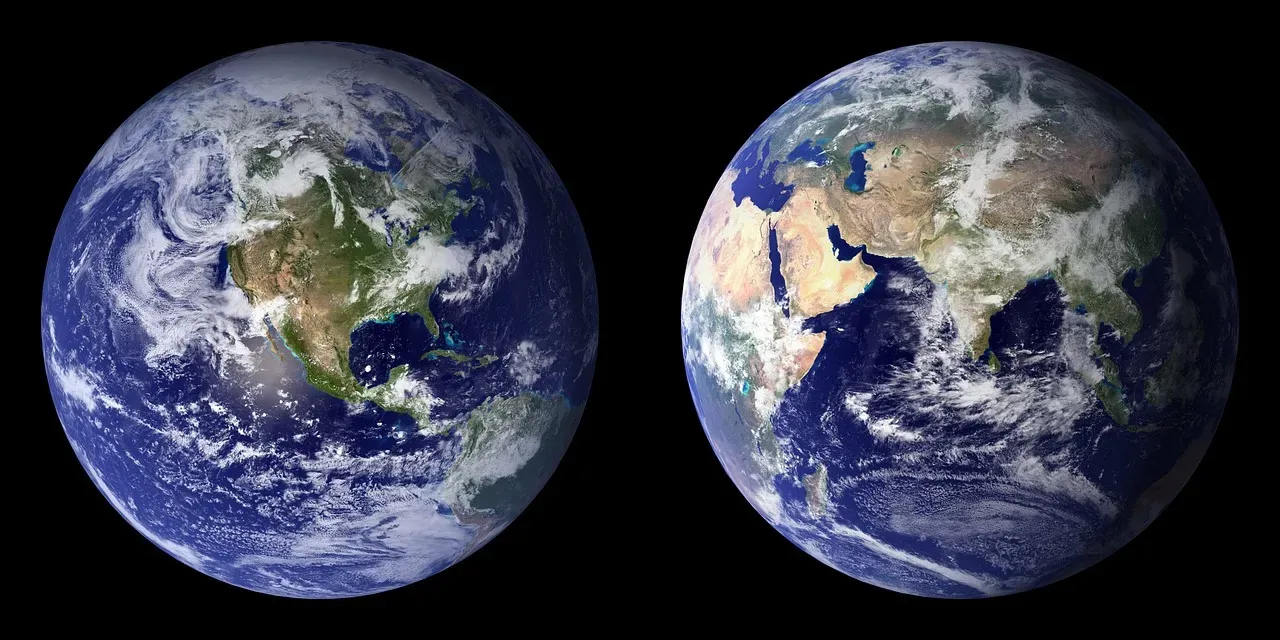
One of the most startling ideas to emerge is that the solid inner core may be spinning at a slightly different speed than the rest of the planet. For years, some studies suggested the inner core was rotating just a bit faster than Earth’s surface, like a flywheel inside a machine gradually slipping ahead. More recent research, though, points to a more complicated picture: the inner core may sometimes speed up, sometimes slow down, and even occasionally rotate slightly more slowly than the mantle and crust.
This “differential rotation” idea sounds abstract, but it has real implications. Changes in the inner core’s rotation could be linked to small variations in the length of our day, measured to fractions of a millisecond with precise astronomical tools. Think about that for a second: the hidden metal heart of the planet may be ever so gently tugging on how fast Earth spins, like a heavy dancer turning within a spinning partner’s arms.
A Magnetic Field That Pulses and Wanders
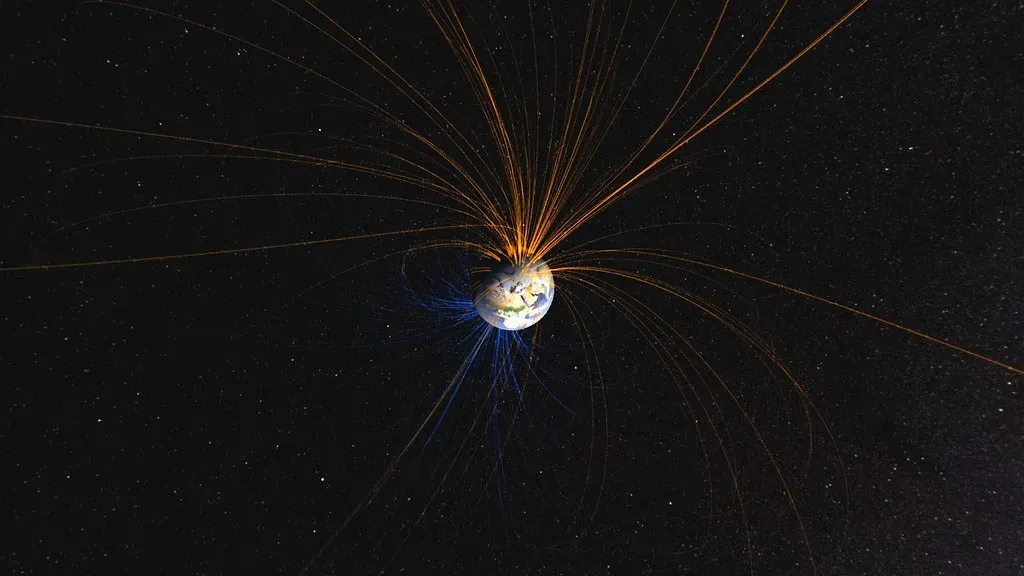
If you’ve ever watched a compass needle twitch, you’ve seen the core’s influence firsthand. Earth’s magnetic field is generated by the outer core: a churning, liquid sea of mostly molten iron and nickel. This flowing metal acts like a massive dynamo. For a long time, the magnetic field was treated almost like a stable shield with occasional big events, such as field reversals every few hundred thousand years. Now, with precise satellite measurements and global observatories, scientists are discovering it’s far more twitchy and temperamental.
The field is weakening in some regions, strengthening in others, and drifting in ways that are surprisingly fast. One famous example is the South Atlantic Anomaly, a region where the magnetic field is unusually weak and continues to evolve. These changes are thought to be directly tied to chaotic flows in the outer core, with patches of rising and sinking metal altering how the field emerges at the surface. It’s less like a solid protective bubble and more like a turbulent, breathing force field driven by restless metal currents far below.
Inner Core Structure: Layers Within the “Solid” Heart
For years, the inner core was taught as a single solid lump of iron alloy. But more recent research has pointed toward a structure that is more layered and complex. Some studies suggest there is an “innermost inner core,” a central region with crystals aligned differently from the outer part of the inner core. That might sound like nitpicking, but it means the very center of the Earth may have gone through different growth stages, like the rings inside a tree.
Scientists also see strong directional differences in how seismic waves move through the inner core: they travel faster along some paths and slower along others. This hints that iron crystals deep below are not arranged randomly, but oriented and evolving under intense pressure and heat. Instead of a simple metal ball, imagine something more like a slowly changing, pressure-shaped crystal, with different zones revealing different parts of Earth’s inner history.
Heat, Radioactivity, and a Fierce Energy Budget
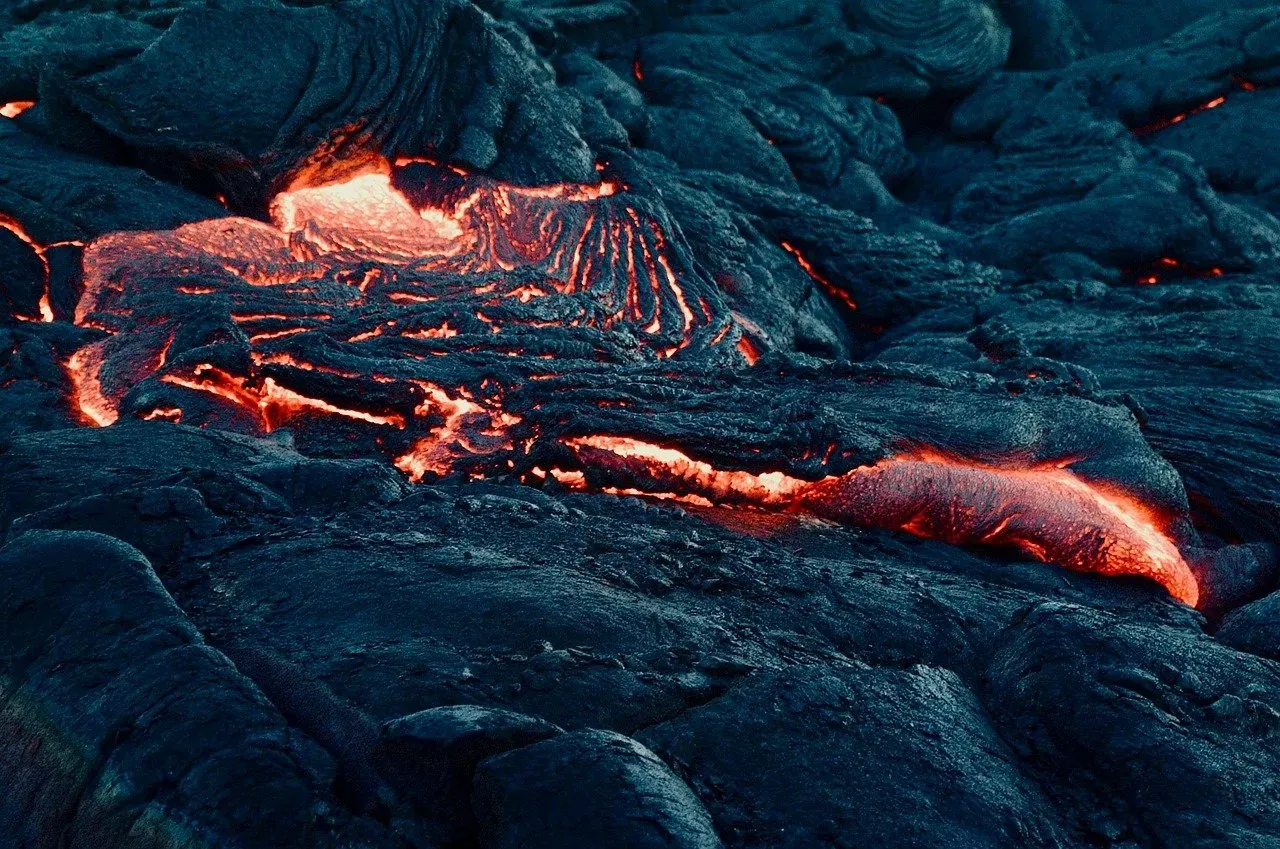
The core isn’t just physically moving; it’s also a colossal heat engine. One of the biggest questions in geophysics has been: where does all that heat come from, and how fast is it flowing out? Scientists now think that the heat leaving the core into the mantle is significantly higher than early estimates suggested. That extra heat drives stronger convection in the outer core, which in turn energizes the magnetic field and can alter convection patterns in the mantle above.
There’s also an ongoing debate about how much of that heat is from the original formation of the Earth, how much from the cooling and crystallization of the inner core, and how much from radioactive elements possibly present in small amounts within the core. The balance matters because it determines how vigorously the core churns and how long our magnetic field will stay strong. A more active core, with a higher heat flux, paints a picture of a planet that’s more dynamically alive and evolving inside than once assumed.
Ripples at the Surface: From Tiny Time Shifts to Tectonic Clues

All this hidden motion in the core might sound distant, but scientists are finding subtle fingerprints of it in surprising places at the surface. Minute variations in the length of the day, measured over decades, line up with changes believed to be happening in the core and mantle system. It’s like watching a clock run fractionally fast or slow and realizing the gears deep inside must be shifting.
There are also hints that core dynamics could interact with mantle flow patterns over long timescales, subtly affecting where hot plumes rise or where tectonic plates are more active. While it would be misleading to say the core directly “causes” earthquakes or volcanic eruptions, the energy and motion that begin in the deep interior ultimately feed the entire system. The surface of Earth is, in many ways, just the cooled skin of a restless engine that never really turns off.
How New Tools Are Transforming Our View of the Deep Earth
We can’t drill to the core, and we almost certainly never will, but our tools for exploring it keep improving. Global arrays of seismometers are now dense enough that scientists can catch subtle echoes and reflections from deep inside the planet, like sonar for the interior. Advanced numerical models running on powerful supercomputers simulate how molten iron might flow in the outer core, comparing predictions with observations of the magnetic field to refine our picture.
At the same time, lab experiments using diamond anvils and lasers are recreating core-like pressures and temperatures on tiny samples of iron alloys. Those experiments help test whether the conditions at the center of the Earth match our theoretical models. Put together, these tools are showing a world that’s more dynamic, layered, and unpredictable than the neat textbook diagrams many of us grew up with.
Living on a Planet With a Restless Heart
When you zoom out and put all these pieces together – the shifting seismic signals, the wobbling inner core rotation, the pulsing magnetic field, and the surprising heat flow – one message stands out. Earth is not a quiet, settled world with a frozen heart; it’s powered from within by a complex, ever-changing core that reshapes our planet in ways we’re only starting to understand. That hidden activity keeps our magnetic field alive, affects our sense of time, and subtly guides the slow dance of rocks and plates at the surface.
In a way, we live our entire lives on the thin crust of a vast, roaring engine we can never see directly. The fact that the core is is both unsettling and strangely comforting: the planet still has a lot of life left in it. The more we listen to the vibrations of the Earth, the clearer it becomes that our world is not a static rock in space but a restless, breathing system with a fiercely beating metal heart. Did you expect it to be this alive down there?