There is something almost incomprehensible about the raw fury of our planet when it decides to unleash its full power. Volcanoes that darken skies for years. Earthquakes that shatter cities in seconds. Floods so vast they swallow entire civilizations whole. These are not just tragedies – they are the fingerprints of a living, breathing, violently dynamic world.
What you might not realize is just how deeply these catastrophic events have altered the very story of life on Earth, including your own. They have reshaped coastlines, redirected rivers, triggered the collapse of empires, and in some cases, forced humanity to evolve in entirely new directions. Buckle up, because what you are about to discover might permanently change the way you look at the ground beneath your feet. Let’s dive in.
The Chicxulub Impact: When a Space Rock Rewrote Life on Earth
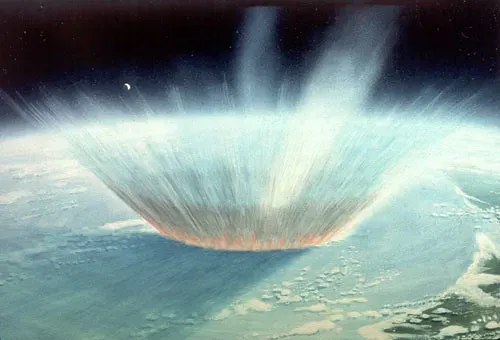
Imagine a rock only about ten kilometers wide ending the reign of an entire group of creatures that had dominated the planet for over 160 million years. That is exactly what happened roughly 66 million years ago when an asteroid slammed into what is now the Yucatán Peninsula in Mexico. Buried under the Yucatán Peninsula lies the world-famous Chicxulub Crater – a natural cavity some 180 km wide and 20 km deep, the remnant of an asteroid that crashed into Earth approximately 66 million years ago. Let that sink in for a moment.
The impact triggered an extinction-level event that wiped out up to 75% of the flora and fauna of the Cretaceous Era, including all land-based dinosaurs. With the equivalent power of more than one billion atom bombs, shockwaves were felt across the globe, and winds of up to 600 miles per hour stormed outward from the epicentre. Masses of ash, gases, and debris were thrown high into the atmosphere, blocking out the Sun and severely dropping global temperatures.
When comets or asteroids crash into the world, they create global firestorms, massive tsunamis, colossal temperature fluctuations, and can blanket the sky with soot, shutting off photosynthesis and thereby killing off entire food chains. Honestly, the terrifying thing is that without this single event, mammals – and eventually humans – might never have risen to dominance at all. One rock from space, and the entire trajectory of life on Earth changed forever.
The Toba Supervolcano: The Eruption That Almost Erased Us
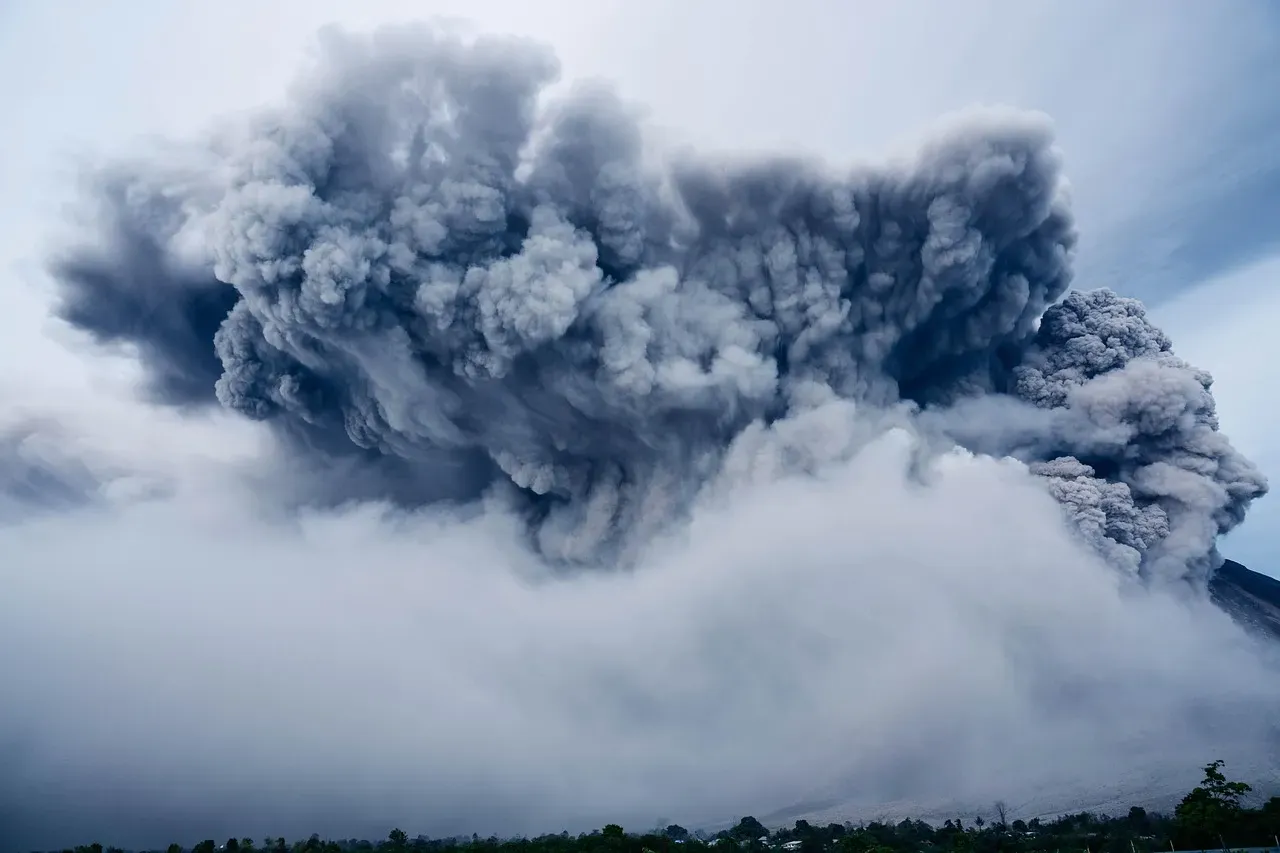
Here’s the thing about the Toba eruption. It happened 74,000 years ago in what is now Sumatra, Indonesia, and it may have come closer to wiping out your entire species than almost anything else in the natural world. The Toba eruption occurred around 74,000 years ago, during the Late Pleistocene, and was the last in a series of at least four caldera-forming eruptions. It had an estimated volcanic explosivity index of 8, making it the largest known explosive volcanic eruption in the Quaternary period.
It was the most powerful eruption of the last 2.5 million years; by volume, it was more than 215 times larger than the 20th century’s biggest boom, the Novarupta event in Alaska, and more than 11,000 times the size of the 1980 Mount St. Helens eruption. It dwarfed even the three largest known eruptions of the Yellowstone supervolcano. Yet here you are, reading this. The behavioral flexibility of Middle Stone Age people not only helped them live through the supereruption but may have facilitated the later dispersal of modern humans out of Africa and across the rest of the world. Survival, it seems, was always in your DNA.
The 1931 China Floods: A Catastrophe on a Scale You Can Barely Imagine
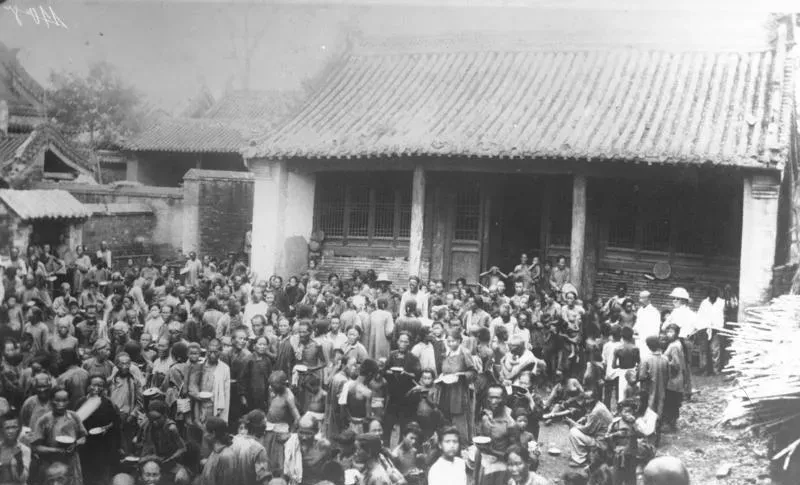
Major flood events along the Yangtze River in central and eastern China have occurred from ancient times to the present, but the major flood of 1931 stands out above all others. It covered tens of thousands of square miles, flooding rice fields and cities including Nanjing and Wuhan, affected more than 50 million people, and government organizations estimated the death toll to have been about 3.7 million people. To put that in perspective, that is more than the entire population of many modern nations.
In the period between July and August 1931, China suffered excessive rainfall which, in conjunction with spring snowmelt in the mountains, led to catastrophic floods along the Yangtze River. According to government statistics, approximately two million people died in what is regarded as the most lethal flood on record. The country’s central and eastern regions, including crowded cities such as Wuhan and Nanjing, were inundated. In June of that year, areas near the Yangtze registered precipitation levels that caused the river to rise to its highest point since records began. The sheer scale of this disaster is almost beyond human comprehension.
The 1970 Bhola Cyclone: How a Storm Changed a Nation’s Borders
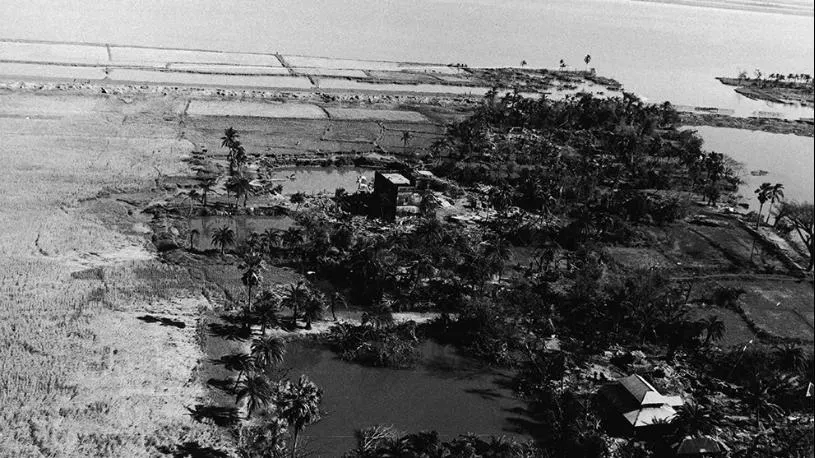
You might think a cyclone is just a cyclone, but the 1970 Bhola Cyclone was something else entirely. Also called the Ganges-Brahmaputra delta cyclone, the Bhola Cyclone was a catastrophic tropical storm that struck East Pakistan on November 12, 1970, killing hundreds of thousands of people in the densely populated Ganges-Brahmaputra delta. Although it was not ranked in the top category of cyclone intensity scales, it was one of the deadliest tropical cyclones in recorded history. The cyclone formed over the Bay of Bengal on November 8, and after reaching a peak wind speed of 115 miles per hour, it made landfall on November 12.
Striking East Pakistan and the West Bengal area of India, the 1970 Bhola Cyclone remains one of the deadliest tropical cyclones on record, with winds reaching 115 mph and claiming the lives of an estimated 300,000 to 500,000 people, underscoring the vulnerability of coastal communities to extreme weather events. What makes this even more staggering is what came next. The cyclone affected the political environment of the country: West Pakistan’s failure to send sufficient aid to East Pakistan in the aftermath was one of the key factors that prompted widespread protests and calls for independence in East Pakistan. A storm literally helped create the nation of Bangladesh.
The 1976 Tangshan Earthquake: A City Razed Before Dawn
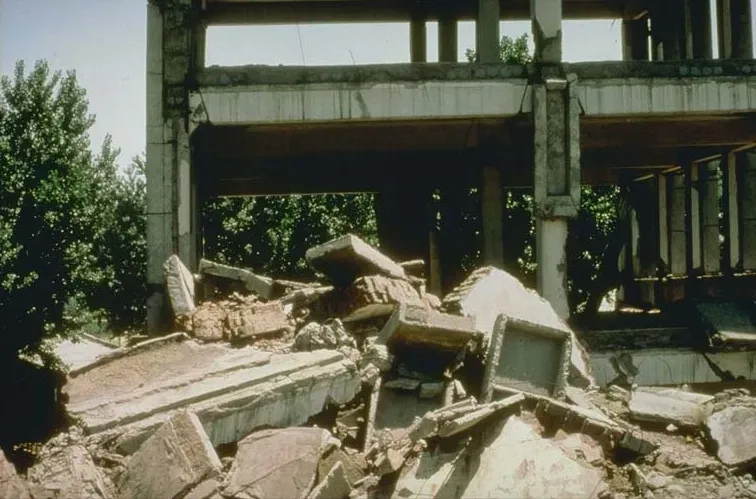
Most people have never heard of the Tangshan earthquake. That in itself is remarkable, because by almost any measure, it belongs in the same conversation as the worst disasters in recorded human history. At 3:42 a.m. on July 28, 1976, the Chinese city of Tangshan was razed to the ground by a magnitude 7.8 earthquake. Tangshan, an industrial city with a population of about one million at the time, suffered staggering casualties of over 240,000. Some experts suggest this number is grossly underestimated and that the actual loss of life was likely closer to 700,000.
Reportedly, roughly 85% of Tangshan’s buildings collapsed, and trembles were felt in Beijing, more than 100 miles away. It took several years before the city was rebuilt to its prior glory. The lack of immediate response and distribution of emergency resources, due to political tensions at the time, limited care for survivors and contributed to further deaths. A positive outcome of the disaster is that it prompted a reassessment of building codes in China and brought about significant changes in the country’s approaches to earthquake response. Tragedy, when it forces change, sometimes saves future lives.
The 2004 Indian Ocean Tsunami: The World Awakened in Terror
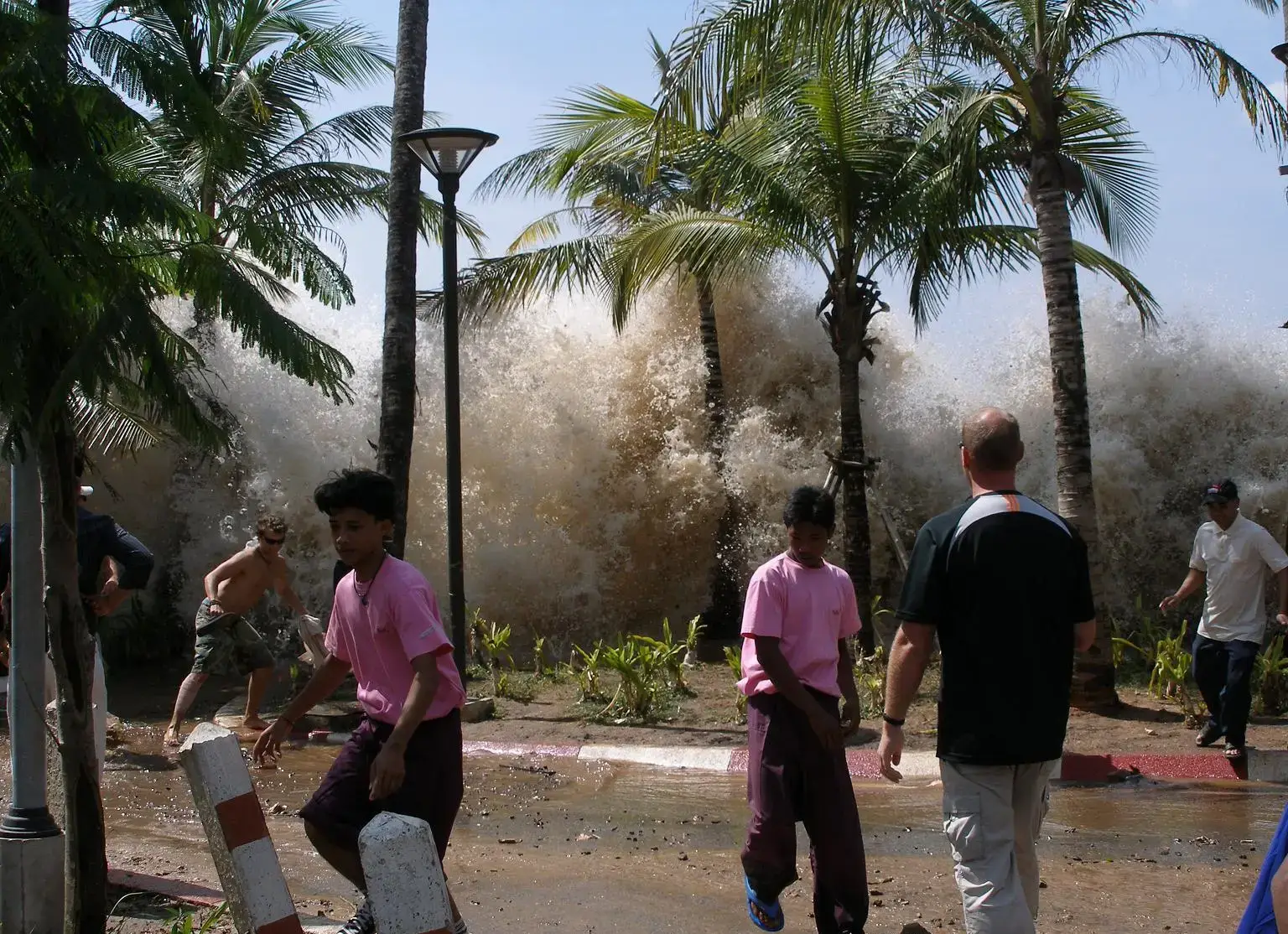
If you were alive on December 26, 2004, you probably remember the horrifying images. Walls of water swallowing entire coastlines. Villages disappearing in minutes. A catastrophic magnitude 9.1 earthquake struck undersea off the west coast of Sumatra, Indonesia, and the resulting tsunami killed approximately 230,000 people and displaced nearly two million in 14 South Asian and East African countries. Traveling as fast as 500 miles per hour, the tsunami reached land in as little as 15 to 20 minutes after the quake hit, giving residents little time to flee to higher ground.
The tsunami produced by the Sumatra-Andaman earthquake generated energy equal to 23,000 atomic bombs used on Hiroshima. By causing a shift in the planet’s mass, the 2004 Indonesian earthquake actually altered the Earth’s rotation. This disaster is considered to be the third-largest earthquake since 1900, and the tsunami it caused killed more people than any other tsunami in recorded history. That last point is worth sitting with. An earthquake so powerful it physically changed how fast the Earth spins on its axis.
The Great Chilean Earthquake of 1960: The Ground Beneath Your Feet Is Never Still
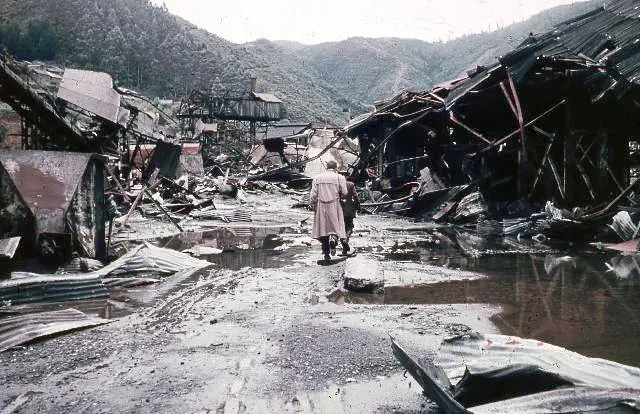
Let’s be real. When you think of the most powerful earthquake ever recorded in human history, you probably do not think of Chile in 1960. The Great Chilean Earthquake is the most powerful earthquake ever recorded, occurring on May 22, 1960, with a magnitude of 9.5 to 9.6. Originating off the coast of southern Chile, it caused widespread destruction, significant loss of life, and a massive tsunami that affected countries across the Pacific Ocean. The event led to advancements in seismology, tsunami warning systems, and disaster preparedness.
The mainshock released an estimated energy equivalent to 20,000 Hiroshima atomic bombs, making it the most energetic earthquake ever instrumentally recorded. Earthquake-induced tsunamis affected southern Chile, Hawaii, Japan, the Philippines, China, eastern New Zealand, southeast Australia, and the Aleutian Islands. The global extent of this tsunami led to the creation of the Pacific Tsunami Warning and Mitigation System in 1965. Sometimes it takes a catastrophe of almost unimaginable proportions to build the systems that protect future generations.
The 2011 Japan Earthquake and Fukushima: When Nature Triggered a Nuclear Crisis
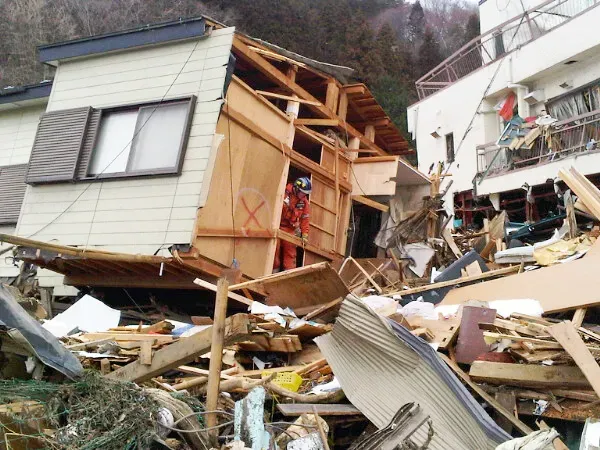
Some disasters do not stop at the natural. The 2011 earthquake off the coast of Japan demonstrated with terrifying clarity how one event can cascade into something that rewrites a nation’s history on multiple levels at once. A magnitude 9.0 earthquake off the coast of Japan triggered a tsunami wave that rose 133 feet at its highest and traveled as far as six miles inland. That alone would have been cataclysmic enough, but the event also triggered a technological disaster on the scale of the infamous 1986 Chernobyl crisis: a series of nuclear meltdowns and a large-scale release of radioactive material from the Fukushima Daiichi power plant.
The earthquake and tsunami caused $220 billion in damage in Japan and resulted in a nuclear disaster with an International Atomic Energy Agency rating of 7 at the Fukushima Daiichi Nuclear Power Station. The Japan earthquake spawned a tsunami that killed an estimated 19,300 people and knocked out the electrical power to Japan’s Fukushima Daiichi nuclear power plant, creating the world’s second most serious nuclear emergency. I think what makes this disaster uniquely sobering is how it exposed the intersection between natural forces and the fragile infrastructure humans build on earthquake-prone ground.
The Permian-Triassic Extinction: Nature’s Deadliest Chapter
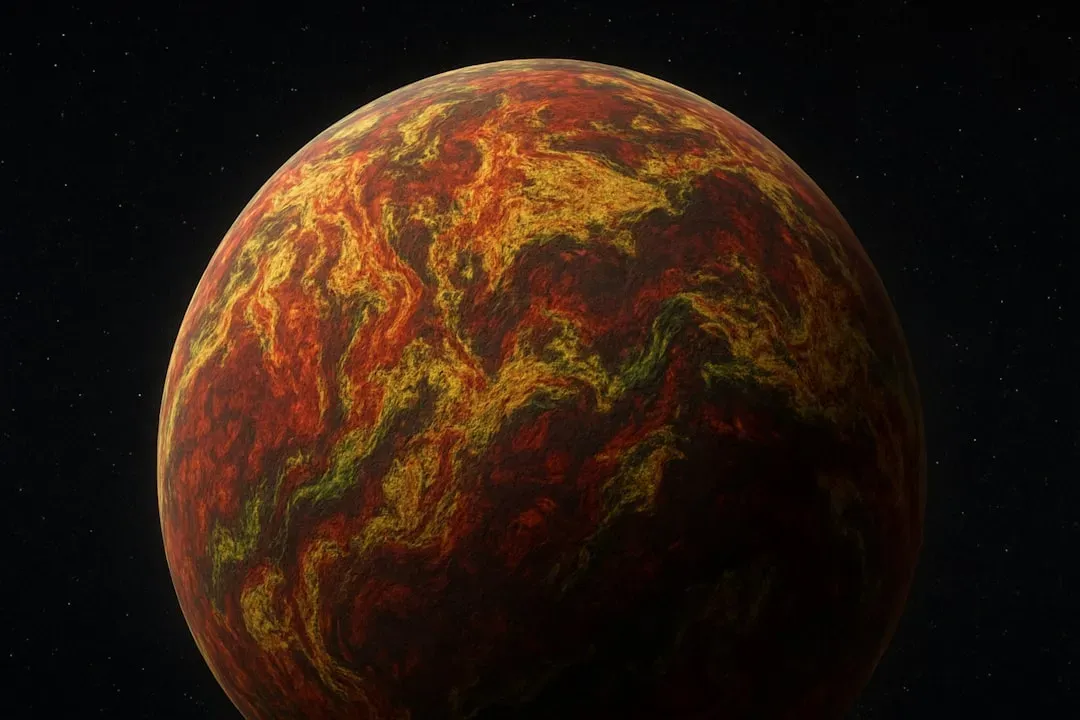
If you thought everything covered so far was bad, the Permian-Triassic extinction event, known as the Great Dying, makes all of it look modest by comparison. The Earth lives in a constant state of delicate balance between plants, animals, and minerals, and scientists believe that a catastrophic shift in that balance occurred 252 million years ago during the Permian-Triassic extinction event. The seas were turned toxic and the ozone layer was permanently damaged.
If you had to pin down a single natural disaster as the most powerful in Earth’s history, the volcanic activity that killed off life during the Great Dying has the strongest claim. By depositing so much carbon dioxide into the atmosphere, the world’s climate changed so fast that almost all life on Earth died. Scientists hypothesize that global warming upset the balance between photosynthesizing algae in the sea and deep water bacteria, triggering a steady rise in hydrogen sulphide in the oceans. As the toxic gas grew in intensity, it killed anything it contacted and caused severe damage to the Earth’s ozone layer, triggering further death and destruction as wildlife was exposed to the Sun’s radiation. It is a sobering reminder that Earth has survived catastrophes far greater than anything humans have witnessed.
Conclusion: The Planet Shapes Us as Much as We Shape It
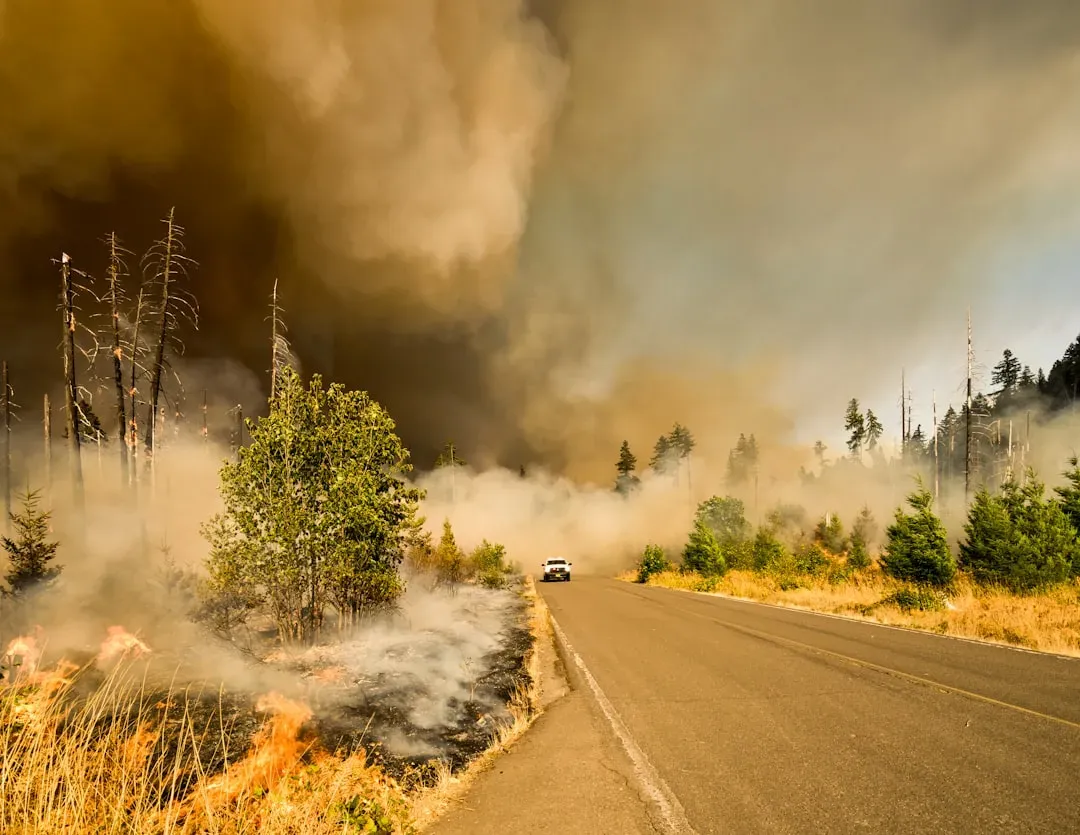
Every volcano, every earthquake, every flood, and every extinction event has left an indelible mark on this planet and on the species that inhabit it. Natural disasters have been an integral part of Earth’s history, leaving a lasting impact on communities and landscapes. These events, often beyond human control, can unleash devastating forces, but they also serve as crucial lessons for understanding, preparing for, and mitigating the impact of future disasters.
There is something almost poetic about it, if you are willing to look past the horror. The same forces that destroyed civilizations also carved the coastlines you visit on holiday. The same volcanic eruptions that darkened skies also created the fertile soils that fed billions. As global warming continues to accelerate climate change, it is estimated that natural catastrophes such as cyclones, rainfalls, landslides, and heat waves will intensify in the coming years and decades. So the story is far from over.
In the end, our planet is not a passive stage on which human history plays out. It is an active, restless, sometimes violent participant. The question worth asking yourself is this: knowing how radically these forces have already reshaped life on Earth, what do you think the next great natural event will change? Share your thoughts in the comments – because history, as you have just seen, is never really finished.