
What if everything you see, feel, and touch is not actually real in the way you think it is? Not a philosophical musing. Not a scene from a science fiction film. A genuine, peer-reviewed scientific hypothesis that has been seriously debated by some of the greatest minds in theoretical physics for decades. The idea is both breathtaking and deeply unsettling: the universe you experience in three dimensions might be nothing more than a projection, a kind of cosmic hologram encoded on a flat, two-dimensional boundary somewhere at the edge of existence.
You might assume this is fringe thinking. You would be wrong. The holographic universe theory, which has been around since the 1990s and is now a mainstream scientific hypothesis, holds that the universe and everything in it is a three-dimensional projection from a two-dimensional plane. It has inspired careers, reshaped entire subfields of physics, and continues to challenge our most fundamental assumptions about reality. So let’s dive in.
Where the Idea Was Born: The Origins of the Holographic Principle
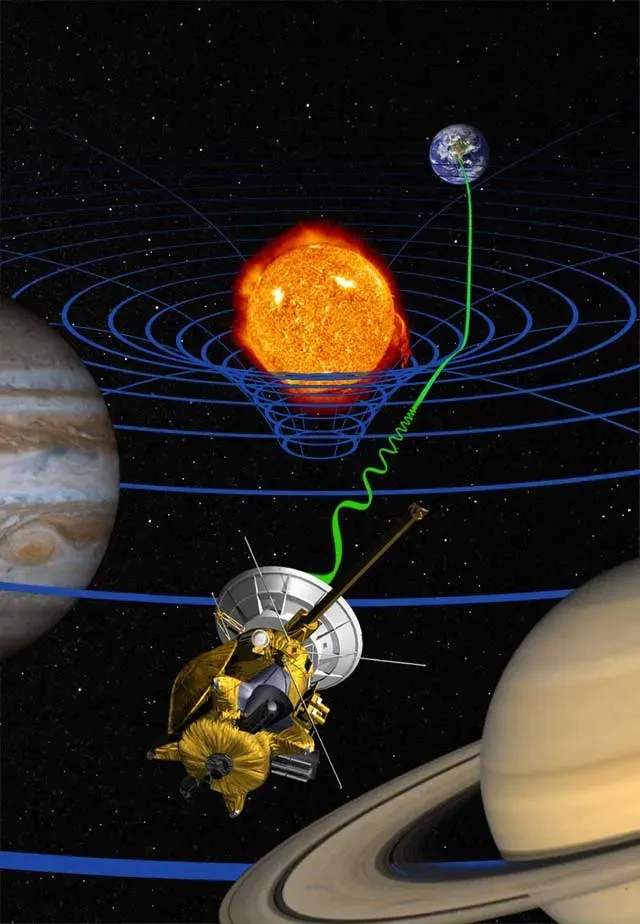
Here’s the thing about revolutionary ideas in science: they rarely arrive fully formed. The holographic principle grew from one of the messiest, thorniest problems in all of modern physics. The holographic principle grew out of one of the biggest scientific problems of the twentieth century: the fact that the two fundamental theories of physics, Einstein’s theory of gravity (general relativity) and quantum mechanics, do not get along with each other. While general relativity describes the world of planets and galaxies, quantum mechanics looks at the sub-atomic scale, the realm of the fundamental particles that make up matter.
Think of it like two brilliant experts who can each explain their own territory perfectly, but completely contradict each other the moment they try to describe the same thing. First proposed by Gerard ‘t Hooft in 1993, the holographic principle was given a precise string theoretic interpretation by Leonard Susskind, who combined his ideas with previous ones of ‘t Hooft and Charles Thorn. From this collision of great minds, one of the most radical ideas in physics quietly entered the conversation.
What the Holographic Principle Actually Says
Let’s be real for a second. The phrase “holographic universe” sounds like marketing. It sounds like something you’d see on a late-night documentary. So what does it actually mean? The holographic principle states that the entropy of ordinary mass is also proportional to surface area and not volume, that volume itself is illusory and the universe is really a hologram which is isomorphic to the information “inscribed” on the surface of its boundary. It is a property of string theories and a supposed property of quantum gravity that states that the description of a volume of space can be thought of as encoded on a lower-dimensional boundary to the region.
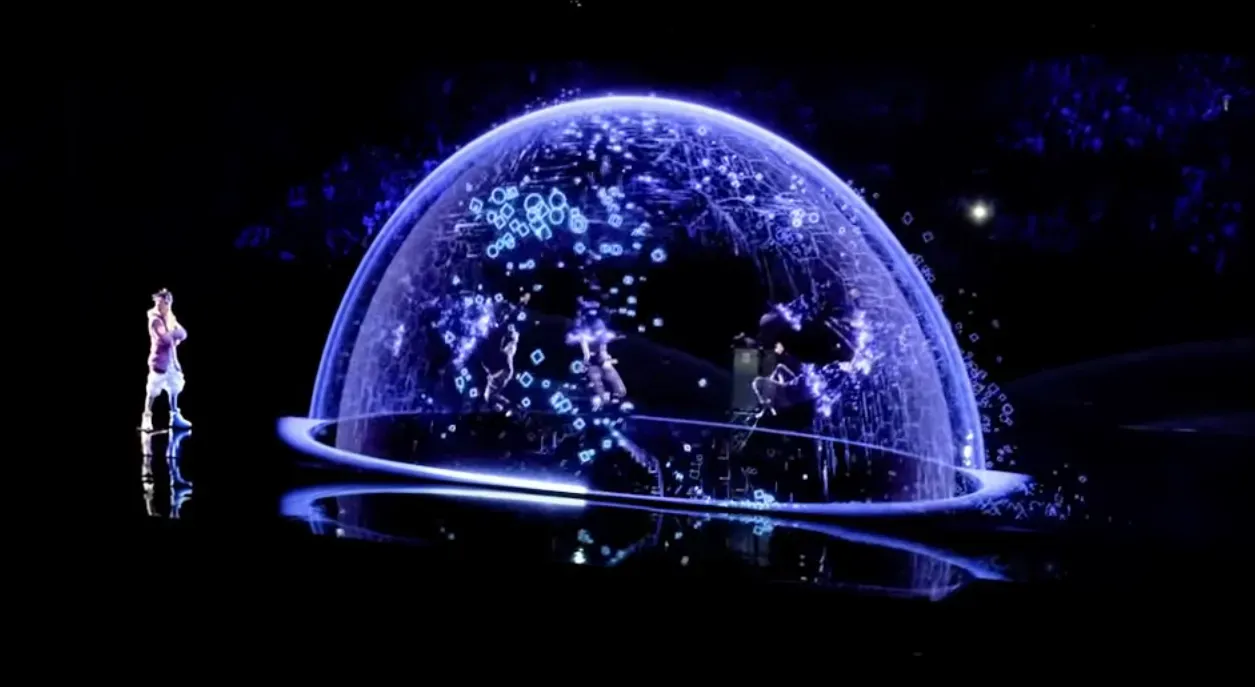
Think about a credit card hologram. You look at it straight on and you see a flat, two-dimensional surface. Yet tilt it in the light and a three-dimensional image shimmers into view. In the everyday world, a hologram is a special kind of photograph that generates a full three-dimensional image when it is illuminated in the right manner. All the information describing the 3-D scene is encoded into the pattern of light and dark areas on the two-dimensional piece of film, ready to be regenerated. The holographic principle contends that an analogue of this visual magic applies to the full physical description of any system occupying a 3-D region: it proposes that another physical theory defined only on the 2-D boundary of the region completely describes the 3-D physics.
The Man Who Changed Everything: Juan Maldacena and the AdS/CFT Correspondence

Honestly, no single figure did more to transform the holographic principle from a bold conjecture into a concrete mathematical framework than Juan Maldacena. The idea, put forth by Juan Maldacena of the Institute for Advanced Study in Princeton, suggested something profound: that our universe could be a hologram. Much like a 3D hologram emerges from the information encoded on a 2D surface, our universe’s 4D spacetime could be a holographic projection of a lower-dimensional reality. Specifically, Maldacena showed that a five-dimensional theory of a type of imaginary spacetime called anti-de Sitter space that included gravity could describe the same system as a lower-dimensional quantum field theory of particles and fields in the absence of gravity.
What makes this so striking is what it reveals about gravity itself. In Maldacena’s model, it is a hologram because all the physical goings-on inside it can be described by a physical theory that’s only defined on the boundary. What’s more, it’s a universe in which the gravity and quantum conundrum has been resolved completely: the boundary theory is purely quantum, it contains no gravity, but a being living in the interior will still experience gravity. Gravity in this universe is part of the holographic illusion. Wrap your head around that: gravity, the force pulling you to your chair right now, could itself be an emergent illusion.
Black Holes and the Information Paradox: The Clue Hidden in the Cosmos
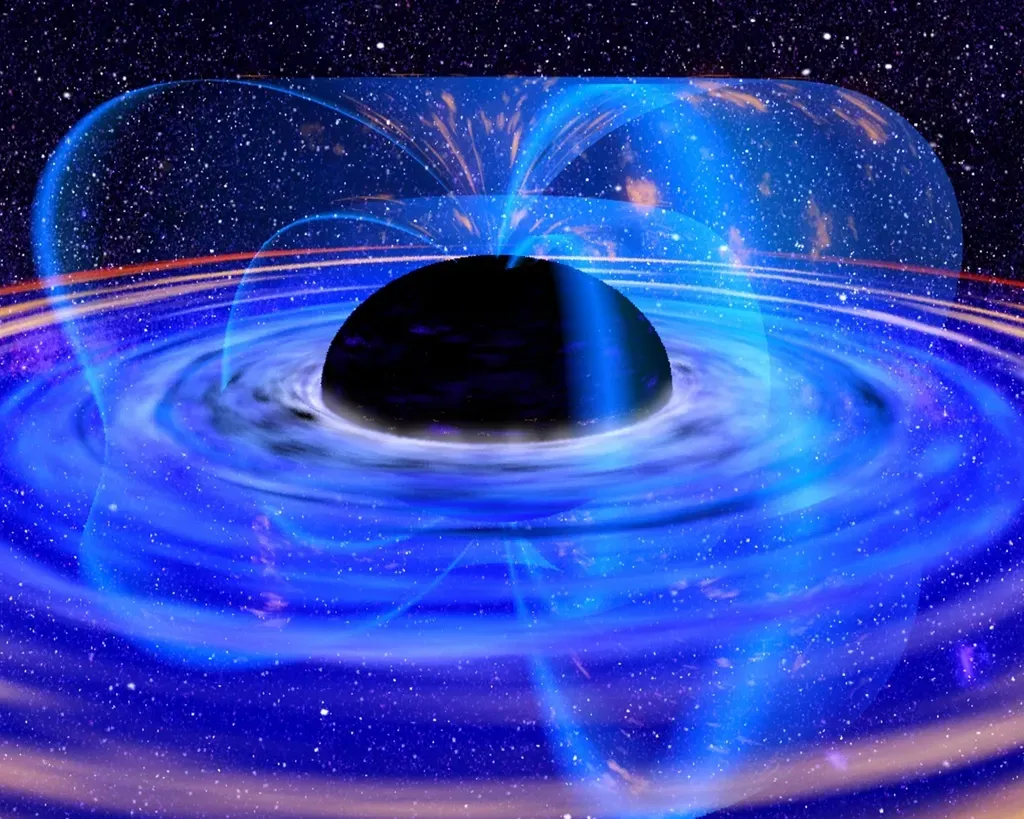
You cannot talk about the holographic universe without confronting black holes. They were the unlikely key that unlocked the whole idea. Starting in the mid-1970s, Stephen Hawking and Jacob Bekenstein put forward theoretical arguments that suggested that black-hole evaporation loses information, and is therefore inconsistent with unitarity. These arguments were meant to apply at the microscopic level and suggested that black-hole evaporation is not only thermodynamically but microscopically irreversible.
The problem was devilishly deep. If you throw a book into a black hole, does all the information contained in its words vanish forever? Quantum mechanics says that cannot happen. In the case of a black hole, the insight was that the information content of all the objects that have fallen into the hole might be entirely contained in surface fluctuations of the event horizon. The holographic principle resolves the black hole information paradox within the framework of string theory. In other words, nothing is truly lost. It is all written on the surface, like cosmic graffiti on the walls of the universe.
The Cosmic Horizon: Where the Holographic Screen Might Live
So if our universe is a projection, you naturally want to know: projected from where, exactly? Scientists have thought hard about this. One of the weirdest theories in cosmology is the holographic principle, the idea that our universe is a three-dimensional image projected off a two-dimensional surface. Originally, the holographic principle was conceived of to help solve a vexing riddle in physics: how to reconcile quantum mechanics, which explains the behavior of atoms, with Einstein’s theory of general relativity, which explains gravity and helps us understand vast distances of space.
One possible location for the two-dimensional plane has long been thought to be the cosmic horizon, the distant surface beyond which light can never reach us. The information needed to produce our universe may have been encoded on it shortly after the Big Bang, 13.8 billion years ago. It’s a staggering thought. Everything you have ever known, every mountain, every ocean, every memory, could trace its ultimate origin to a kind of cosmic DVD scratched into the fabric of the universe’s outermost boundary. Still, scientists are careful to note that cosmological holography has not yet been made mathematically precise, partly because the cosmological horizon has a finite area and grows with time.
Testing the Untestable: Modern Science Pushes the Boundaries
I know it sounds crazy, but scientists are genuinely developing ways to test whether we live in a hologram. This is where theory meets the frontier of experiment. Quantum mechanics, along with Albert Einstein’s theory of general relativity, are the two pillars of modern physics. The challenge is, for more than half a century, scientists have struggled to reconcile these two theories.
Recent research is pushing that effort forward. In the quest toward finding the correct theory of quantum gravity, physicists at Utah State University described their progress in testing the holographic principle, which they say is a key property of any valid theory of quantum gravity. The team published their findings in the April 2025 online issue of Physical Review Letters. Meanwhile, a subfield called celestial holography seeks to reformulate quantum field theories and quantum gravity in asymptotically flat spacetimes in terms of a lower-dimensional theory. Researchers in this subfield aim to approach it as testable within real-world physics using gravitational wave detection with LIGO or LISA. In other words, a gravitational wave detector might one day tell you whether reality is an illusion.
What This Means for Reality, Consciousness, and Everything You Know
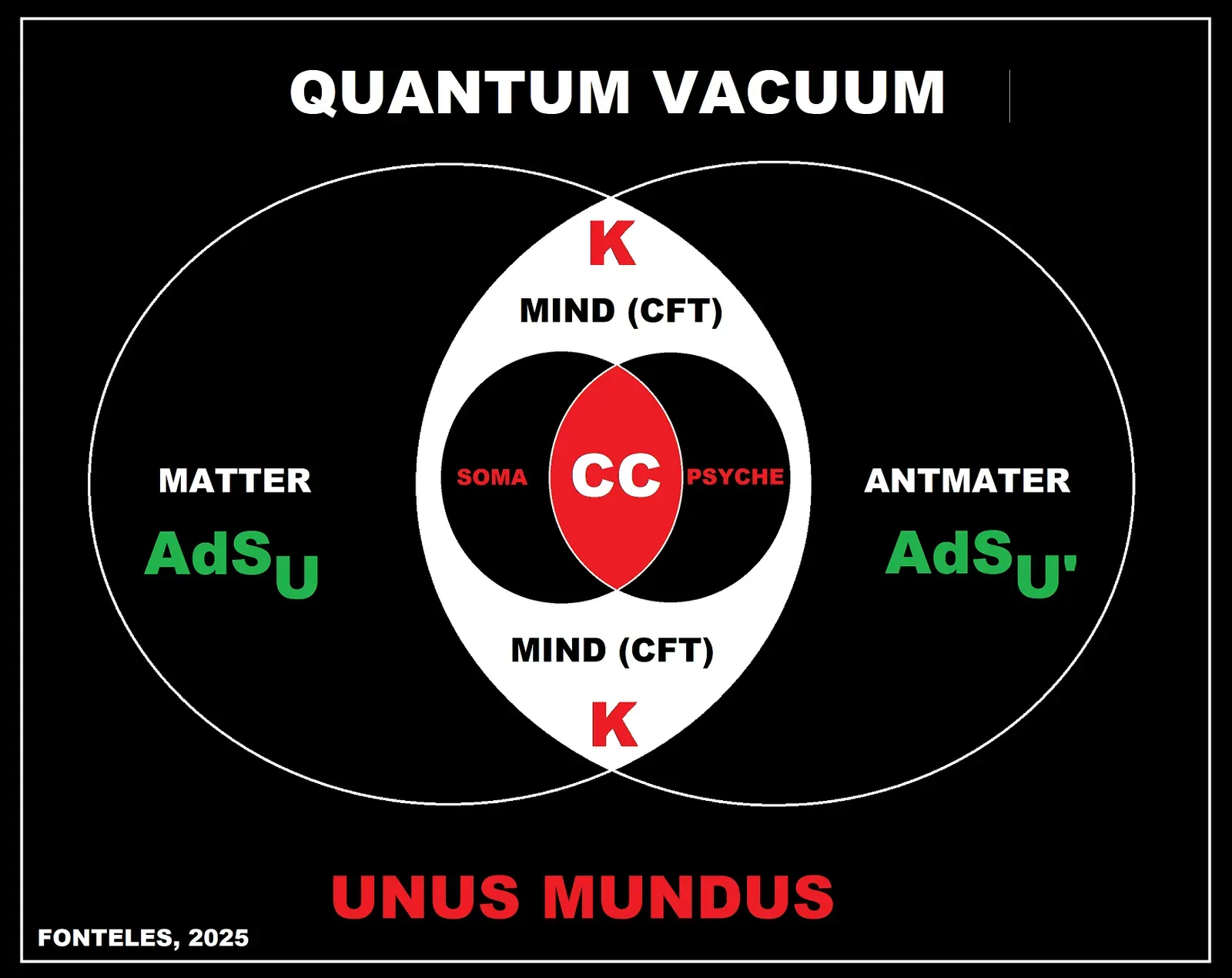
This is where things get genuinely philosophical. If the holographic principle is correct, what does that mean for you, the person reading this right now? In a larger and more speculative sense, the theory suggests that the entire universe can be seen as a two-dimensional information structure “painted” on the cosmological horizon, so that the three dimensions we observe are only an effective description at low energies.
Your sense of depth, of space, of moving through a three-dimensional world may simply be the universe’s way of rendering a lower-dimensional reality into something you can navigate and experience. It turns out that this idea of the holographic principle, or the universe is a hologram, although at first it might seem like a completely random idea, actually helps us to solve some of the thorniest puzzles that arise when you try to combine quantum mechanics and general relativity. Stephen Hawking himself took this seriously in his final theoretical work. Hawking’s final theory of the Big Bang provides a bold and surprising answer. It envisages the universe as a holographic projection. If the universe’s greatest mind spent his final years on this idea, it’s probably worth taking seriously.
Conclusion: Reality Might Be Stranger Than You Ever Imagined

We are, in 2026, standing at one of the most extraordinary moments in the history of science. Physicists are not just speculating about whether our reality is an illusion. They are building mathematical tests, publishing peer-reviewed results, and pointing gravitational wave detectors at the sky to find out.
The holographic universe theory does not mean your life is fake, or that your experiences do not matter. What it suggests is something far more astonishing: that the information making up everything you are, everything you love, and everything you will ever know may be encoded on a cosmic surface far beyond what you can see. While the holographic universe theory offers an exciting and potentially groundbreaking perspective on the nature of existence, there’s still much we don’t understand. As scientists continue to explore this mind-bending concept, it invites us to question our understanding of space, time, and reality itself.
Physics, at its best, does not just answer questions. It replaces your old questions with far more beautiful ones. Here, the question is no longer “what is the universe made of?” The real question, the one scientists are now racing to answer, is this: what is the screen that the universe is painted on, and what lies beyond it? What do you think? Could you accept a reality that turns out to be a hologram? Tell us in the comments.