
Imagine you are sitting in a quiet room, and somewhere in the walls, so faint you cannot hear it without instruments, there is a hum. Not from a machine. Not from traffic outside. From the literal birth of time itself. That is not a metaphor. It is the reality of our universe right now, in 2026, and it is one of the most jaw-dropping facts in all of science.
The Big Bang was not just an event that happened and then faded into history. It left behind fingerprints, ripples, and reverberations that you could, in theory, detect from your own living room. Let’s dive into what those echoes actually are, why they still matter after nearly 14 billion years, and what the very latest science is telling us about them.
The Ancient Glow That Never Really Left
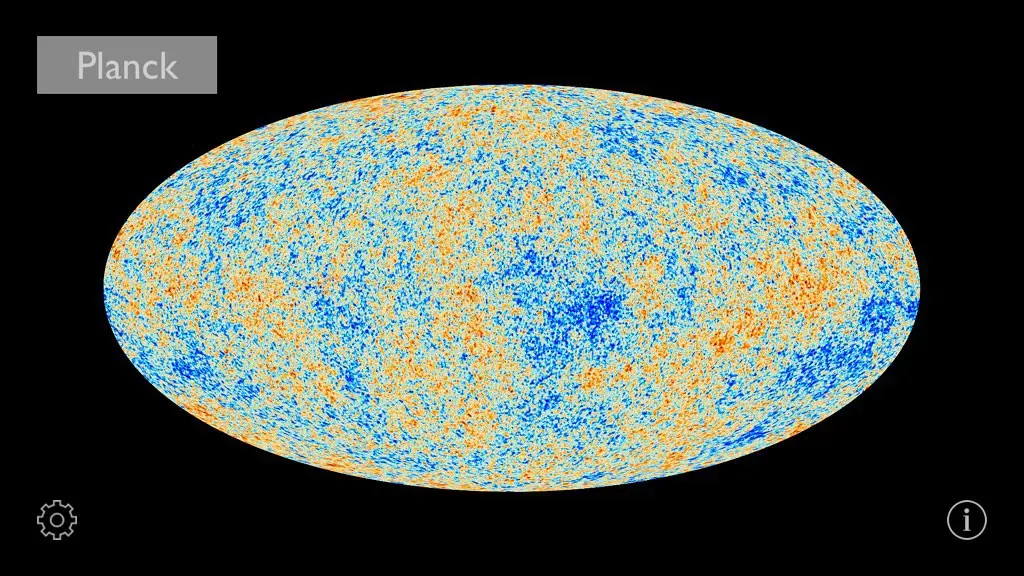
The Cosmic Microwave Background, or CMB, is the cooled remnant of the first light that could ever travel freely throughout the universe. This “fossil” radiation, the furthest that any telescope can see, was released soon after the Big Bang. Think of it like the last flicker of an impossibly ancient bonfire, one that burned so hot and so bright that its warmth is still washing over you, even now.
For the first 380,000 years or so after the Big Bang, the entire universe was a hot soup of particles and photons, too dense for light to travel very far. As the cosmos expanded, it cooled and became transparent. Light from that transition could now travel freely, and we see a lot of it today. That moment was the universe’s first exhale, and we are still breathing it in.
You Could See It on Your Old Television
Here is the thing that never gets old, no matter how many times you hear it. A tiny fraction of the static you see on an old TV tuned to no channel comes from the CMB. When you see that snow on the screen, a part of it is the ancient afterglow of the Big Bang, washing over you from all directions. That is not science fiction. That is physics.
Due to cosmic expansion, that light was stretched until it became invisible, shifting from a blinding glow to very faint, cold radio waves. Today, its temperature is just about 2.7 degrees above absolute zero. For something nearly 14 billion years old, it is remarkably still there, still present, still detectable. Honestly, that alone should make your head spin a little.
How It Was Discovered Completely by Accident
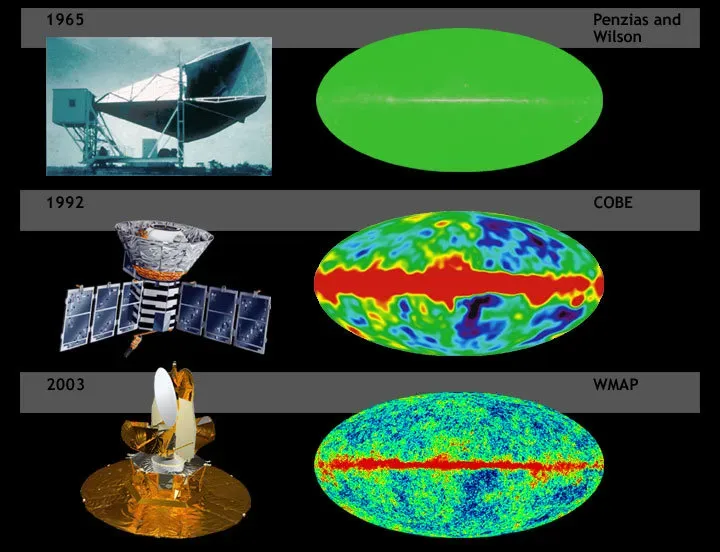
The discovery of this cosmic noise happened entirely by accident in 1965, when Arno Penzias and Robert Wilson, two engineers at Bell Labs, were trying to eliminate noise from a radio antenna because they kept hearing a constant, persistent, and inexplicable hum. At first, they thought the problem was pigeons nesting in the instrument. After carefully cleaning away the bird droppings, the annoying noise persisted in all directions. It did not come from the Sun or our galaxy, but from infinite space.
For their discovery, Penzias and Wilson were awarded the Nobel Prize in Physics in 1978. More than awards, their finding cemented the Big Bang theory as the leading explanation for the origin of the universe. The universe wasn’t eternal and unchanging – it had a beginning, and it left behind a whisper of its birth. Two engineers trying to shoo pigeons, stumbling onto the most significant cosmological discovery of the twentieth century. You genuinely cannot make this stuff up.
The Cosmic Music Frozen in the Fabric of Space
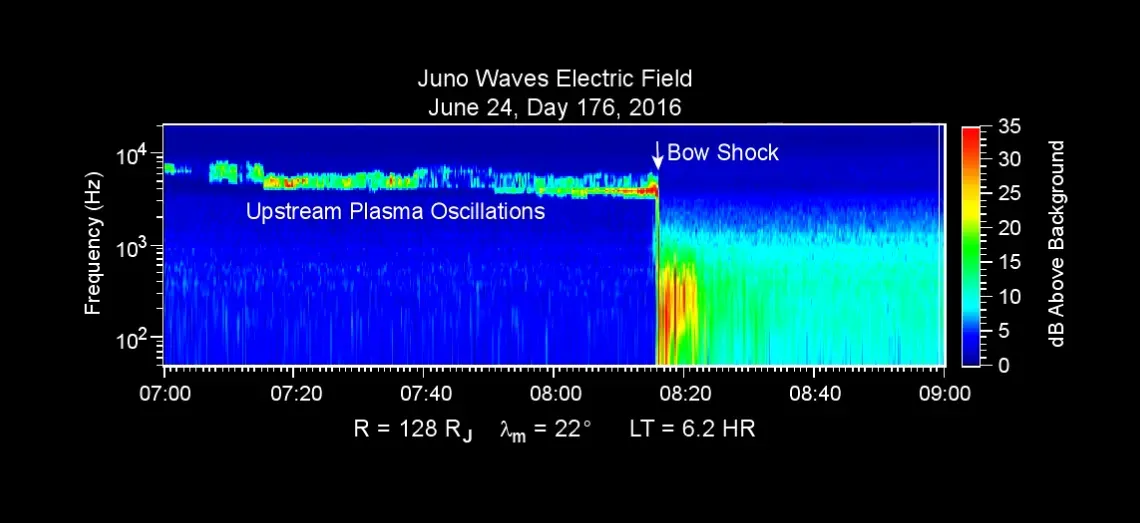
The CMB isn’t just light – it can also be thought of as sound. In the early universe, waves of compressed and rarefied plasma rippled through space, like sound waves through air. These acoustic oscillations are frozen into the CMB’s patterns. It is like pressing your ear to a cathedral wall and hearing the last chord of a concert performed before the Earth even existed.
In cosmology, baryon acoustic oscillations are fluctuations in the density of the visible baryonic matter of the universe, caused by acoustic density waves in the primordial plasma of the early universe. In the same way that supernovae provide a “standard candle” for astronomical observations, BAO matter clustering provides a “standard ruler” for length scale in cosmology. The length of this standard ruler is given by the maximum distance the acoustic waves could travel in the primordial plasma before the plasma cooled to the point where it became neutral atoms. These frozen sound waves are now embedded in the large-scale structure of galaxies spread across the observable universe – a cosmic musical score etched into space itself.
What the CMB Tells You About Everything
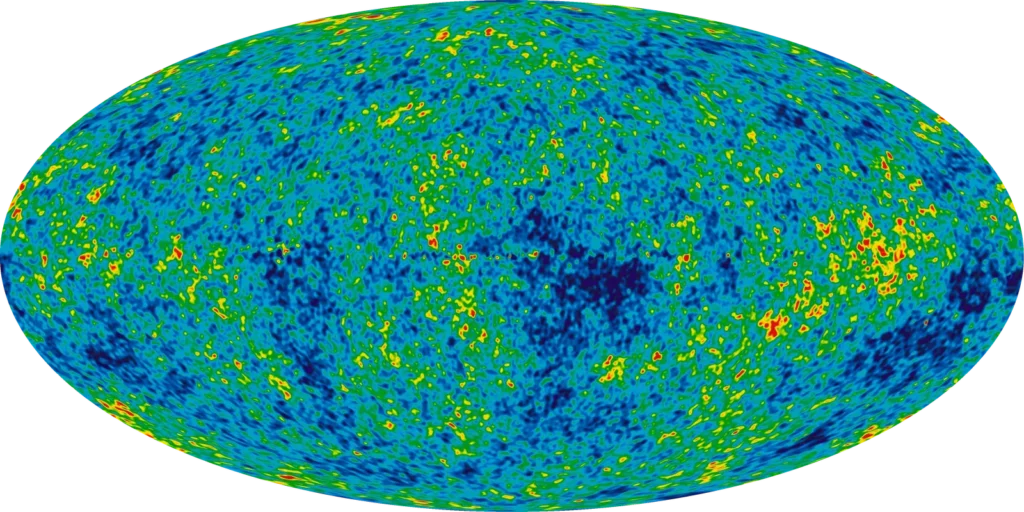
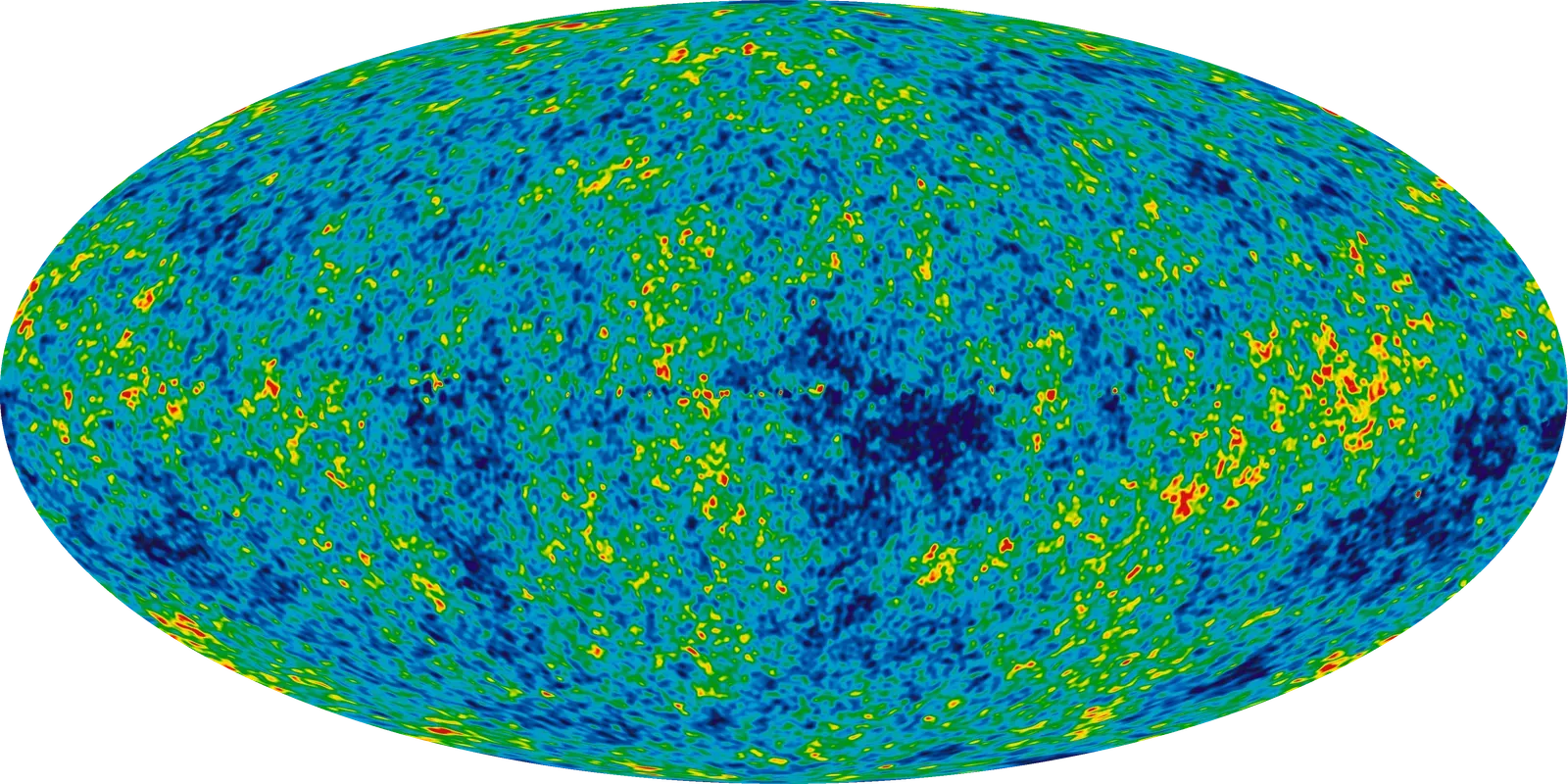
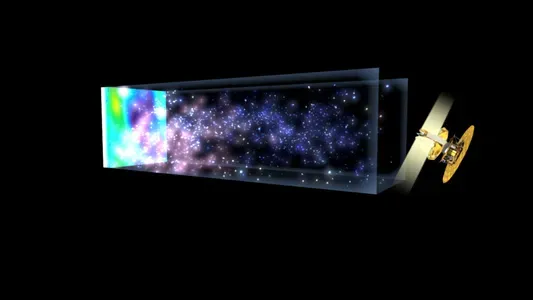
Astronomers use the patterns in CMB light to determine the total contents of the universe, understand the origins of galaxies, and look for signs of the very first moments after the Big Bang. It is, in effect, a baby photo of the cosmos – and just like any baby photo, you can look at it and see the seeds of everything that came later.
Scientists call these color patches the “seeds” of galaxies. Without these initial irregularities, gravity would not have been able to clump matter together, and the universe today would be an empty, dull, and completely uniform place in all its vast regions. Thanks to these tiny seeds, the first stars and large structures were born, where every point on the map tells the story of a future galaxy cluster. Every galaxy you have ever seen in a photograph, including the Milky Way you live in, grew from those imperceptibly tiny wrinkles in the ancient light. That is equal parts humbling and astonishing.
When Scientists Challenged Everything We Thought We Knew
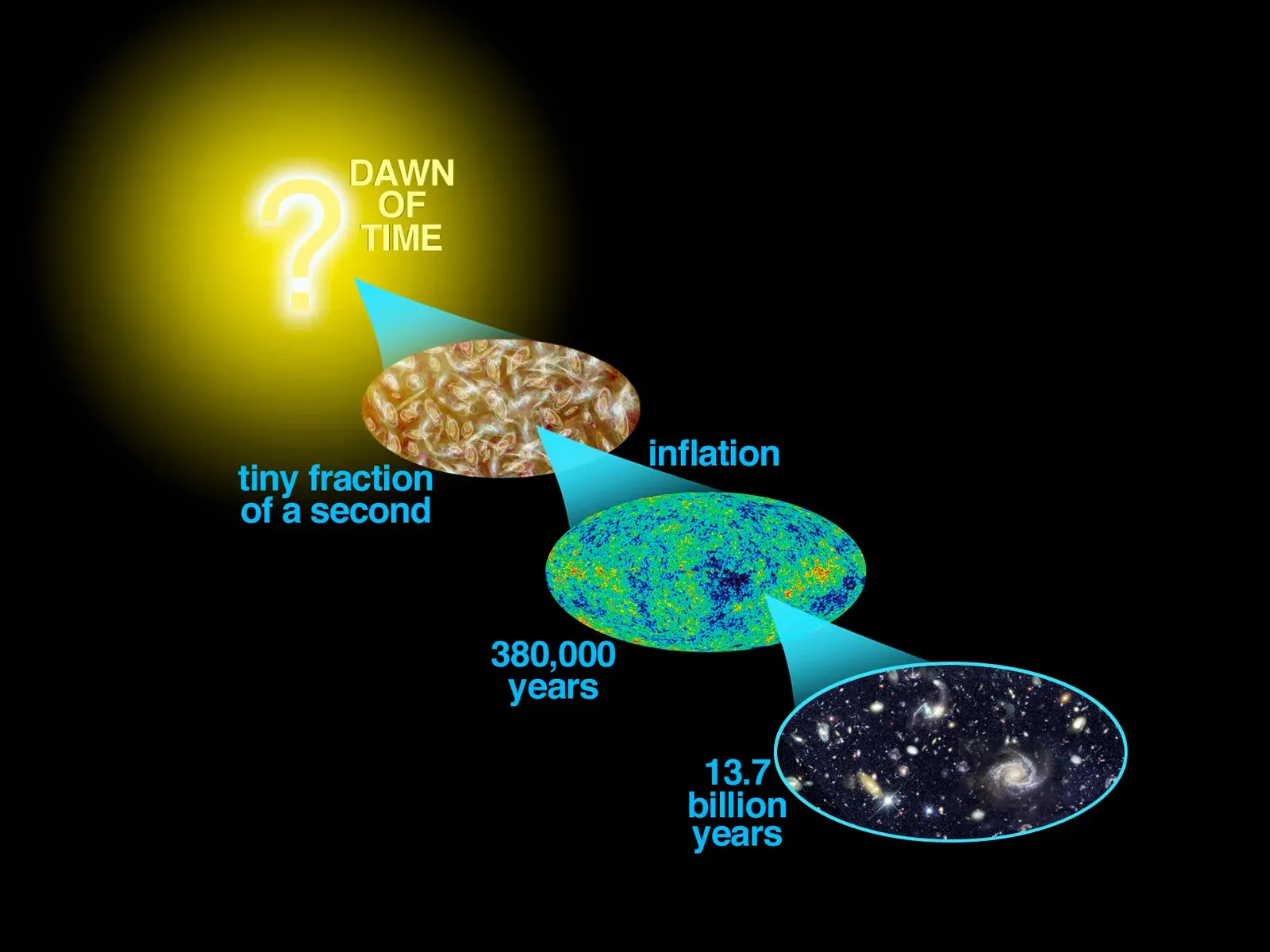
Now, here is where things get genuinely unsettling – in the best possible way. The faint “afterglow” that fills the universe has long been one of the most important clues supporting the Big Bang theory. Known as cosmic microwave background radiation, this ancient light not only serves as a snapshot of the early universe, but also helps scientists understand how the very first galaxies came to be. Now, a team of researchers from the Universities of Bonn, Prague, and Nanjing is challenging what we thought we knew. Their new calculations suggest that the strength of this background radiation may have been significantly overestimated. If their findings are confirmed, it could force scientists to rethink some of the most fundamental ideas in modern cosmology.
The rocking of the cosmological boat, as it were, is driven by new evidence of early-type galaxies. Recent data from the James Webb Space Telescope suggests these ETGs might account for some or even all of the CMB, depending on the simulation used. It is hard to say for sure what this means for the future of Big Bang cosmology, but what’s certain is that as our space telescopes and analysis systems get more sophisticated, we’re learning more about the surrounding universe than ever before. Science at its finest is never really settled, and that is not a weakness. That is the whole point.
The Future of Listening to the Universe’s First Sound
The Simons Observatory is one of the most ambitious cosmic observatories on Earth, dedicated to studying the cosmic microwave background – the ancient light left over from the Big Bang. Its mission includes exploring the physics of the early universe, the nature of dark energy and dark matter, neutrino properties, and the formation of cosmic structures. Instruments like this, perched at extreme altitude in the Chilean desert where the air is thin and the sky is impossibly clear, are pushing the boundaries of what humanity can hear from across time.
In 2025, knowledge of the cosmic microwave background continues to enrich modern cosmology, guiding the big questions about dark matter, dark energy, and hypotheses about cosmic inflation. The attentive study of its characteristics invites speculation about the extent of what the primordial universe still holds, while precisely scrutinizing the limits of our observable universe and beyond, towards the unknown of proposed multiverses. Every new generation of telescopes peels back another layer. The universe is not done telling its story. Not by a long shot.
Conclusion: The Universe Is Still Speaking, If You Know How to Listen
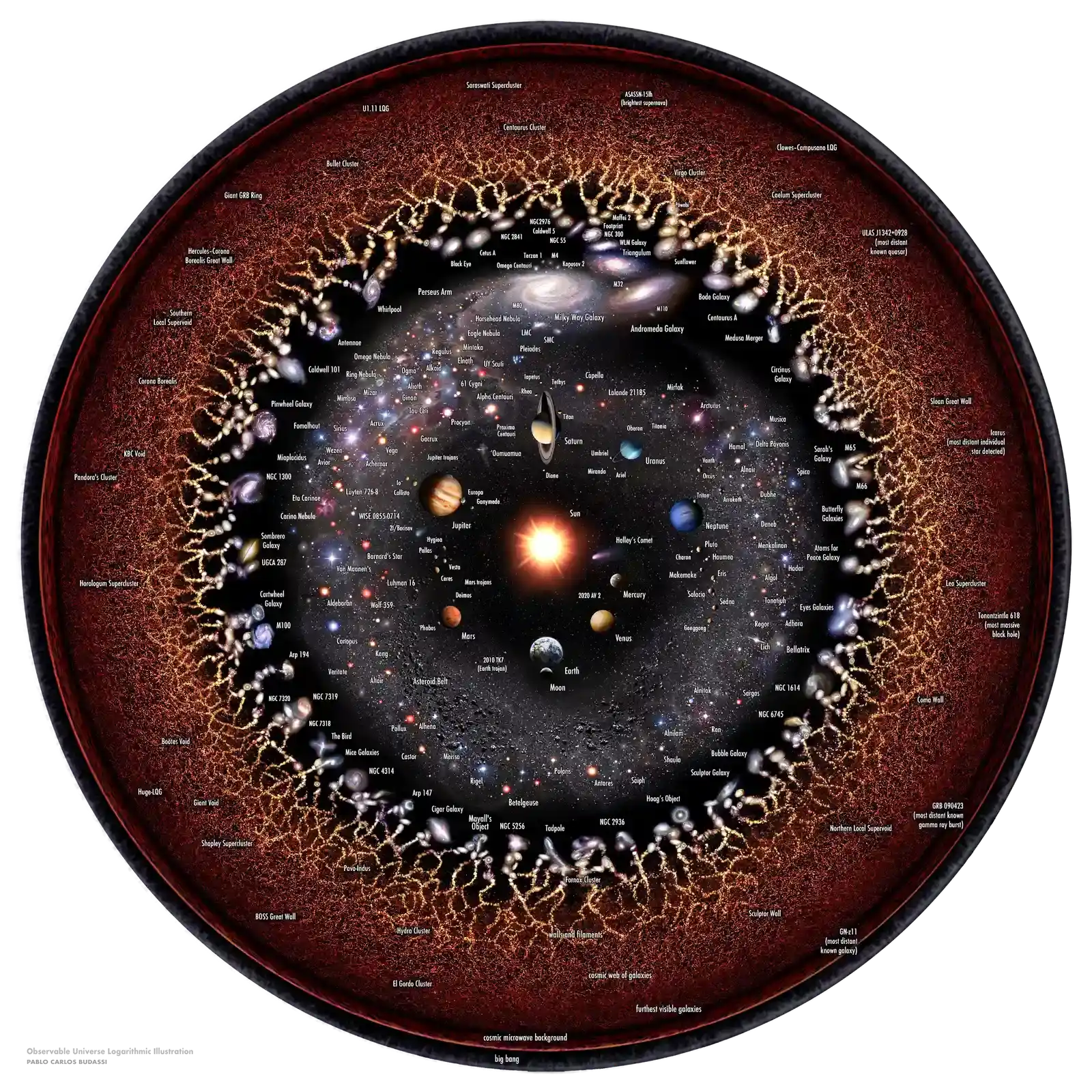
There is something quietly profound about the fact that the very first moment of existence, an event so violent and so total that no words truly capture it, did not simply vanish into silence. It left behind a glow that fills every corner of space. It froze its sound waves into the positions of galaxies. It imprinted its temperature variations onto the sky like a painter signing a canvas.
The CMB takes astronomers as close as possible to the Big Bang, and is currently one of the most promising ways we have of understanding the birth and evolution of the universe in which we live. You are, right now, bathed in that ancient light. Every second of every day, photons that have been traveling for nearly 14 billion years are passing through you. The Big Bang did not just happen long ago in a place far away. In a very real sense, it is still happening around you, right now.
So the next time you see static on an old screen, or you look up at the night sky and feel that familiar shiver of scale, ask yourself: what would it mean to you if the very first moment of time was never truly over?
Hi, I’m Andrew, and I come from India. Experienced content specialist with a passion for writing. My forte includes health and wellness, Travel, Animals, and Nature. A nature nomad, I am obsessed with mountains and love high-altitude trekking. I have been on several Himalayan treks in India including the Everest Base Camp in Nepal, a profound experience.