A Striking Cosmic Phenomenon Emerges (Image Credits: Cdn.mos.cms.futurecdn.net)
The James Webb Space Telescope recently captured evidence of the farthest jellyfish galaxy observed to date, providing a window into transformative processes in the early universe.[1]
A Striking Cosmic Phenomenon Emerges
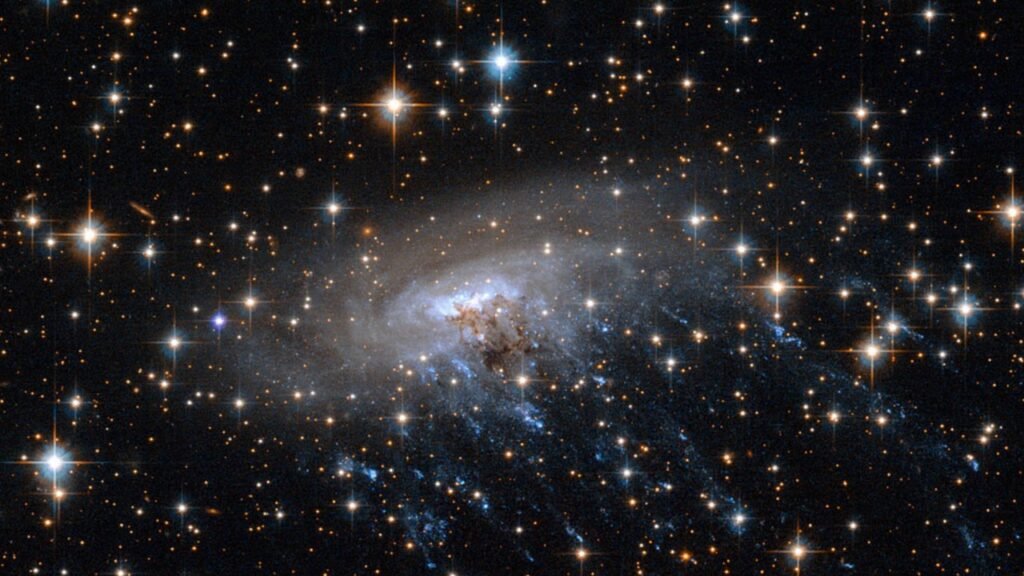
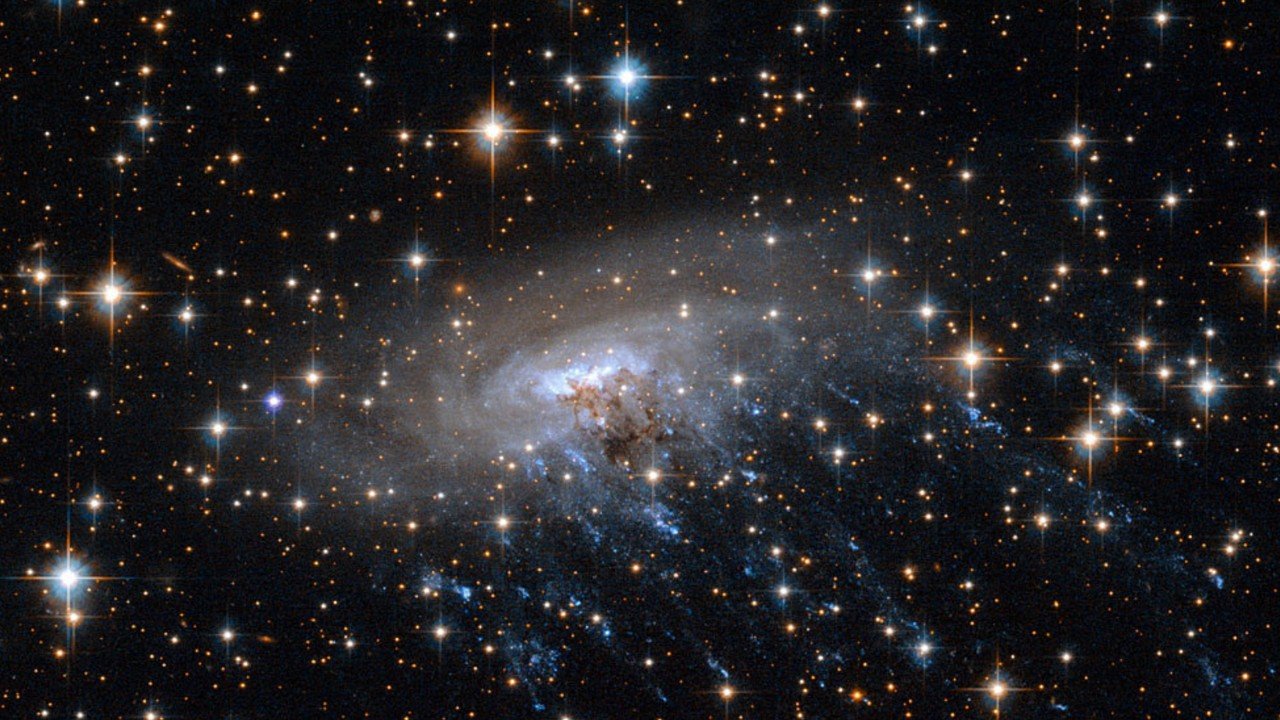
Astronomers spotted a galaxy resembling a jellyfish while sifting through James Webb data from the COSMOS field. This object, named COSMOS2020-635829, displays long, tentacle-like streams of gas trailing behind it.[1]
The galaxy resides at a redshift of 1.156, meaning observers see it as it appeared roughly 8.5 billion years ago. Bright blue knots along the tails indicate young stars forming in the stripped gas outside the main disk. Such features challenged researchers immediately upon discovery.[1]
Dr. Ian Roberts from the University of Waterloo led the team that identified this candidate. They examined deep-space observations hoping to find previously undocumented examples.[1]
What Makes a Galaxy a Jellyfish?
Jellyfish galaxies earn their name from the distinctive streams that extend from their cores. These form when a galaxy plunges through the hot, dense intracluster medium of a galaxy cluster at high speed.[1]
The process, known as ram-pressure stripping, acts like a cosmic wind. It pushes gas out from the galaxy, creating trailing tentacles. In COSMOS2020-635829, the one-sided tails confirm this mechanism at work in a proto-cluster environment.[1]
- Normal-looking disk at the core
- Sweeping gaseous tentacles
- Extraplanar star formation in tails
- Evidence of ram-pressure effects
- Location in a forming cluster
This configuration highlights how cluster dynamics reshape galaxies far earlier than previously thought.[2]
Discovery Through James Webb’s Eyes
The team uncovered COSMOS2020-635829 during analysis of Webb’s near-infrared observations. The telescope’s sensitivity revealed details invisible to prior instruments.[1]
Roberts explained, “Jellyfish galaxies are named for the long, tentacle-like streams that trail behind them. They move quickly through their hot, dense galaxy cluster, and the gas within the cluster acts like a strong wind pushing the jellyfish galaxy’s own gas out the back, forming trails.”[1]
The findings appeared in a paper published in The Astrophysical Journal.[1]
Reshaping Views on Galaxy Evolution
This observation suggests galaxy clusters formed harsh environments billions of years ago. Ram-pressure stripping likely quenched star formation in many galaxies, contributing to the prevalence of quiescent ones seen today.[1]
“These data provide us with rare insight into how galaxies were transformed in the early Universe,” Roberts noted.[1]
| Aspect | Observation |
|---|---|
| Distance | Redshift 1.156 (8.5B years ago) |
| Environment | Proto-cluster |
| Process | Ram-pressure stripping |
| Star Formation | In gas tails |
Such early interventions challenge models of cosmic structure growth.
Key Takeaways:
- Most distant jellyfish galaxy pushes boundaries of observation.
- Demonstrates active stripping in proto-clusters 8.5 billion years ago.
- Links to quenching of star formation in modern clusters.
This jellyfish galaxy underscores the violent interactions that sculpted the cosmos long ago. What surprises will James Webb reveal next in galaxy evolution? Share your thoughts in the comments.