
You go through your entire day making decisions, sensing the world around you, trusting your eyes and ears as gospel. Your morning coffee is hot, your chair is solid, and the sky is reliably blue. Simple, right? Yet tucked beneath every mundane moment is one of the most destabilizing questions humanity has ever faced: what if none of this is the complete picture? What if your version of reality is just one of many?
This question isn’t reserved for stoners and science fiction writers anymore. Physicists, philosophers, neuroscientists and cosmologists have been wrestling with it in earnest, and the answers they keep arriving at are genuinely jaw-dropping. Some of the most brilliant scientific minds alive today believe there is serious reason to think that alternate versions of reality not only could exist, but almost certainly do. So buckle up, because the rabbit hole goes surprisingly deep.
The Brain Is Not a Camera: You Construct Reality, Not Record It
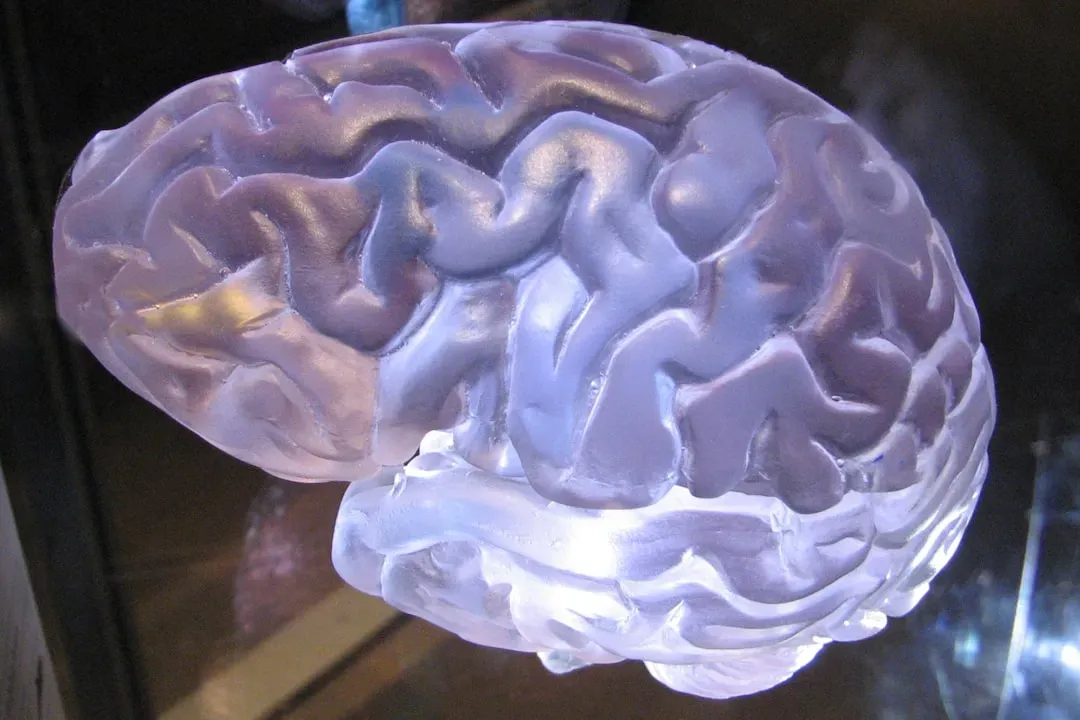
Here’s the thing most of us never stop to consider: your brain doesn’t show you the world as it is. It builds a model of it. Everything you see, hear, smell, and feel is a construction assembled in real time by billions of neurons firing based on incomplete sensory data and a lifetime of learned expectations. That version of reality is yours, and only yours.
Philosophy of perception raises pointed questions based on the evolutionary history of our perceptual systems, particularly the idea that “we don’t see reality, we only see what was useful to see in the past,” suggesting that our species succeeded not despite its inability to perceive reality directly, but because of it. Think about that for a moment. You’re essentially running on a best-guess simulation your brain assembled for survival purposes, not for accuracy.
Out of all the realities, the reality of everyday life is the most important one, since consciousness requires us to be completely aware and attentive to the experience of everyday life. That’s a compelling point but it also quietly admits something enormous: there are other realities to choose from. Your version of what’s real is not the universe’s only draft.
Quantum Mechanics and the Strange Behavior Behind the Curtain
Quantum mechanics suggests that particles can exist in multiple states simultaneously until observed. This quantum behavior may indicate the presence of parallel realities. When quantum events occur, reality might split into different branches, with each branch representing a unique outcome in a separate universe. If you’ve never found that genuinely unsettling, you might want to read it again slowly.
I think the most mind-bending part of quantum theory is not just that particles behave strangely. It’s that they behave strangely in ways that seem to demand the existence of other realities to explain the math. The quantum rules, which were mostly established by the end of the 1920s, seem to be telling us that a cat can be both alive and dead at the same time, while a particle can be in two places at once. Classical physics simply has no room for that. Quantum mechanics, apparently, does.
Your understanding of quantum mechanics reveals strange behaviors at tiny scales. When particles act in unexpected ways, it might mean they’re interacting with parallel realities. It sounds wild. But this is the working framework of the most precisely tested scientific theory ever developed. That’s not nothing.
The Many Worlds Interpretation: Every Possibility Actually Happens
The Many Worlds Interpretation (MWI) is an interpretation of quantum mechanics that asserts that the universal wavefunction is objectively real, and that there is no wave function collapse. This implies that all possible outcomes of quantum measurements are physically realized in different “worlds.” In other words, the universe doesn’t pick a winner between competing outcomes. Every outcome wins, each in its own branch of reality.
The Many Worlds Interpretation was proposed by physicist Hugh Everett III in 1957. This theory argues that instead of one definite outcome when we observe a quantum event, the universe splits into separate realities. If this applies to every quantum event, then countless parallel universes are constantly forming, each representing a different possible outcome. If true, this means that every choice you make creates a new universe, one where you took a different path, made a different decision, or experienced an entirely different fate.
MWI’s main conclusion is that the universe, or multiverse in this context, is composed of a quantum superposition of an uncountable or undefinable number of increasingly divergent, non-communicating parallel universes or quantum worlds. Sometimes dubbed Everett worlds, each is an internally consistent and actualized alternative history or timeline. It’s not metaphor. These physicists mean it literally.
String Theory and Hidden Dimensions You Can’t See or Touch
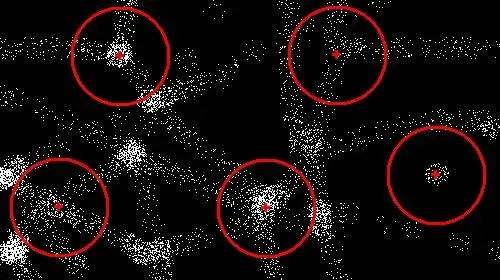
String theory proposes multiple dimensions beyond the four you can observe. These extra dimensions could contain other universes with different physical laws. Imagine living your whole life in a two-dimensional world, completely unaware that a third dimension exists all around you. That’s essentially what string theory suggests may be happening to us right now, except at a scale we can’t even begin to sense.
String theory typically necessitates the existence of up to ten or eleven dimensions, depending on the specific model such as M-theory. These additional dimensions are theorized to be compactified or curled up at scales too small for current detection. The introduction of extra dimensions opens the door to alternative realities existing within these hidden dimensions. It suggests that our perceivable universe might be a three-dimensional “brane” floating in a higher-dimensional space, with other branes, and hence other universes, existing parallel to ours.
Interactions between these branes could potentially explain phenomena such as gravity’s relative weakness compared to other fundamental forces. Honestly, the fact that string theory might explain one of physics’ oldest puzzles by invoking invisible parallel universes is simultaneously the strangest and most satisfying thing I’ve come across in a long time. Science doesn’t get weirder or more wonderful than this.
The Multiverse Map: More Than One Type of Alternate Reality
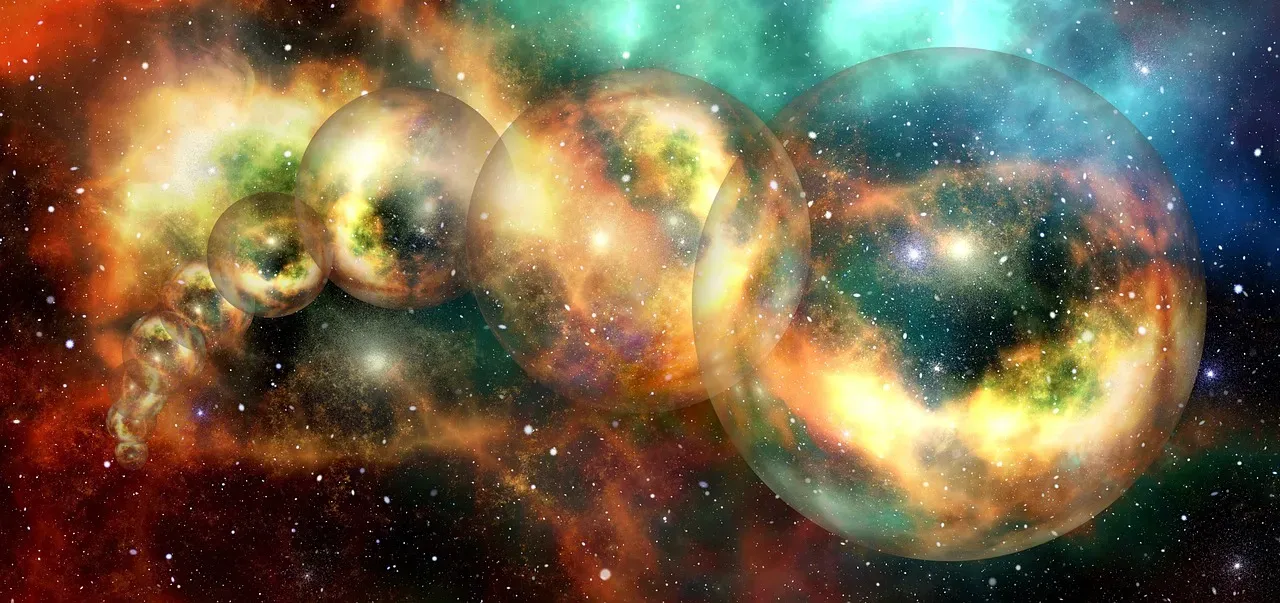
Here’s where it gets layered. There isn’t just one version of the multiverse idea. Scientists have mapped out several distinct types, each arising from a different corner of physics. Max Tegmark and Brian Greene have proposed different classification schemes for multiverses and universes. Tegmark’s four-level classification consists of Level I, an extension of our universe; Level II, universes with different physical constants; Level III, many-worlds interpretation of quantum mechanics; and Level IV, an ultimate ensemble.
In the eternal inflation theory, a variant of the cosmic inflation theory, the multiverse or space as a whole is stretching and will continue doing so forever, but some regions of space stop stretching and form distinct bubbles. Such bubbles are embryonic level I multiverses. Different bubbles may experience different spontaneous symmetry breaking, which results in different properties, such as different physical constants. Think of it like a cosmic loaf of bread rising in the oven, with each air bubble becoming its own universe.
The anthropic principle suggests that the existence of a multitude of universes, each with different physical laws, could explain the apparent fine-tuning of our own universe for conscious life. The weak anthropic principle posits that we exist in one of the few universes that support life. It’s a staggering thought: maybe the universe didn’t design itself for us. Maybe we just happen to be in the one that worked.
The Simulation Hypothesis: What If Reality Is Coded?

The simulation hypothesis proposes that what one experiences as the real world is actually a simulated reality, such as a computer simulation in which humans are constructs. There has been much debate over this topic in the philosophical discourse, and regarding practical applications in computing. Let’s be real: this one sounds like pure science fiction. Yet the people taking it seriously are not fringe thinkers. They are philosophers at top universities and physicists who think about fundamental reality for a living.
In 2003, philosopher Nick Bostrom proposed the simulation argument suggesting that if a civilization becomes capable of creating conscious simulations, it could generate so many simulated beings that a randomly chosen conscious entity would almost certainly be in a simulation. This argument presents a trilemma: either such simulations are not created because of technological limitations or self-destruction, or advanced civilizations choose not to create them, or we are almost certainly living in one.
The simulation hypothesis challenges traditional notions of reality and existence. If your consciousness resides within a simulation, what does it mean for concepts like free will, identity, and the soul? Those aren’t casual questions. They are the deepest kind, and the simulation hypothesis forces them onto the table in a way that is surprisingly hard to dismiss.
Consciousness at the Center: Is Your Mind Shaping Reality Itself?
Maybe the most radical proposal of all doesn’t come from astrophysics or string theory. It comes from a question about what consciousness actually is and what role it plays in generating reality. A new theoretical model proposes that consciousness is fundamental, and that only thereafter do time, space, and matter arise. This is the starting point for a framework presented by Maria Strømme, Professor of Materials Science at Uppsala University, published in AIP Advances.
The framework presents consciousness not as a byproduct of brain activity, but as a fundamental field underlying everything we experience, including matter, space, time, and life itself. That’s a complete inversion of how most of us think about minds and the universe. Usually we imagine the universe came first and consciousness showed up later, like a late guest at a party. This theory suggests consciousness was never the guest. It was the host.
The theory is based on the idea that consciousness constitutes the fundamental element of reality, and that individual consciousnesses are parts of a larger, interconnected field. In this model, phenomena that are now perceived as “mysterious,” such as telepathy or near-death experiences, can be explained as natural consequences of a shared field of consciousness. It’s hard to say for sure how far this theory will travel, but the fact that it was selected as the best paper of its issue in a peer-reviewed physics journal means someone with serious credentials is listening.
The Mandela Effect, Dreams, and Everyday Glitches in the System
You’ve probably experienced it. You remember something vividly, with total confidence, only to discover that your memory contradicts the record. The Mandela Effect, named after the widespread false memory of Nelson Mandela dying in prison in the 1980s, has become a cultural phenomenon. Some people report false memories that suggest they remember events differently than recorded history. Some theorists speculate this could be due to overlapping realities. Most psychologists would offer a simpler explanation involving how memory actually works. Still, the idea is hard to fully shake.
Then there are dreams. Scientists have suggested that dreams sometimes act as portals to alternate realities, connecting a person to another version of themselves in a parallel world. It’s a speculative idea with no confirmed empirical backing just yet, but the hypothesis draws on serious quantum frameworks. According to David Leong, an honorary professor at Charisma University, when a person sleeps and dreams, it might be possible that their consciousness crosses the boundaries of space and time. This is because, during sleep, consciousness is in the least contact with the logical brain, physical reality, and the senses.
Scientists still don’t know much about human consciousness and its limitations. It is possible that consciousness also experiences something like quantum entanglement, a phenomenon that suggests two particles can affect each other’s states regardless of the distance between them. It might be possible that consciousness is also capable of affecting people across parallel universes. Wild? Absolutely. Impossible? Apparently, nobody can say that with certainty yet.
Conclusion: Living at the Edge of What’s Real
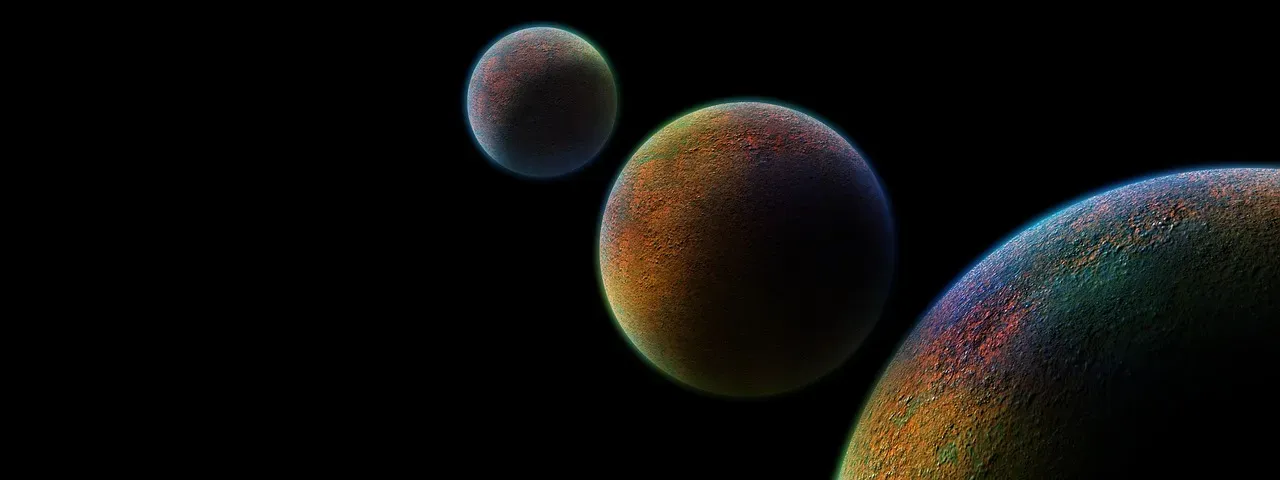
What makes all of this so genuinely exciting is that these aren’t idle philosophical games. They are live debates in the world’s finest physics departments and philosophy journals, backed by real mathematics and real experimental science. Parallel universes are no longer just a feature of a good sci-fi story. There are now some scientific theories that support the idea of parallel universes beyond our own. However, the multiverse theory remains one of the most controversial theories in science. Controversial, yes. Dead on arrival? Not even close.
Your perception of the world around you is real, vivid, and deeply personal. Yet it may also be just one narrow channel tuned into a vastly larger broadcast. The idea of parallel universes challenges your perception of reality. If they do exist, they could redefine your understanding of fate, free will, and identity. Are you living the “best” version of your life, or is there another you in a reality where things played out differently?
Honestly, the most fascinating part of all this isn’t the science. It’s what the science is quietly asking you to consider about yourself. If other realities exist, then the choices you didn’t make, the paths you didn’t take, might not be lost at all. They might be thriving somewhere just beyond the edge of everything you can see. So here’s a thought to carry with you: if there are countless versions of you out there right now, which version are you choosing to be in this one? What do you think? Drop your thoughts in the comments below.