If you picture ancient North America as a quiet land of dinosaurs and nothing more, you’re missing some of the wildest characters to ever walk, swim, or soar across this continent. For millions of years, this place was a rotating stage of monsters, giants, and downright bizarre animals that make modern wildlife look almost tame. Think less “national park hike” and more “sci‑fi movie with a gigantic special effects budget.”
When I first saw museum reconstructions of some of these creatures, I honestly thought the artists had gone a little overboard. Then you look at the fossils, the measurements, the bite marks on bones, and you realize: no, this was real. From razor‑toothed marine reptiles patrolling ancient seas to elephant‑sized ground sloths lumbering through forests, North America was once home to creatures you’d never guess shared the same continent you’re standing on today.
Mosasaurus: The Sea Monster That Made Sharks Look Small
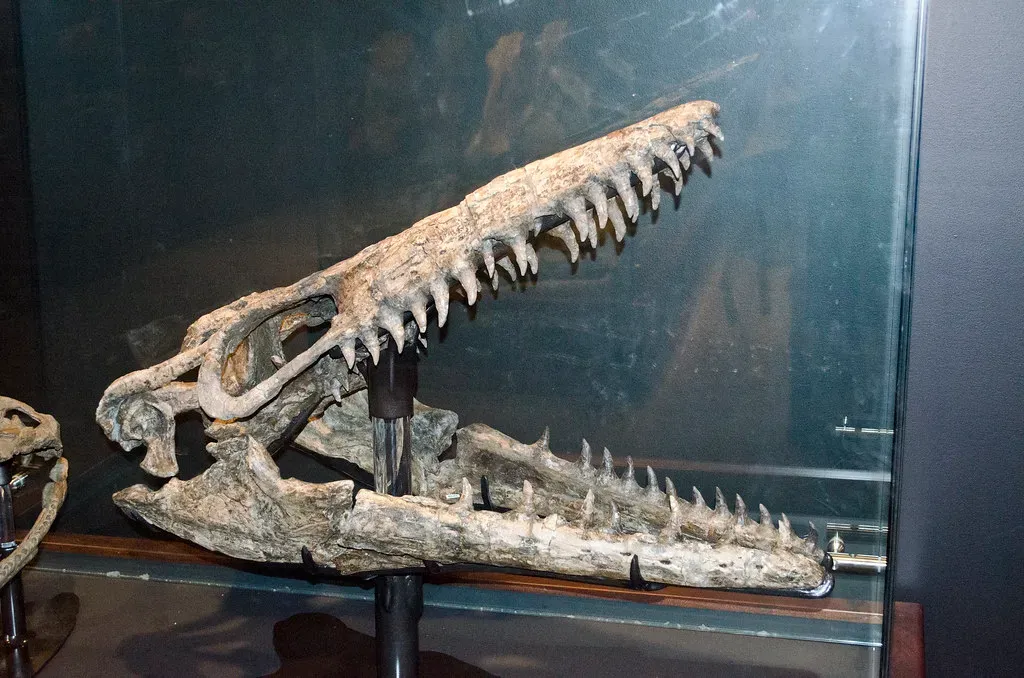
Imagine swimming in warm, shallow seas where the biggest predator isn’t a shark, but a marine reptile longer than a bus with jaws like a living bear trap. That was Mosasaurus, a huge carnivorous reptile that dominated the oceans covering parts of what’s now Kansas, Texas, and the central United States near the end of the Cretaceous period. Paleontologists estimate some species stretched more than fifteen meters, packed with conical teeth built for grabbing slippery prey. It didn’t just snack on fish; it likely ate turtles, other marine reptiles, and anything unlucky enough to cross its path.
The wild part is that much of what is now dry, flat land in the American interior was once a vast inland sea. Fossils of Mosasaurus and its relatives have been found in rock layers that formed on the floor of this ancient waterway. Picture a world where the “middle of the continent” was basically a reptilian shark tank, with these monsters cruising through murky water like muscle‑powered submarines. If you’ve ever stood in a calm Kansas field, it’s hard to believe you’re standing where one of Earth’s most terrifying ocean predators used to hunt.
Quetzalcoatlus: The Giraffe‑Tall Pterosaur That Stalked the Plains
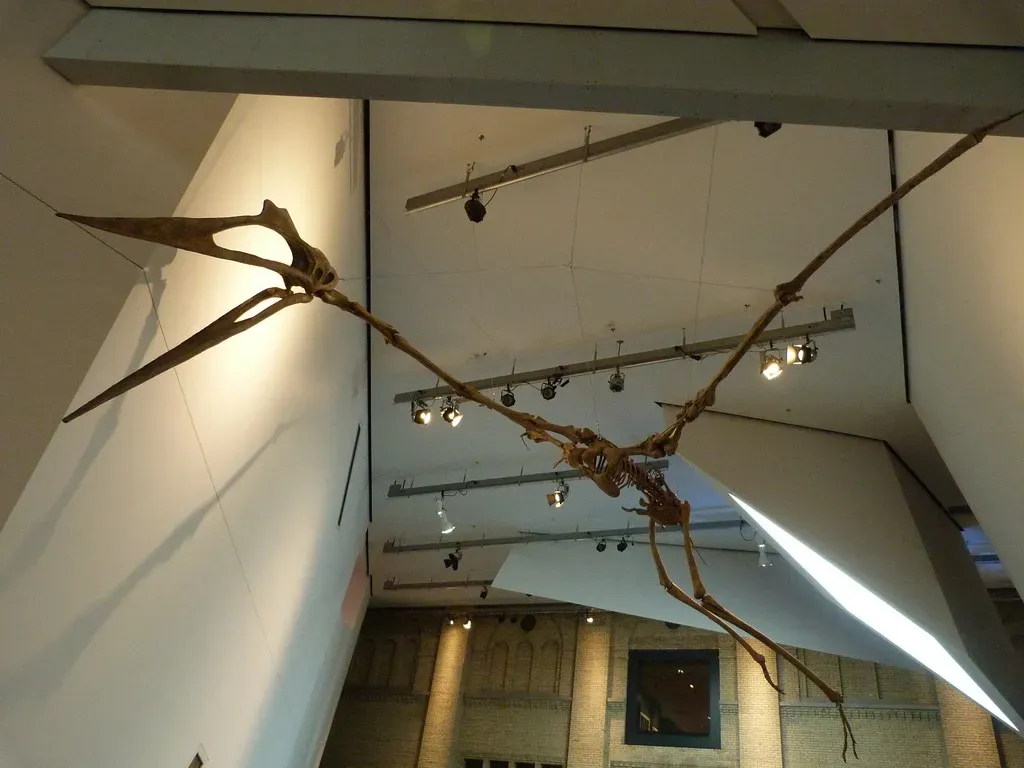
Now picture looking up and seeing a flying creature with a wingspan rivaling a small airplane, then realizing it isn’t just flying overhead – it can also stalk across the ground, towering over you like a living crane. That’s Quetzalcoatlus, one of the largest pterosaurs ever discovered, whose fossils have been found in what is now Texas. Its wings may have reached around ten meters from tip to tip, and when standing on the ground, it may have been as tall as a giraffe. This wasn’t some flimsy, delicate bat; it was a muscular, long‑necked predator built like a bizarre mix of heron, vulture, and stilt‑walker.
Scientists think Quetzalcoatlus likely hunted by walking across open floodplains and wetlands, snapping up small animals with its long, toothless beak. The image of a giant pterosaur striding over late Cretaceous Texas, folding and unfolding those massive wings, feels almost too dramatic for real life, but the bones say otherwise. I’ve stood under a life‑size reconstruction of one, and it’s unnerving – your brain keeps insisting something that big with wings shouldn’t exist. Yet for a time, the skies and open lands of North America belonged to this impossibly huge, airborne hunter.
Deinonychus: The Real “Raptor” That Hunted in Packs
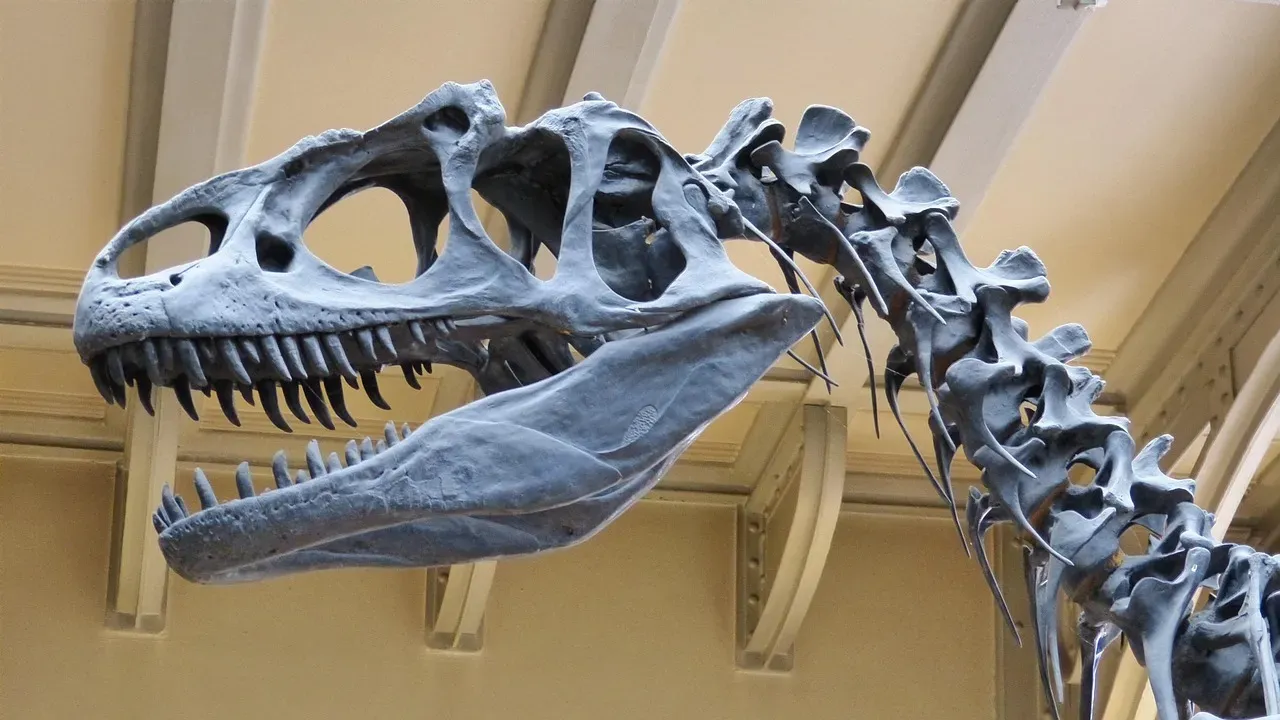
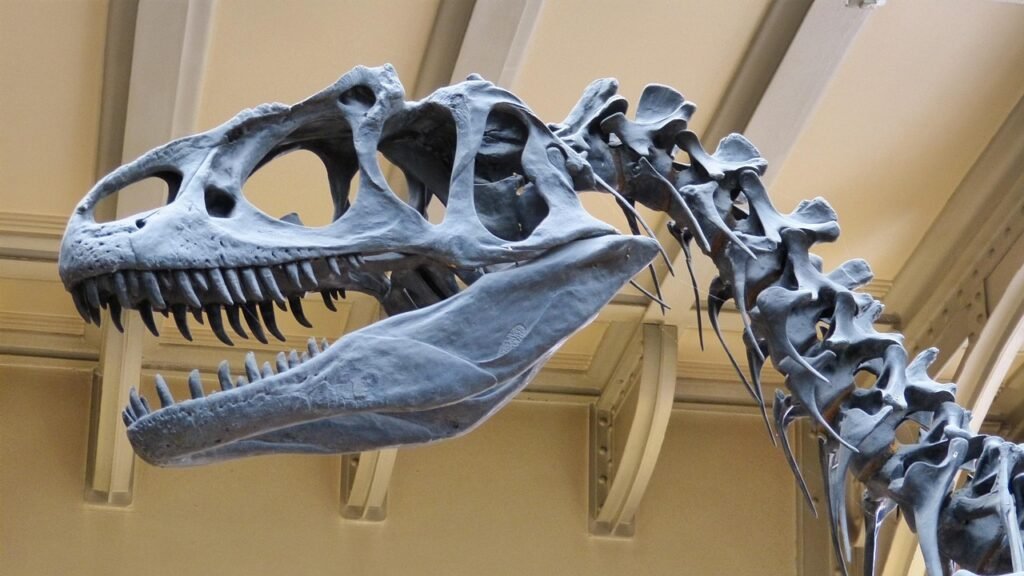
If you’ve ever watched movies about Velociraptors and thought they seemed too clever and scary to be real, you were actually thinking of something much more North American: Deinonychus. This dinosaur, discovered in Montana and Wyoming, was a mid‑sized predator with a sickle‑shaped claw on each foot and a build made for speed and agility. It was much larger than the real Velociraptor from Asia, and its fossils show strong, grasping hands and a stiffened tail that worked like a dynamic counterbalance when it lunged. Walking on two legs, it likely stood about as tall as a person’s hip but was long, lean, and all muscle.
What makes Deinonychus so shocking is the evidence suggesting it may have hunted in groups. Paleontologists have found multiple Deinonychus skeletons around the remains of large plant‑eaters like Tenontosaurus, hinting that they tackled prey much bigger than a single individual could handle. Combine that with likely feathers and a keen sense of balance, and you get a predator that feels more like a pack of wolf‑sized, bird‑like assassins than clumsy lizards. For a long time, discoveries of Deinonychus helped flip the image of dinosaurs from slow, lumbering reptiles to fast, active hunters. The idea that this terrifying, coordinated predator once prowled parts of what’s now the American West is enough to make a quiet forest hike feel very different in your imagination.
Megalonyx: The Giant Ground Sloth That Was Anything but Cute
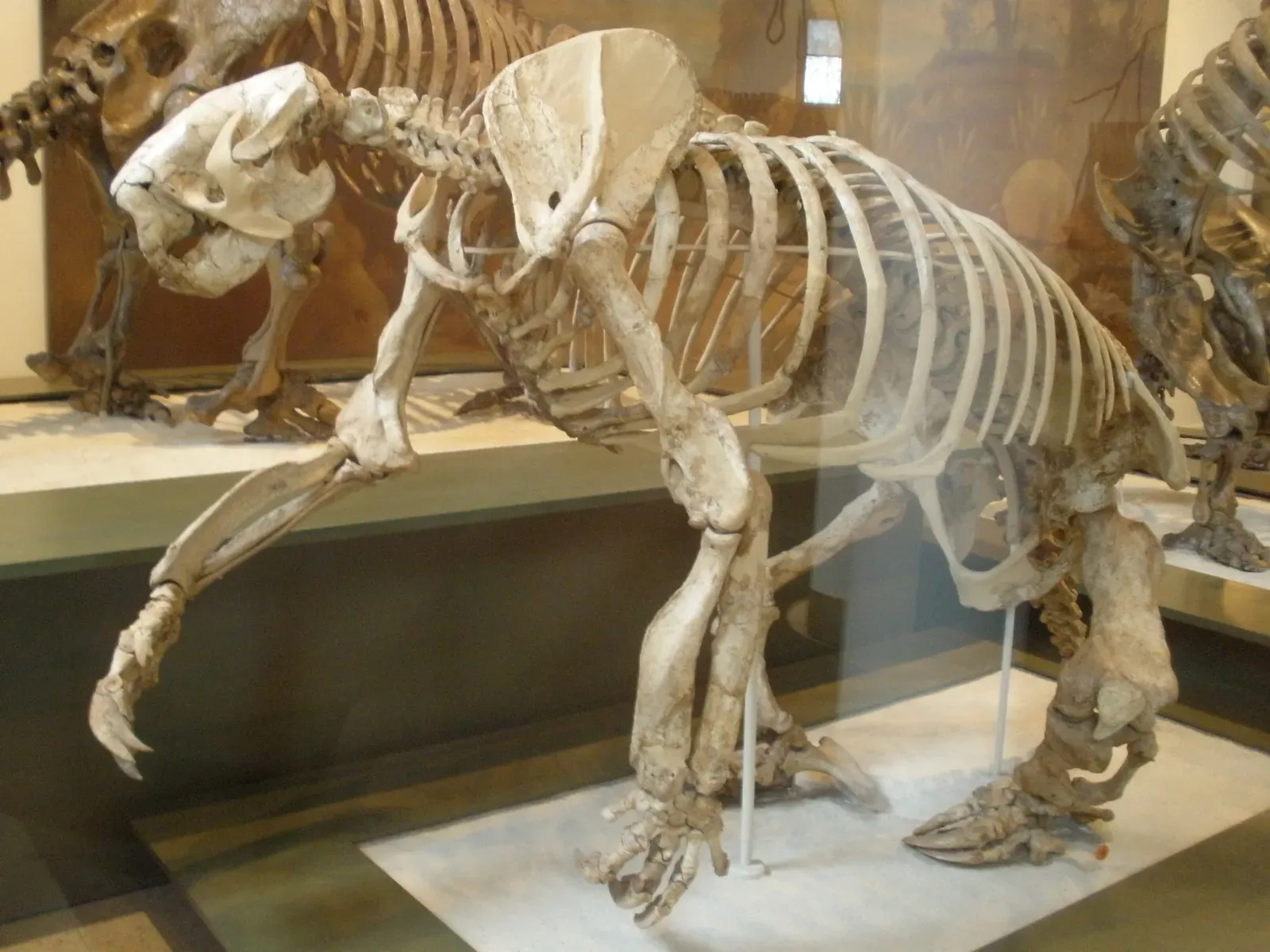
Sloths today have a reputation for being slow, sleepy, and a little adorable. Megalonyx, the giant ground sloth that lived across North America during the Ice Age, tears that image to pieces. This animal was roughly the size of a modern-day bison, with powerful forelimbs and massive curved claws that could be longer than a human hand. Instead of hanging from trees, it walked on the ground, sometimes rearing up on its hind legs and using its tail as a tripod for support. Picture a sloth crossed with a bear and a backhoe, and you’re in the right neighborhood.
Fossils of Megalonyx have been found from the eastern United States to the Pacific Northwest, showing that it once roamed forests and open woodlands across a huge stretch of the continent. It was a plant‑eater, stripping leaves, twigs, and branches, probably reshaping vegetation patterns as it fed. There’s good evidence that early humans in North America may have encountered these animals before they went extinct. It’s wild to think about people walking into a clearing and seeing a towering, clawed herbivore watching them back. When you realize that this land was once home to giant sloths instead of just deer and raccoons, it makes the recent past of North America feel strangely close and deeply unfamiliar at the same time.
Gorgonopsian Relatives: Sabre‑Toothed “Proto‑Mammal” Predators Before Dinosaurs
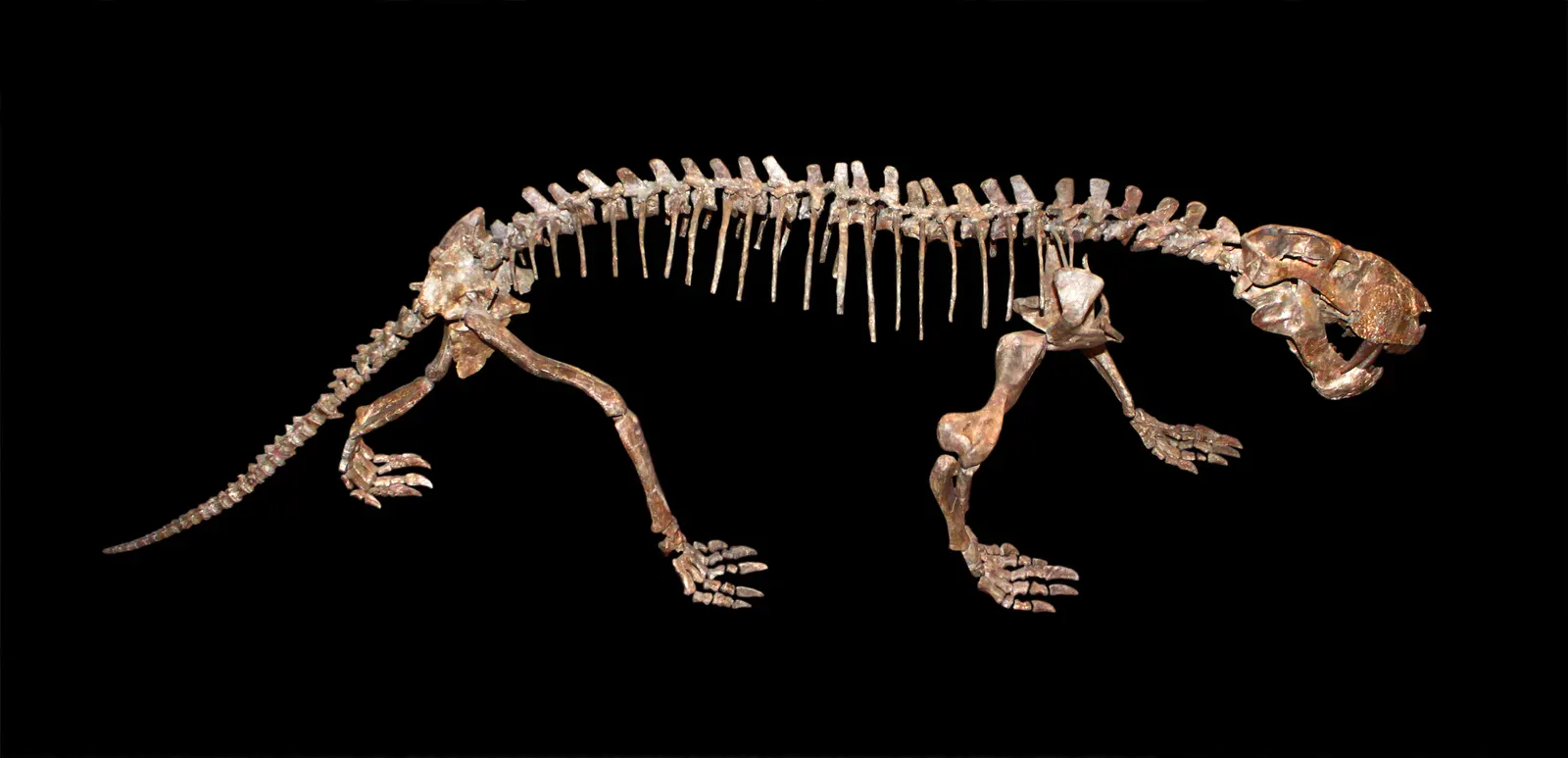
Long before dinosaurs took over, North America hosted predators that looked like they came from someone’s nightmare sketchbook. Among them were relatives of gorgonopsians and other early synapsids, the “proto‑mammal” line that would eventually lead to true mammals. These creatures lived during the late Paleozoic era, hundreds of millions of years ago, and some of their kin had long, saber‑like canine teeth and powerful jaws. They weren’t reptiles in the modern sense, and they weren’t mammals yet either; they were something in between, with features of both groups. In some species from this wider family, the head looked like a mash‑up of a dog, a lizard, and a big‑game hunter’s worst dream.
In what is now North America, their close relatives and similar synapsids prowled swamps and dry uplands, preying on anything they could overpower. Their bones show shifts in jaw structure and tooth patterns that hint at the future evolution of mammals, including us. The thought that our deep evolutionary cousins once ruled these ancient landscapes with saber‑toothed grins is a bit humbling. Stand on a rocky outcrop in the American Southwest or a quiet Appalachian hillside, and beneath your feet are rock layers old enough to have buried entire ecosystems of these creatures. It’s a reminder that the story of North America doesn’t just start with dinosaurs or mammoths; it stretches back into a world so alien that even the ancestors of mammals were monsters in their own right.
The next time you drive across a flat Midwestern field, hike through Texas scrub, or look out over an Appalachian valley, it’s worth remembering that those same places were once hunting grounds, nesting sites, and feeding areas for creatures that feel more like myth than history. The ground under our feet is layered with vanished worlds, stacked one on top of another like chapters in a book written in stone. These five prehistoric animals are just a glimpse of how strange those chapters really were. Which of them would you have guessed once called North America home?