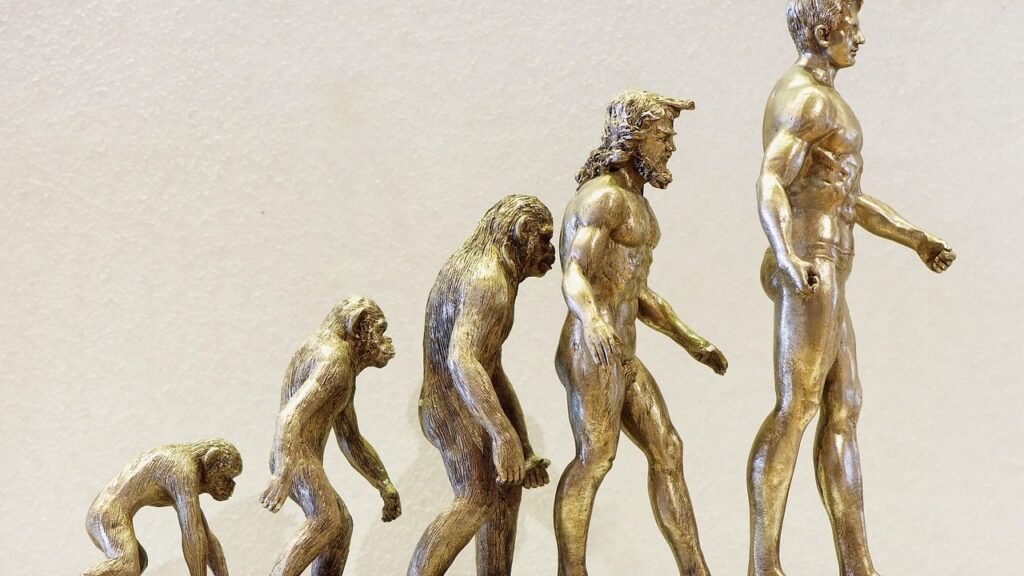

For more than a century, most of us have carried around a simple mental image of evolution: a neat, slow march from simple to complex, from fish to reptiles to mammals to humans. It feels tidy, comforting even, like a well-organized bookshelf. But the more scientists dig into DNA, fossils, and ancient environments, the more that bookshelf looks overturned, with pages scattered all over the floor.
In the last few years especially, new discoveries have hinted that key chapters of evolutionary history may be in the wrong place, out of order, or wildly incomplete. Human ancestors showing up in the wrong continent, complex life appearing far earlier than we thought, and entire groups of animals apparently “ghosting” the fossil record for tens of millions of years – it’s forcing researchers to ask a radical question: what if our evolutionary timeline isn’t just a bit off, but fundamentally distorted?
The Human Origin Story Keeps Moving Back – And Sideways
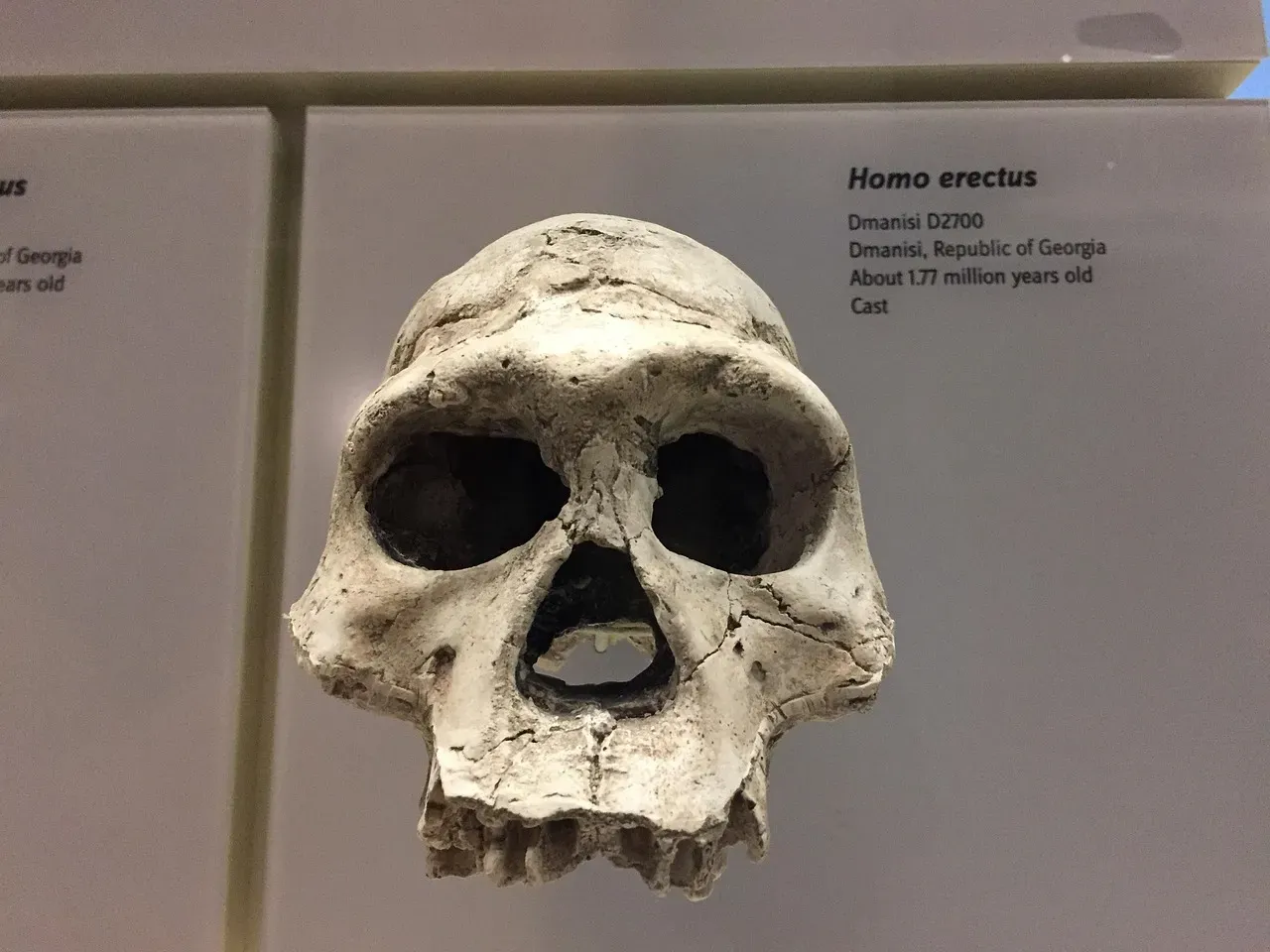
Not long ago, most school textbooks described a relatively simple human origin story: modern humans evolved in Africa about two hundred thousand years ago, then left in one big wave around sixty thousand years ago and spread across the globe. That story is now in pieces. Fossils of early Homo sapiens in Morocco appear to be around three hundred thousand years old, pushing our species’ origin far deeper into the past than many scientists expected.
It gets even messier. Genetic evidence suggests repeated waves of movement out of and back into Africa, a tangled pattern rather than a single migration arrow on a map. We also find ancient human relatives like Denisovans and Neanderthals leaving faint traces of their DNA in modern people, revealing that “our” lineage repeatedly interbred with others. Instead of a clean, linear progression, human evolution looks more like overlapping circles on a messy family whiteboard.
Ancient DNA Is Rewriting Family Trees Overnight
For most of the twentieth century, fossils were the main way to reconstruct evolutionary history, and they are still crucial. But in the last fifteen years, ancient DNA has crashed into the scene like a plot twist in a movie. Scientists can now pull genetic material from teeth, bones, and even sediments in caves, then compare those sequences to living species. Sometimes the results confirm what paleontologists expected. Other times, they blow up the entire family tree.
Ancient DNA has revealed “ghost lineages” of animals and humans that we barely knew existed or had misclassified based on bones alone. In some cases, lineages that looked closely related by anatomy turn out to be only distant cousins at the genetic level. In others, species we thought were far apart genetically diverged more recently than expected. Every time a new ancient genome is sequenced, it has the potential to shove a branch of the family tree into a different place or shift dates by tens of thousands of years.
Complex Life May Have Appeared Far Earlier Than We Believed
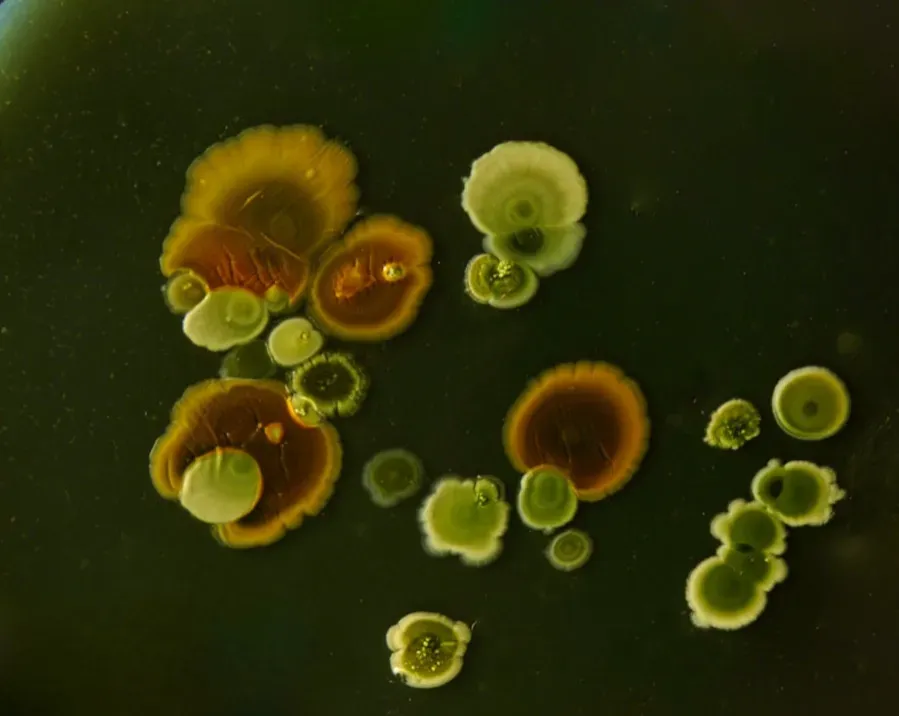
For a long time, the story went like this: simple life dominated Earth for billions of years, then suddenly, around five hundred and forty million years ago, there was a dramatic burst of innovation known as the Cambrian explosion. Many major animal groups seem to appear almost out of nowhere in the fossil record, so it became a convenient starting point for “complex” life. But that view is being challenged as researchers uncover older fossils and chemical signatures that hint at complexity lurking in deeper time.
Some microfossils and sedimentary markers suggest that multicellular organisms, including eukaryotes with complex cells, were present hundreds of millions of years before the Cambrian. There are also hints of early animals or animal-like organisms in rocks that predate the supposed explosion. If these findings hold up, it means the rise of complex life was more of a slow burn than a sudden spark, and that our timeline for when animals first emerged may be off by a very uncomfortable margin.
“Ghost Lineages” Expose Huge Gaps in the Fossil Record
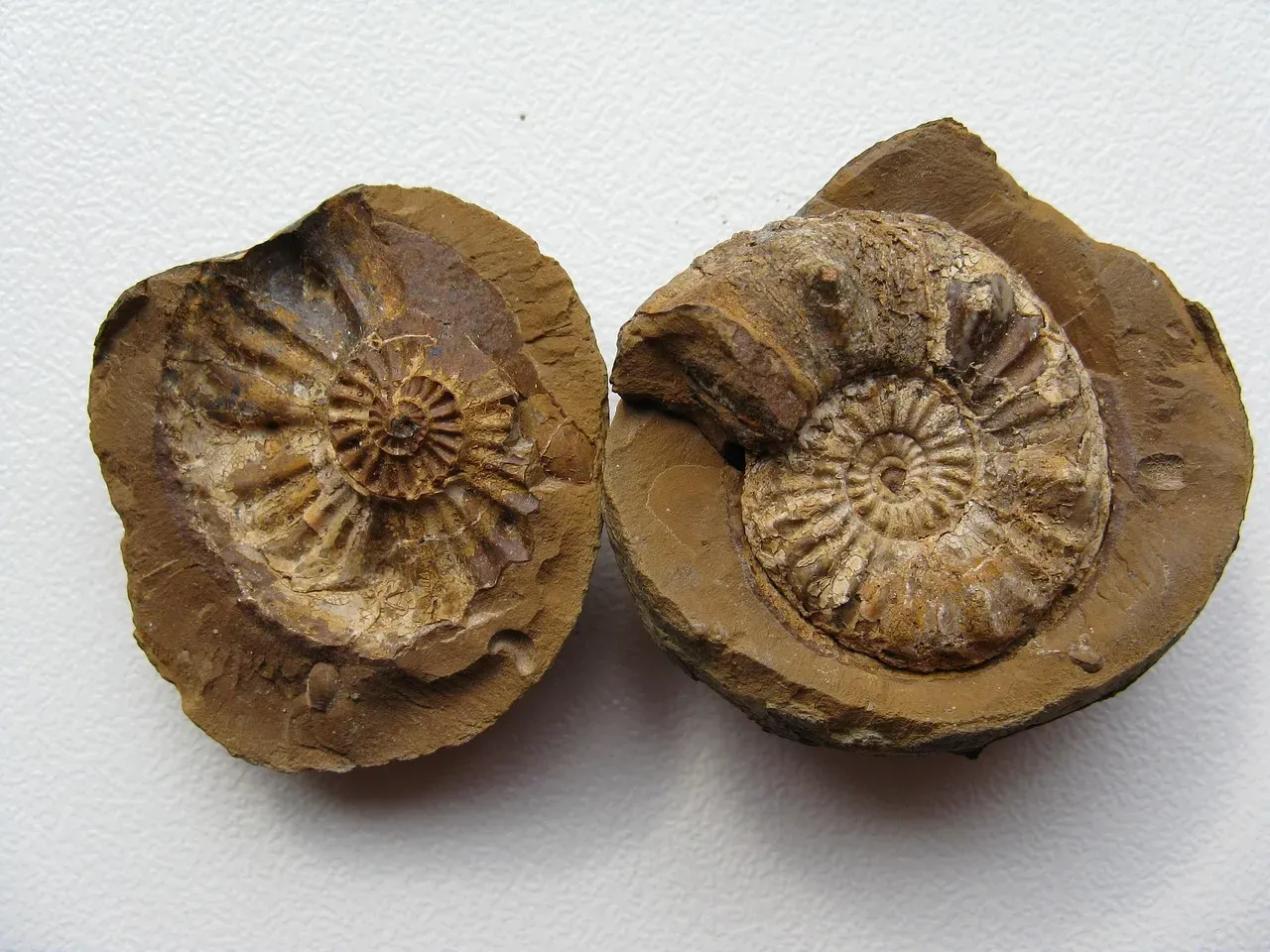
One of the strangest concepts reshaping evolutionary timelines is the idea of ghost lineages. These are inferred branches of the evolutionary tree that must have existed, based on genetics and later fossils, but are almost invisible in the rocks for millions of years. It’s like knowing a character has to exist in a novel because of chapter ten, but finding no trace of them in chapters three through nine.
Ghost lineages show up everywhere: in dinosaurs, in early mammals, in marine invertebrates, and in our own family tree. Their existence suggests that what we see in the fossil record is just a thin sampling of what was really out there. When scientists connect the dots between DNA-based divergence dates and the earliest known fossils, they often find long stretches of “missing time.” Those gaps force timelines to be redrawn, sometimes drastically, and remind us that absence of fossils is not the same thing as absence of life.
Climate Shocks and Catastrophes Scrambled Evolution’s Pace
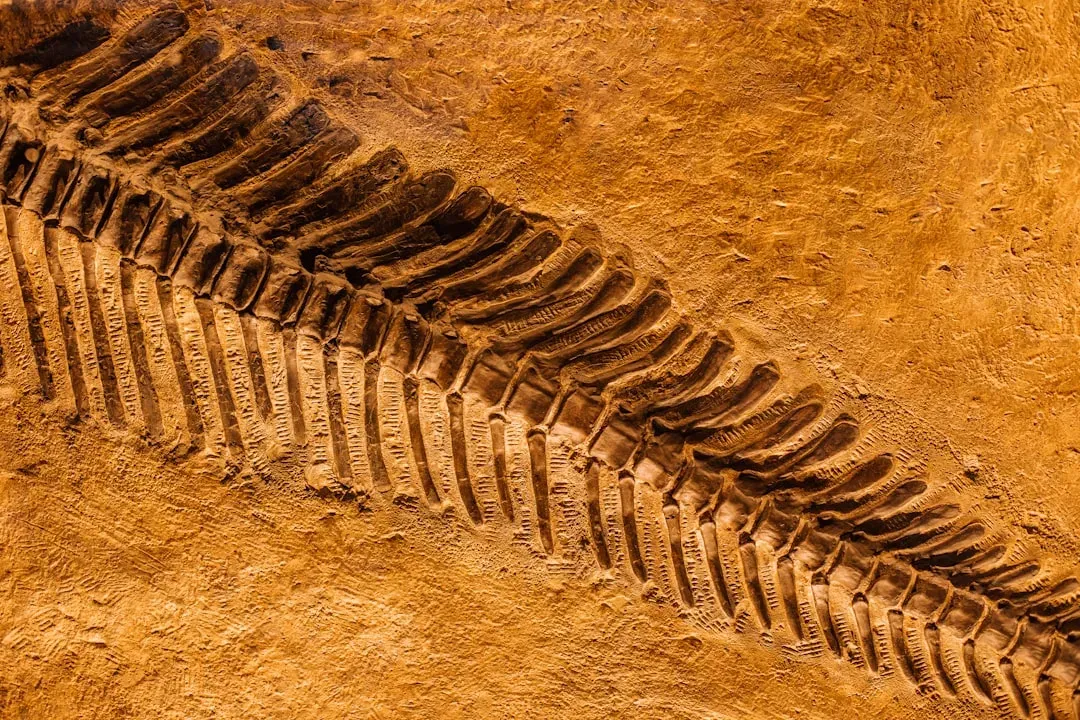
We like to imagine evolution as a slow, steady process, but the Earth itself has never been steady. Sudden climate swings, volcanic eruptions, asteroid impacts, and changes in ocean chemistry repeatedly jolted ecosystems. As researchers line up high-precision climate records with fossil and genetic timelines, they’re seeing that big environmental shocks seem to compress and stretch evolutionary change in surprising ways.
Some lineages that were thought to have evolved gradually may instead have undergone rapid bursts of change during times of stress, while others remained almost unchanged for astonishingly long periods. Major extinction events appear to have acted like a reset button, wiping out dominant groups and giving obscure survivors a chance to radiate. When you start layering these environmental disruptions on top of the family tree, the idea of a neat, evenly spaced evolutionary timeline quickly falls apart.
Evolution Is Much More of a Bush Than a Ladder
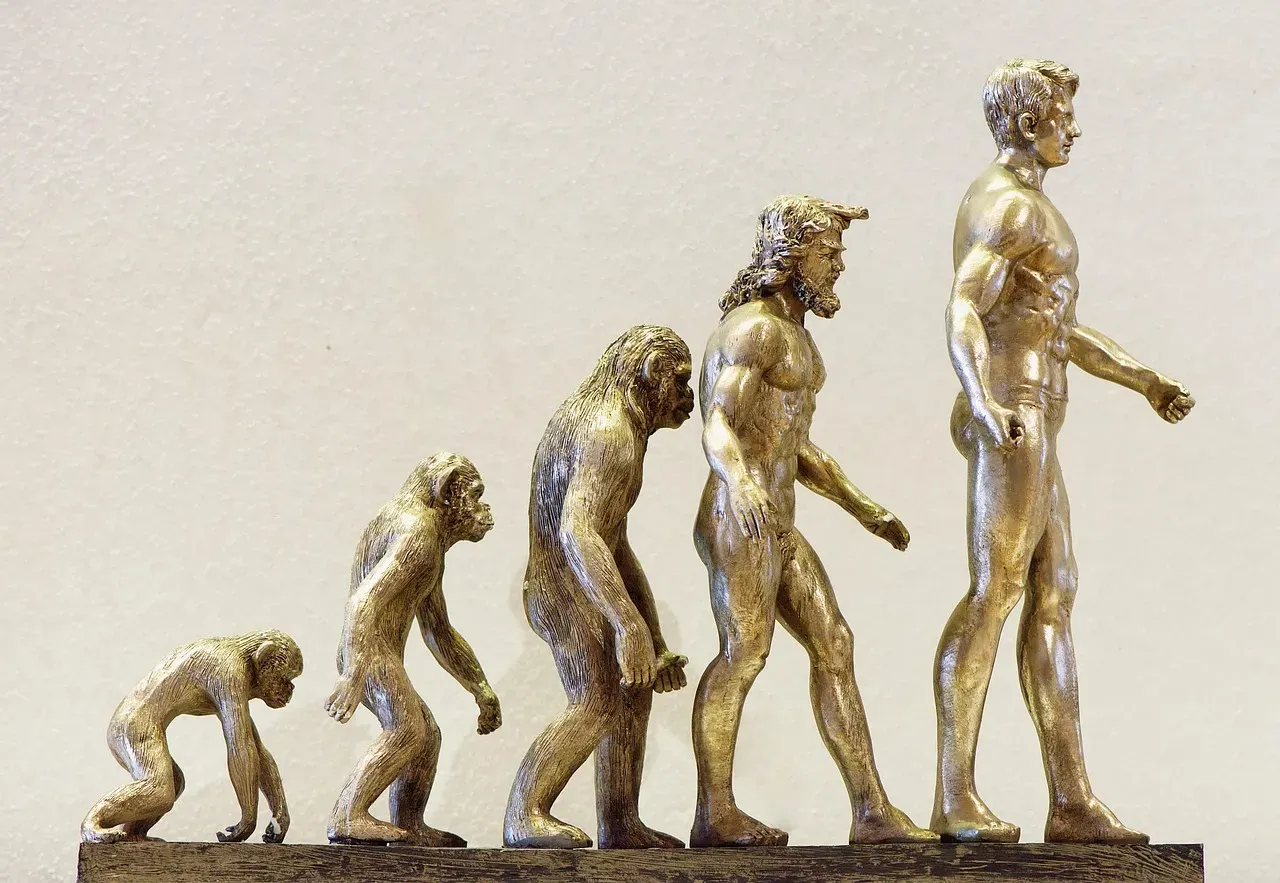
A lot of the confusion comes from the mental picture we’ve inherited: evolution as a ladder, with simple organisms at the bottom and humans at the top. But almost every new discovery pulls us further away from that image. The real pattern looks more like a wild, tangled bush, with branches growing, splitting, withering, and sometimes reconnecting in ways that are anything but orderly.
This matters because timelines built on ladder thinking tend to arrange species as if they were stepping stones toward us. In reality, most lineages are side branches with their own long, independent histories. When scientists stop forcing fossils into a linear sequence and instead treat them as twigs on a huge branching tree, the timing of key traits – walking upright, using tools, complex brains – often shifts. Some abilities appear earlier, in parallel lineages, or pop up more than once, making the schedule of evolution feel far less predictable than we once assumed.
Why Getting the Timeline Right Matters Right Now
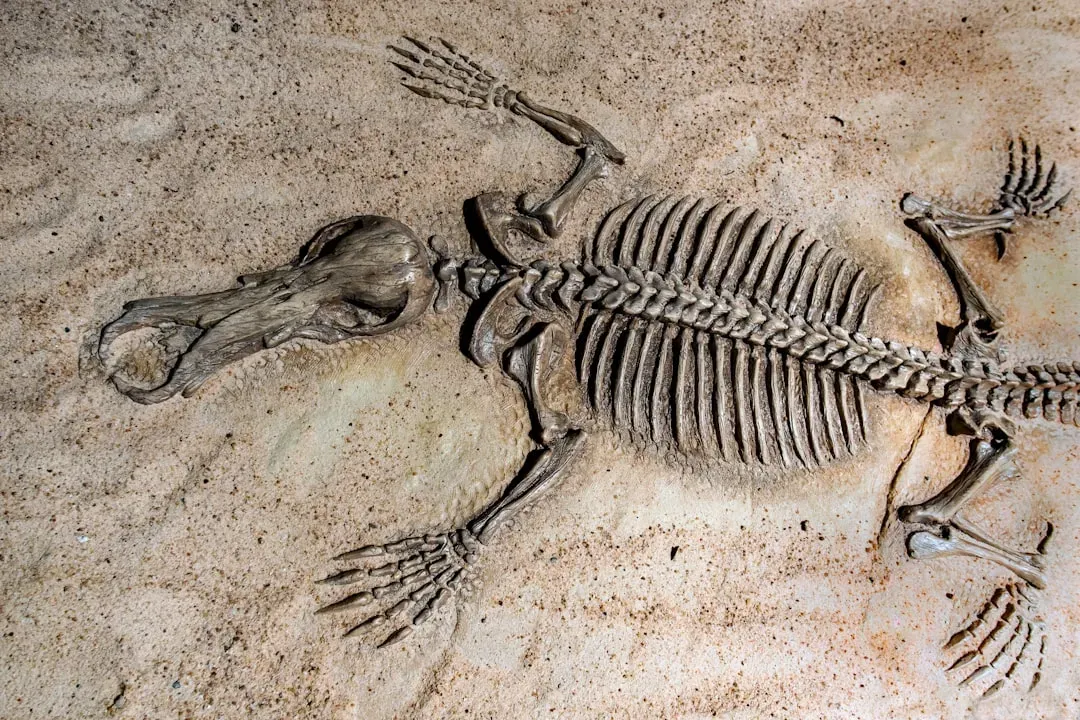
At first glance, whether a species evolved two hundred thousand or three hundred thousand years ago might feel like trivia, interesting but not urgent. But the timeline of evolution shapes how we think about ourselves, our place on Earth, and our expectations for the future. If human-like traits and complex ecosystems arose through messy, fragile chains of events, it underscores how contingent our existence really is, and how easily things could have turned out differently.
There’s also a practical side. Accurate timelines help us understand how life responds to rapid climate change, habitat loss, and environmental shocks – issues we’re facing in real time. By recognizing that our previous timelines were often oversimplified or just wrong, scientists are building more realistic models of how species survive, adapt, or disappear. In a century defined by ecological stress, knowing that our old evolutionary calendar was off is less an academic correction and more a wake-up call to pay careful attention to how quickly life can change.
Living With an Unfinished Story
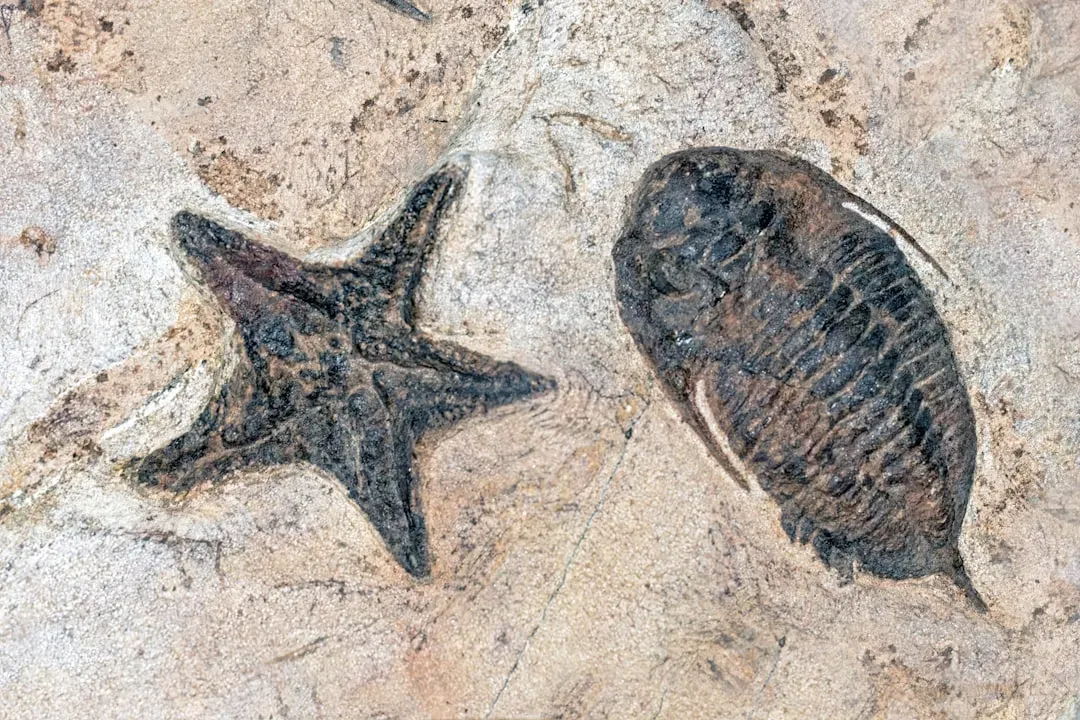
What’s becoming clear is that the evolutionary timeline we grew up with was more of a rough sketch than a finished painting. New fossils, better dating techniques, ancient DNA, and sharper climate records are adding detail but also exposing just how many pieces were missing or placed in the wrong spots. The story of life on Earth is turning out to be stranger, more chaotic, and more intertwined than the tidy diagrams in schoolbooks ever suggested.
Instead of a fixed, authoritative timeline, we’re looking at a living document that keeps getting revised as fresh evidence comes in. That uncertainty can feel unsettling, but it’s also a sign of science doing exactly what it should: updating the story when the facts demand it. If the past can change this much in our understanding, it raises a quiet but powerful question about the present and the future: how much of what we take for granted today will look completely different once we uncover the next layer of evidence?