
The universe as we know it may owe its very existence to something so ghostly that trillions of them pass through your body every second without leaving a trace. They don’t shine, they don’t stick to anything, and for a long time scientists weren’t even sure they had mass. Yet new research suggests these elusive particles, called neutrinos, may have quietly sculpted the cosmos from its earliest moments.
That idea is both unsettling and strangely beautiful: an entire universe guided in part by particles that almost never interact, shaping galaxies like a hidden hand. It’s a reminder that the most important forces in our lives are often the ones we can’t see or feel directly. And once you start to understand what neutrinos are and what they may have done, it becomes hard to look at the night sky the same way again.
The Ghost Particles That Never Stop Coming
Imagine something so shy that it slips through walls, planets, and even stars as if they were thin mist. That’s a neutrino. These particles are produced in staggering quantities in nuclear reactions, especially in the hearts of stars and during cataclysmic events like supernovae, and they stream across the universe at nearly the speed of light. Right now, an unimaginably huge number of neutrinos are passing through you every single second, but you don’t feel a thing.
For decades, scientists thought neutrinos might be completely massless, more like pure flashes of nothing than proper particles. That changed when experiments studying how neutrinos change identity in flight showed they must have some mass, however tiny. This was a big deal because the more mass you have in the universe, the more gravity you get. And gravity is the cosmic sculptor that pulls matter together into stars, galaxies, and clusters instead of leaving everything as a thin, boring fog.
How Neutrinos Quietly Tugged the Early Universe Into Shape
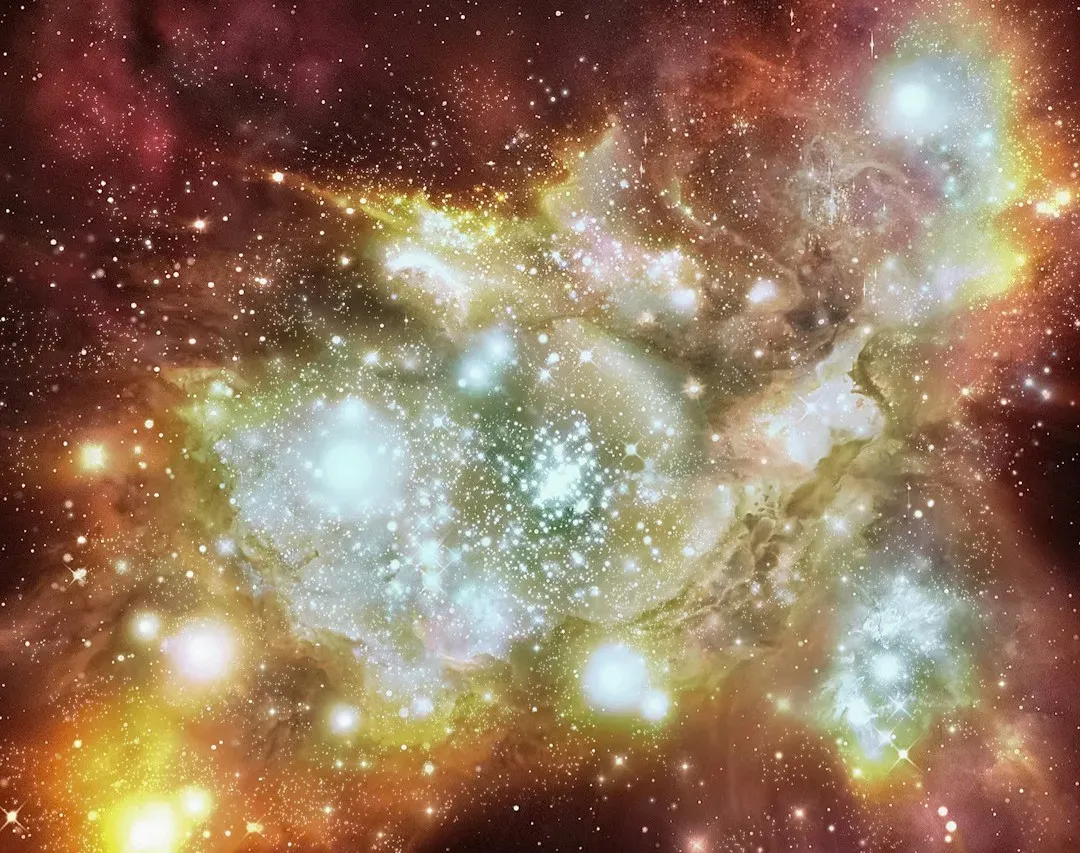
Right after the Big Bang, the universe was a hot, dense soup of particles and radiation, expanding and cooling like a cosmic explosion in slow motion. During those early times, neutrinos were everywhere, flying around almost at light speed, adding just a bit of extra gravitational pull to the mix. Their mass is tiny, but their numbers are so huge that, taken together, they contribute a real amount of gravity on cosmic scales.
This gravity didn’t act alone, of course. Dark matter and regular matter also played enormous roles in forming cosmic structure. But neutrinos changed how clumps of matter grew, slightly slowing the formation of very small structures while subtly influencing the growth of larger ones. It’s like adding a faint, background bass line to a song; the melody is still there, but the entire feel changes in ways you might not notice at first, even though you’d miss it if it were gone.
Galaxies, Gravity, and Why We’re Even Here
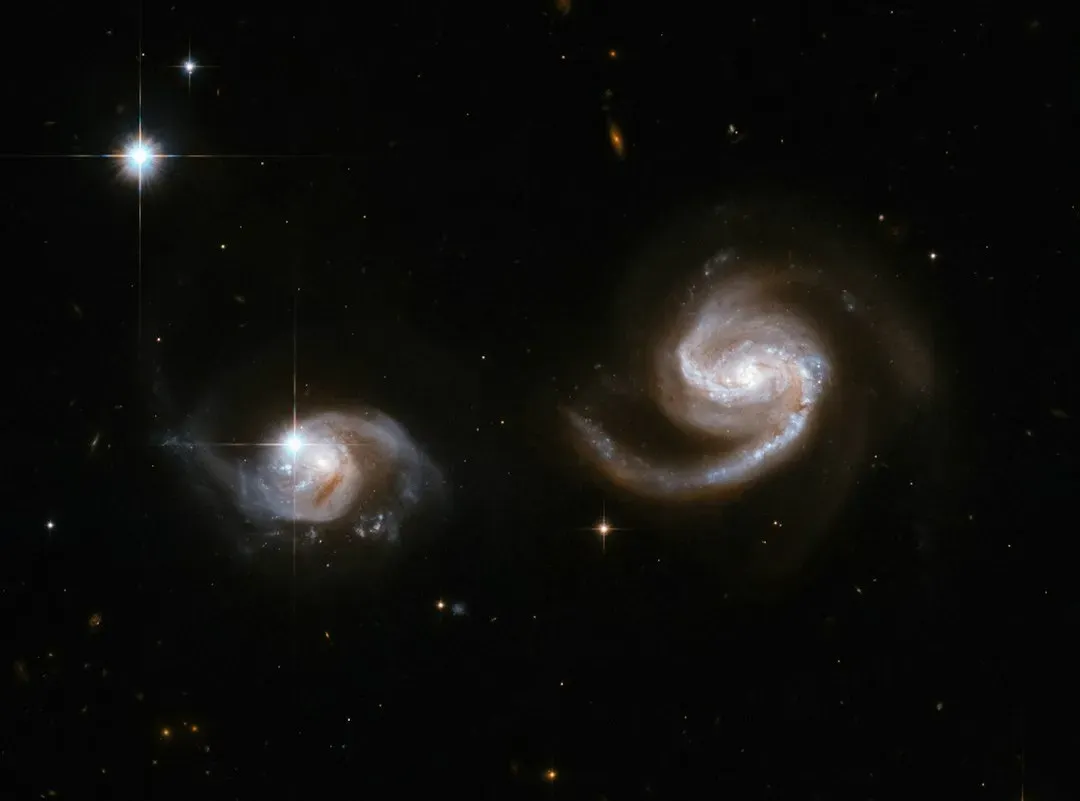
The story of why we exist is really a story about how matter clumped together strongly enough to make stars, planets, and eventually living, thinking creatures who wonder where they came from. Gravity is the hero of that story, pulling everything together over billions of years. Neutrinos, with their slight but real mass, quietly added to that gravitational budget. Without their contribution, the timing and pattern of structure formation in the universe would likely have been different.
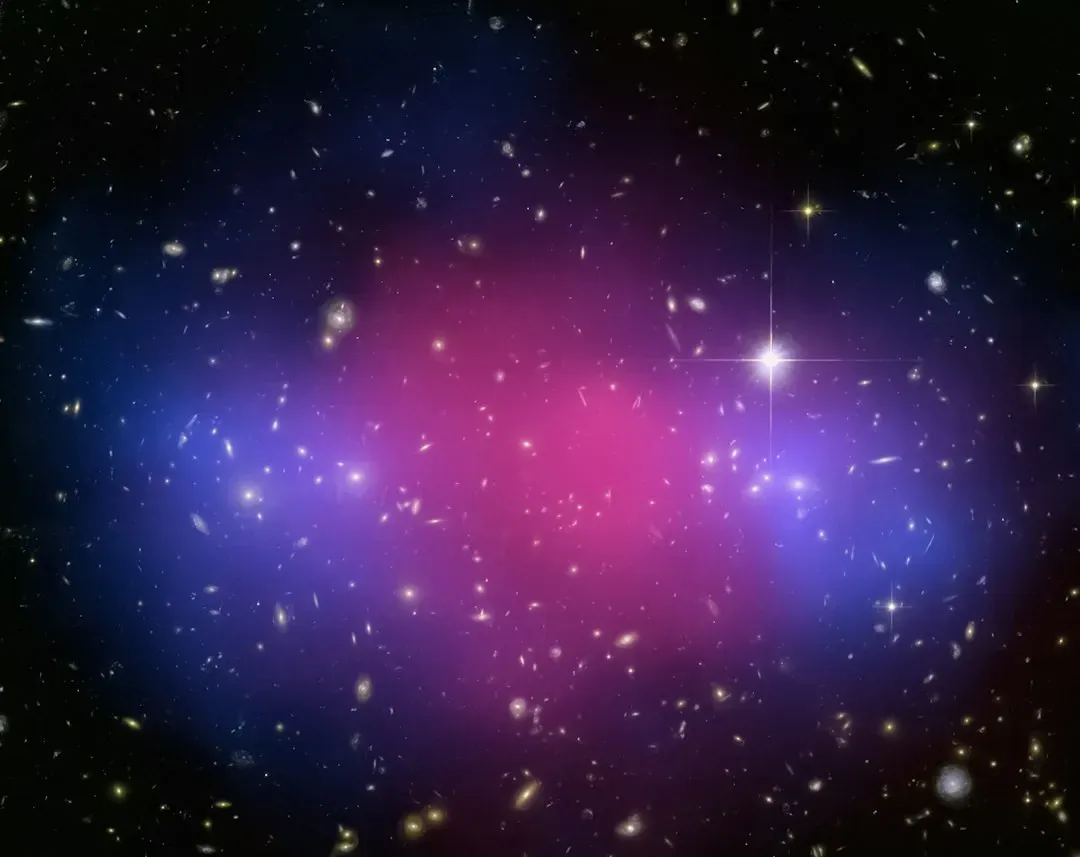
Researchers now suspect that neutrinos helped shape how quickly small galaxies formed, how large cosmic structures like galaxy clusters grew, and even how the web-like pattern of matter across the universe developed. Change that balance just a little, and the universe might become either too smooth and empty or too clumpy and chaotic to support long-lived stars and stable planetary systems. In that sense, our very existence may rest partly on the faint pull of particles that almost never touch anything at all.
Why Measuring Neutrino Mass Is So Hard (and So Important)
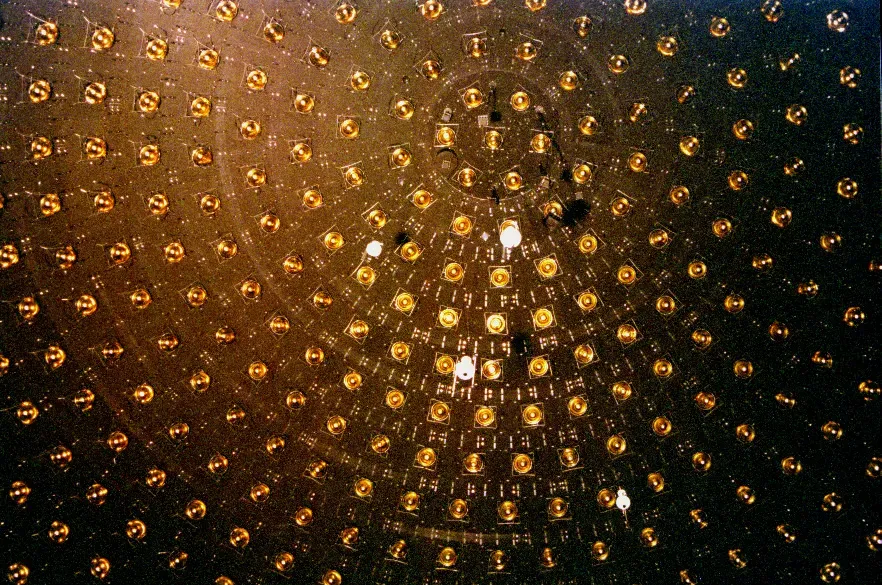
Here’s the tricky part: to understand what neutrinos did to the universe, scientists need to know exactly how much they weigh. But because they interact so rarely, weighing them is like trying to measure the mass of a shadow. Laboratory experiments study rare radioactive decays and look for tiny mismatches in the energy budget that would reveal the neutrino’s mass. So far, these measurements have only been able to put upper limits on how heavy they can be.
Cosmologists attack the problem from a different angle, using the universe itself as a giant experiment. By studying the pattern of galaxies, the distribution of matter on large scales, and the leftover glow from the Big Bang known as the cosmic microwave background, they can infer how much neutrino mass would best explain what we see. Intriguingly, results from these cosmic measurements and those from Earth-based experiments have not lined up perfectly, leaving a puzzle that feels a bit like getting two different answers to the same math problem.
The New Study Linking Neutrinos to the Cosmic Web
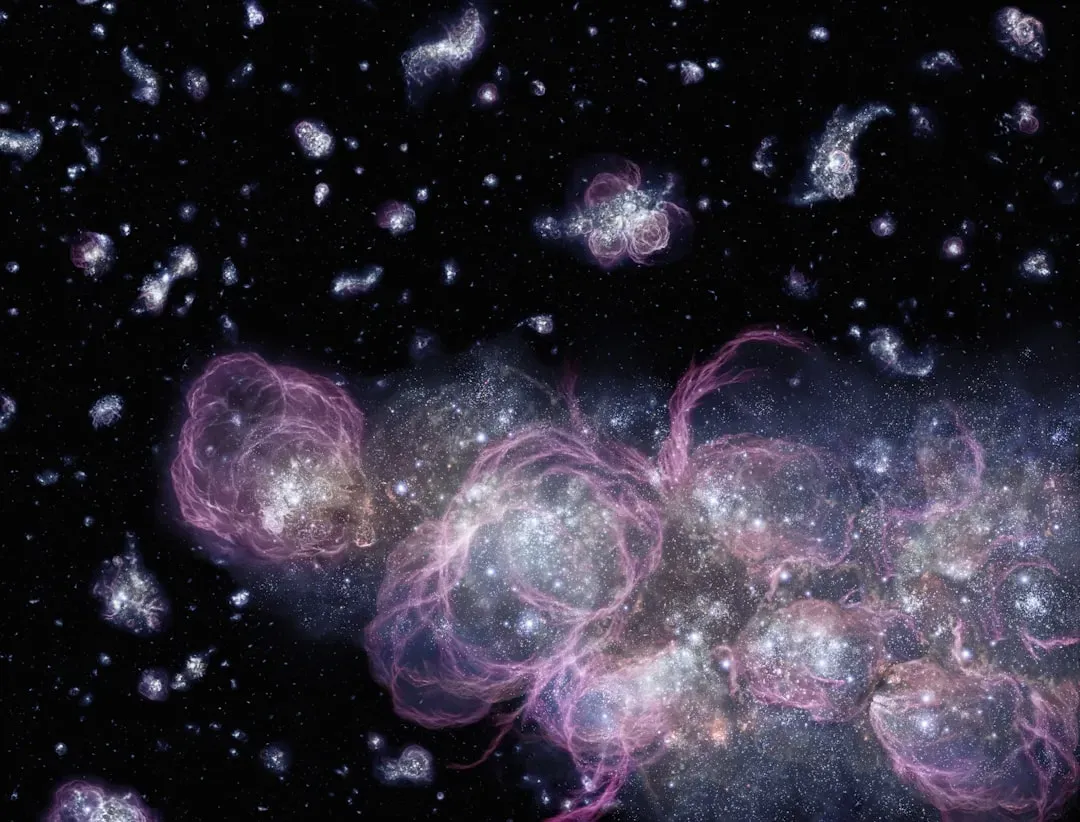
The recent research that sparked so much attention dug deeply into how neutrinos would have altered the growth of structures across cosmic time. By comparing precise maps of galaxies and galaxy clusters to advanced computer simulations that include different amounts of neutrino mass, the team showed that neutrinos leave a subtle, but distinct fingerprint on the cosmic web. They change how matter is distributed on different scales, smoothing out some small structures and gently reshaping larger ones.
This work supports the idea that neutrinos are not just passive background players but active shapers of the universe. It strengthens the case that their gravity mattered enough to influence when and where galaxies formed. The study does not claim that neutrinos built the universe single-handedly, but it argues persuasively that if you removed their gravitational role entirely, the universe would look significantly different. That’s a bold statement in cosmology, where most effects are tiny and tangled together, and it’s precisely why this result has turned so many heads.
The Tension Between Lab Experiments and the Cosmos
One of the most fascinating twists in the neutrino story is the growing tension between what laboratory experiments say and what the universe seems to suggest. Experiments on Earth, using enormous detectors and incredibly sensitive instruments, are pushing down the maximum possible mass neutrinos can have. At the same time, some cosmological analyses that fit neutrino mass as a parameter seem to hint at values that do not quite match those strict lab limits, or that strain the most standard cosmological models.
This mismatch doesn’t automatically mean someone made a mistake. Sometimes, tensions like this are the first hints that new physics is hiding just beyond our current theories. Maybe neutrinos do something we don’t yet understand, or perhaps our cosmological models are missing a subtle ingredient. I find this part of the story especially compelling because it shows science as it really is: messy, uncertain, and alive with arguments, rather than a neat, finished set of answers.
Why These Invisible Particles Matter to Our Everyday Lives
It’s easy to shrug and think that what happens with ghostly particles billions of light-years away has nothing to do with us. But the universe’s history set the stage for everything familiar: the kind of stars that formed, the elements spread by exploding suns, the chances for rocky planets with liquid water to exist at all. Neutrinos were part of that long chain of events. If their masses had been significantly different, the cosmic story might have played out in a way that never led to a world like ours.
There’s also something quietly humbling about knowing that every second, you’re being pierced by countless neutrinos created in the core of the Sun, in distant supernovae, and in the early universe itself. You’re literally bathed in the same particles that may have helped carve the cosmic landscape. The next time you look up at the night sky, it’s worth remembering that some of the most important actors in that grand scene are the ones you can’t see, can’t feel, and can barely even measure.