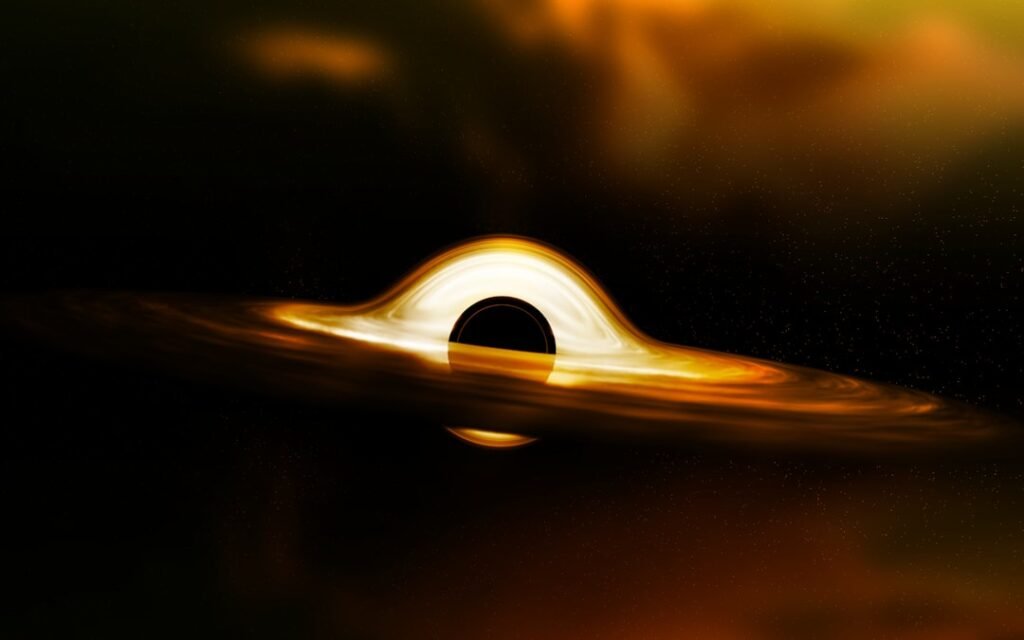
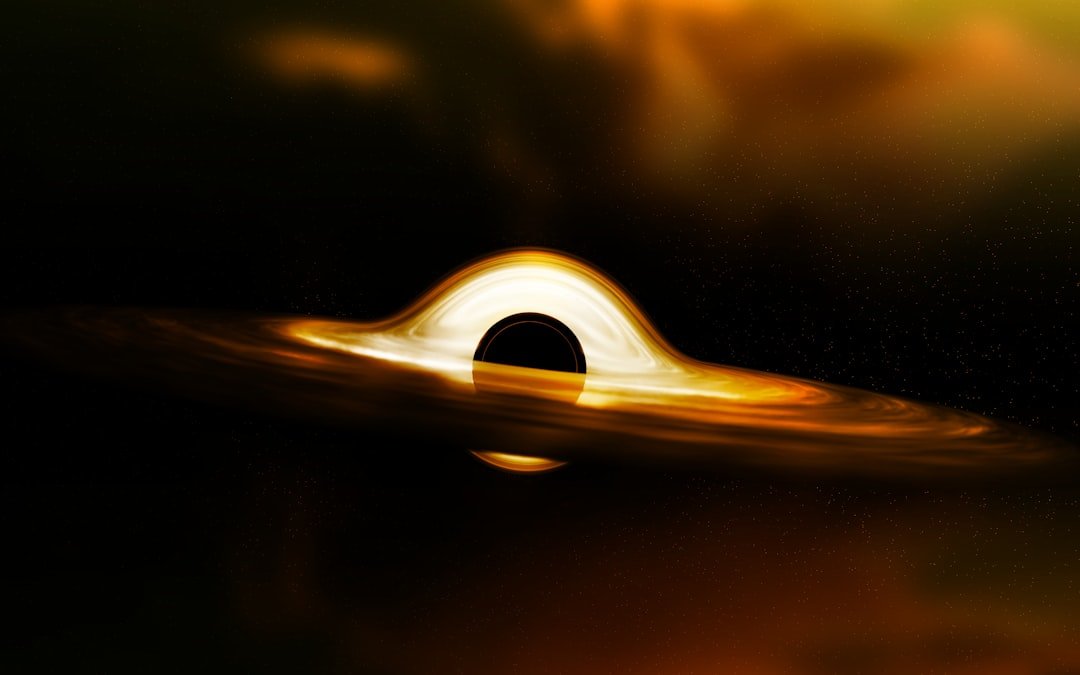
A Dying Star Defies Expectations (Image Credits: Unsplash)
Los Angeles – Astronomers pieced together nearly two decades of infrared and optical data to document a massive star’s quiet implosion into a black hole in the nearby Andromeda galaxy.[1][2]
A Dying Star Defies Expectations
The object known as M31-2014-DS1 caught researchers’ attention through its bizarre behavior. This hydrogen-depleted supergiant, once weighing about 13 times the sun’s mass, had shed much of its outer layers over its lifetime, leaving roughly five solar masses by its end.[3][4] Instead of erupting in a brilliant supernova, the star faded dramatically, offering rare proof of direct black hole formation.
Observations showed the star brightened in mid-infrared light starting in 2014, peaking around 2016 before plunging into obscurity. By 2019, its optical brightness dropped by a factor exceeding 10,000, rendering it undetectable in later images. Infrared emissions lingered faintly, hinting at a dusty remnant shell.[5][2]
Two Decades of Sky Surveillance Pay Off
Data from NASA’s NEOWISE mission formed the backbone of the discovery, spanning from 2005 to 2023. Supplementary observations came from ground-based telescopes, including Keck Observatory, which captured the star’s evolution in exquisite detail.[2][6] The Andromeda galaxy’s proximity – mere 2.5 million light-years away – enabled this unprecedented monitoring.
Here is a timeline of key changes in M31-2014-DS1’s light output:
- Pre-2014: Steady luminosity as a red supergiant.
- 2014-2016: Mid-infrared brightening by about 50% over two years.[5]
- 2016-2019: Rapid optical fade, dropping below detection thresholds.
- 2019-2023: Continued dimming in infrared, now at 7-8% of original brightness.[7]
- Present: Faint dust shell and no X-ray emission from the core.
This sequence painted a clear picture of failure rather than explosion.
Why No Supernova? The Mechanics of Failure
Massive stars typically explode when their iron cores collapse, generating a shockwave that ejects outer material. For M31-2014-DS1, that shockwave proved too feeble. Most of the star’s remaining mass – around 98% – succumbed to gravity, forming a black hole estimated at 5 to 6.5 solar masses.[6]
“The dramatic and sustained fading of this star is very unusual, and suggests a supernova failed to occur, leading to the collapse of the star’s core directly into a black hole,” said Kishalay De, lead researcher from Columbia University.[3] A low-energy ejection of hydrogen-rich envelope created the observed dust and gas shroud, expanding slowly at about 100 km/s. The central remnant continues to fade as fallback material accretes inefficiently.
Shifting Views on Black Hole Origins
This event bolsters theories of “failed supernovae,” a pathway long predicted but sparsely observed. Previous candidates existed, yet none matched M31-2014-DS1’s clarity due to Andromeda’s nearness and data quality.[6] Researchers now suspect such quiet births explain some intermediate-mass black holes.
The findings appeared in the journal Science on February 12, 2026, drawing from collaborative efforts across NASA, Caltech, and other institutions.[2]
Key Takeaways
- M31-2014-DS1 provides the strongest evidence to date for direct stellar collapse to a black hole.
- No supernova means no ejected neutron star or bright outburst – just a vanishing act.
- Future surveys may uncover more of these stealthy events, refining black hole formation models.
This quiet cosmic event challenges assumptions about stellar deaths and opens doors to understanding black holes’ hidden beginnings. What do you think about this failed supernova? Tell us in the comments.