
Have you ever stood before a landscape so surreal that you had to remind yourself you’re still on Earth? Our planet is home to geological marvels that challenge everything we think we know about natural rock formation. Some look like they’ve been carved by alien hands, others seem to defy the laws of physics entirely.
These aren’t CGI creations from science fiction films. They’re real places you could actually visit, if you’re willing to venture off the beaten path. Let’s explore seven of the most mind-bending geological formations that blur the line between our world and something far more mysterious.
The Eye of the Sahara: A Bullseye in the Desert
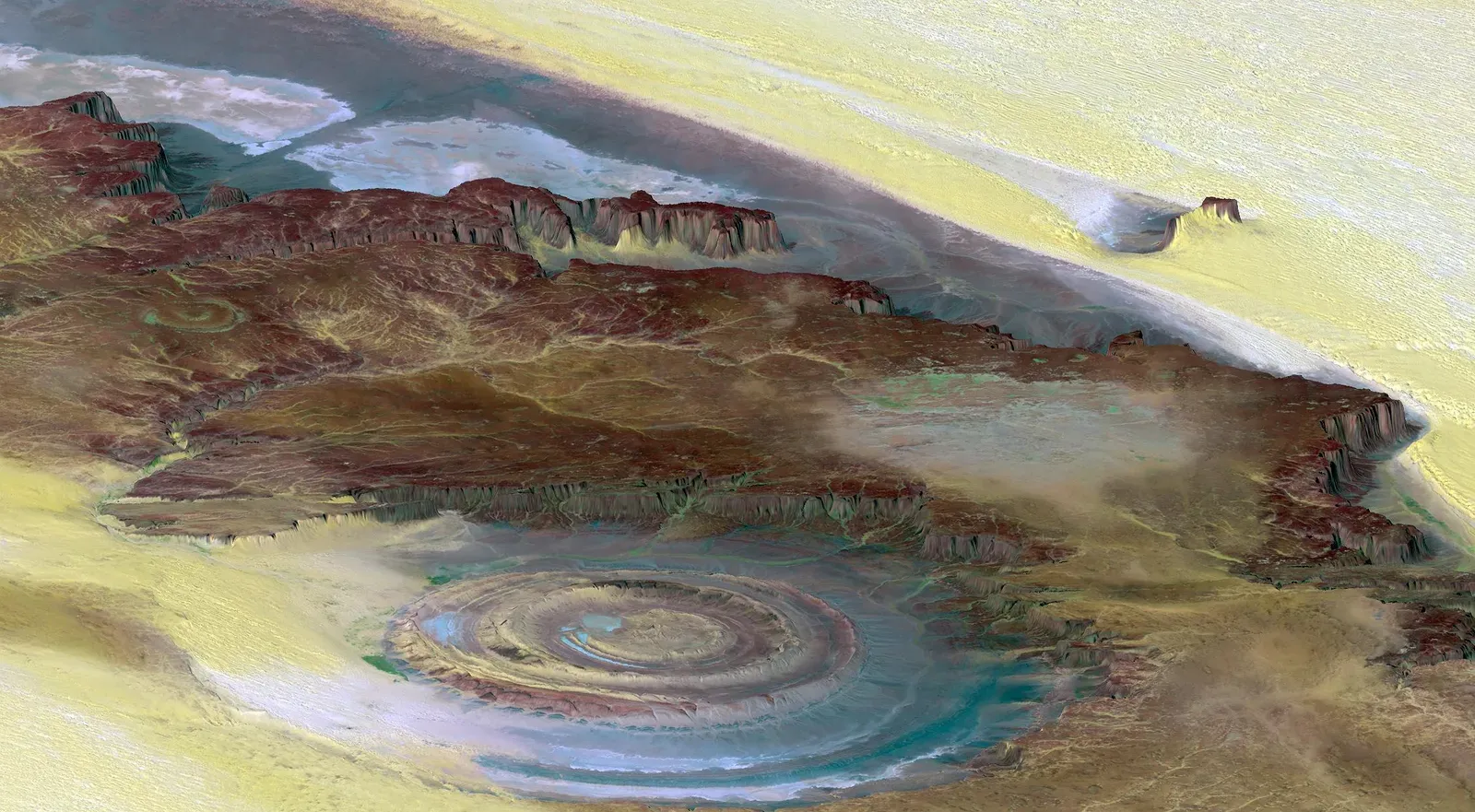
The Eye of the Sahara, also known as the Richat Structure, is a 28-mile-wide site of huge concentric circles found in the western African nation of Mauritania. From the ground, you’d barely notice anything unusual. Yet from space, astronauts have marveled at this perfect bullseye pattern for decades, wondering if they’d discovered evidence of an ancient meteorite impact or perhaps something even stranger.
Here’s the thing: scientists initially thought exactly that. Geologists initially thought the site was created by an asteroid impact, but there isn’t enough melted rock among the rings to support this theory. More recently, geologists have proposed that the Eye of the Sahara could be an eroded, collapsed geological dome, formed some 100 million years ago when the supercontinent Pangea broke up. Some enthusiasts still insist it could be the lost city of Atlantis, though geologists remain skeptical. The mystery continues to captivate anyone who sees this impossible formation from above.
Giant’s Causeway: Nature’s Perfect Hexagons
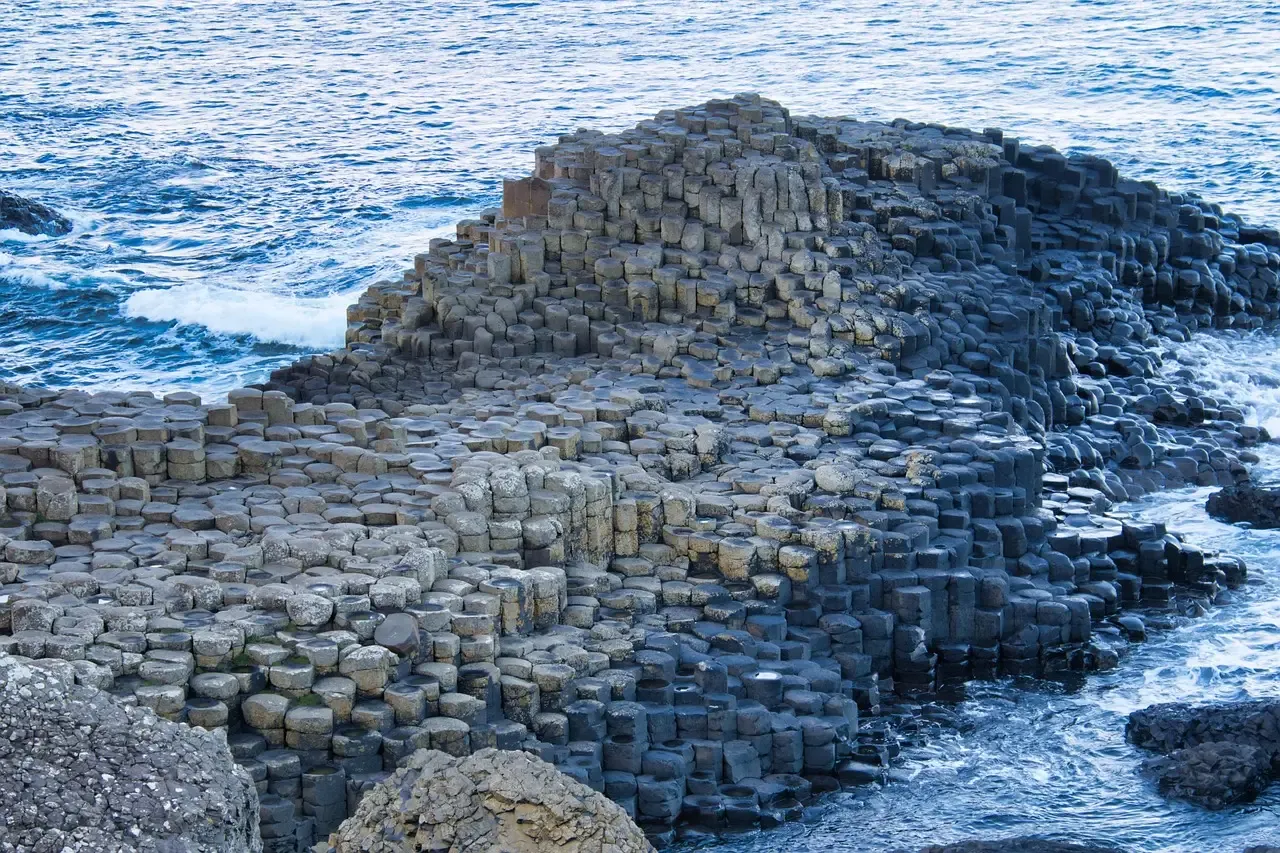
The Giant’s Causeway is an astonishing rock formation that’s become an icon of Northern Irish tourism, with around 40,000 naturally hexagonal basalt columns constantly battered by the Atlantic. When you first see them, your brain struggles to accept that these aren’t manufactured. The columns are so geometrically precise, so perfectly interlocking, they seem almost machined.
These hexagonal columns are a rock formation resulting from volcanic fissures nearly 60 million years ago. Local legend tells a better story though. They say the giant Finn McCool built this causeway as a bridge to Scotland so he could battle his rival across the Irish Sea. Standing among these towering stone pillars with waves crashing around you, honestly, the folklore version feels just as plausible as the geological explanation.
Goblin Valley: Where Rock Creatures Come Alive
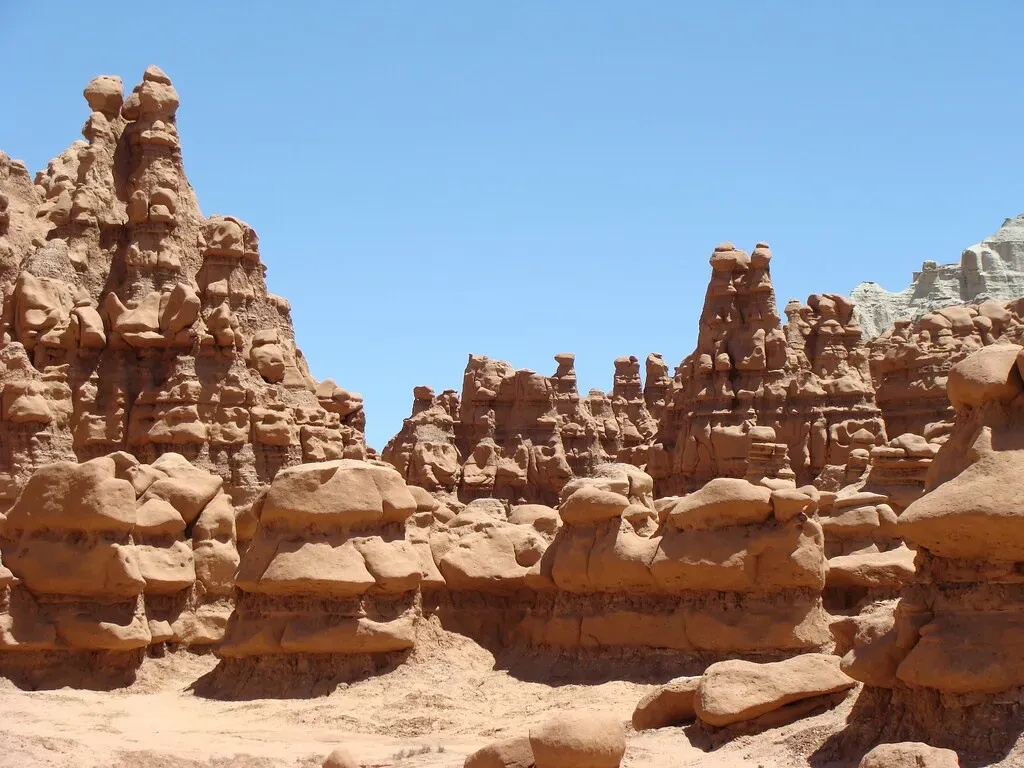
Goblin Valley in southern Utah is home to some of the most bizarre rock formations on Earth, with thousands of mushroom-shaped sandstone rocks, known as “goblins,” filling the valley. Walking through this valley feels like stepping onto the set of a sci-fi movie. Actually, that’s not far from the truth – the landscape was used as an alien world in the 1999 movie Galaxy Quest.
These strange formations were shaped over time by the slow and uneven erosion of sandstone and siltstone, leaving behind a valley filled with clustered rock structures and surrounded by towering pinnacles. What makes this place particularly magical is that there are no designated trails. You’re free to wander among these stone creatures, discovering hidden alcoves and secret passageways between the goblins. Some people swear the formations look different every time they visit, as if the goblins shift positions when no one’s watching.
The Stone Forest of China: Petrified Trees That Never Grew
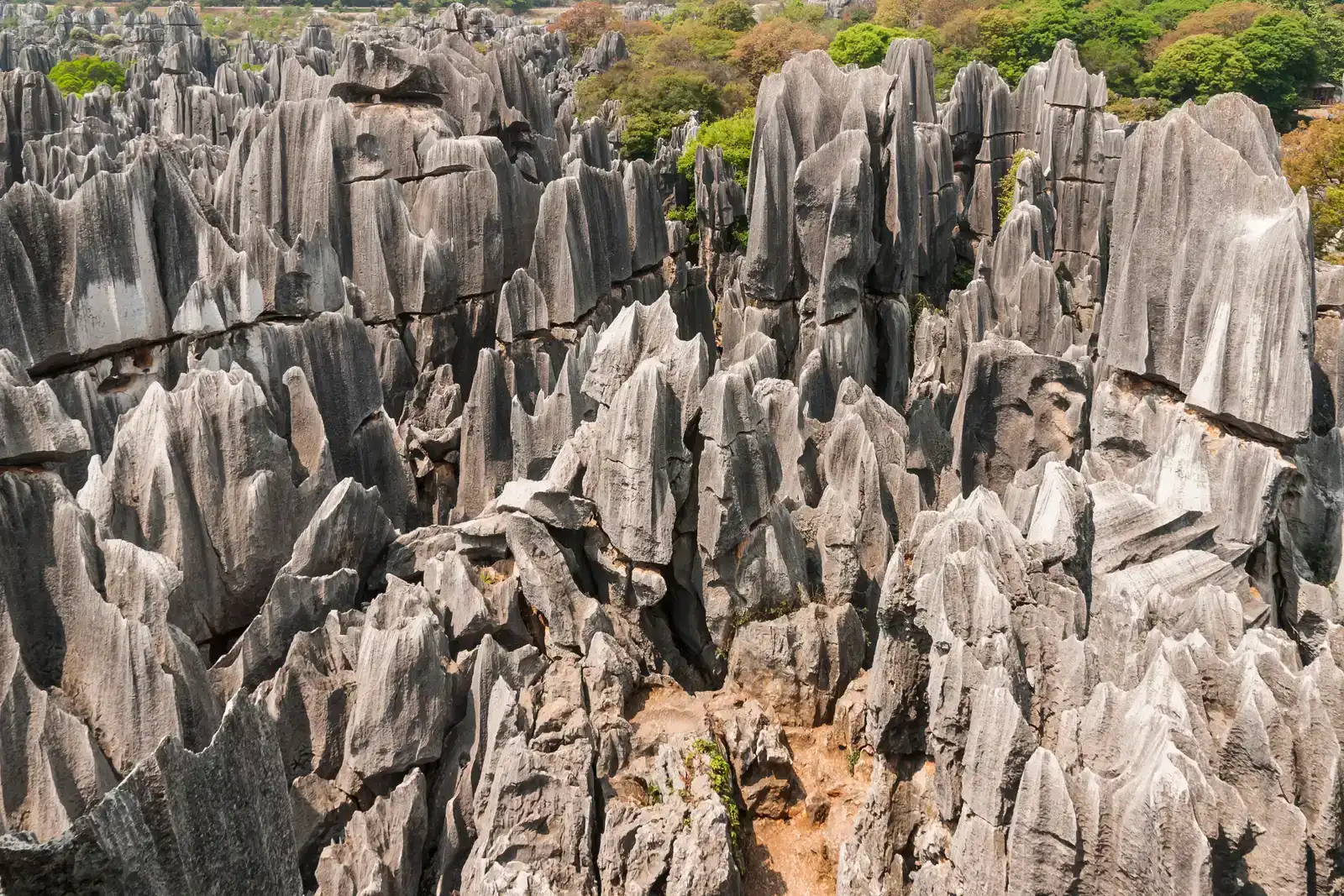
The Stone Forest or ‘Shilin’ in China’s Yunnan Province is a spectacular example of what natural forces can achieve, with limestone formations resembling petrified trees, creating the illusion of a forest made of stone. The stone forest dates back around 270 million years and covers about 186 miles altogether. Imagine walking through a forest where every tree has turned to stone, reaching skyward like frozen fingers.
Spread over an area of more than 300 square kilometers, the Stone Forest is part of a larger karst landscape with a maze of towering peaks, deep valleys, and subterranean rivers, all of stone. Local legend adds a haunting dimension to this already eerie landscape. They say a woman named Ashima ran into the forest after being forbidden to marry her true love, and one particular stone formation bears her name, forever commemorating her sorrow. Whether you believe the legend or the geology, this place makes you question what’s possible.
Chocolate Hills: Perfectly Symmetrical Sweet Spots
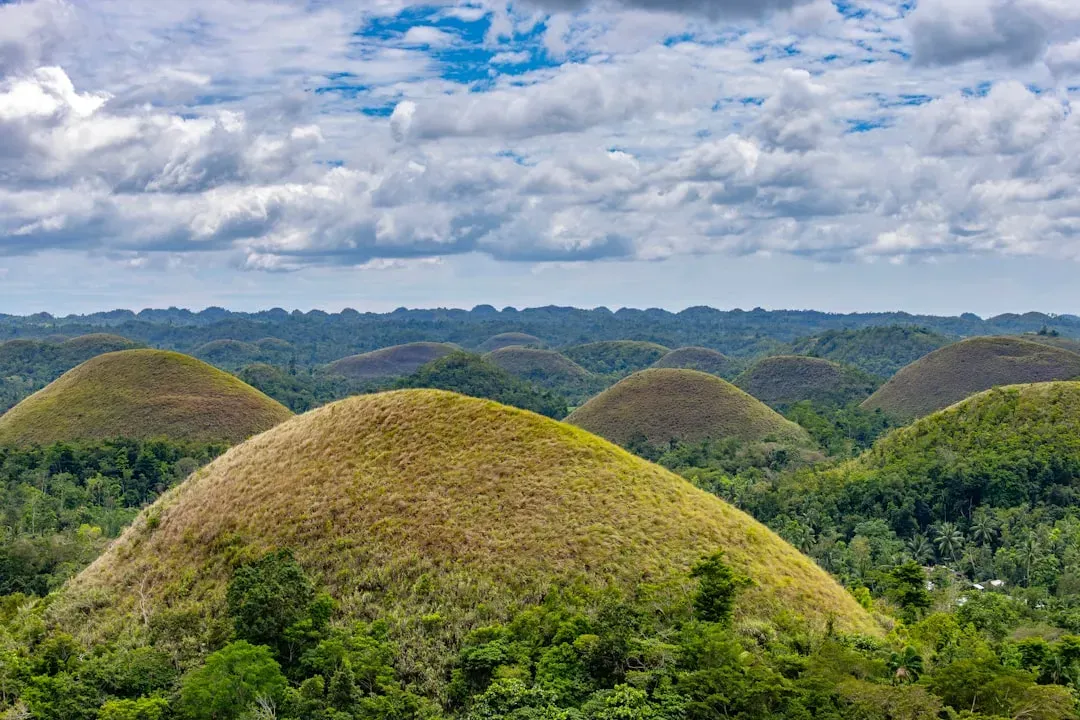
The Chocolate Hills are a geological formation in the Bohol province of the Philippines, with at least 1,260 hills spread over an area of more than 50 square kilometres. They are covered in green grass that turns brown (like chocolate) during the dry season, hence the name. The symmetry is what gets you – cone after cone after cone, stretching to the horizon in unnaturally perfect rows.
These aren’t small bumps either. These 1,260 or more cone-shaped hills span over 50 square kilometers, creating a mysterious and symmetrical landscape. Geologists explain they formed from coral deposits lifted from an ancient seabed and then weathered by rainfall over millennia, but honestly, looking at their perfectly uniform shape makes you wonder if some cosmic pastry chef got carried away. During the wet season they’re a lush green, transforming the landscape entirely. It’s like nature decided to show off its ability to create patterns with mathematical precision.
Fairy Chimneys of Cappadocia: Houses for Mythical Beings
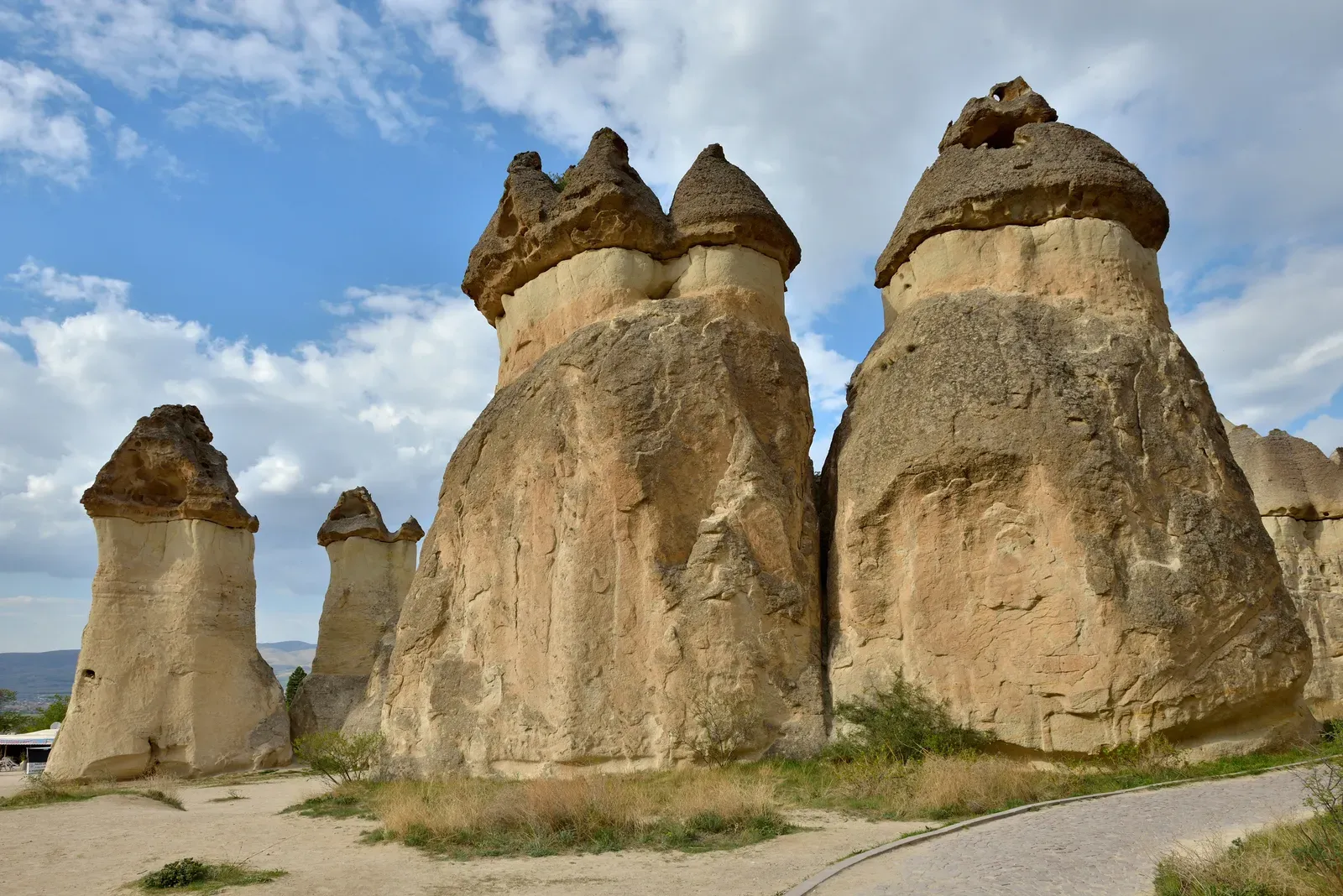
These days, Cappadocia’s geological past is arguably more recognizable than its socio-political one: fairy chimneys, conical towers up to 130 feet high formed by the erosion of ancient lava beds, virtually cover the landscape. What makes these formations truly bizarre is that humans have carved homes, churches, and entire underground cities into them. The soft volcanic rock made excavation surprisingly easy.
In appearance these rock formations with high conical peaks resemble chimneys, and since ancient times, locals believed that fairies lived inside pipes and, thus, were afraid to approach them. Today you can take hot air balloon rides over this surreal landscape at sunrise, watching the shadows play across hundreds of these towering spires. The contrast between the pale stone and the vibrant hot air balloons creates an almost dreamlike scene. It’s hard to say for sure, but standing among these formations makes you understand why ancient people attributed them to supernatural forces.
Tsingy de Bemaraha: The Forest of Knives
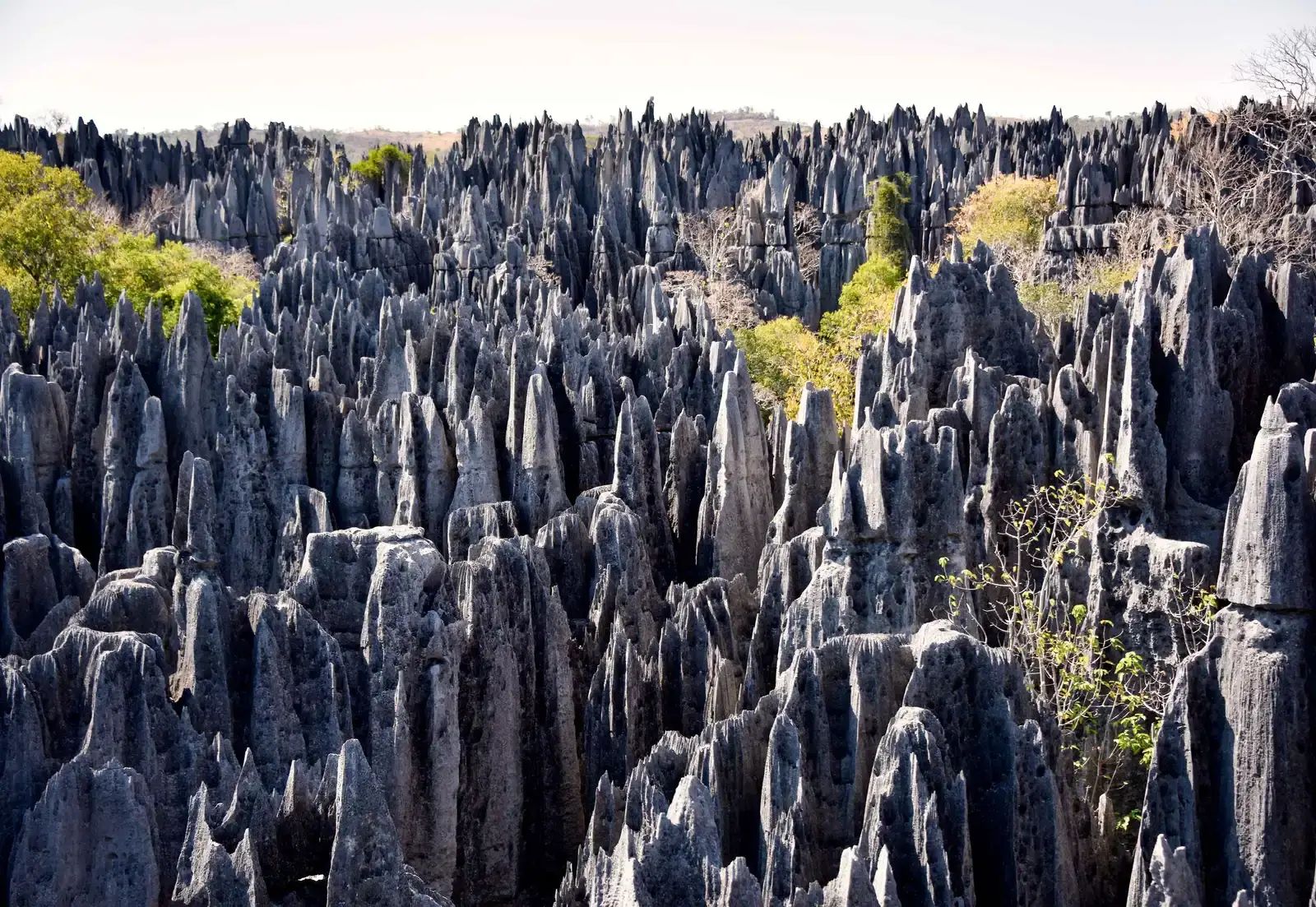
Tsingy was named due to unique, sharp-edged limestone formations erected over the entire park, with Tsingy de Bemaraha appearing after centuries of acidic rain, which created layers of sedimentation, providing a jagged backdrop. The name “tsingy” comes from the Malagasy word meaning “where one cannot walk barefoot” – and trust me, that’s an understatement. These aren’t gentle rock formations you can casually stroll through.
These stone fingers reach up from the barren landscape to create both deep canyons and needle-like peaks, created by monsoon erosion over thousands of years, making this the largest stone forest in the world. The only way to explore this landscape is via suspension bridges and climbing ropes strung between the razor-sharp limestone pinnacles. It’s simultaneously terrifying and exhilarating. The formations create their own ecosystem too, with unique species that exist nowhere else on Earth, trapped in the canyons between the stone blades. This place pushes the boundaries of what we consider habitable terrain.
Conclusion
These seven geological wonders remind us that Earth still holds mysteries capable of making us question reality itself. Each formation tells a story millions of years in the making, shaped by volcanic eruptions, erosion, tectonic shifts, and forces we’re only beginning to understand. What’s perhaps most remarkable is that these places exist not on some distant exoplanet, but right here on our own world, waiting to be explored.
They challenge our assumptions about what natural processes can create and blur the line between the possible and the seemingly impossible. Next time you see images from Mars or read about alien landscapes in science fiction, remember that our own planet offers scenery just as bizarre and breathtaking. Which of these formations would you visit first? The choice might reveal something about what kind of otherworldly landscape speaks to your sense of adventure.