
Some questions sneak into your head late at night and refuse to leave. Why are we here? What is the universe really made of? Is consciousness just brain chemistry, or something we still can’t name? Scientists ask those same questions – only with equations, telescopes, particle colliders, and sleepless nights filled with data that doesn’t quite make sense.
Despite all our progress, there are a few big puzzles that stubbornly refuse to crack. They sit right at the edge of what we know, taunting physicists, biologists, and cosmologists who have devoted their lives to solving them. These are not tiny gaps in our knowledge; they’re gaping holes, the kind that suggest we might be missing something huge about reality itself.
The Dark Matter That Refuses to Show Its Face
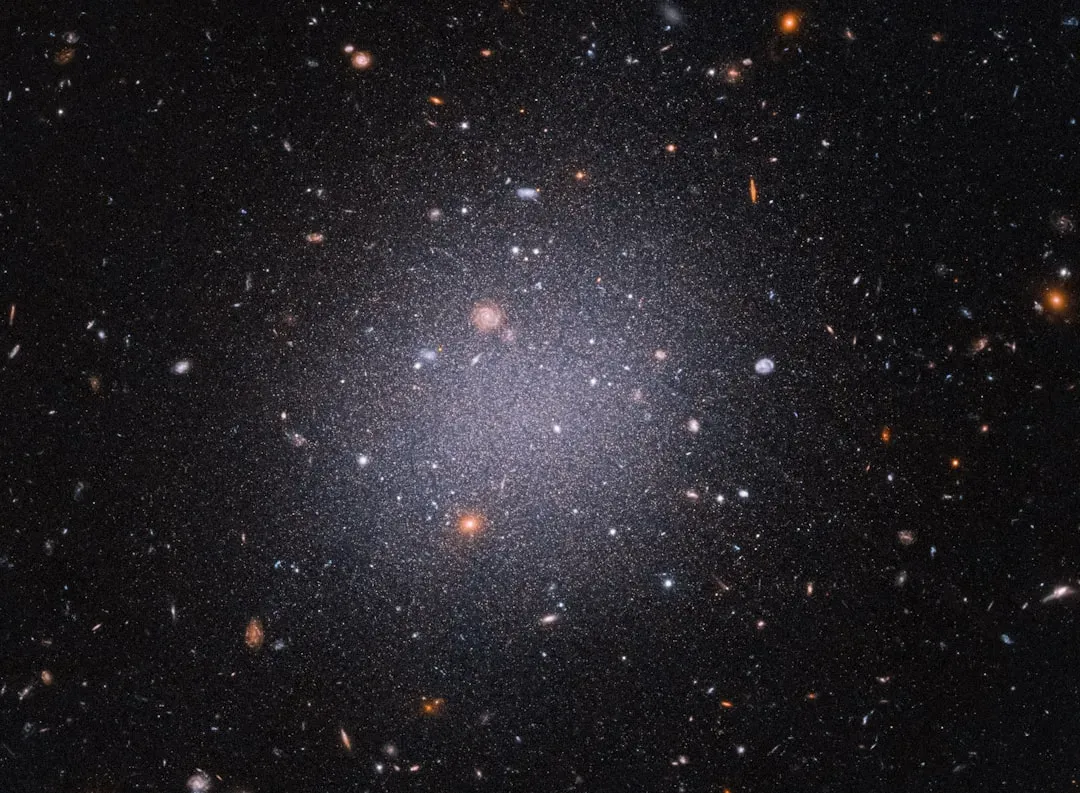
Imagine looking at a merry-go-round that spins so fast the horses should be flying off, but somehow they stay perfectly in place. That’s roughly what galaxies look like when astronomers measure how they rotate. The visible stars and gas simply don’t have enough mass to hold everything together, yet galaxies remain intact. The simplest explanation is that there’s an invisible “something” adding extra gravity: dark matter.
For decades, observations of galaxy rotation, galaxy clusters, and the cosmic web have all pointed to this unseen mass making up most of the matter in the universe. But here’s the maddening part: no one has ever directly detected a dark matter particle. Huge underground detectors, space telescopes, and high-energy experiments keep coming up empty or give hints that later vanish on closer inspection. Some researchers think dark matter is a new kind of particle beyond the Standard Model, others suspect gravity itself needs a rewrite. Until someone catches it in the act, dark matter remains a ghost that shapes the cosmos but won’t step into the spotlight.
Dark Energy and the Strange Acceleration of the Universe
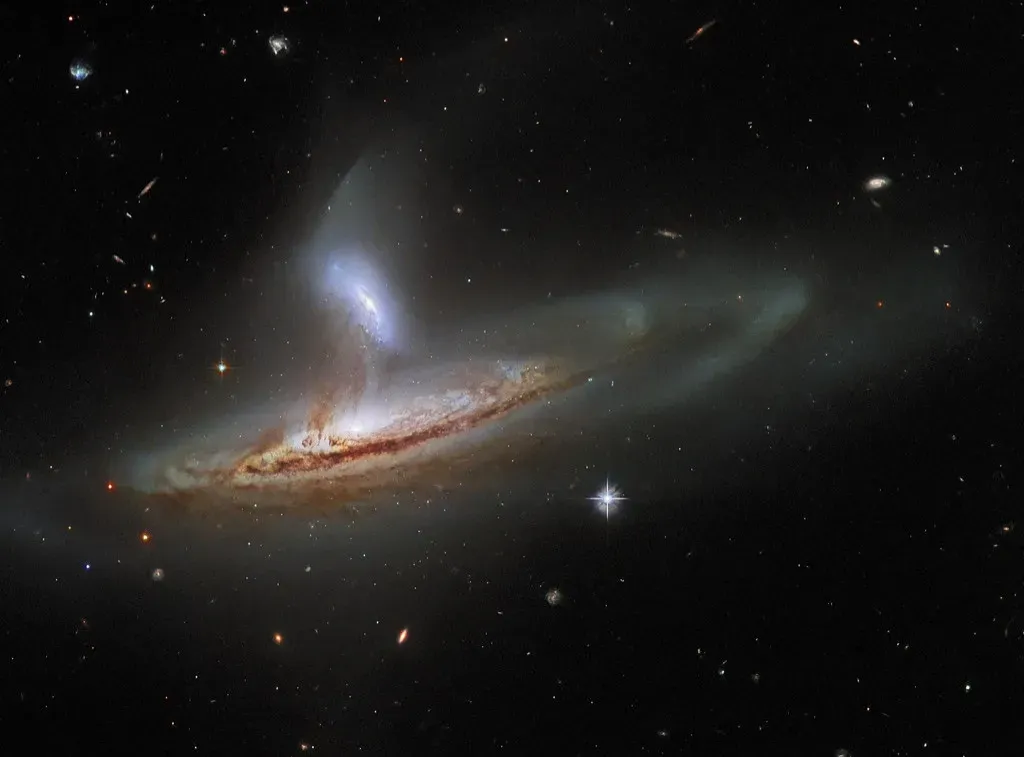
Just when cosmologists were starting to feel confident about how the universe works, distant exploding stars delivered a shock. Careful measurements of supernovae in the late twentieth century revealed that the expansion of the universe isn’t slowing down as gravity pulls things together. Instead, it’s speeding up, as if some invisible force is pushing space itself apart. That mysterious driver was given a name – dark energy – but a name is not an explanation.
Current estimates suggest dark energy makes up most of the total energy content of the universe, far more than normal matter or even dark matter. The leading idea is that it might be related to the energy of empty space, something like a cosmological constant built into the fabric of reality. The problem is that theoretical predictions of this vacuum energy are ridiculously off compared to what we measure, by an absurdly large factor. New telescopes and surveys are mapping galaxies and cosmic structure in unprecedented detail to see if dark energy changes over time or behaves in a more exotic way. For now, the universe is not just expanding, it’s accelerating – and no one knows why.
What Consciousness Actually Is (Beyond Clever Neurons)
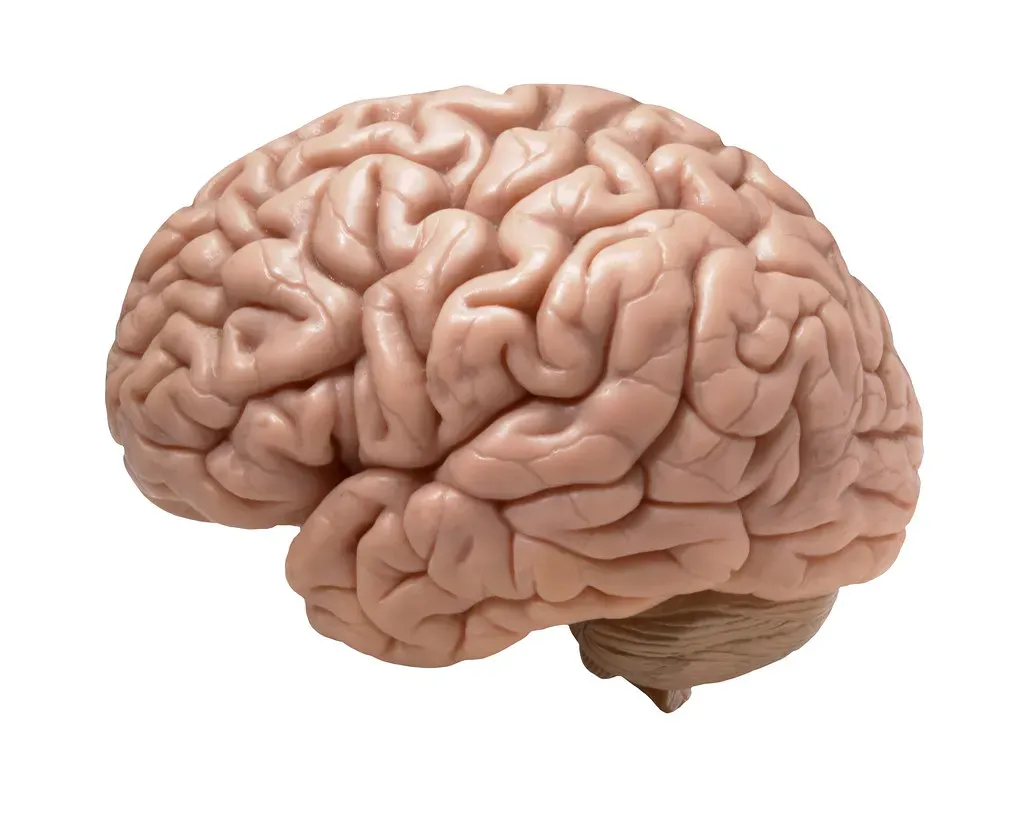
You can describe neurons firing, networks forming, and brain regions lighting up in a scanner, but none of that really captures what it feels like to be you. That inner movie of sensations, thoughts, memories, and emotions – consciousness – remains one of the most stubborn mysteries in science. Neuroscientists can track which circuits are active when you see a face or remember a song, yet the leap from electrical activity to subjective experience is still a huge, foggy gap.
Some theories argue consciousness emerges when information in the brain is integrated in specific complex ways, while others focus on particular patterns of connectivity or even quantum effects in neural structures. Researchers study patients under anesthesia, people with brain damage, meditators, and those in minimal consciousness states to look for signatures of awareness. Still, no consensus exists on what consciousness actually is, or how to define it in a way that would let us say, with confidence, whether a sophisticated AI, an octopus, or a brain organoid in a dish is truly conscious. For many scientists, that uncertainty is both thrilling and deeply unsettling.
The Origin of Life From “Just Chemistry”
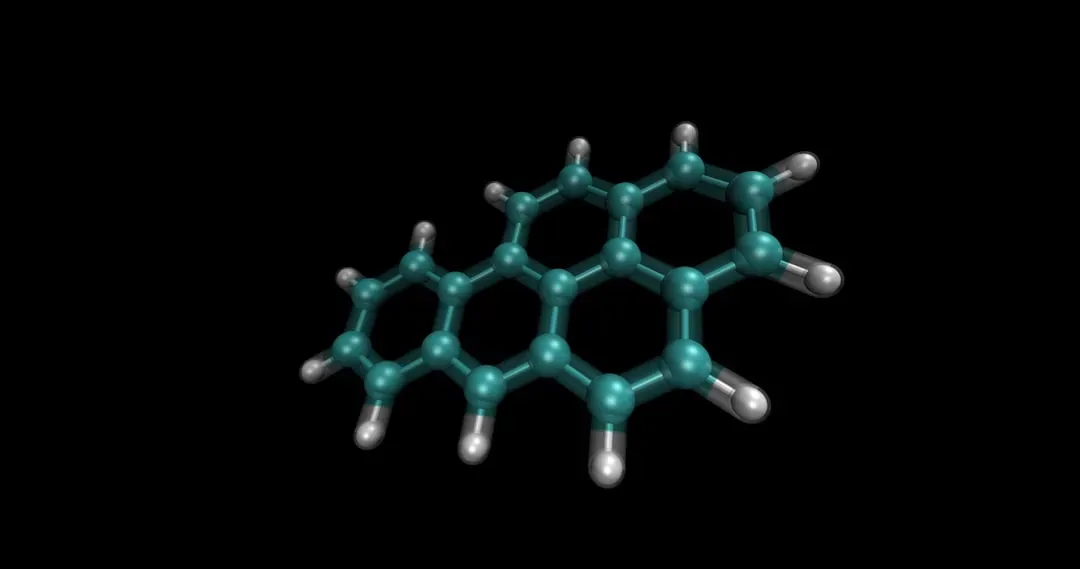
At some point on the early Earth, a jumble of simple molecules turned into something that could copy itself, use energy, and evolve. That transition from nonliving chemistry to living biology is one of the biggest jumps we know of, and yet we still don’t know exactly how it happened. We’ve found amino acids in meteorites, created basic biological molecules in lab simulations of early Earth, and shown that simple RNA strands can copy pieces of themselves. But the full path from a messy “primordial soup” to the first cell is still missing crucial steps.
There are competing ideas: maybe life began in deep-sea hydrothermal vents, where mineral structures could act like primitive reactors; maybe it started in shallow ponds that went through cycles of drying and re-wetting; maybe icy environments helped protect fragile molecules while they assembled into more complex systems. Each scenario has experimental support, but none has tied all the pieces together in a convincing, complete story. With new discoveries of complex organic chemistry on Mars, icy moons, and comets, scientists are also wrestling with a chilling possibility: what if life’s origin is common in the universe, but we still can’t recreate it on purpose here?
The Nature of Time and Why It Only Flows One Way

Everyday experience tells us time moves in one direction: eggs break but never un-break, you remember the past but not the future, and you steadily get older instead of younger. Yet many fundamental equations in physics are time-symmetric – they work just as well if you run them backward. This clash between the arrow of time we feel and the timeless math that describes particles is a puzzle that has bothered physicists for generations.
The usual explanation points to entropy, a measure of disorder that tends to increase, giving time its direction from ordered past to more disordered future. But that answer quietly assumes the universe started in a state of extremely low entropy, a bizarre level of order that current theories struggle to justify. Cosmologists debate whether the early universe’s conditions were a fluke, a necessity of some deeper law, or part of a bigger multiverse where different regions follow different arrows of time. Until we understand why the universe began so improbably ordered – and whether time itself might be emergent rather than fundamental – the ticking of the cosmic clock will remain an open question.
Where All the Missing Baryons and High-Energy Neutrinos Are Hiding
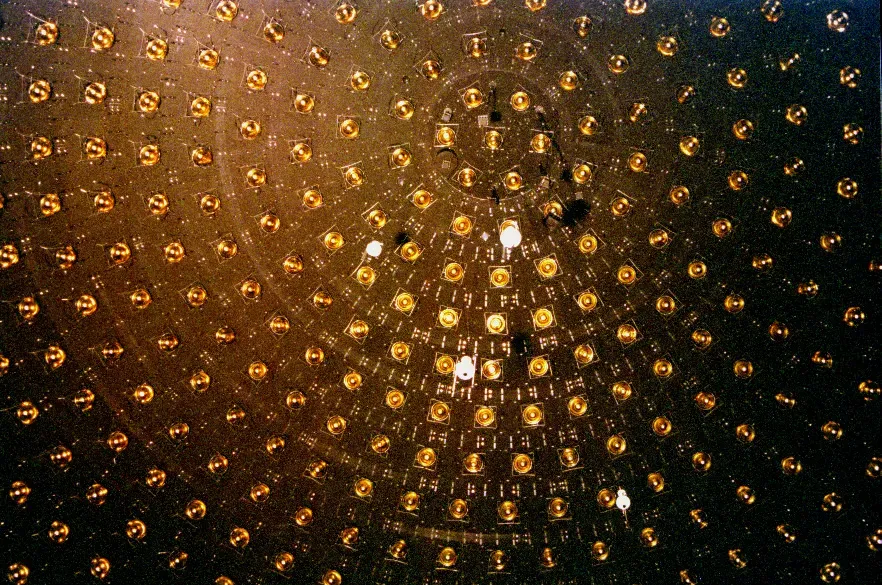
Even if we ignore dark matter and dark energy and just focus on normal matter – the stuff that makes up stars, planets, and people – there’s a weird accounting problem. Measurements of the early universe suggest a certain amount of ordinary matter should exist, but for a long time, telescopes simply couldn’t find it all. More recently, astronomers have tracked down a good portion of those “missing baryons” in hot, diffuse gas threads between galaxies, but not all the details are nailed down. On top of that, high-energy neutrinos detected on Earth point back to extreme cosmic accelerators that haven’t been clearly identified.
Neutrinos are tiny, almost ghostlike particles that rarely interact, yet they can carry information about some of the most violent events in the cosmos – like supermassive black holes feeding on gas or explosive collisions between compact objects. Detectors buried deep in Antarctic ice and underwater arrays listen for the faint signatures of these particles passing through. So far, only a handful of sources have been tentatively linked to them, and a big-picture understanding of where the most extreme neutrinos come from is still missing. It’s like hearing distant thunder without yet seeing the storm.
Living With Questions That Refuse Easy Answers
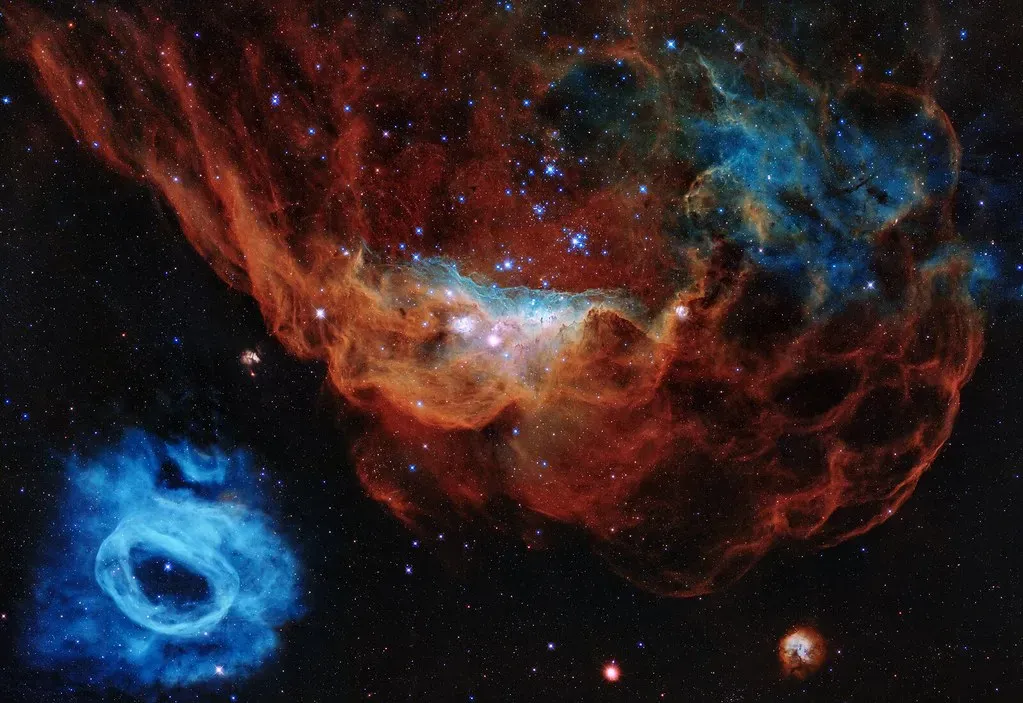
In a way, these unanswered riddles are a healthy reminder that science is not a neat, finished book but an unfinished manuscript with entire chapters missing. We’ve mapped the genome, walked on the Moon, built machines that can recognize faces and generate humanlike text, and yet we still can’t say what most of the universe is made of or how life first sparked into being. That mix of achievement and ignorance is strangely humbling.
Some of these mysteries will probably crack open in unexpected ways – through an odd glitch in a detector, a new kind of telescope, or a small experiment by a grad student working late when everyone else has gone home. Others might demand a complete rewrite of the rules we thought we understood. The fact that our best minds still lie awake at night over questions like these is not a failure of science; it’s the clearest sign that there’s so much more left to discover. Which of these unsolved puzzles would you most want to see answered in your lifetime?