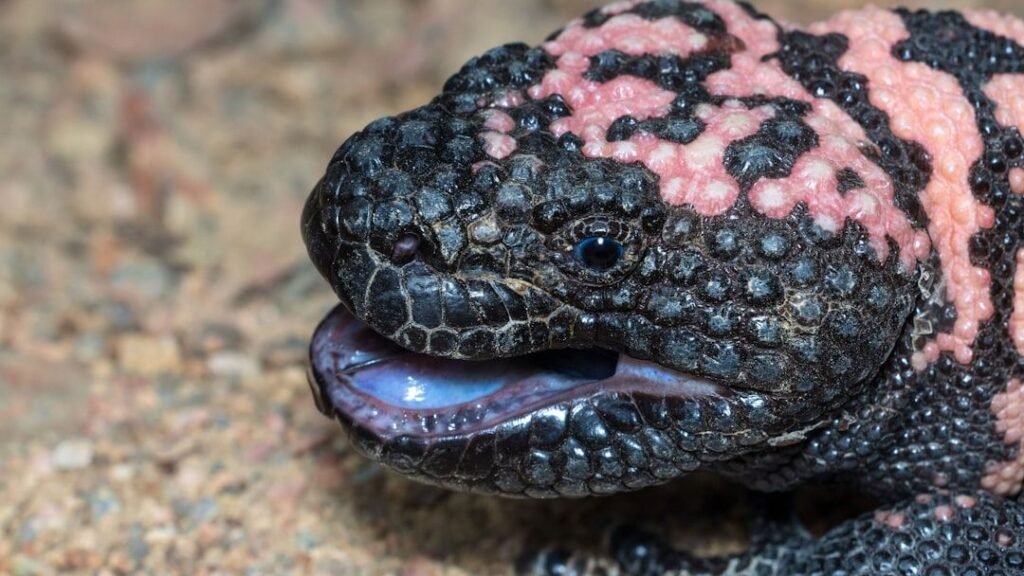
There’s something deeply fascinating about the creatures lurking beneath Arizona’s blazing desert sands. While rattlesnakes and scorpions tend to hog the spotlight, a far more mysterious reptile spends most of its existence hidden from view. The Gila monster looks like it crawled straight out of prehistoric times, with its beaded skin and lumbering gait. It’s hard to believe such a slow, sluggish creature could be venomous.
Yet despite living right in people’s backyards, this lizard remains shrouded in myths and misconceptions. Most folks only know the scary stories passed down through generations. The truth about these remarkable animals is far stranger and more compelling than any old folklore could ever be.
They Spend Nearly Their Entire Lives Underground
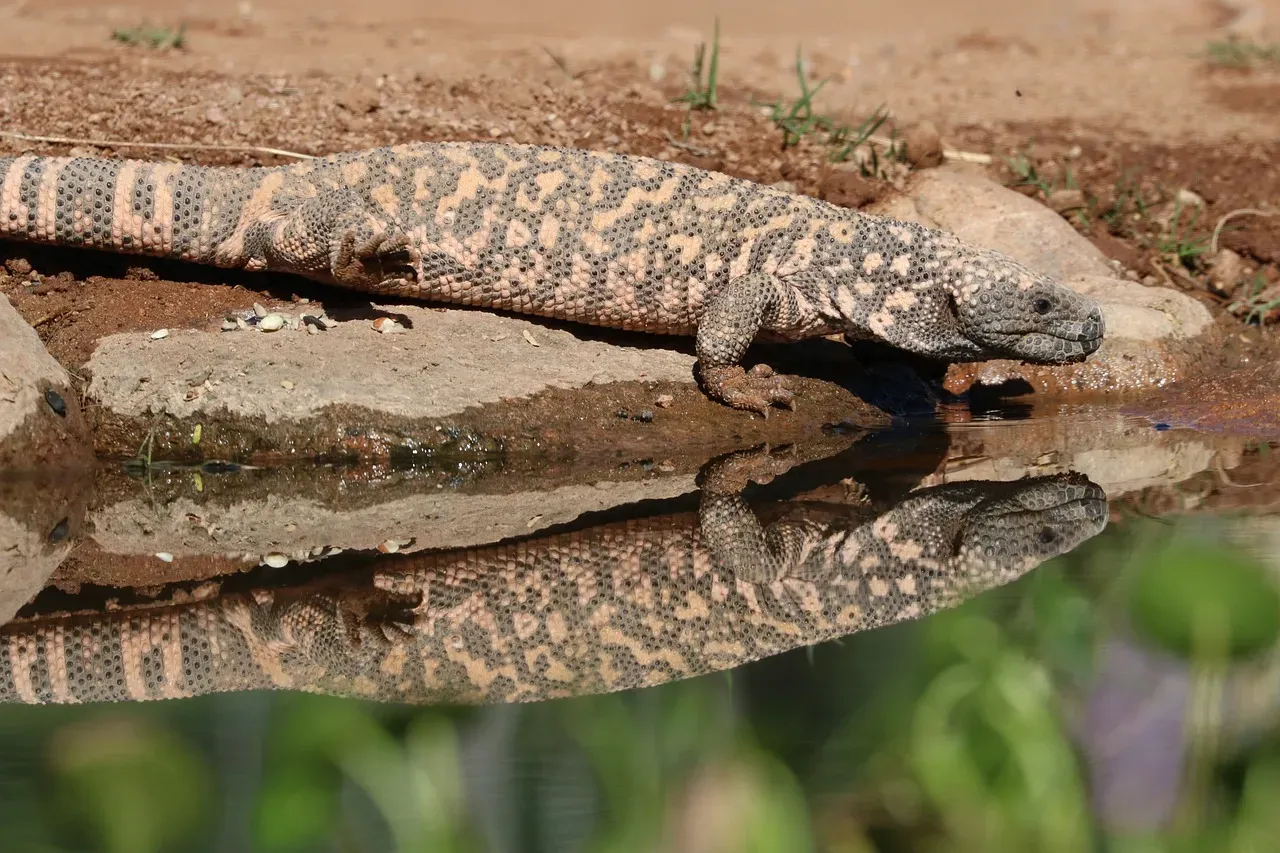
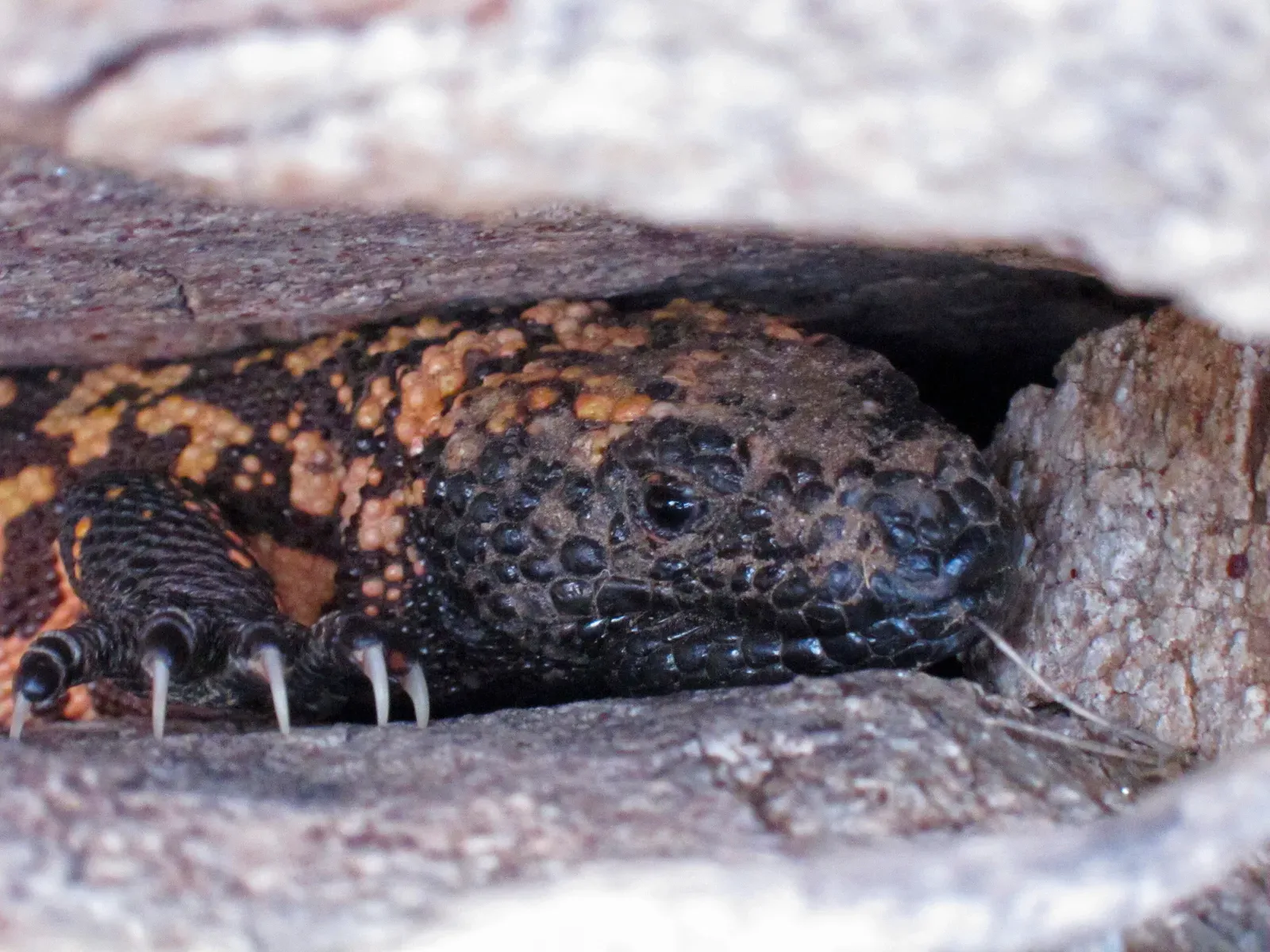
Here’s the thing about Gila monsters. They spend roughly nine-tenths of their lifetime underground in burrows or rocky shelters, which makes spotting one a genuine rarity. Some sources estimate they spend up to ninety-eight percent of their time in their subterranean shelters, only emerging for brief windows during spring and early summer.
Think about that for a second. An animal this notorious is essentially invisible for the vast majority of its existence. They’re not lurking around every corner waiting to strike like old cowboy tales would have you believe. Most of their aboveground activity occurs in three months in the spring, which explains why even longtime desert dwellers might never encounter one in person.
Their Venom Led to a Breakthrough Diabetes Treatment
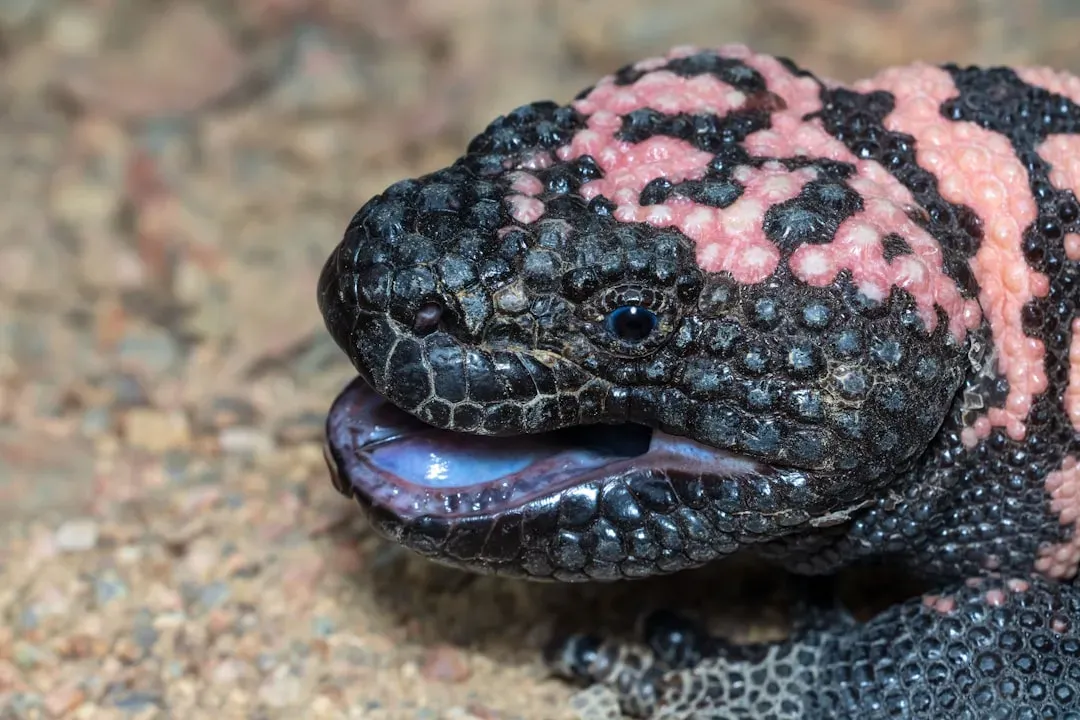
This one honestly surprised me when I first learned about it. A hormone in the lizard’s saliva, exendin-4, could be used to treat type 2 diabetes, and researchers discovered this connection over three decades ago. The peptide works because it’s structurally similar to a human hormone that helps regulate blood sugar.
The synthetic version of exendin-4, called exenatide with the commercial name Byetta, was developed in 1992 but was not approved for use until 2005. Even more remarkable, researchers used exendin-4 as a model to build the first synthetic semaglutides, known today by brand names like Ozempic and Wegovy. A monster’s venom transformed into a lifesaving medicine. Nature’s pretty wild sometimes.
They Can Eat One-Third of Their Body Weight in a Single Meal
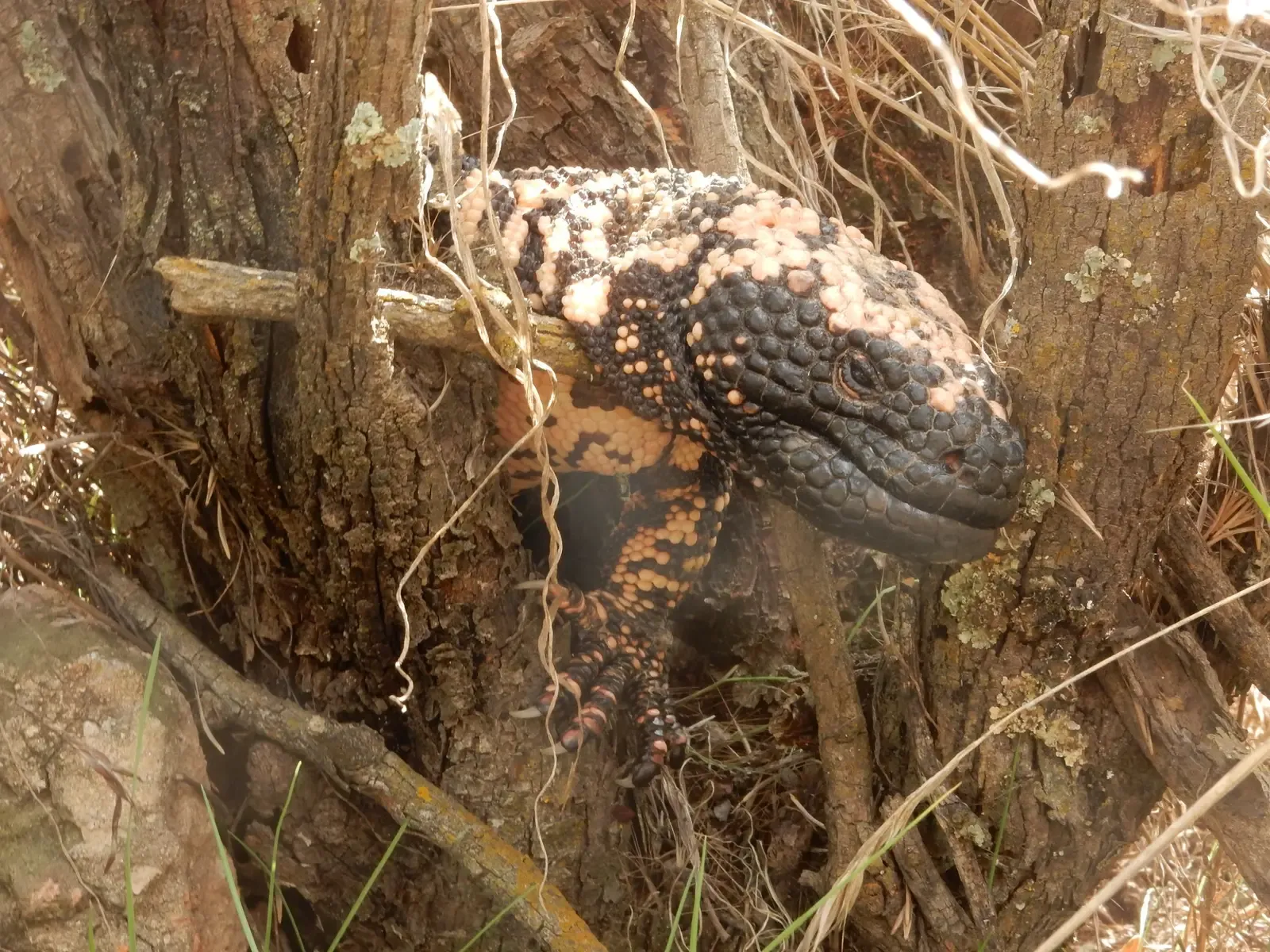
Gila monsters are the ultimate feast-or-famine eaters. They can eat up to one-third of their body weight in one meal, storing fat in both their tails and bodies for later use. It has been suggested that Gilas can consume all the calories they need for a year in three or four large meals.
Their prey consists mainly of bird eggs, nestlings, and young mammals, which they simply swallow whole without chewing. They do break open eggs, showing at least some table manners. This extreme efficiency allows them to survive those long months underground without food, relying entirely on stored reserves. It’s like they’re built-in survivalists, perfectly adapted to the harsh desert’s unpredictable resources.
Their Speed Is Laughably Slow
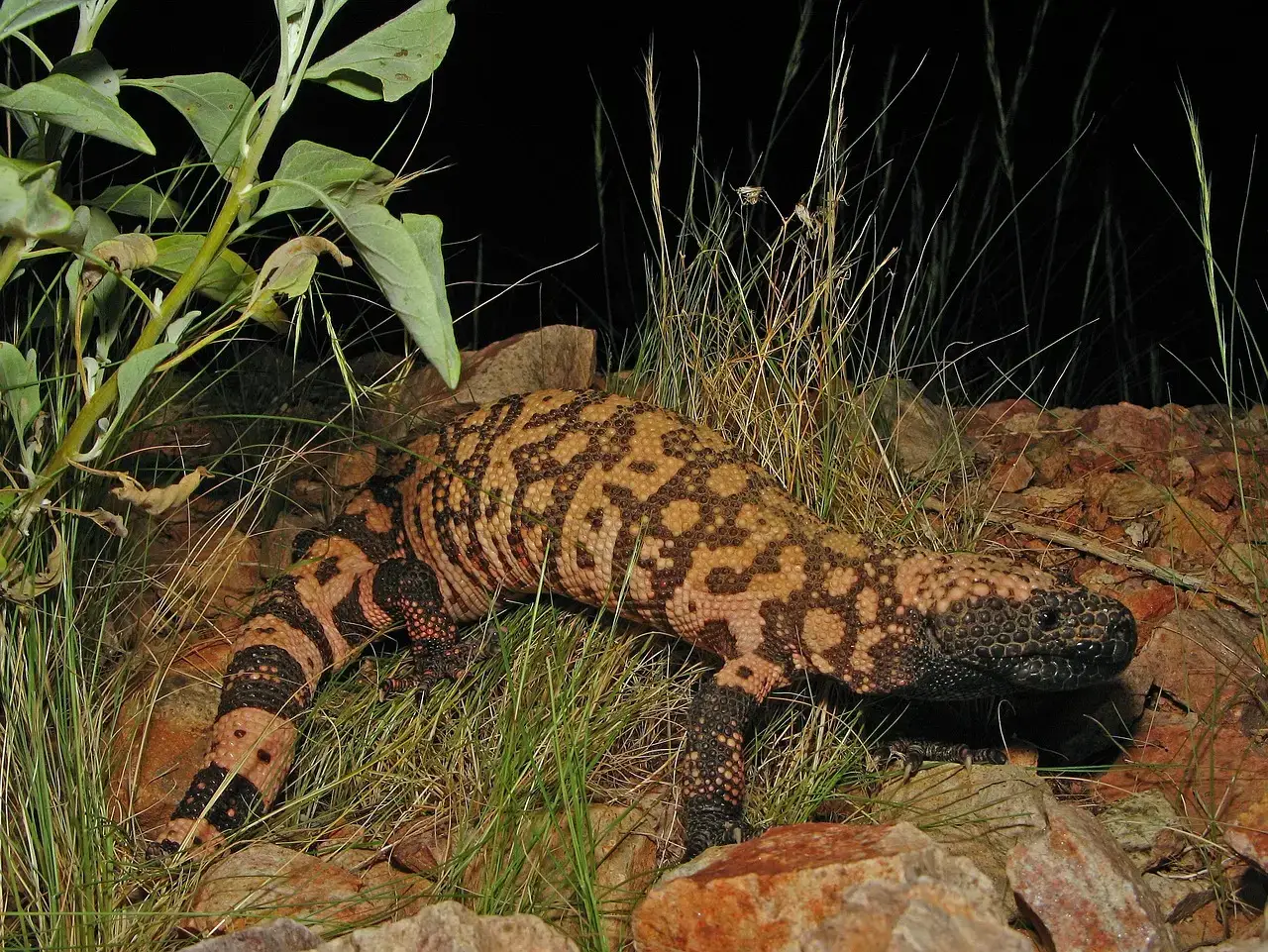
Let’s be real. Gila monsters are not winning any races. Their top speed is only about one and a half miles per hour, which is slower than most people’s leisurely stroll. They lumber along with an awkward gait, tail swinging side to side for balance.
Despite this glacial pace, they’re surprisingly good climbers. Gila monsters are often found fairly high up in cholla cactus foraging for bird eggs in nests. The fact that something so slow can scale a spiny cactus speaks to their determination. Their hunting strategy relies entirely on stealth and patience rather than speed, sneaking up on defenseless prey before it can escape.
They Were the First Venomous Animal Legally Protected in North America
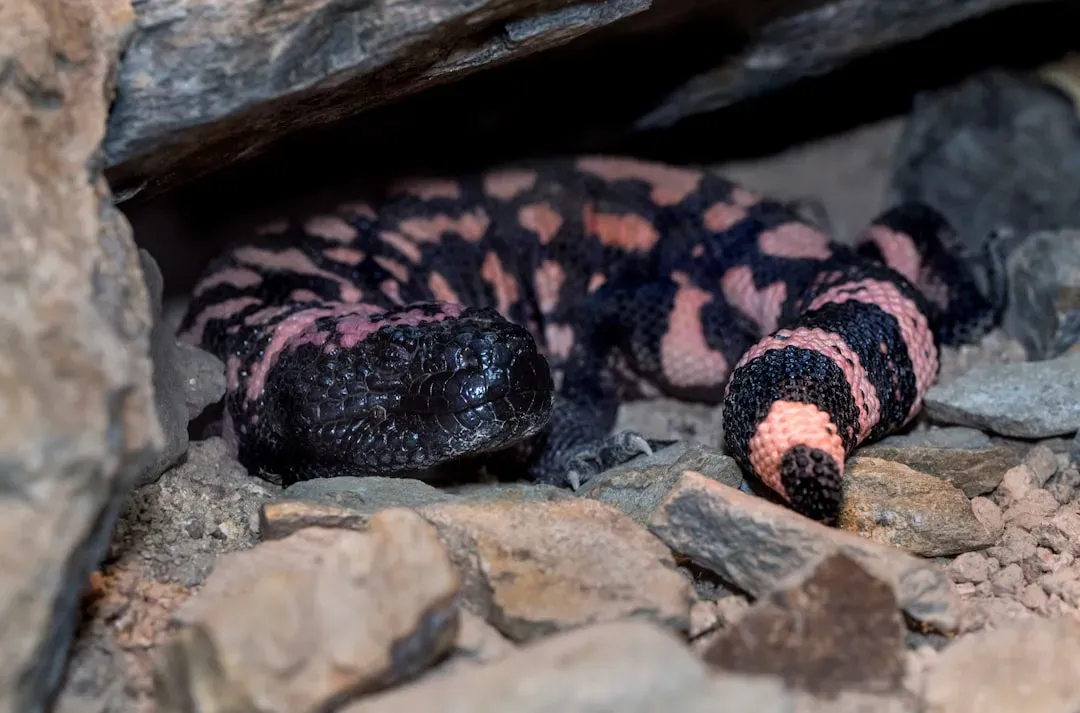
Way back in 1952, something unprecedented happened in wildlife conservation. The Gila monster became the first venomous animal in North America to be afforded legal protection, making it illegal to collect, kill, or sell them in Arizona. This was decades before most people even thought about protecting predators or dangerous animals.
Gila monsters became the first venomous wildlife in North America to be given legal protection despite their fearsome reputation. Think about the courage that took in an era when most venomous creatures were killed on sight. It shows that even back then, some people recognized these lizards deserved respect and preservation rather than extermination.
Their Eggs Overwinter in the Ground for Up to Ten Months
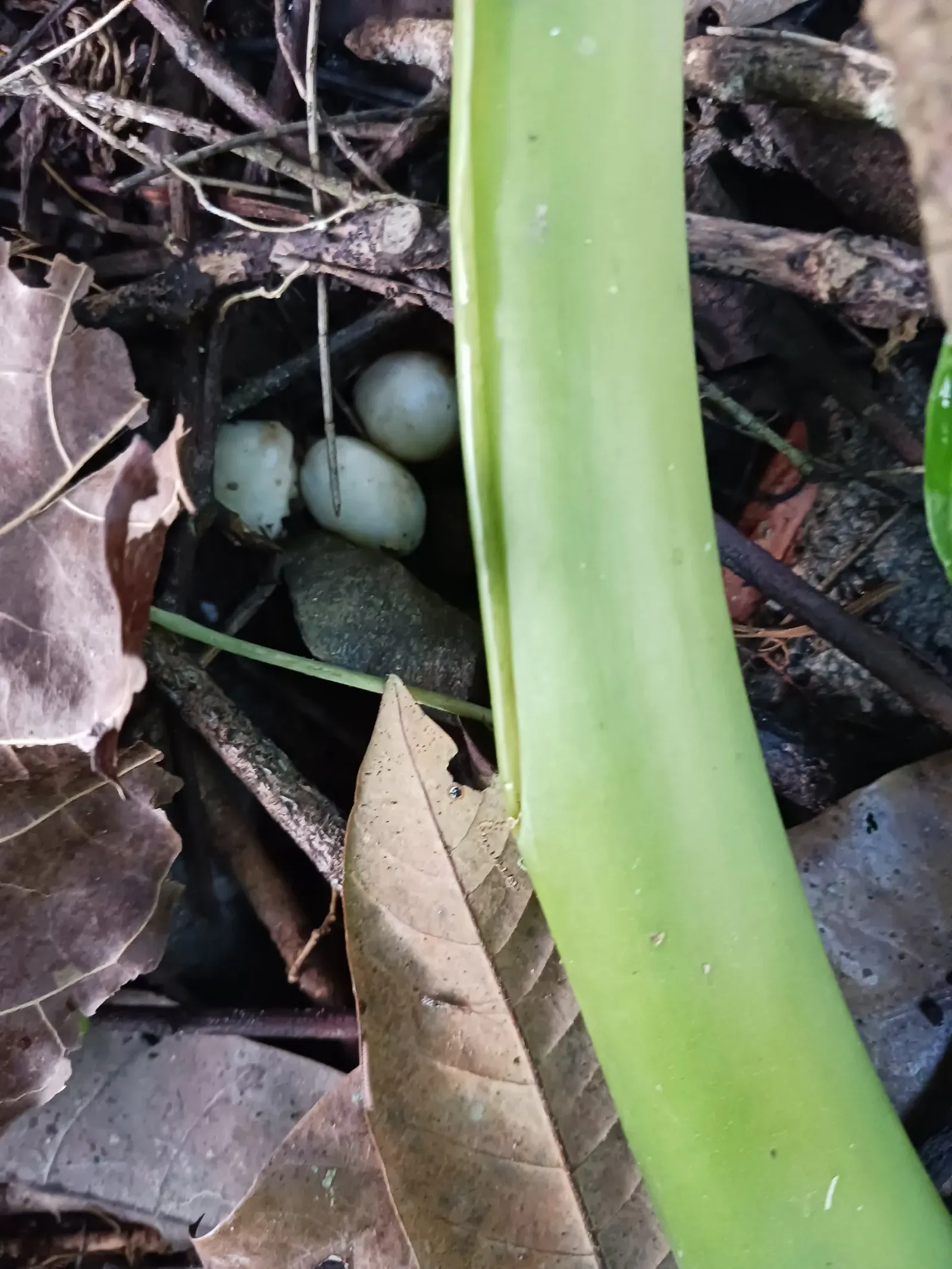
The reproductive cycle of Gila monsters is genuinely bizarre. In southern Arizona, Gila monsters breed in May and June, with eggs laid in late June through mid August, and the eggs incubate and develop from fall to early spring with young appearing the following April through June. That’s a seriously long incubation period.
There is no other known egg-laying lizard in North America where eggs over-winter and hatch the following year. A study by Arizona State University suggests wild Gila monster young overwinter, remaining in their nests for seven to ten months after hatching, with hatchlings from eggs laid in July not emerging from their nests until late April through to early August the following year. This strategy likely ensures the babies emerge when prey is abundant and temperatures are ideal.
Old West Pioneers Believed Absurd Myths About Them
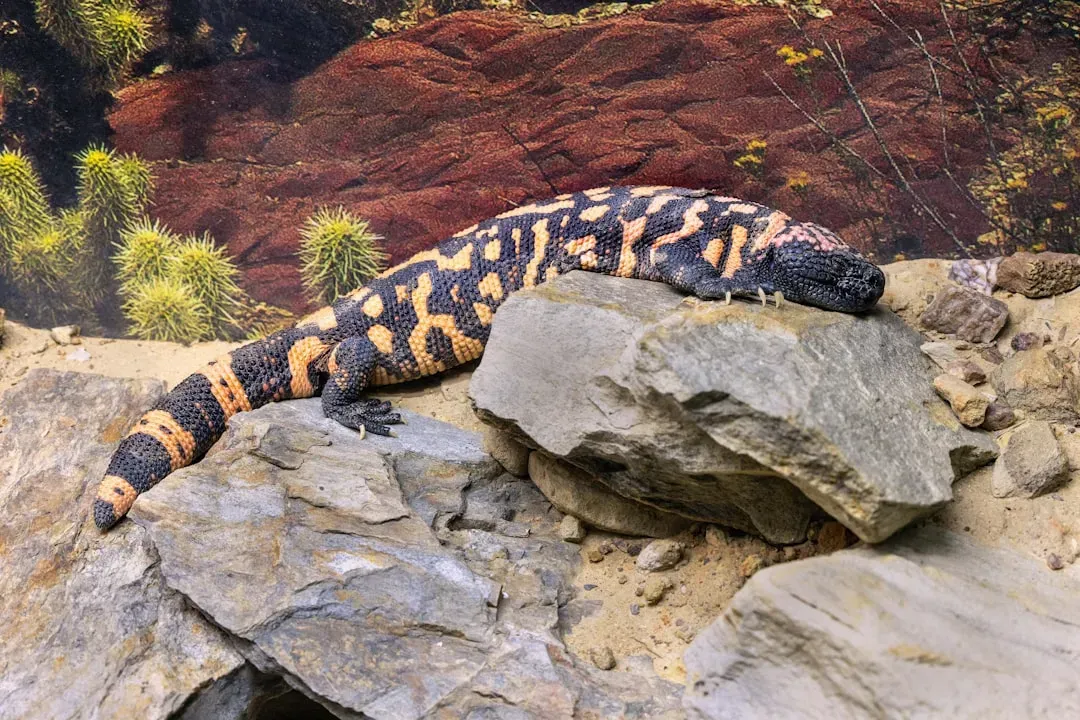
The folklore surrounding these lizards was absolutely ridiculous. It has been accused of spitting venom, leaping several feet in the air to attack, stinging with its tongue, and killing people with gusts of poisonous breath. None of these claims are remotely true, yet people genuinely believed them.
In the Old West, the pioneers believed the lizard had foul or toxic breath and that its bite was fatal. There were even tales that once they bit down, they couldn’t let go until sundown, or that they lacked an anus and that’s why they were venomous. The wild imagination of frontier storytellers knew no bounds, and these myths persisted for generations despite having zero basis in reality.
No Human Deaths Have Been Confirmed in Modern Times
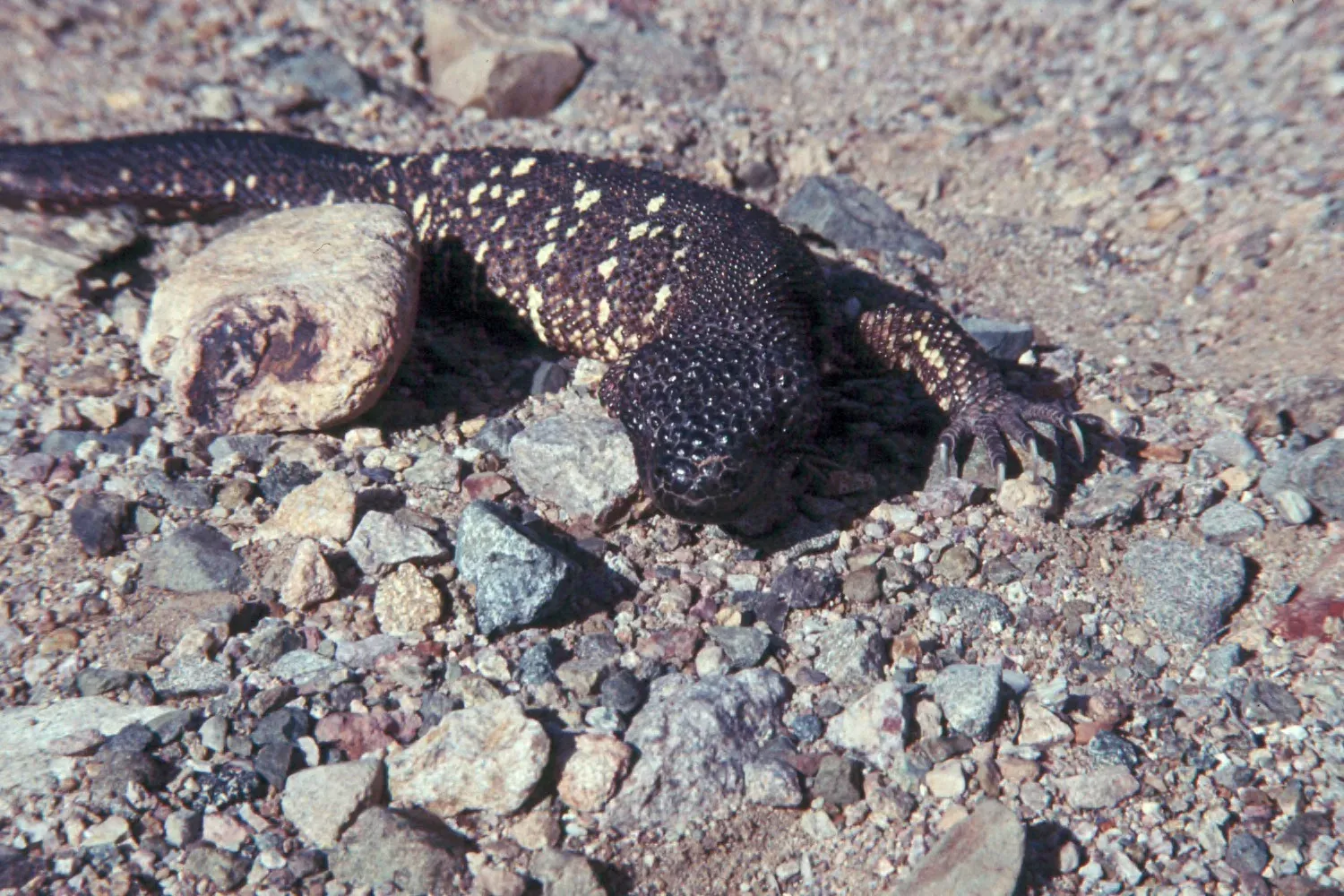
Despite all the terror and legends, Gila monster bites are rarely life-threatening to healthy adults. Although the Gila’s bite is extremely painful, no human death has been reported in recent records. The venom is about as toxic as a western diamondback rattlesnake, but they inject much smaller amounts.
Depending upon which report you may read, the last death recorded from a Gila monster bite was in 1939 while others report no deaths in the last one hundred years. The reality is that getting bitten requires serious effort on the human’s part, since these animals are slow, reclusive, and give plenty of warning before striking. There is no antivenom for Gila monster bites, but most people recover with proper medical treatment.
Males Engage in Ritualized Wrestling Matches for Mates
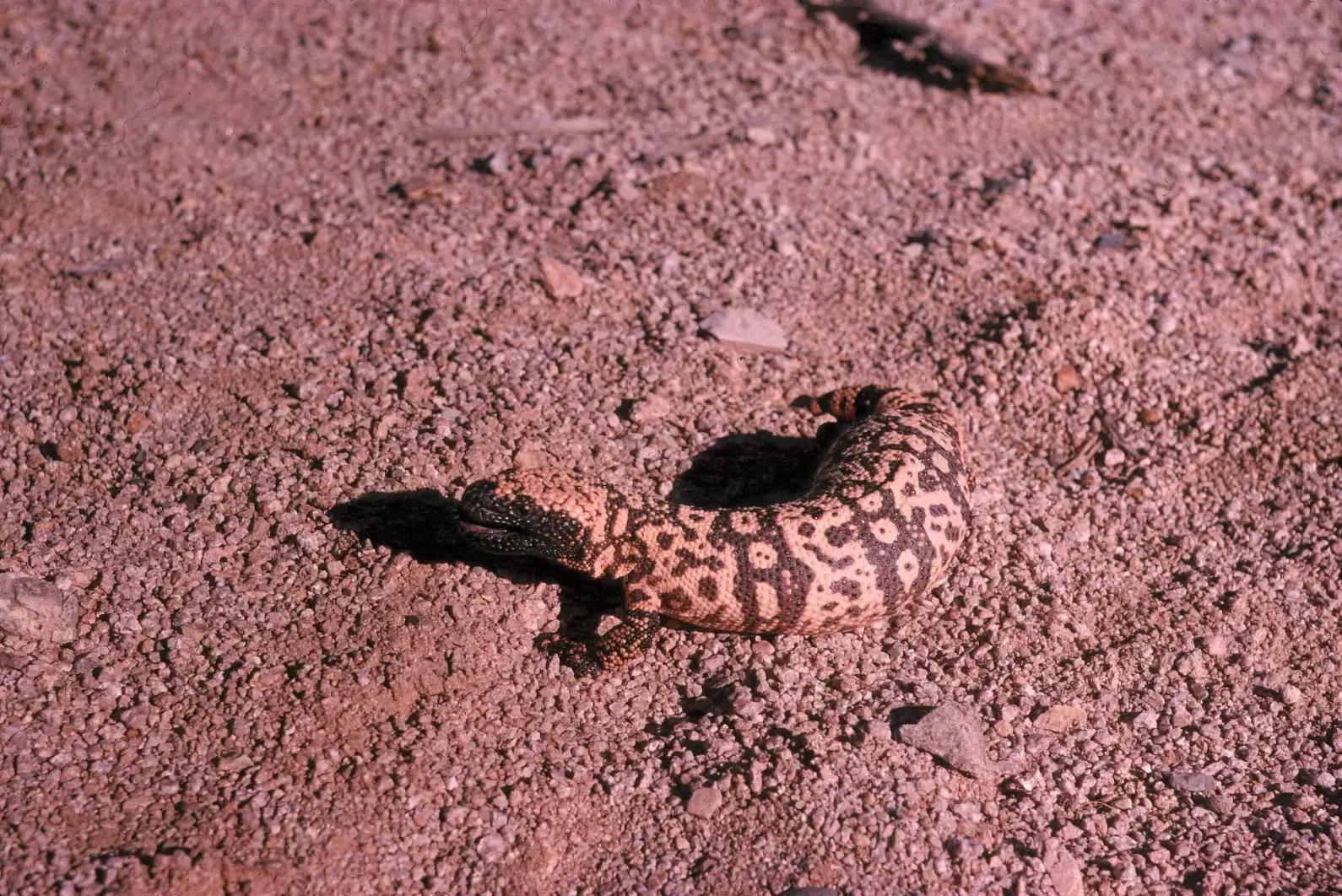
When breeding season arrives, male Gila monsters put on quite a show. Males compete for mates by engaging in carefully choreographed wrestling matches, in which the biggest and strongest wins. It’s less about violence and more about displaying dominance through sheer determination.
The dominant male lies on top of the subordinate one and pins it with its front and hind limbs, while both lizards arch their bodies, pushing against each other and twisting around in an effort to gain the dominant position. These matches can last quite a while, with the loser eventually giving up and retreating. It’s oddly dignified for such fearsome-looking creatures, like watching sumo wrestlers in reptile form.
Their Scientific Name Literally Means “Studded Skin”
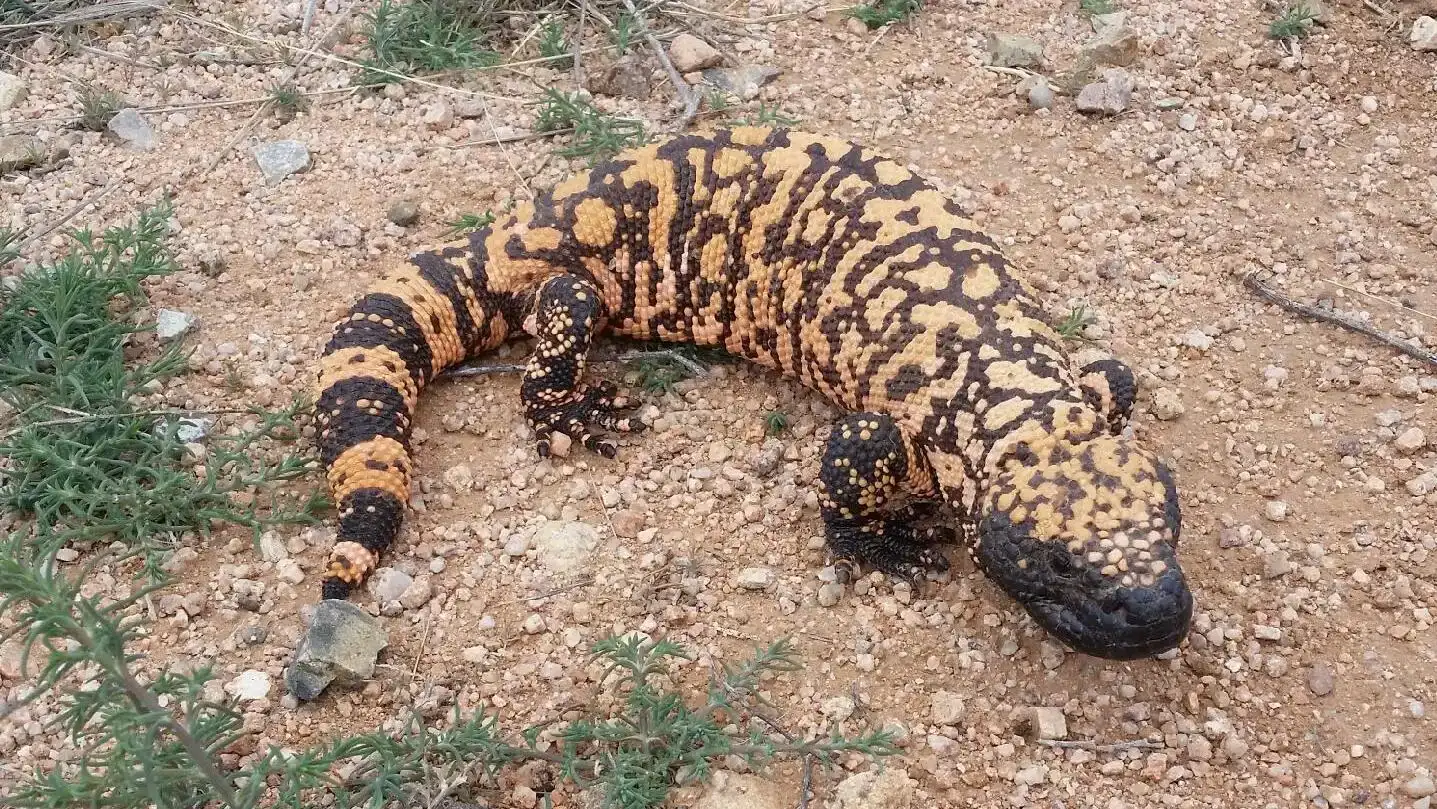
The scientific name Heloderma suspectum has an interesting origin story. Heloderma means “studded skin”, from the Ancient Greek words helos, meaning “the head of a nail or stud”, and derma, meaning “skin”. It’s a perfect description when you look at their distinctive appearance.
Their bodies are covered with bead-like scales called osteoderms, giving them that characteristic bumpy texture that resembles ornamental beadwork. The name “Gila” refers to the Gila River Basin in the U.S. states of Arizona and New Mexico, where the Gila monster was once plentiful. The combination creates a name that’s both descriptive and geographically specific, capturing the essence of this unique desert dweller.
Conclusion
The Gila monster defies easy categorization. Venomous yet sluggish, feared yet rarely dangerous, these lizards have survived for millions of years by mastering the art of patience. Their contribution to modern medicine alone makes them invaluable, transforming from desert monster to diabetes treatment in one of nature’s most unexpected plot twists.
What strikes me most is how little time they spend in our world, preferring the darkness and safety of underground burrows to the harsh desert sun. Maybe that’s why so many myths persist. When something is rarely seen, imagination fills in the gaps. What do you think about these misunderstood creatures? Did any of these facts surprise you?