

Close your eyes for a second and imagine your favorite song. You can feel the beat, the rise and fall of the melody, maybe even the bass in your chest if you turn it up loud enough. But what’s wild is this: everything you’re feeling is just invisible air being pushed around in a very organized way. Sound is basically the universe’s way of making invisible motion feel real, emotional, and sometimes absolutely overwhelming.
We tend to treat sound like wallpaper in our lives – always there, rarely noticed, unless it’s annoyingly loud or eerily quiet. But underneath every voice, every car engine, every notification ping, there’s a hidden world of vibrations, pressure waves, and strange physical tricks. Once you see how sound really works, it’s hard not to notice that it’s quietly shaping how we think, move, build, heal, and even how we feel about a room the moment we walk into it.
The Invisible Waves All Around Us
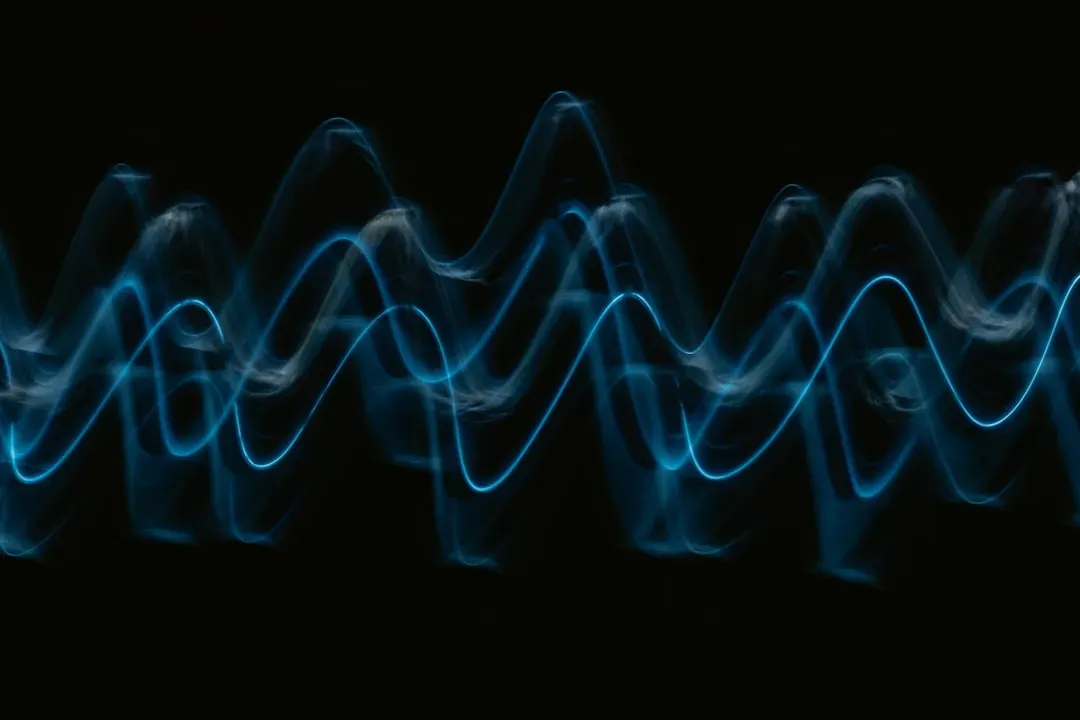
Here’s something slightly unsettling: even in a perfectly “silent” room, the air around you is constantly trembling. Sound is simply a pattern of tiny compressions and expansions traveling through a material, usually air, like ripples on the surface of a pond. When something vibrates – a guitar string, your vocal cords, a car engine – it shoves nearby air molecules back and forth, creating waves that radiate outward in every direction.
These waves are pressure changes your ears are surprisingly good at detecting. Your eardrum moves back and forth by distances smaller than the width of a human hair, yet your brain turns those minuscule movements into music, speech, and the sound of someone laughing on the other side of a wall. What feels mysterious or even magical is, at its core, just a very organized chain reaction of tiny pushes and pulls moving through space faster than you can walk but slower than light.
Frequency, Pitch, and Why Some Sounds Feel “Right”
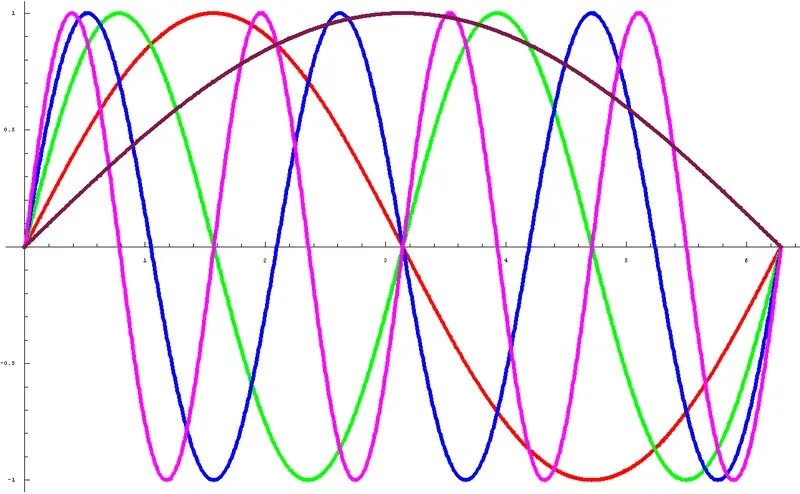
Every sound has a frequency: how many times per second something vibrates. Your brain translates low frequencies into deep, booming sounds and high frequencies into sharp, piercing ones. Humans usually hear a wide band of frequencies, from slow rumbles to fast, high-pitched whistles, though this range shrinks as we age or expose ourselves to too many loud concerts and headphones turned up just a bit too far.
Our ears and brains love certain frequency relationships and dislike others. When two notes have a simple mathematical relationship between their frequencies, they blend smoothly, which is why musical intervals like octaves and fifths feel stable and satisfying. When those relationships are messy, the waves interfere in awkward ways and produce rough, clashing sensations we call dissonance. Music theory might feel artistic or emotional, but underneath it, there’s a lot of pure physics quietly setting the rules.
How Vibrations Travel Through Different Materials

Sound doesn’t just travel through air; it can move through solids and liquids too, and it behaves very differently depending on where it’s traveling. In solids, particles are packed closer together, so vibrations can race through much faster than in air, which is why you can sometimes hear a train coming by putting your ear to the track before you hear it in the air. Underwater, sound travels more quickly and can carry over serious distances, which is one reason marine animals rely so heavily on sound to navigate and communicate.
But there’s a catch: not all materials pass sound along equally well. Soft materials like foam, curtains, or carpets soak up sound energy and turn it into a little bit of heat, which is why recording studios and cinemas are full of them. Hard, smooth surfaces like glass, tile, and concrete reflect sound, creating echoes that make some rooms feel loud and chaotic. That buzzing restaurant where you can barely hear the person next to you? That’s not just bad luck, it’s physics and interior design teaming up in the worst possible way.
Resonance: When Objects Sing Back
Every object has natural frequencies at which it prefers to vibrate, a bit like how every person has a comfortable singing range. When sound waves hit an object at those special frequencies, they can make it vibrate more strongly, a phenomenon called resonance. That’s why a singer can shatter a fragile glass if they match the glass’s resonance just right and keep the sound loud and steady enough.
Resonance can be beautiful, like the rich tone of a violin or a perfectly tuned guitar string amplifying sound through its wooden body. But it can also be dangerous: bridges, buildings, and even spacecraft can be shaken violently if exposed to vibrations that match their natural frequencies. Engineers spend a lot of time figuring out how to control or avoid these resonances, because a structure that “sings” too enthusiastically can end up cracking, swaying, or in extreme cases, collapsing.
How Sound Shapes Places: Acoustics in Everyday Life

Walk into a cathedral, whisper, and suddenly your voice feels huge. Step into a tiny, carpeted room, and even shouting sounds strangely contained. That shift in feeling is acoustics at work: the way a space reflects, absorbs, scatters, and shapes sound. Architects and acousticians study how sound bounces around in rooms so concert halls can sound warm and immersive, while lecture theaters stay clear and intelligible instead of echoing like a cave.
Even everyday spaces are deeply influenced by acoustics, whether anyone admits it or not. A classroom with hard floors and bare walls can make kids feel restless and overwhelmed because the constant sound reflections turn chatter into a blur. On the other hand, a calm coffee shop with softer surfaces and subtle background music can gently lower stress levels and make conversations feel more intimate. We tend to say a place feels cozy, tense, or chaotic, but very often, what we’re reacting to is simply the way sound behaves there.
Sound as a Tool: From Ultrasound to Noise-Canceling

Once you understand that sound is just mechanical vibrations, it becomes a powerful tool rather than just something passing through your ears. Medical ultrasound uses very high-frequency sound waves to create images inside the body, bouncing vibrations off organs and tissues to help doctors see what’s going on without a single cut. In industry, ultrasonic cleaners use intense high-frequency vibrations in liquid to shake dirt and grime off delicate objects like jewelry or surgical instruments.
On the more everyday side, noise-canceling headphones use physics tricks to quiet the world. They listen to the sound around you, then create an opposite wave that cancels it out, like two ripples on a pond colliding and flattening each other. Speakers, microphones, sonar, and even some types of non-destructive testing in engineering all rely on sending, shaping, and reading vibrations. We might think of sound as fleeting, but in practice, we’ve turned it into a surprisingly precise toolset for imaging, measuring, and manipulating the world.
The Emotional Power of Sound and Silence

Not all the effects of sound can be captured by equations, even though physics explains the mechanics underneath. Certain chords or rhythms can make your heart race, slow your breathing, or bring up memories you didn’t even know you still had. Film soundtracks guide your emotions scene by scene, using changes in volume, tempo, pitch, and texture to tell you when to feel tension, relief, sadness, or joy long before the characters say anything.
Even silence is rarely truly silent, and it can be just as powerful. When the background hum of life suddenly drops away – no traffic, no chatter, no appliances whirring – many people feel a mix of calm and discomfort, because we’re not used to hearing our own bodies, our thoughts, and the tiny creaks of our environment so clearly. In a way, sound is the emotional lighting of our lives, coloring everything without us realizing it, until the moment it changes or disappears.
Conclusion: Listening Differently to a Noisy World

Once you know that sound is just vibrations moving through matter, the world starts to look different. That loud truck is a rolling collection of vibrating parts shaking the air, your favorite song is carefully sculpted pressure waves, and even your own voice is a tiny physical disturbance radiating outward from your body. None of it is visible, but it’s all very real, constantly nudging your ears, your nervous system, and even your mood.
The next time you walk into a room, ride in a train, or sit in a park, try paying attention not just to what you hear, but to how the space is shaping those sounds and how those sounds are shaping you. Sound is not just background; it’s an invisible architecture we live inside all day long, whether we notice it or not. If vibrations you can’t see are quietly sculpting your world, what else might be at work around you that you’ve never really stopped to listen to?