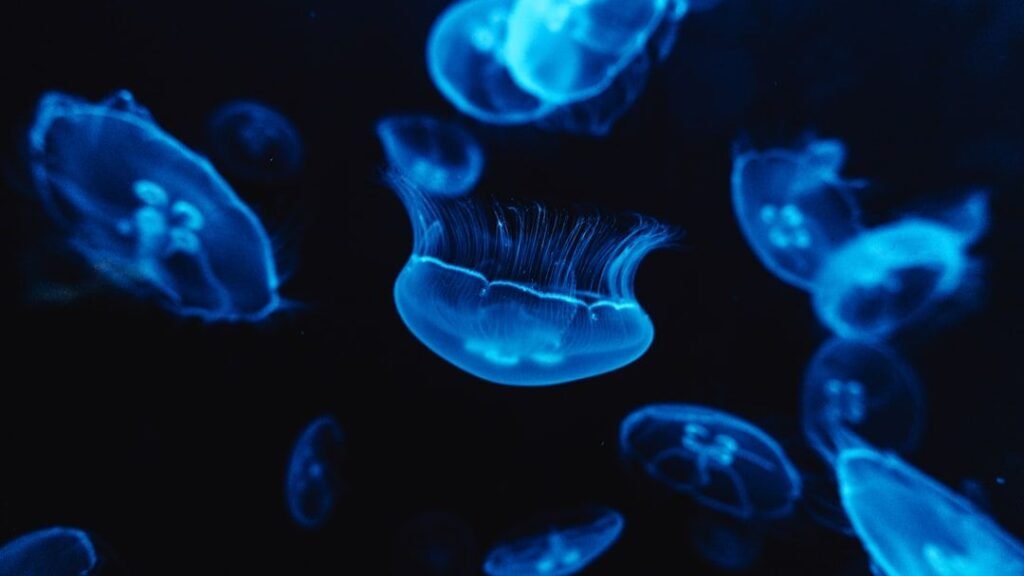

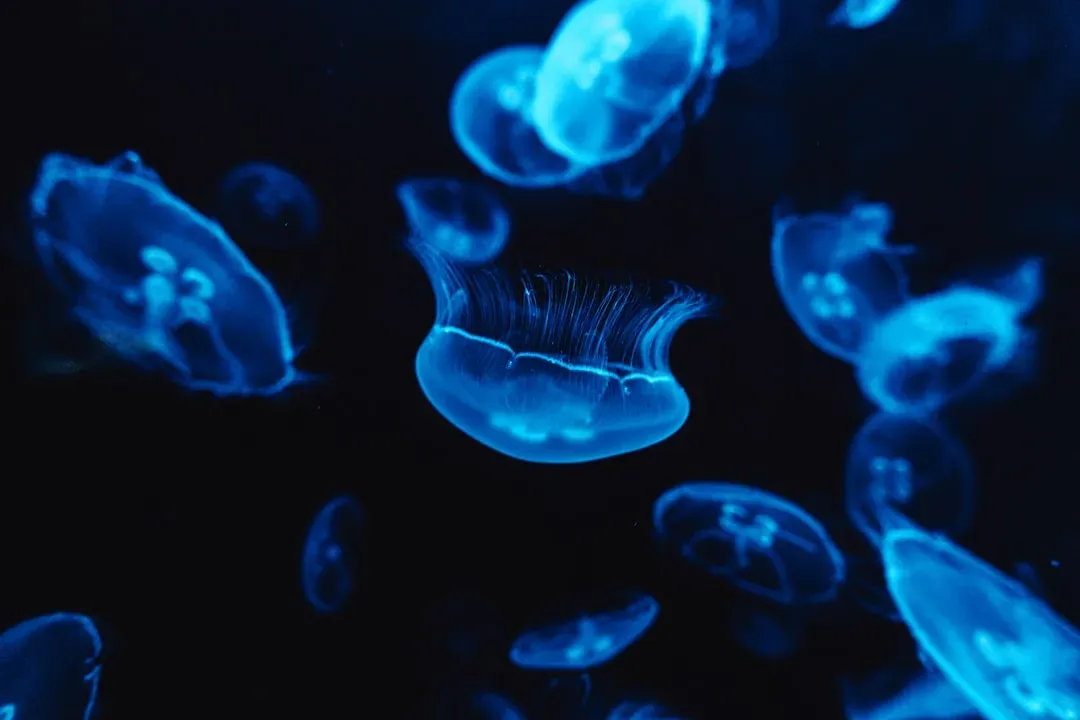
Walk along a dark beach on a warm night and you might see the waves suddenly flare up with an eerie blue light, as if the ocean itself is alive and breathing. That first sight of glowing water or a firefly-filled field can feel almost supernatural, like you’ve stepped into a scene from a fantasy movie rather than real life. Yet bioluminescence is not magic at all – it’s chemistry, evolution, and survival strategy wrapped inside living bodies.
In the last few decades, scientists have discovered that glowing life is far more common than anyone expected. From deep-sea fish to microscopic plankton, from mushrooms in tropical forests to beetles in your backyard, light is being made in the dark all around us. Once you understand how and why they glow, the night feels very different – less empty, more alive, and full of secret signals you can’t always see.
The Chemistry Behind the Glow
The glow of bioluminescence is built on a surprisingly simple idea: turn chemical energy into light with almost no heat. Inside glowing organisms, a molecule called luciferin reacts with oxygen, usually with the help of an enzyme called luciferase. This reaction releases energy, and instead of that energy turning into heat like a normal flame, much of it is released as visible light. It’s like a microscopic, ultra-efficient LED installed inside living tissue.
What fascinates researchers is that there isn’t just one luciferin-luciferase system; different groups of organisms have evolved their own versions. Deep-sea creatures, fireflies, and some bacteria all use slightly different chemical setups, which means the colors and brightness of their light can vary. Some shine an icy blue, others a greenish glow, and a few even lean towards yellow or red. This chemical diversity suggests that bioluminescence has evolved multiple times across the tree of life, each with its own twist on the same basic trick.
Glowing in the Deep: Survival in the Dark Ocean
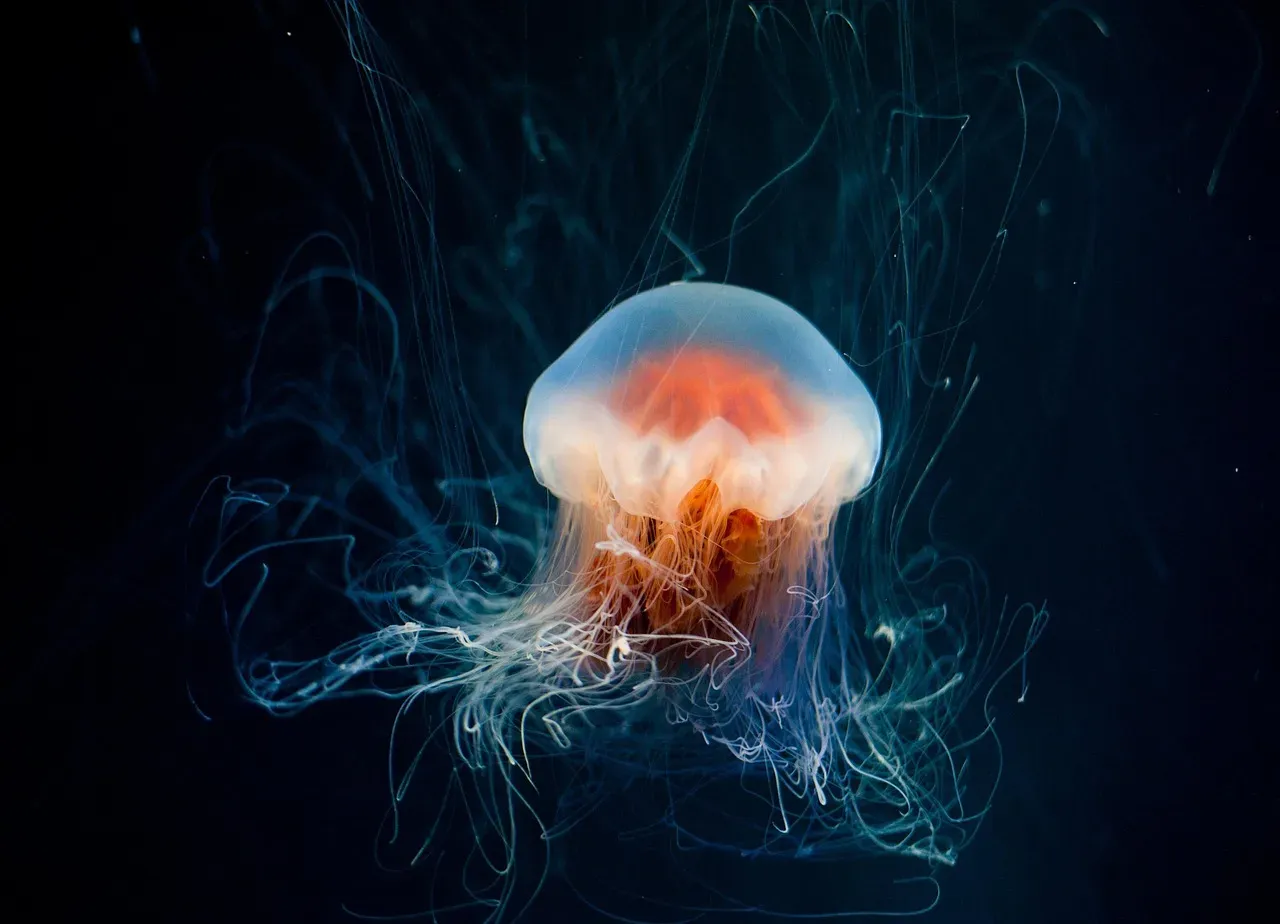
The deep ocean is the heartland of bioluminescence, a place where sunlight never reaches but light is constantly being made. Scientists now think that in the deep sea, most animals either produce light or can see it, which completely flips our old image of a pitch-black abyss. Predators use lights on their bodies like lures, dangling glowing appendages to attract curious prey in the darkness. Others emit sudden flashes to startle attackers or confuse them long enough to escape.
Some fish even use bioluminescence as a kind of invisibility cloak. They produce faint light on their bellies that matches the dim light filtering down from above, erasing their silhouette when viewed from below. This trick, called counterillumination, turns them into almost perfect shadows that blend into the background. In the deep sea, where any outline can give you away, being able to control how you appear – or disappear – can be the difference between living and becoming someone else’s dinner.
<h2.Fireflies, Romance, and the Language of Light
Microscopic Light Shows: Plankton and Glowing Waves
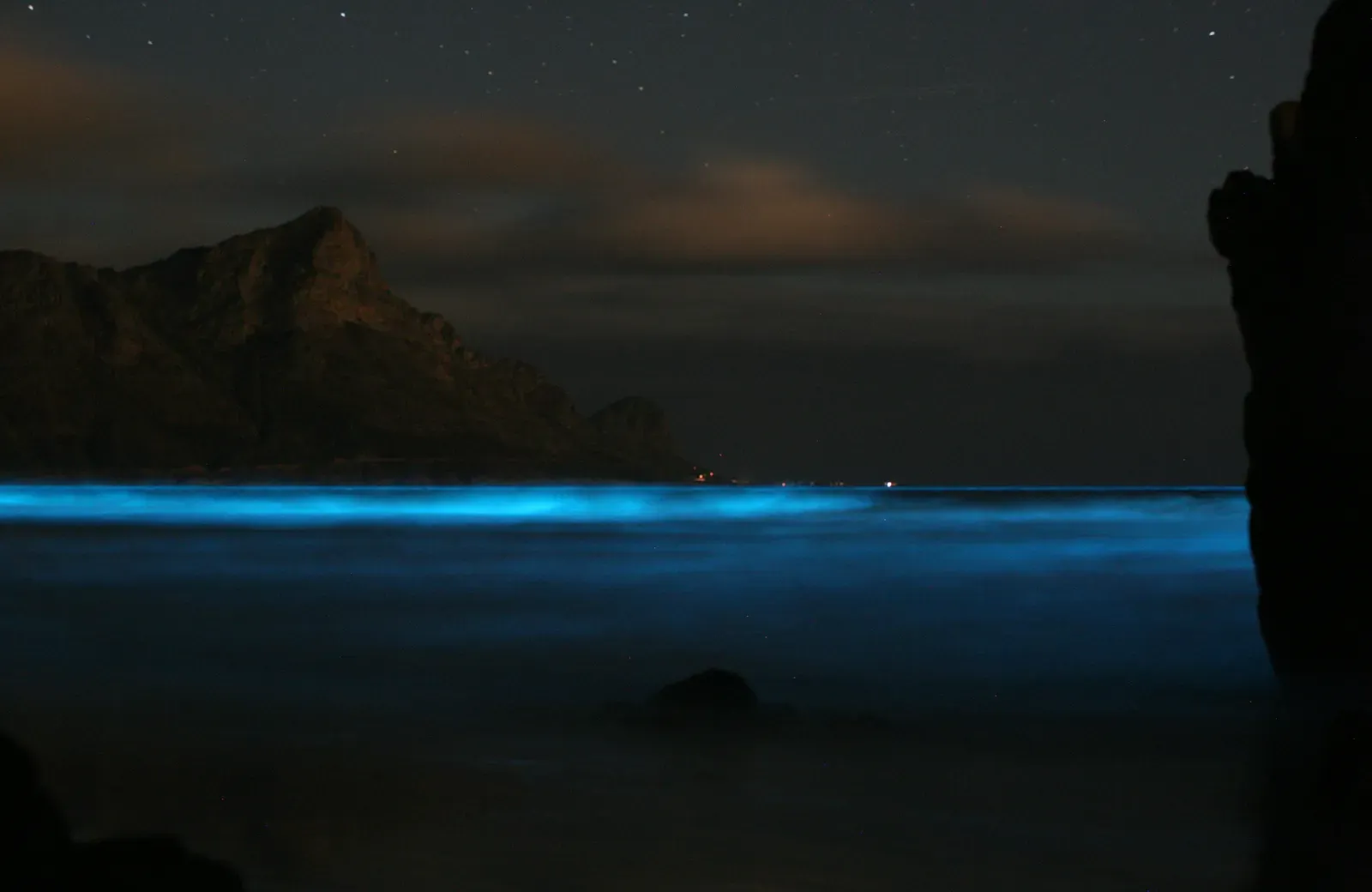
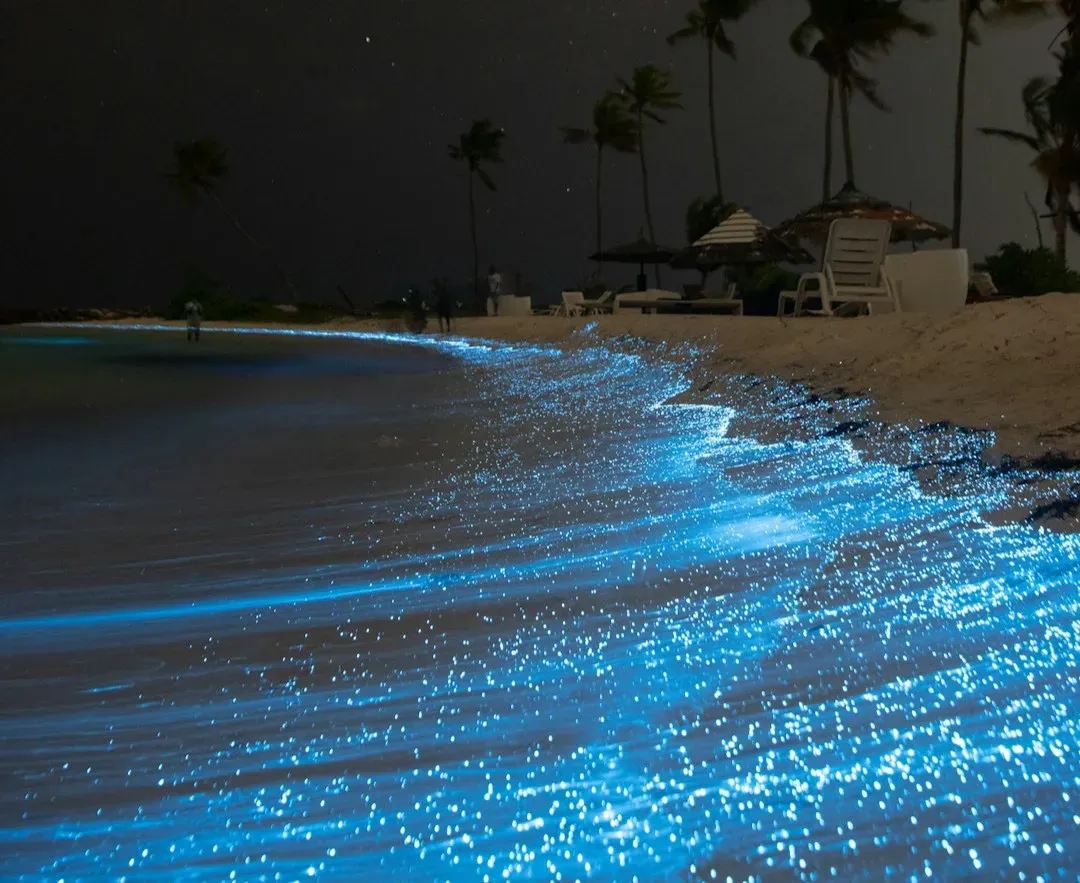
Those glowing waves you may have seen in viral photos or in real life often come from tiny organisms called dinoflagellates, a type of plankton that lights up when disturbed. When waves crash or a boat passes through the water, these microscopic cells flash with a brief blue light, turning motion into streaks and sparkles. It’s a defensive move: by lighting up suddenly, they might startle or expose the fish or shrimp trying to eat them, attracting even bigger predators that could chase the attacker away.
The scale of these light shows can be staggering. Swarms of glowing plankton can stretch for kilometers, bright enough to be seen from the shore or even from space-sensitive cameras. People who kayak at night through these waters talk about feeling like they’re paddling through liquid stars, each stroke setting off a flurry of sparks. Underneath the beauty is a reminder that even the smallest organisms have complex strategies for survival, turning chemistry into a kind of alarm system that paints the sea with light.
Glow as a Warning, Decoy, or Disguise
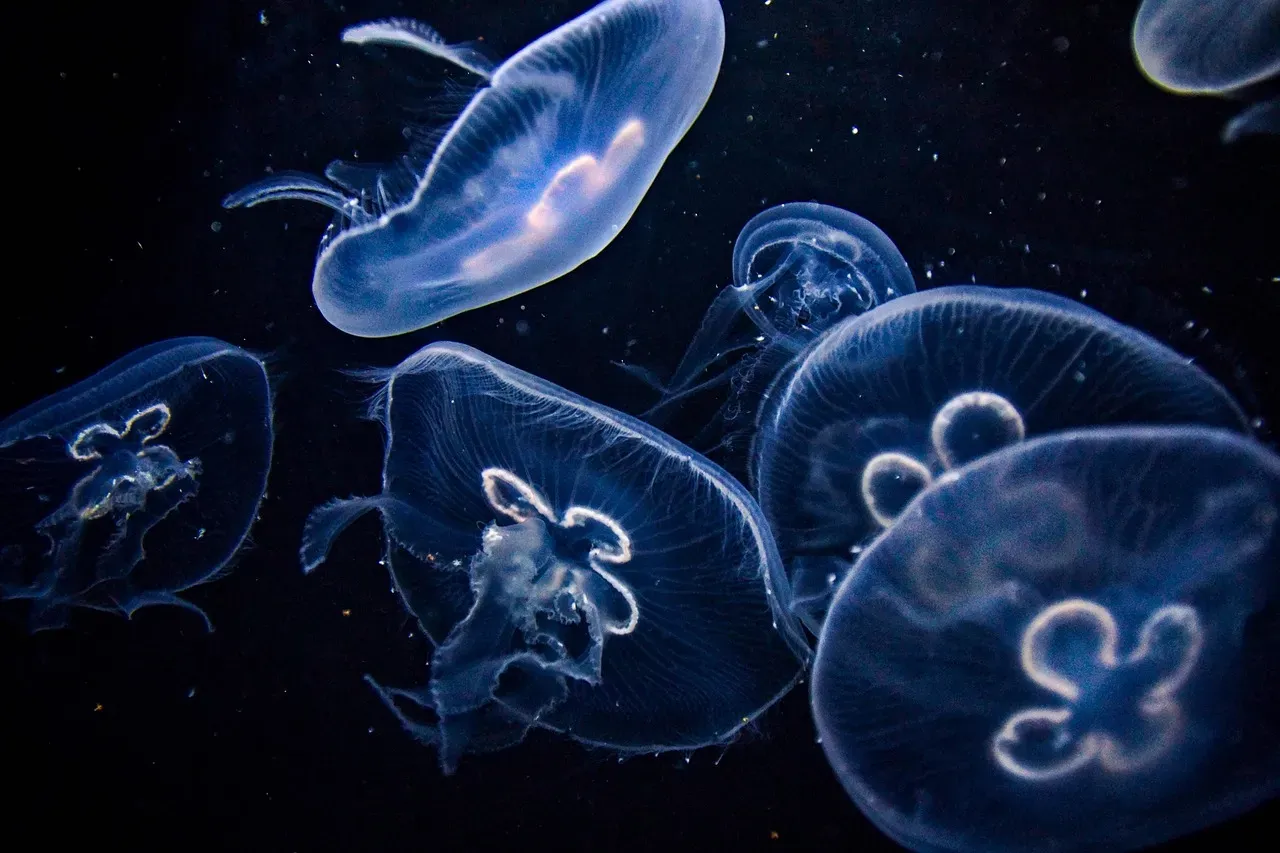
Bioluminescence isn’t always about attracting mates or prey; sometimes it’s about sending a very clear stay-away message. Some deep-sea worms, for example, can release glowing mucus or tiny light-emitting particles when threatened, creating a distracting cloud of light. Predators may snap at the glowing cloud while the worm wriggles away in the darkness. Other animals produce light to mimic dangerous or unappetizing creatures, borrowing the same logic as bright colors on poisonous frogs, but in the language of light.
Then there’s the more subtle use of bioluminescence as camouflage and disguise. Certain squids host bioluminescent bacteria in specialized organs and adjust the intensity of the light to match the brightness coming from above, erasing their shadow. Some fish even use light to break up their outline, a kind of glowing camouflage that makes them blend into shifting light patterns around them. Whether it’s a sudden flash to scare or a soft glow to hide, the common thread is that light becomes a tool for not getting eaten.
Fungi, Bacteria, and Glow in the Forest
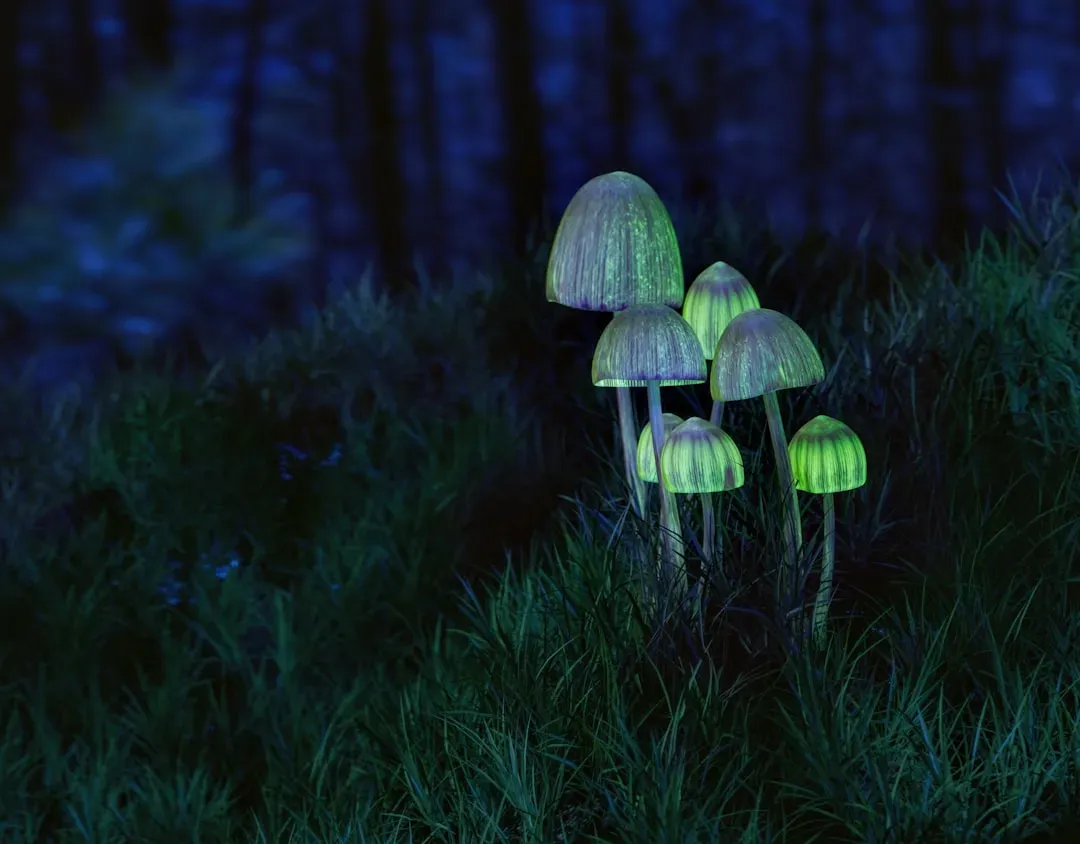
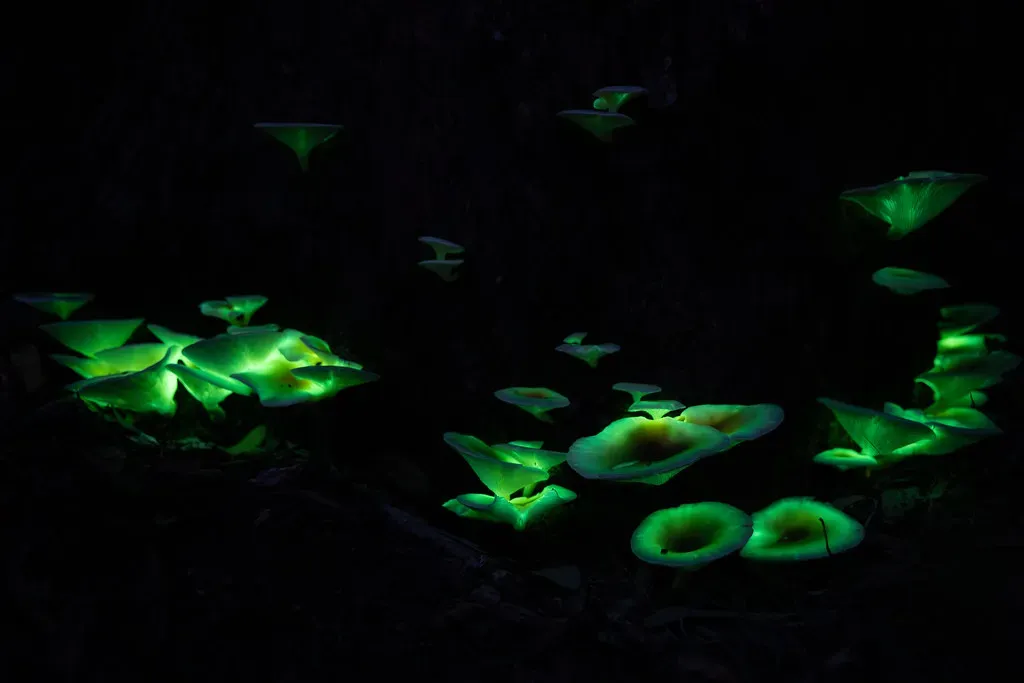
Bioluminescence isn’t just a marine or insect thing; it also shows up in places you might walk past without noticing, like forests after dark. Certain species of mushrooms emit a steady greenish light, sometimes bright enough that people in very dark forests have used them to mark paths. Scientists think this glow may help the fungus attract insects that will spread its spores, or it could be a side effect of chemical reactions that protect the fungus from damaging molecules produced during metabolism. Either way, there’s something oddly haunting about a forest floor dotted with cold, ghostly lights.
Glow-in-the-dark bacteria add another layer to the story. Some live on the surfaces of fish or in their light organs, forming mutualistic partnerships where the animal provides a home and nutrients, and the bacteria provide light. Those glowing patches can help fish communicate, coordinate, or attract prey. In other cases, bioluminescent bacteria colonize dead fish or organic matter, turning decaying bodies into eerie beacons in the water. The glow becomes a side effect of bacterial life, yet it can still shape how other animals perceive and interact with their environment.
How Humans Are Harnessing Bioluminescence
Humans, naturally, have looked at glowing creatures and thought: can we borrow that? In modern biology and medicine, genes from bioluminescent organisms have become some of the most powerful tools in the lab. By inserting luciferase genes into cells, scientists can make specific tissues glow under certain conditions and literally watch processes like gene expression, cancer growth, or drug responses in real time. Instead of guessing what’s happening inside a living system, they can follow the light as a live report from deep within cells and organs.
Beyond the lab, designers and engineers are experimenting with using bioluminescent systems in more everyday contexts, even if many ideas are still experimental or limited. There have been attempts to create glowing plants for ambient lighting, or to use bacteria-based light for low-energy signage and art installations. None of this is ready to replace street lamps, but it reveals a powerful fascination with lighting our world the way nature does. Looking ahead, the combination of synthetic biology and bioluminescence could lead to new kinds of sensors, medical diagnostics, or emergency lighting that literally grow themselves instead of being built from metal and glass.
What Bioluminescence Reveals About Life Itself
The more we learn about bioluminescence, the more it challenges our sense of what life looks like and how it functions. Light, something we usually associate with the sun, fire, or electricity, turns out to be a built-in feature for many organisms. It’s not an add-on; it’s woven into their behavior, communication, and survival strategies. When you realize that in the deep sea, light is the main currency of information, you start to see how flexible and inventive evolution can be in solving the problem of living in the dark.
On a human level, there’s also something quietly humbling about this hidden glow. Long before we wired cities with neon signs and LEDs, the planet was already full of silent, living lights flickering in forests, meadows, and oceans. Standing on a beach watching waves spark with blue or walking through a field lit by fireflies can feel like a reminder that the world still holds secrets we haven’t fully mapped or tamed. In a time when so much of life feels over-lit and over-documented, bioluminescence is a rare kind of wonder that only appears when we’re willing to step into the dark and really look.