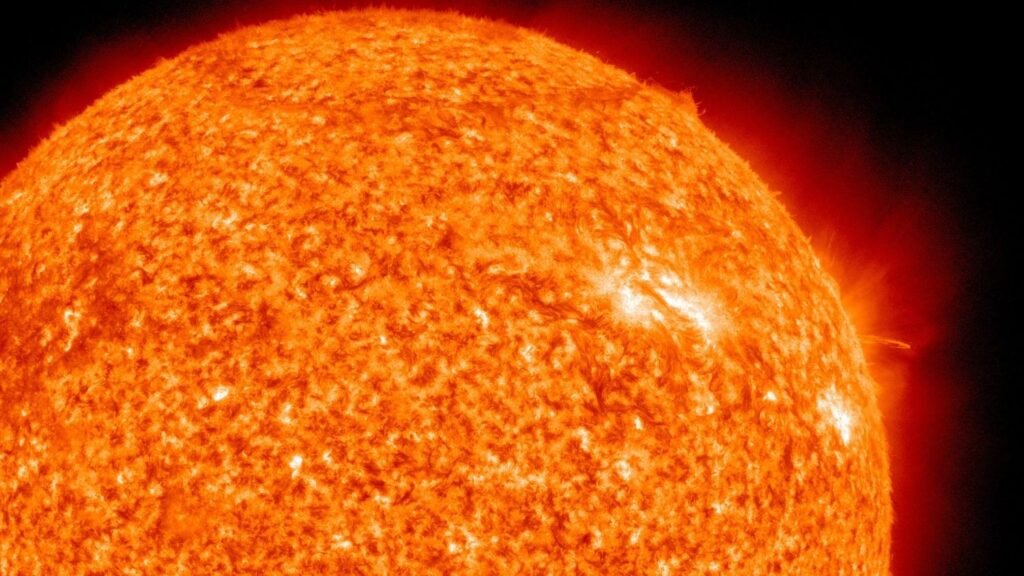
If you grew up thinking of the Sun as a steady yellow ball in the sky, recent discoveries feel almost shocking. Modern solar telescopes and spacecraft have revealed a restless, boiling, magnetic monster that’s constantly changing, pulsing, and throwing colossal storms across the solar system.
From delicate magnetic threads the size of planets to eruptions that can shut down satellites and power grids, the Sun behaves less like a simple lamp and more like a wild, living system. We’re finally seeing it in enough detail to understand that our star is not calm at all – and that its mood swings reach all the way down to Earth’s surface.
The Sun’s Surface Is Boiling Plasma, Not a Calm Yellow Disk
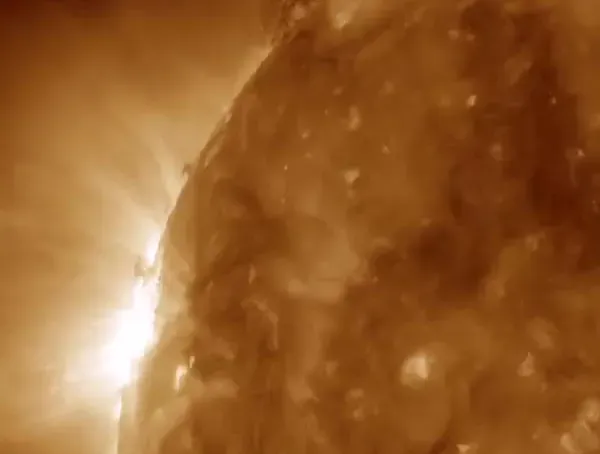
Look up (with proper protection!) and the Sun seems perfectly smooth and constant, but high-resolution images show something closer to a pot of water at a furious boil. The visible surface, called the photosphere, is covered in granules – huge convection cells of hot plasma rising and cooler plasma sinking – each one about the size of a small country. These granules constantly appear and disappear on timescales of minutes, making the Sun’s surface flicker and churn in a way our eyes can’t detect.
New telescopes like the Daniel K. Inouye Solar Telescope in Hawaii have zoomed in so much that you can see these granules in staggering detail, looking like bright golden cells edged by darker lanes. The constant motion helps transport energy from the Sun’s interior outward, feeding its light and heat. Once you see that close-up view, it’s hard to think of the Sun as a static object again; it feels strangely alive, always reshaping itself in a chaotic, never-ending dance.
Magnetic Fields Are the Sun’s Invisible Skeleton
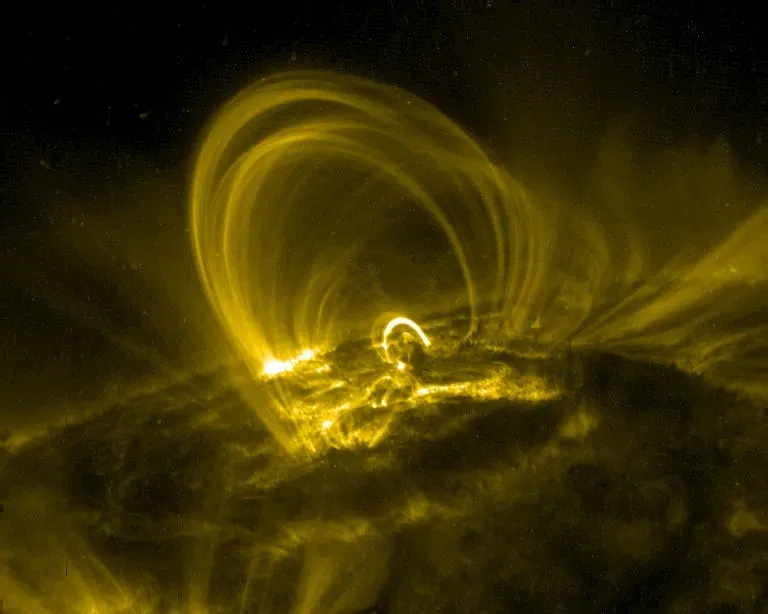
For decades, solar physicists suspected the Sun’s magnetic field controlled most of its behavior, but now we’re finally mapping it with far more precision. Instruments on missions like NASA’s Solar Dynamics Observatory and ESA’s Solar Orbiter can measure the strength and direction of magnetic fields across the solar surface. Those measurements reveal tangled, looping magnetic structures that rise up from the Sun like invisible scaffolding, guiding plasma along their paths.
These magnetic fields twist, snap, and reconnect, storing and releasing enormous amounts of energy. Sunspots, those dark patches on the surface, are really just places where intense magnetic fields poke through the photosphere and block some of the heat from below. In a way, the Sun’s magnetic field is like its nervous system, controlling where energy flows, when storms erupt, and how the entire outer atmosphere behaves. Without understanding magnetism, you’re basically missing the Sun’s true personality.
Solar Flares and Eruptions Are Star-Sized Explosions
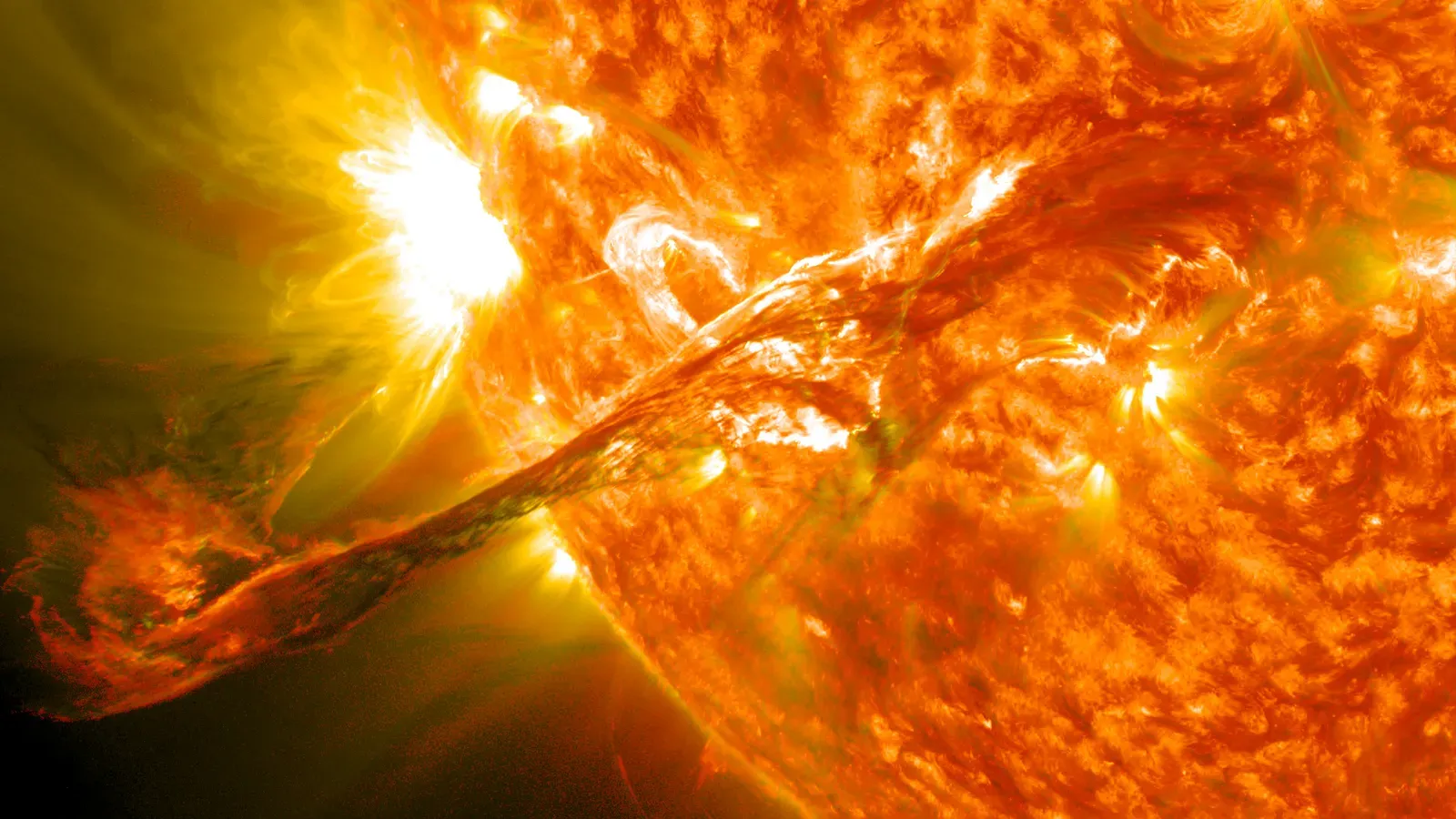
Every so often, the Sun unleashes a solar flare, a sudden flash of energy across the spectrum from radio waves to X-rays. These flares come from magnetic reconnection, where twisted magnetic field lines abruptly snap and realign, releasing energy that was stored like a coiled spring. In the most extreme cases, this can happen alongside a coronal mass ejection, a burst of plasma and magnetic field hurled into space at millions of kilometers per hour.
From Earth’s perspective, these events can trigger auroras, disrupt GPS signals, interfere with radio communications, and in severe cases threaten satellites and power grids. Space weather centers around the world now monitor the Sun in real time, issuing alerts when major flares and eruptions are heading our way. Thinking of the Sun as just a warm, friendly light starts to feel naive when you remember it can fling a cloud of charged particles the mass of a mountain straight at our planet.
The Solar Cycle Is a 11-Year Rhythm That Shapes Space Weather
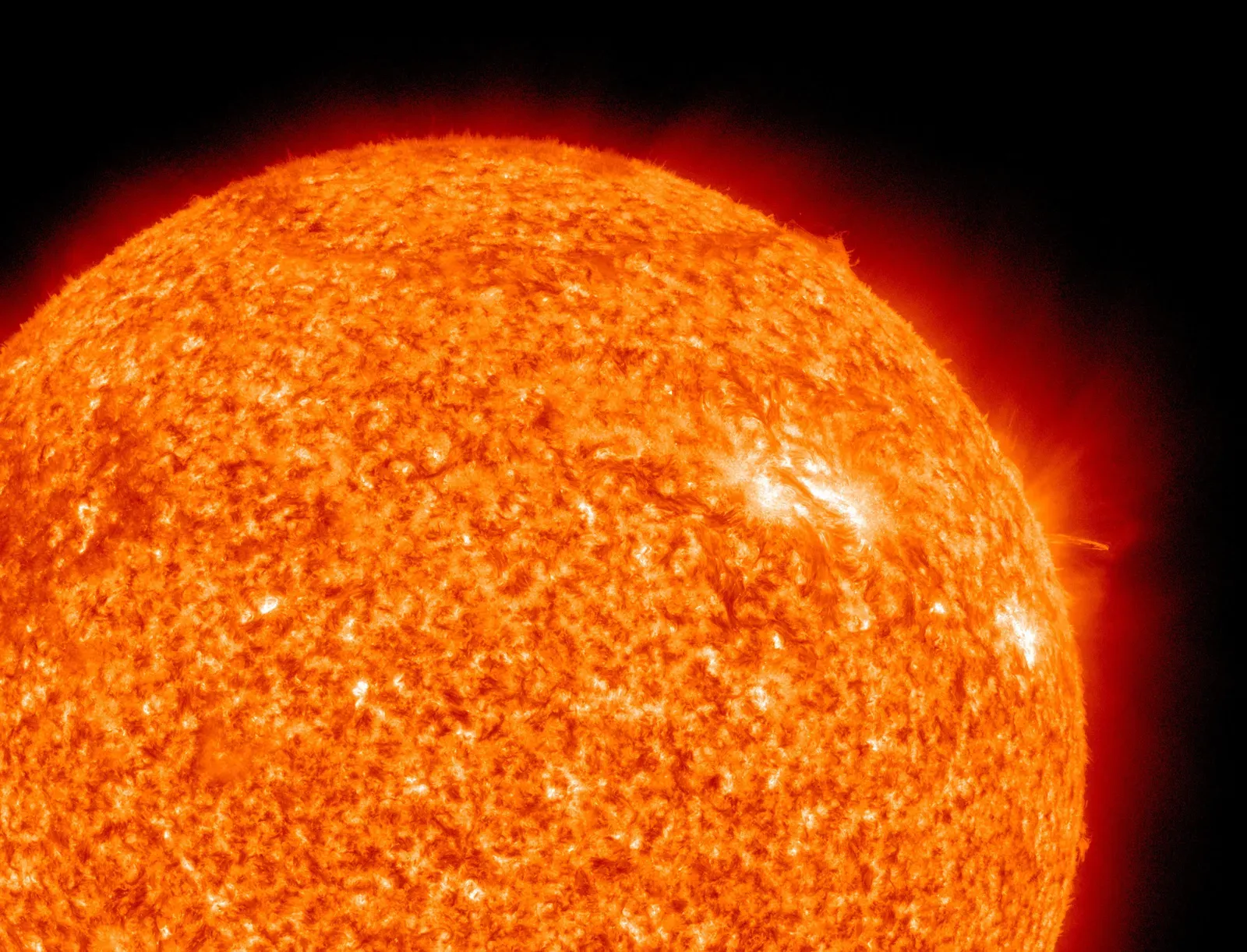
The Sun is not equally active all the time; it follows a cycle of roughly about eleven years where its magnetic activity rises and falls. At solar maximum, sunspots, flares, and eruptions are far more common, while solar minimum brings long stretches of relative calm. This cycle is driven by the Sun’s internal dynamo, where rotating, convecting plasma builds and flips large-scale magnetic fields over time.
We’re currently in a particularly active phase of this cycle, and recent measurements show that this solar maximum is stronger than originally forecast. That means more intense auroras but also greater risk to satellites, astronauts, and infrastructure on the ground. Airline routes over the poles, communications systems, and power grid operators all pay close attention to these cycles now. The Sun has a heartbeat, and when that pulse quickens, life and technology on Earth feel the effects whether we’re ready for it or not.
The Corona Is Hotter Than the Surface, and We’re Finally Getting Closer
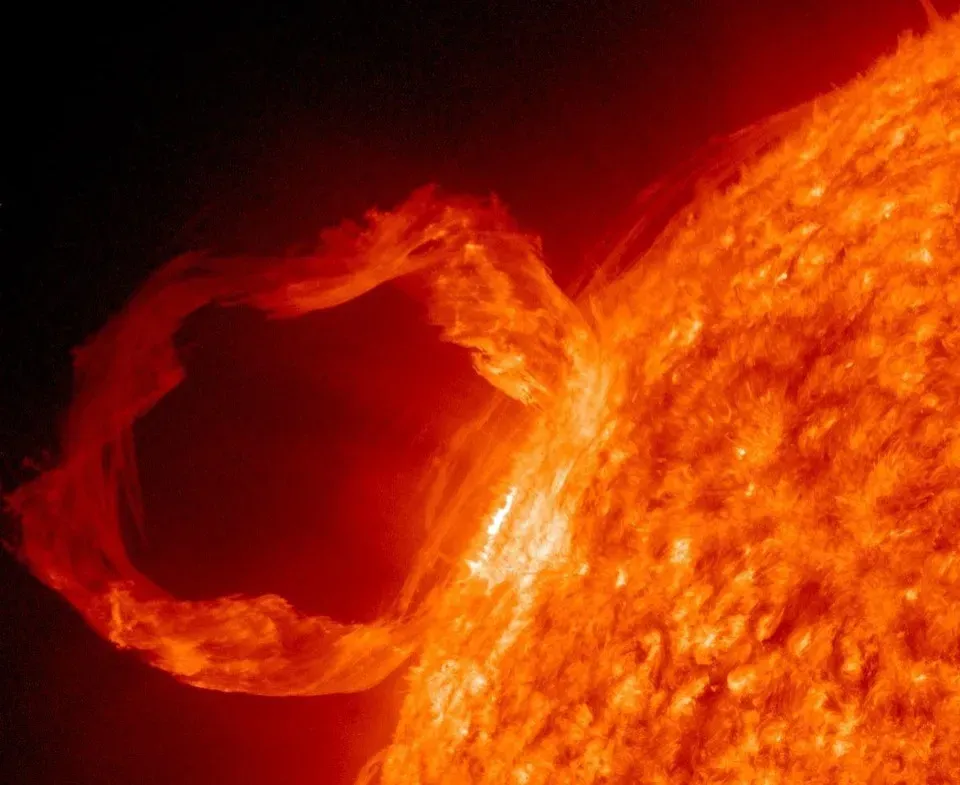
One of the strangest facts about the Sun is that its outer atmosphere, the corona, is vastly hotter than its visible surface. The photosphere simmers at a few thousand degrees Celsius, while the corona soars to millions of degrees, which seems backward and puzzling at first glance. This so-called coronal heating problem has been a long-standing mystery, but recent missions are starting to narrow down the explanations, pointing toward magnetic waves and tiny, rapid reconnection events as key heat sources.
NASA’s Parker Solar Probe and ESA’s Solar Orbiter are flying closer to the Sun than any spacecraft before, directly sampling particles and fields in the region where the corona and solar wind are shaped. As Parker dives deeper into the Sun’s atmosphere, it’s detecting bursts of energy and wave motions that could be dumping heat into the corona. It’s a bit like finally entering the engine room of a ship after guessing how the machinery works for generations, and the data is rewriting textbooks in real time.
The Sun Shapes the Heliosphere: Our Protective Bubble in Space
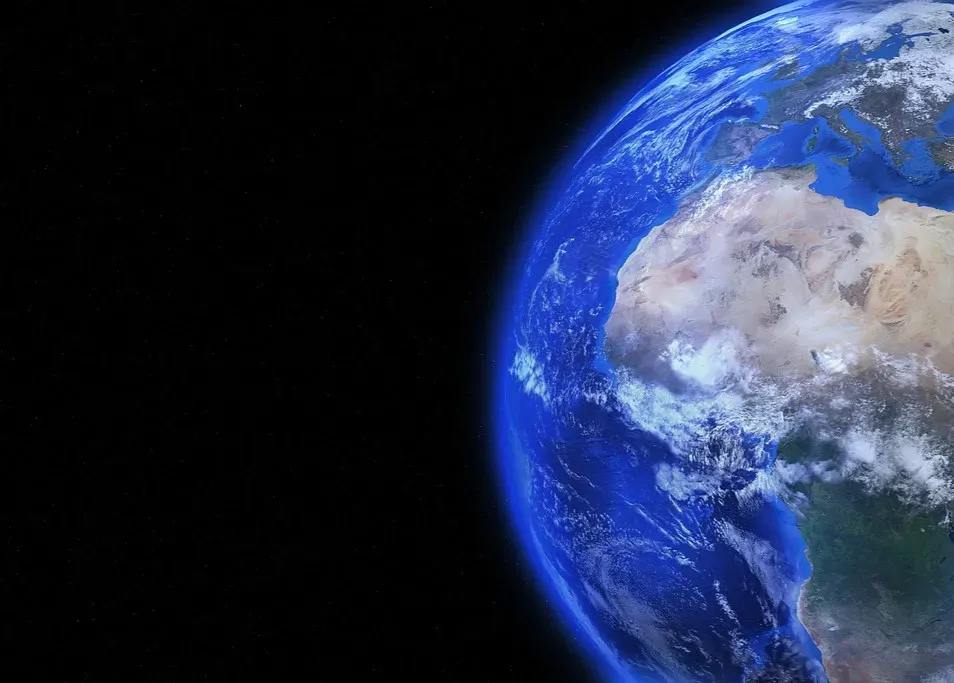
The Sun is constantly blowing a stream of charged particles outward, known as the solar wind, which carves out a huge bubble in interstellar space called the heliosphere. This heliosphere stretches far beyond Pluto and acts as a protective shield, deflecting some of the high-energy cosmic rays that would otherwise bombard the planets. Its size and shape are not fixed; they expand and contract with changes in the solar cycle and solar wind strength.
Data from the Voyager spacecraft, which have passed the edge of the heliosphere, combined with newer missions, show that this bubble is more complex and dynamic than once thought. It’s not a simple, smooth shell, but a distorted, rippled structure, influenced by both solar activity and the surrounding interstellar medium. The Sun, in this sense, acts like a guardian, creating a kind of cosmic cocoon around the solar system. When you realize that our star builds and maintains this entire space environment, it feels much more like a living presence than a background light.
Solar Activity Reaches Down to Earth’s Climate and Technology
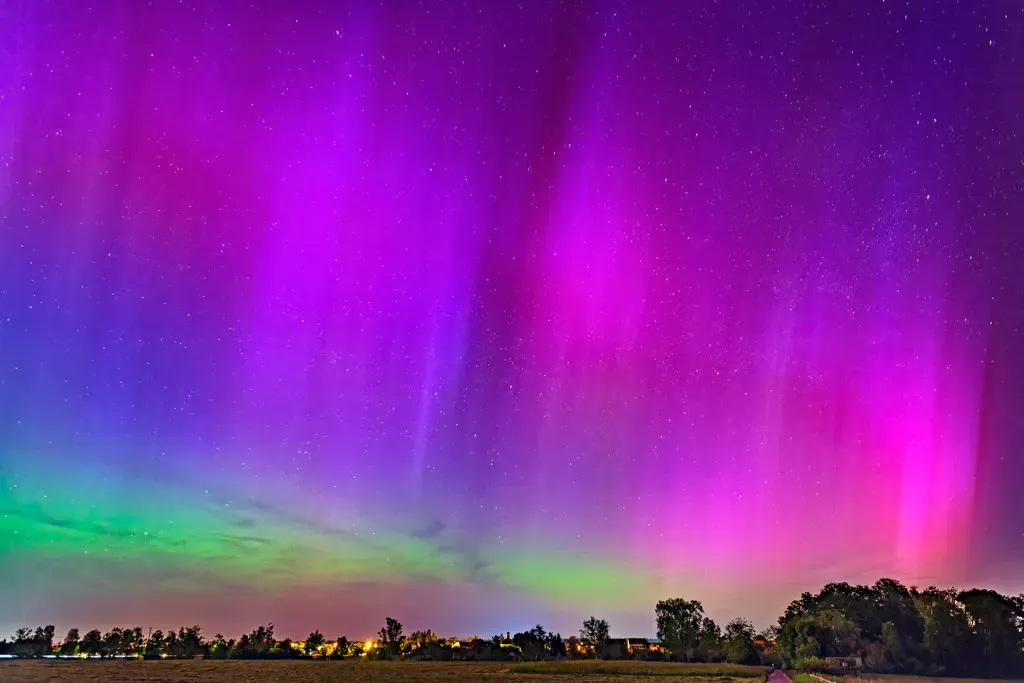
While the Sun isn’t solely responsible for climate change – human greenhouse gas emissions dominate recent trends – solar activity still leaves fingerprints on Earth’s environment. Variations in ultraviolet radiation, solar wind, and magnetic disturbances can nudge the upper atmosphere, alter ozone chemistry, and subtly affect temperature patterns over long periods. Paleoclimate records, like tree rings and ice cores, show correlations between past solar minima and cooler intervals on Earth, even if the effect is modest compared to what we’re doing with fossil fuels now.
On shorter timescales, solar storms create immediate, practical challenges. Strong geomagnetic storms can induce currents in power lines, damage transformers, and shut down large sections of a grid. Satellites can be knocked offline or even lost, and astronauts in deep space need shelter from radiation spikes. As our world gets more dependent on space-based technology, the Sun’s moods become a critical risk factor. That’s pushed solar forecasting from a niche science into something closer to weather prediction for an entire star.
New Telescopes and Probes Are Letting Us Watch a Star Evolve in Real Time
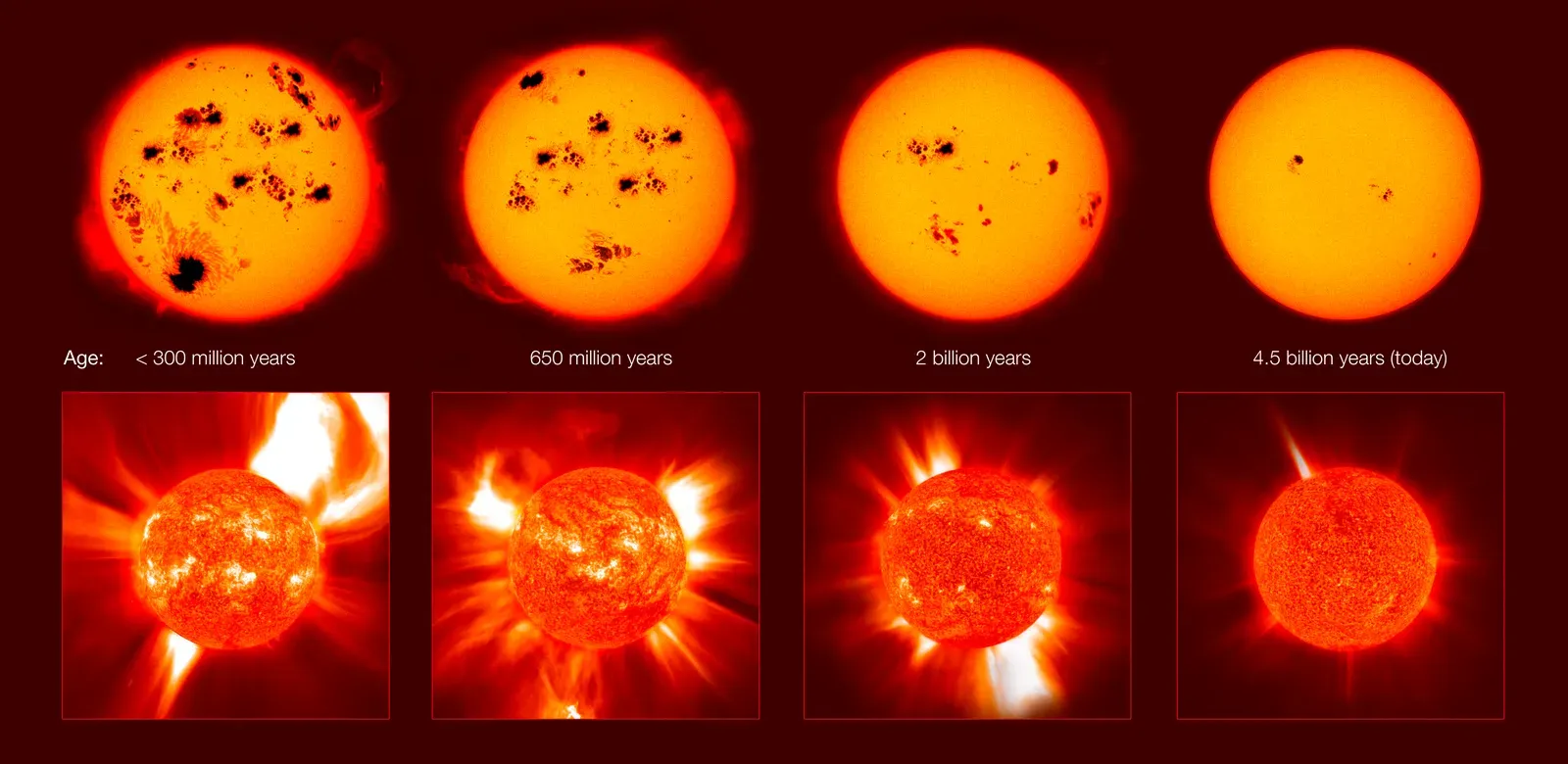
What’s changed most in the last couple of decades is the quality and constant flow of data we get from the Sun. Spacecraft like Solar Dynamics Observatory, Hinode, Parker Solar Probe, and Solar Orbiter, along with ground-based giants like the Inouye telescope, give us a full-time, multiwavelength view. We can now watch magnetic loops grow, twist, and erupt, track sunspots as they rotate across the disk, and follow solar storms from the surface out into deep space. It feels a bit like going from a grainy black-and-white TV to ultra-high-definition streaming, but for a star.
For me, that’s where the “living star” idea really hits. We’re no longer looking at a static snapshot in a textbook; we’re seeing behavior, cycles, and patterns unfold day by day. Every time we add a new instrument or better model, the Sun surprises us again, whether it’s an unexpected wave pattern, a new type of eruption, or a strange twist in the corona. We’re not just learning about our local star; we’re watching an active, evolving system that shapes everything from the edge of interstellar space down to the smartphones in our hands.
Living With a Restless Star
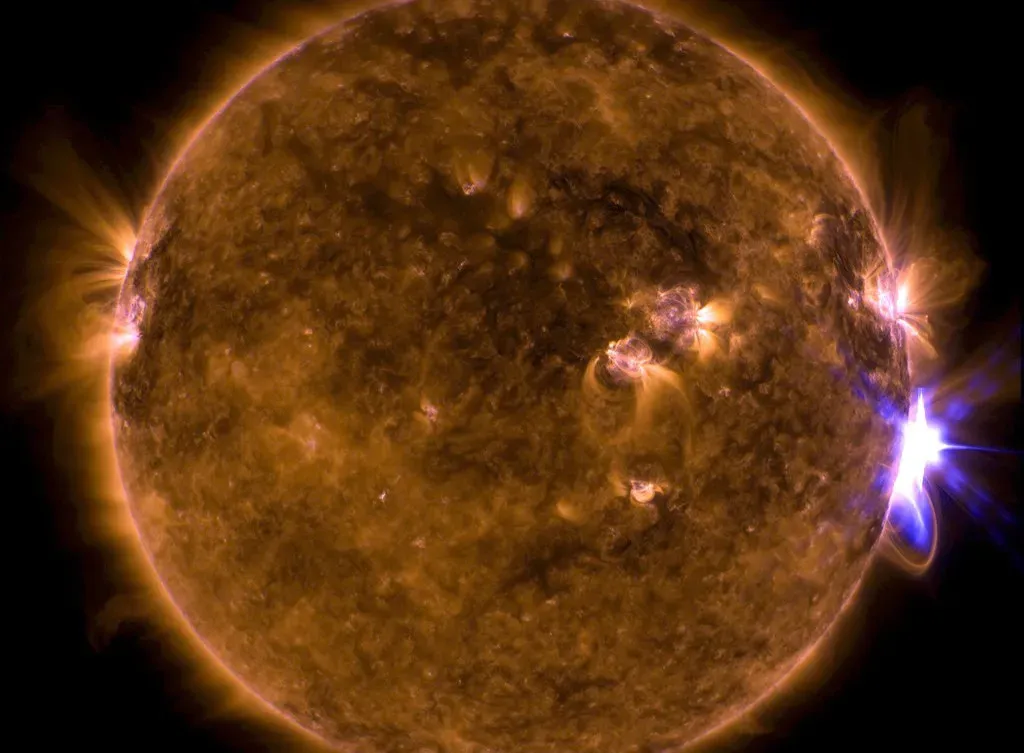
When you put all these discoveries together, the image of the Sun as a calm, unchanging backdrop completely falls apart. Instead, we’re left with a roaring sphere of plasma, sculpted by magnetic fields, throwing off storms and waves that echo through the entire solar system. The more clearly we see it, the easier it is to think of the Sun as a dynamic, living star whose behavior we have to understand, respect, and anticipate.
We rely on this restless giant for every heartbeat, every breath of air, and every beam of light that reaches Earth, even as it occasionally threatens our power grids and spacecraft. By watching it more closely than ever, we’re not just satisfying curiosity; we’re learning how to live safely and intelligently with the star that made us possible in the first place. Knowing all that, does the Sun still feel like just a simple yellow circle in the sky to you?