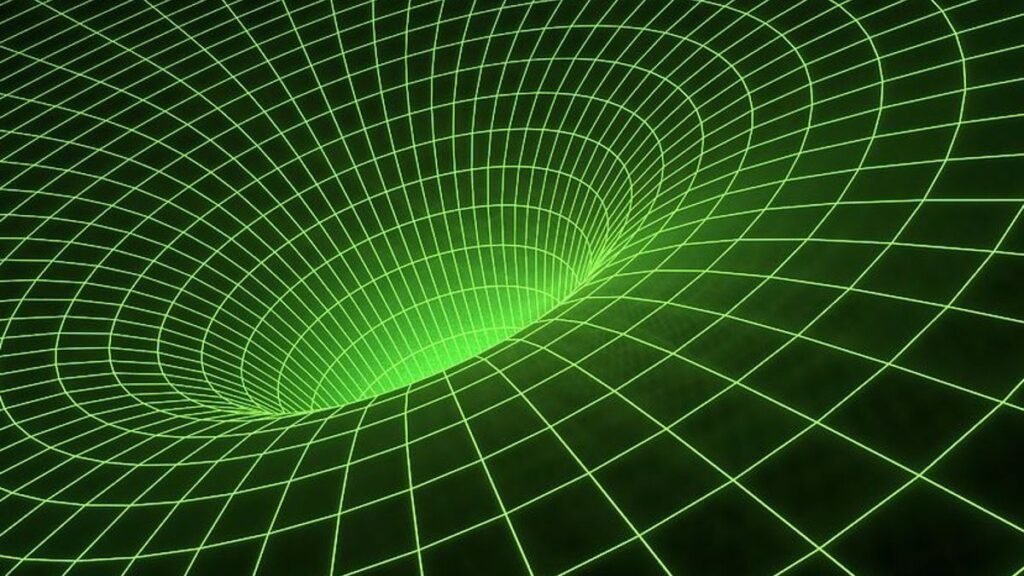

Time travel sits in that strange space between wild science fiction and hard science, and in 2026 it’s closer to both than most people realize. The more physicists study the universe, the more they discover that time is flexible, twistable, and deeply connected to space itself, not the rigid ticking clock we grew up imagining.
At the same time, every promising idea runs into brutal obstacles: energy demands that border on impossible, paradoxes that tear logic apart, and technologies that seem centuries beyond our reach. Still, researchers keep pushing, not because they expect to build a time machine next year, but because asking whether time travel is possible forces us to confront what time really is in the first place.
The Shocking Truth: Physics Does Not Outright Forbid Time Travel
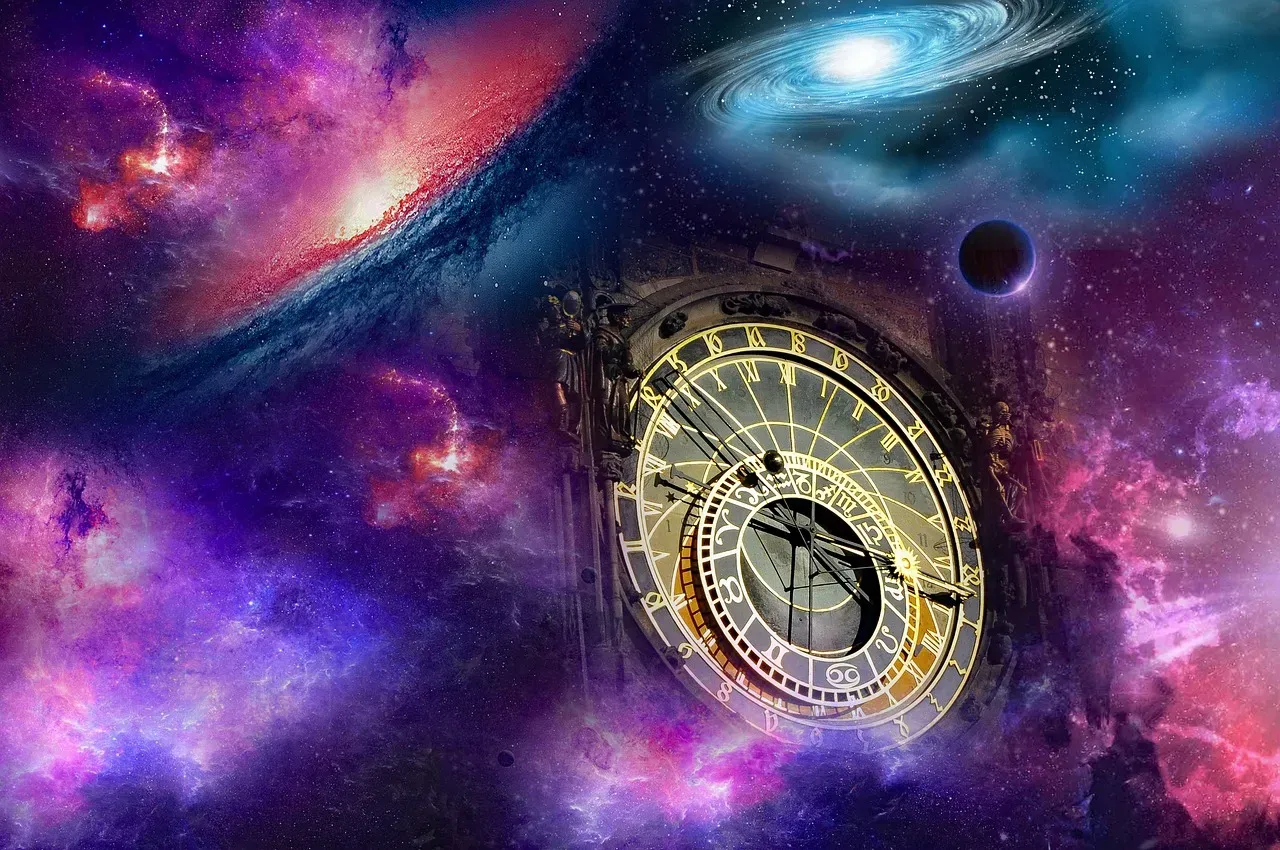
It surprises a lot of people to learn that modern physics doesn’t simply say “no” to time travel. Albert Einstein’s theories of relativity, which still sit at the core of physics in 2026, allow strange solutions where time can bend back on itself, forming what scientists call closed time-like curves. On paper, these are paths through spacetime that could, in principle, let you end up in your own past.
This doesn’t mean we know how to build a time machine, or even that nature actually uses these bizarre pathways. It just means that when you take the equations of general relativity seriously and push them to their extremes, the universe doesn’t always play out in a simple, one-directional timeline. That alone is a bit unsettling: the math that predicts black holes, gravitational waves, and GPS corrections also whispers that looping through time might not be completely off the table.
Time Dilation: The Real-Life “Forward” Time Travel We Already Use

There’s one kind of time travel that definitely exists, and we already use it every day: traveling into the future faster than people around you. According to special relativity, when you move very fast compared to someone else, your time slows down relative to theirs, a phenomenon called time dilation. For astronauts on the International Space Station, this effect is tiny but measurable; they return to Earth having aged slightly less than people on the ground.
This isn’t just a weird thought experiment; it’s something that must be corrected for in GPS satellites, whose clocks run differently because they’re both moving quickly and sitting in weaker gravity than we are on Earth. In that sense, time travel into the future isn’t speculative at all, it’s a routine feature of our technology. If one day we manage to build spacecraft that move at a significant fraction of the speed of light, an astronaut could leave for a “few years” and come back to find that decades passed on Earth.
Black Holes, Wormholes, and Other Cosmic Shortcuts
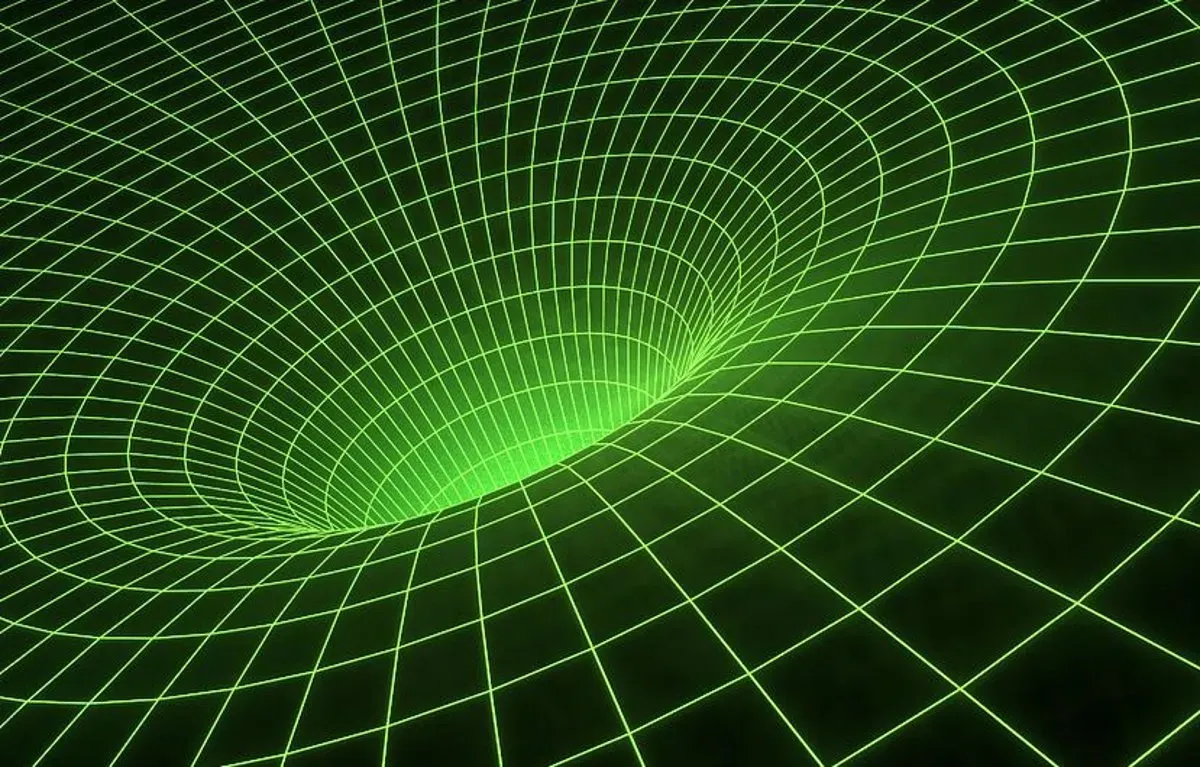
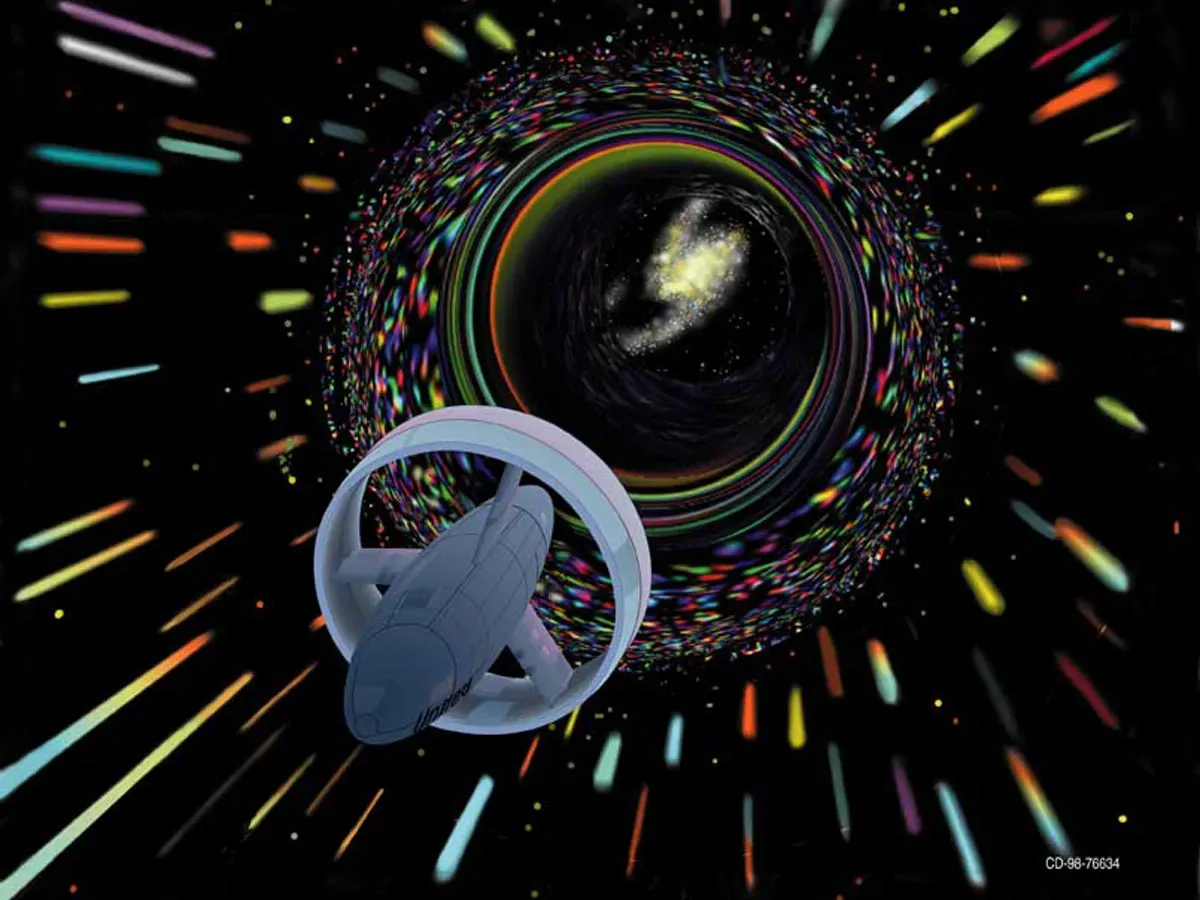
When people imagine cinematic time machines, what they’re often really picturing are wormholes, hypothetical tunnels through spacetime that connect distant points. In Einstein’s framework, wormholes can exist mathematically as bridges, a bit like taking a shortcut by folding a sheet of paper instead of walking across it. Some versions of these wormholes, if they could be kept stable, might let you connect not only different places, but different times.
The catch is brutal: keeping a wormhole open appears to require exotic forms of matter with negative energy density, something we don’t know how to produce in macroscopic amounts. Black holes are another tempting tool because they warp time violently; near their edges, time runs much slower compared to far away. But falling toward a black hole to exploit time stretching is a one-way ticket, more of a cosmic trap than a practical time portal, unless our understanding changes dramatically.
Can We Really Go Backwards? The Nightmare of Paradoxes

Traveling into the future is relatively tame compared to going backwards, which runs straight into some of the most famous paradoxes in science. The classic example is the scenario where someone goes back in time and prevents their own grandparents from meeting, raising the obvious question: if they were never born, who went back in time to interfere in the first place? This sort of logical knot suggests that something has to give: either backward time travel is impossible in practice, or reality works in a way that stops paradoxes from happening.
Physicists have proposed a few possible escape routes. One idea is that events in the past are self-consistent: if you travel back, you can become part of history, but you can’t change it in a way that breaks logic, no matter how hard you try. Another possibility is that branching timelines or multiple universes appear whenever a change is made, creating a new reality while your original history still exists. These ideas are fascinating, but as of now, they’re interpretations, not testable facts, more like different storylines woven over the same mathematical skeleton.
The Hard Limits: Energy, Technology, and Quantum Reality
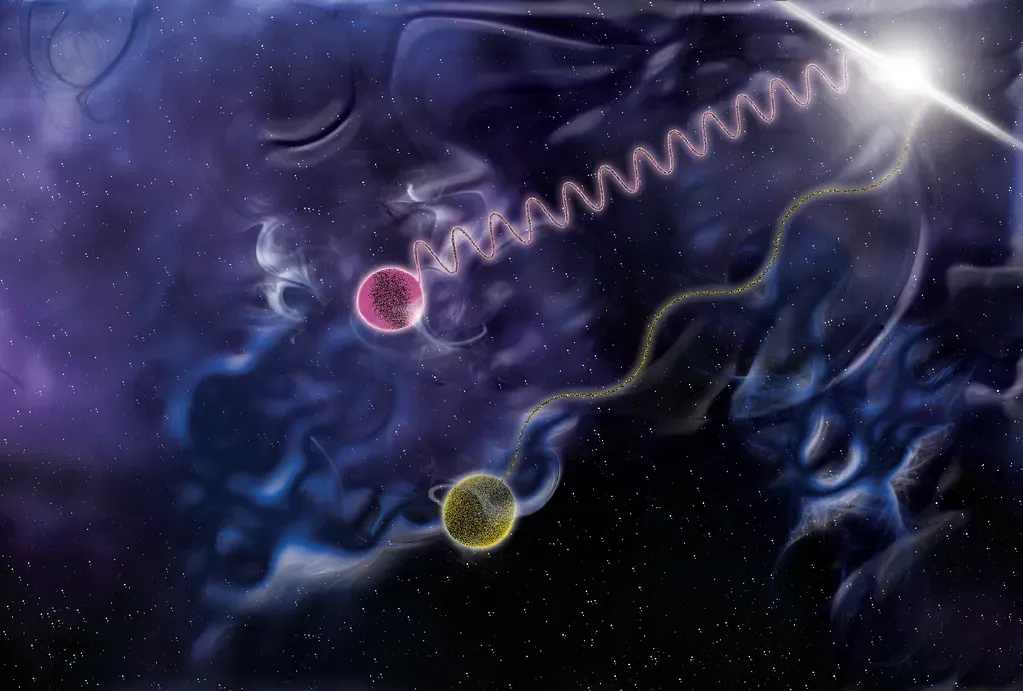
Even if the equations leave a narrow door open for time travel, the practical barriers are massive. Some solutions that look like time machines require energies comparable to those of entire stars or galaxies, not something you can generate in a lab or power with a futuristic engine. Building anything that manipulates spacetime on that scale feels, at least with today’s technology, like trying to carve a mountain using a plastic spoon.
Then there’s the quantum world, which adds another layer of complexity. Quantum mechanics governs the behavior of particles at the smallest scales, and it doesn’t always play nicely with general relativity’s smooth picture of spacetime. Many researchers suspect that a full theory of quantum gravity, which we don’t yet have, might close off some of the exotic time-travel solutions or reshape them into something very different. Until that deeper theory is nailed down, we’re operating with an incomplete map of what’s fundamentally allowed.
Arrow of Time: Why We Remember the Past but Not the Future

One of the strangest parts of talking about time travel is that the laws of physics mostly work the same forward and backward, yet our everyday experience absolutely doesn’t. We remember yesterday, not tomorrow; coffee cools down but never spontaneously heats itself; broken glasses don’t jump back together. This one-way feeling of time, often called the arrow of time, is strongly linked to entropy, a measure of disorder that tends to increase.
From this perspective, time travel is not just about moving along a timeline; it’s about fighting the deep tendency of the universe to go from order to chaos. Going back to a lower-entropy past would mean undoing an enormous number of microscopic changes all at once, like unscrambling a cosmic egg. That doesn’t make time travel logically impossible, but it highlights that we’re not just dealing with geometry and equations – we’re pushing against the most fundamental statistical direction the universe prefers.
Why Scientists Still Take Time Travel Seriously
Despite all the obstacles, serious physicists keep returning to time travel, not because they secretly have blueprints for time machines, but because the topic is a stress test for our best theories. If a proposed model of the universe casually allows paradoxes or nonsensical loops, that’s a red flag that something is missing. In this way, time travel is like a philosophical crash test dummy: we throw it at our equations to see what breaks.
And there’s another reason the idea won’t go away: it’s a powerful way to get people interested in real science. Many researchers today, including those working in gravity, quantum information, and cosmology, first fell in love with physics by wondering whether they could someday jump into the past or leap into the far future. Even if usable time machines never leave the realm of imagination, the effort to understand whether they could exist has already pushed science to uncover black holes, gravitational waves, and the strange flexibility of spacetime itself.
So, Is Time Travel Possible After All?

Looking at what we know in 2026, the honest answer is that limited forms of time travel already happen, extreme future travel is theoretically possible, and backward time travel remains a huge open question tangled in paradox and practical impossibility. Our current theories leave a small, intriguing window open, especially in the strange geometries allowed by general relativity, but they slam us with energy demands and logical constraints that no one knows how to overcome. If a real time machine is possible, it would likely require physics we haven’t discovered yet, and technologies that make today’s rockets look like stone tools.
In the meantime, time keeps moving in the only way we reliably understand: one moment after another, forward, with us dragged along for the ride. Maybe someday distant descendants will look back at us the way we look at people before electricity, wondering how we could ever have lived with such a basic understanding of time. Or maybe they’ll confirm that the dream of hopping through eras was always destined to stay a dream. If you had the choice, would you rather see the distant future or revisit a moment from the past?