
Time rules everything we do, from when we wake up to how long we live, yet no one really knows what it actually is. Physics treats time like a dimension, biology experiences it as aging, and in our heads it sometimes feels like it stretches, snaps, or even disappears.
The deeper scientists dig into time, the stranger it gets. Some of the most advanced theories in physics clash with our everyday sense of past, present, and future, and even simple questions like “Does time really flow?” or “Did time have a beginning?” lead to answers that feel almost unsettling. Let’s dive into five of the biggest questions that still keep scientists arguing, calculating, and, honestly, a little bit confused.
1. Does Time Really Flow, Or Is That Just In Our Heads?

It feels obvious that time is flowing: seconds tick by, days pass, and you move from breakfast to bedtime in one direction, never the other way around. But when physicists write down the fundamental equations of nature, those equations don’t actually include any sense of a “moving” now. They work just as well if you run them forward or backward, like a perfectly reversible movie, which is the opposite of how life feels.
This has led many researchers to argue that the flow of time might be an illusion created by our brains stitching together moments into a coherent story. Some philosophers and physicists describe reality as a “block universe” where past, present, and future all coexist, and what we call “now” is simply the slice we’re currently experiencing. That idea sounds almost offensive to common sense, but so far, nothing in physics has clearly singled out the present as objectively special, no matter how real it feels when you glance at a clock and realize you’re late.
2. Why Does Time Have A Direction At All?
You can scramble an egg, but you can’t unscramble it. A coffee cup falls and shatters, but the pieces never leap back into your hand. This one-way direction, often called the arrow of time, is tightly linked to a concept called entropy, which is basically a measure of disorder. In almost every natural process, entropy tends to increase, and that increase seems to define what we call “forward” in time.
The strange part is that the microscopic laws of physics don’t actually care about this direction; they generally don’t mind whether you run them backward or forward. So scientists are left asking why our universe started in an incredibly low-entropy, super-ordered state that allowed time’s arrow to emerge at all. Some ideas suggest that the early universe was forced into such an orderly beginning by the physics of cosmic inflation or that there might be regions of the universe where time’s arrow runs differently. Right now, though, we still don’t have a fully satisfying answer for why eggs break but never unbreak.
3. Did Time Have A Beginning – And Will It Ever End?
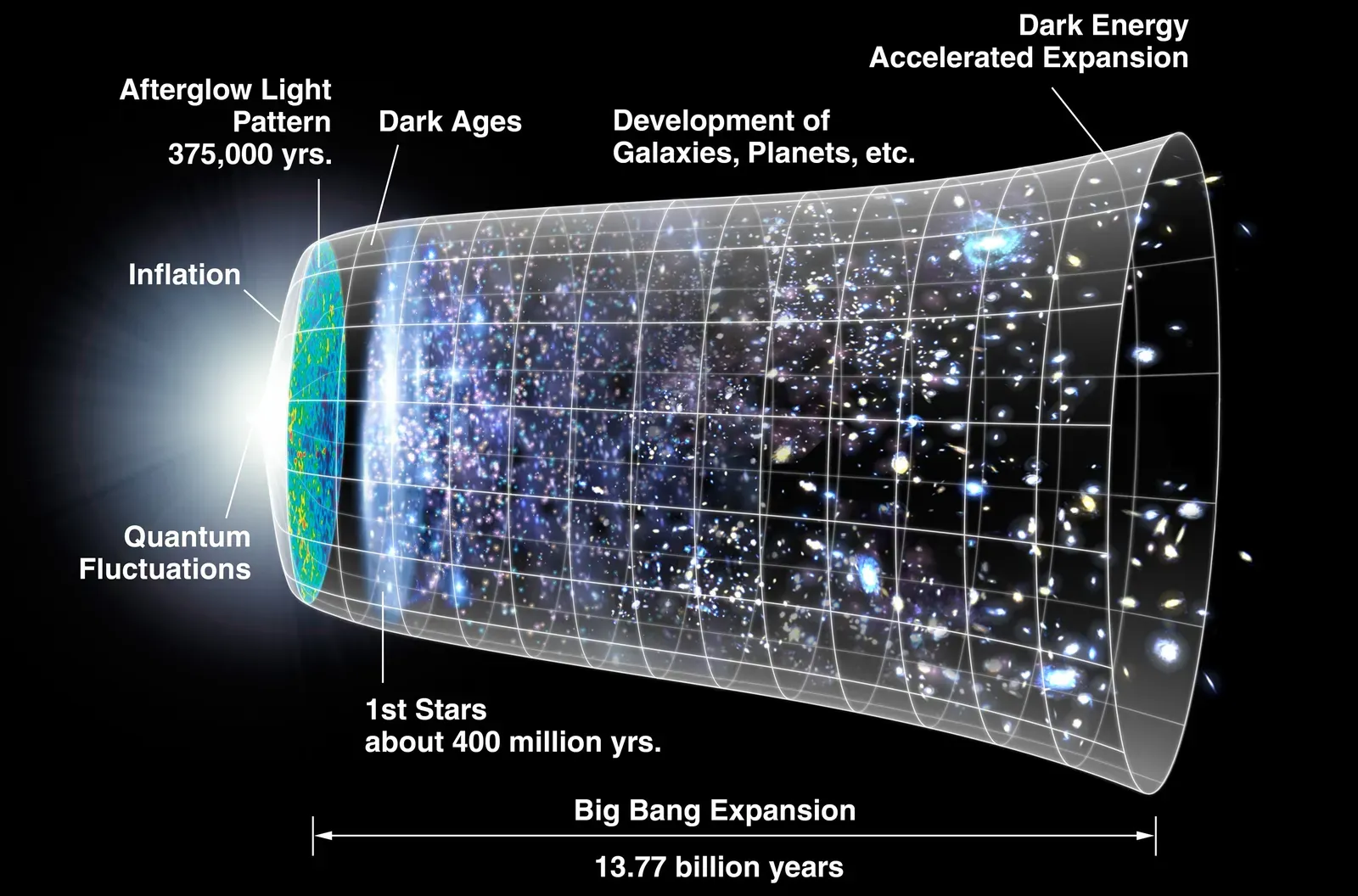
The standard picture in cosmology says our universe began about thirteen and a half billion years ago in an extremely hot, dense state often labeled the Big Bang. That raises a brutally simple question: was there a “before” the Big Bang, or did time itself start there? Einstein’s general relativity suggests that if you follow time backward through the expanding universe, you hit a boundary where the equations break down, like a map that just ends at the edge of the paper.
Newer theories try to dodge this hard beginning. Some quantum gravity models propose that the universe bounced from a previous contracting phase instead of emerging from nothing, while others imagine time as emerging from something even more fundamental and not truly starting or stopping. On the opposite side, many cosmologists also wonder whether time will have an end, perhaps if the universe keeps expanding until galaxies fade into darkness and even atoms decay. Whether time is a finite stretch or an endless road is still wide open, and the universe isn’t in a hurry to explain itself.
4. Is Time Travel To The Past Actually Possible?
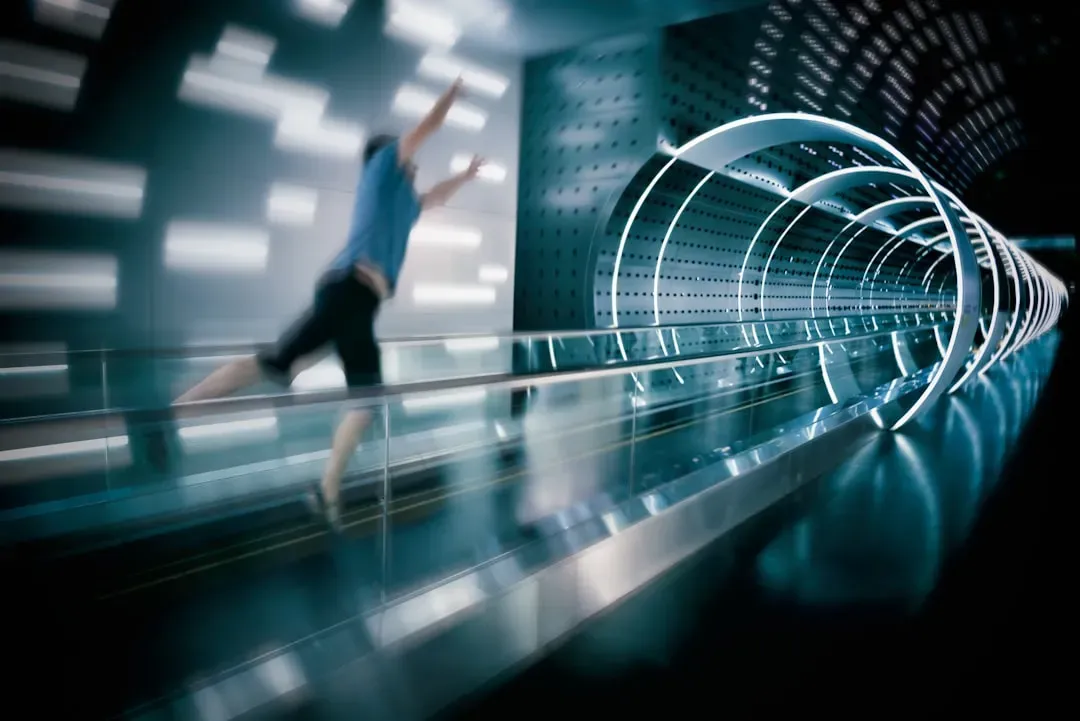
Einstein’s theories already allow a kind of time travel: move very fast or sit deep in a strong gravitational field, and your time slows down compared with someone far away. Astronauts on the International Space Station really do age a tiny bit less than people on Earth, and high-precision clocks on airplanes or satellites confirm this constantly. That sort of “forward-only” time travel into the future is not science fiction; it’s built into how spacetime works.
The wilder question is whether you can go backward. Some solutions to Einstein’s equations allow bizarre structures like wormholes or rotating universes that could in theory send you into your own past, but they come with problems like infinite energies or logical paradoxes where you could interfere with your own history. Quantum physics adds even more weirdness, with ideas that visiting the past might branch you into a different timeline where contradictions are avoided. So far, no experiment or observation has revealed any sign that nature actually permits closed time loops, which leaves backward time travel as a serious theoretical puzzle that might never leave the chalkboard.
5. Is Time Fundamental – Or Does It Emerge From Something Deeper?
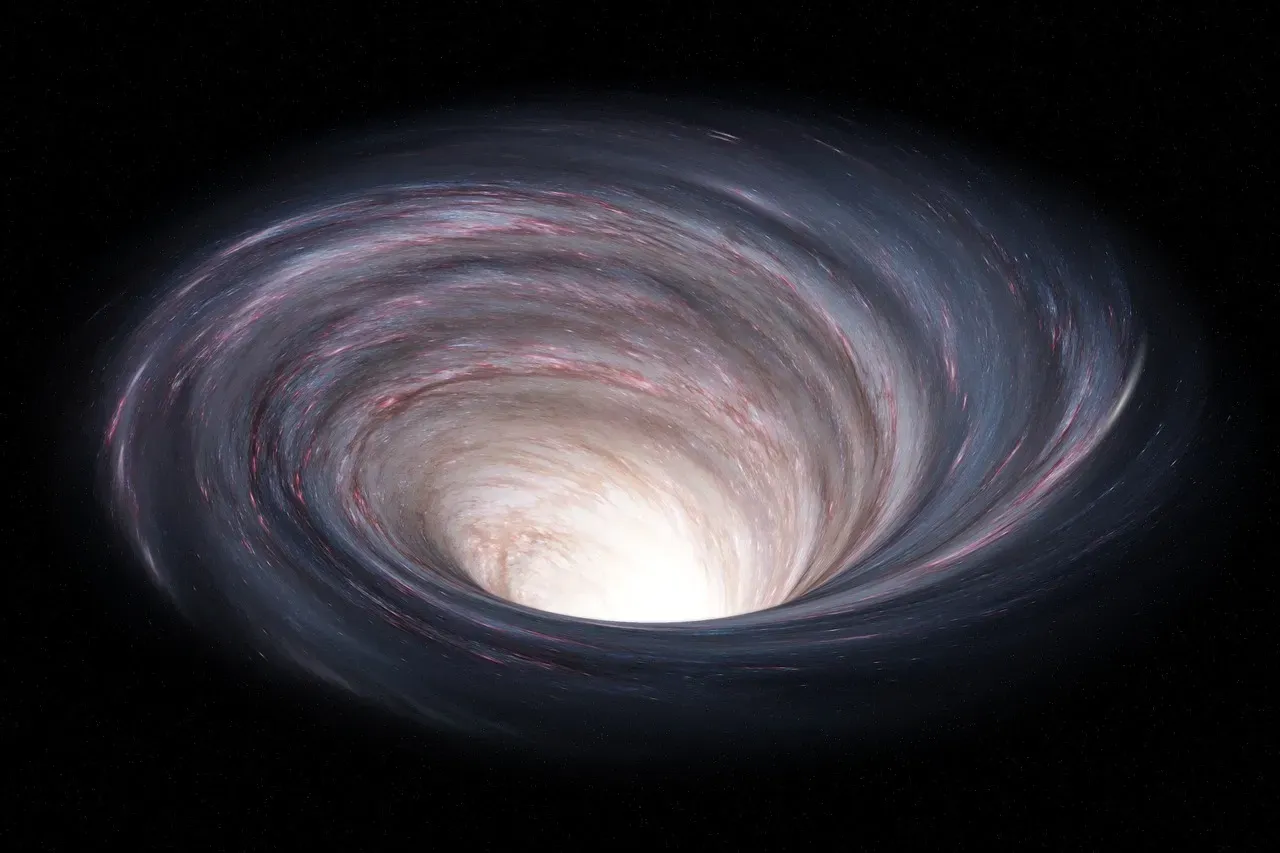
When you look closely at modern physics, time starts to look less like a basic ingredient and more like something that shows up only when conditions are right. Some approaches to quantum gravity try to describe the universe using mathematical structures that don’t include time at the most fundamental level at all. In these pictures, what we experience as time might arise from deeper, timeless relationships, a bit like how temperature appears only when you have enough atoms bouncing around together.
On the quantum side, there are proposals that time is tied to entanglement, the ghostly connection between particles that share information instantly across distance. As systems become more entangled and complex, a sense of ordered change can emerge, which we then interpret as time passing. This idea flips our intuition: instead of events happening in time, time might be what we call the pattern that events form when viewed from inside the system. If that’s true, then our familiar ticking seconds are just one particular way a very strange universe lets its deeper structure show through.
Time touches every second of our lives, yet the more closely science studies it, the less solid it seems. Questions about whether time flows, why it has a direction, when or if it began, whether it can be traveled, and whether it is truly fundamental all remain open, even with our best theories running full speed.
In a way, that uncertainty is part of the thrill: we are creatures built to live in time, trying to get a peek behind the curtain of the very thing that shapes us. The answers, if we ever get them, may force us to rewrite what we mean by past, present, and future. When you look at a clock now, do you see a simple tool tracking seconds, or a tiny window into one of the deepest mysteries in the universe?