

Have you ever walked into a room and felt an overwhelming wave of familiarity wash over you, even though you know with absolute certainty that you’ve never been there before? That uncanny sensation is called deja vu, and it’s one of the most mysterious quirks of human consciousness. The phenomenon affects roughly 60 to 80 percent of people, making it a near-universal experience that bridges cultures, ages, and backgrounds. Yet for something so common, deja vu remains surprisingly difficult to pin down and study.
The experience typically lasts just a few fleeting seconds, but it leaves a lasting impression. It involves a unique awareness that the familiarity you’re feeling is misplaced, which is what makes it so deeply unsettling. You’re not just experiencing familiarity, you’re simultaneously recognizing that the familiarity makes no sense. Let’s dive into what science has uncovered about this peculiar brain phenomenon and why your mind occasionally convinces you that the present moment is a replay of the past.
When Your Brain’s Wires Get Crossed
Deja vu is caused by dysfunctional connections between the parts of your brain that play a role in memory recollection and familiarity. Think of it like two electrical pathways in your brain that normally work in perfect harmony suddenly firing out of sync. Your temporal lobe, which houses your memories, and your hippocampus, which processes new information, normally communicate seamlessly.
The phenomenon could be linked to discrepancies in memory systems, leading sensory information to bypass short-term memory and reach long-term memory instead. It’s as though your brain filed a brand new experience directly into the archive of old memories by mistake. This misfiling creates that bizarre sensation where something feels simultaneously new and ancient, like listening to a song for the first time that you somehow already know all the words to.
The Temporal Lobe Connection
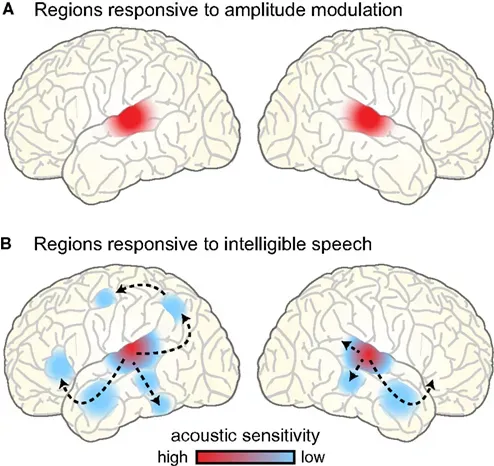
Clues about deja vu were derived from people who suffer from temporal lobe epilepsy, a condition where nerve activity in the brain becomes disrupted. Some patients who suffer from temporal lobe epilepsy report experiencing deja vu almost as a sort of warning before an epileptic seizure event. This discovery gave researchers a crucial window into understanding where deja vu originates in the brain.
The phenomenon can manifest as an inappropriate or premature activation of the parahippocampal cortex, which is crucial for generating feelings of familiarity, occurring without a corresponding activation of the hippocampus, which is necessary for the retrieval of specific memories. Essentially, your brain’s familiarity detector goes off without the memory retrieval system backing it up. You get the feeling without the facts, the recognition without the recollection.
The Dual Processing Theory
One prominent theory suggests that deja vu occurs when information from our senses is processed simultaneously by two separate pathways in the brain, but one pathway is slightly delayed. Imagine taking two photographs of the same scene, but one camera shutter clicks a fraction of a second after the other. Your brain might interpret these as two separate events when they’re actually one continuous moment.
Signals enter the temporal lobe twice before processing, once from each hemisphere of the brain, normally with a slight delay of milliseconds between them; if the two signals were occasionally not synchronized properly, then they would be processed as two separate experiences. This temporal hiccup could trick your consciousness into believing you’re experiencing something for the second time. It’s honestly fascinating how such a tiny delay, measured in milliseconds, can create such a profound psychological experience.
Why Fatigue and Stress Make It Worse

If you’re not getting enough sleep or enough restful sleep, it can disrupt the recognition processes in your brain, which may explain why people are often more likely to experience this phenomenon in the evenings. When your brain is exhausted, it struggles to maintain its usual operational precision. Think of it like a computer running too many programs at once, it starts making mistakes.
When your brain is fatigued, internal neuronal systems may struggle to regulate themselves, leading to a higher likelihood of misfirings. Stress works similarly, changing how your brain perceives and processes information as a coping mechanism. Dopamine, a neurotransmitter associated with signaling familiarity, also plays a role; drugs that affect dopamine levels often induce elevated reports of deja vu. So if you’re tired, stressed, and maybe had a bit too much coffee, you’re creating the perfect storm for your brain to glitch.
The Spatial Similarity Hypothesis

When a new environment shares a similar spatial configuration with a previously encoded one, the parahippocampal gyrus might activate familiarity signals; research using virtual reality has shown that participants are more likely to report feelings of deja vu when they encounter a virtual scene that has the same spatial layout as a previously viewed scene. This is incredibly revealing. It suggests that deja vu might not be a complete malfunction but rather your brain detecting genuine patterns.
It was proposed that deja vu is a reaction of the brain’s memory systems to a familiar experience that is known to be novel but has many recognizable elements; an example would be being in a bar or restaurant in a foreign country that has the same layout as one you go to regularly at home. Your brain picks up on these architectural echoes, these spatial rhymes, and generates a feeling of familiarity even when the specific details are completely different. It’s your mind’s way of saying, “I’ve seen something like this before,” even if the “like” part gets lost in translation.
The Age Factor
Younger people experience more deja vu due to stronger neural activity and healthier fact-checking frontal regions; as we age, our ability to notice errors, including instances of deja vu, may decline. The frequency of deja vu peaks in young adults, with an average of 2.5 experiences per year in individuals aged 20 to 24 years, and declines with age. This age-related pattern is actually kind of counterintuitive, since we tend to associate memory quirks with older age.
The current thinking is that deja vu represents your brain’s quality control system working properly, not malfunctioning. Deja vu occurs when the frontal regions of the brain attempt to correct an inaccurate memory; for the vast majority of people, experiencing deja vu is probably a good thing as it’s a sign that the fact-checking brain regions are working well. Younger brains are simply better at catching these momentary mismatches between what feels familiar and what actually is familiar. It’s hard to say for sure, but that declining deja vu frequency with age might actually reflect a decline in our brain’s error-detection capabilities.
A Window Into Memory’s Complexity

The phenomenon affects about two-thirds of people at some point in their lives, lasts for only a fleeting moment, yet leaves a lasting impression; this unique experience opens a fascinating window onto the workings of memory, perception, and consciousness. Deja vu reminds us that our experience of reality isn’t a perfect recording but rather an active construction happening in real time. Your brain is constantly making predictions, filling in gaps, and creating a coherent narrative from fragmentary sensory information.
Deja vu can be defined as conflict between a subjective evaluation of familiarity and a concurrent evaluation of novelty. It’s that conflict, that cognitive dissonance, that makes the experience so memorable and so unsettling. Rather than being a glitch, deja vu might be evidence of just how sophisticated and complex your memory systems really are. The fact that your brain can recognize when it’s experiencing a false sense of familiarity is actually pretty remarkable when you think about it.
The next time you experience that eerie feeling of having been somewhere before, remember that you’re witnessing your brain’s memory systems in action, catching themselves in a momentary mistake. It’s a brief glimpse behind the curtain of consciousness, a reminder that the reality we experience is constantly being constructed by billions of neurons working in extraordinary coordination. What do you think happens in your brain during deja vu? Have your experiences matched what science suggests?
Hi, I’m Andrew, and I come from India. Experienced content specialist with a passion for writing. My forte includes health and wellness, Travel, Animals, and Nature. A nature nomad, I am obsessed with mountains and love high-altitude trekking. I have been on several Himalayan treks in India including the Everest Base Camp in Nepal, a profound experience.