
You might think superpowers exist only in comic books, but nature has engineered creatures with abilities that make superheroes look almost ordinary. Across the planet, from the deepest oceans to frozen tundras, animals demonstrate feats that scientists still struggle to fully understand. These aren’t mythological beasts or science fiction fantasies.
They’re real, living organisms pushing the boundaries of what biology tells us should be possible. Some can essentially cheat death, others survive conditions that would annihilate most life forms, and a few possess sensory abilities we can barely imagine. Let’s dive in.
The Immortal Jellyfish That Reverses Time
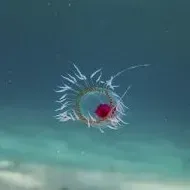
Among all the ocean’s enigmas, none baffles scientists more than Turritopsis dohrnii, the so-called immortal jellyfish, which can revert its cells to their earliest form through a process known as transdifferentiation. When most creatures reach the end of their life cycle, they die. This tiny jellyfish, smaller than your pinky fingernail, simply refuses to follow the rules.
This ability to reverse the biotic cycle in response to adverse conditions is unique in the animal kingdom, allowing the jellyfish to bypass death and rendering it potentially biologically immortal. When physically damaged or experiencing stresses such as starvation, instead of dying it shrinks in on itself, reabsorbing its tentacles and losing the ability to swim, then settles on the seafloor as a blob-like cyst. From there, it transforms back into its juvenile polyp form, essentially hitting the biological reset button. Scientists still can’t fully explain how this cellular reprogramming works without triggering the cancerous growth that would occur in most other organisms.
Tardigrades: The Indestructible Water Bears
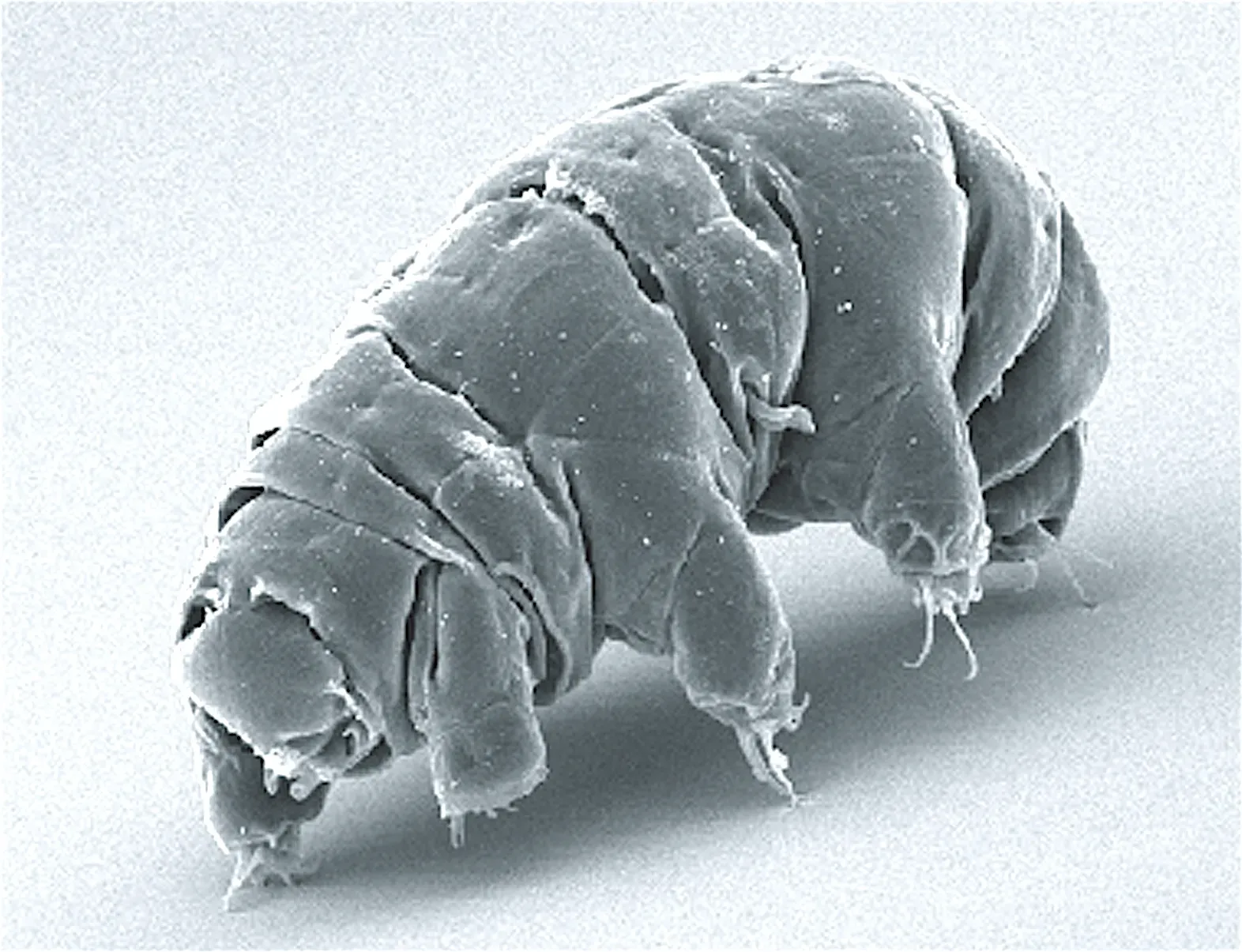
They are among the most resilient animals known, with individual species able to survive extreme temperatures, extreme pressures, radiation, dehydration, and starvation that would quickly kill most other forms of life. You’ve probably never seen one with your naked eye, since they’re typically half a millimeter long at most. Yet these microscopic creatures possess superpowers that border on the impossible.
They can live in a state of suspended animation for decades, and in this desiccated condition have endured the vacuum of space and pressures six times that of the ocean bottom, persisted through temperatures as low as negative 458 degrees Fahrenheit and higher than 300 degrees Fahrenheit, and emerged unscathed from bombardments of radiation that are 1,400 times higher than the levels that would kill a human being. While in a cryptobiotic state, their metabolism reduces to less than one percent of what is normal, and their water content can drop to one percent of normal, allowing them to withstand extreme conditions. Here’s the thing scientists find most perplexing: tardigrades aren’t technically extremophiles because they don’t thrive in these conditions, they just refuse to die.
Mantis Shrimp Eyes That See Impossible Colors
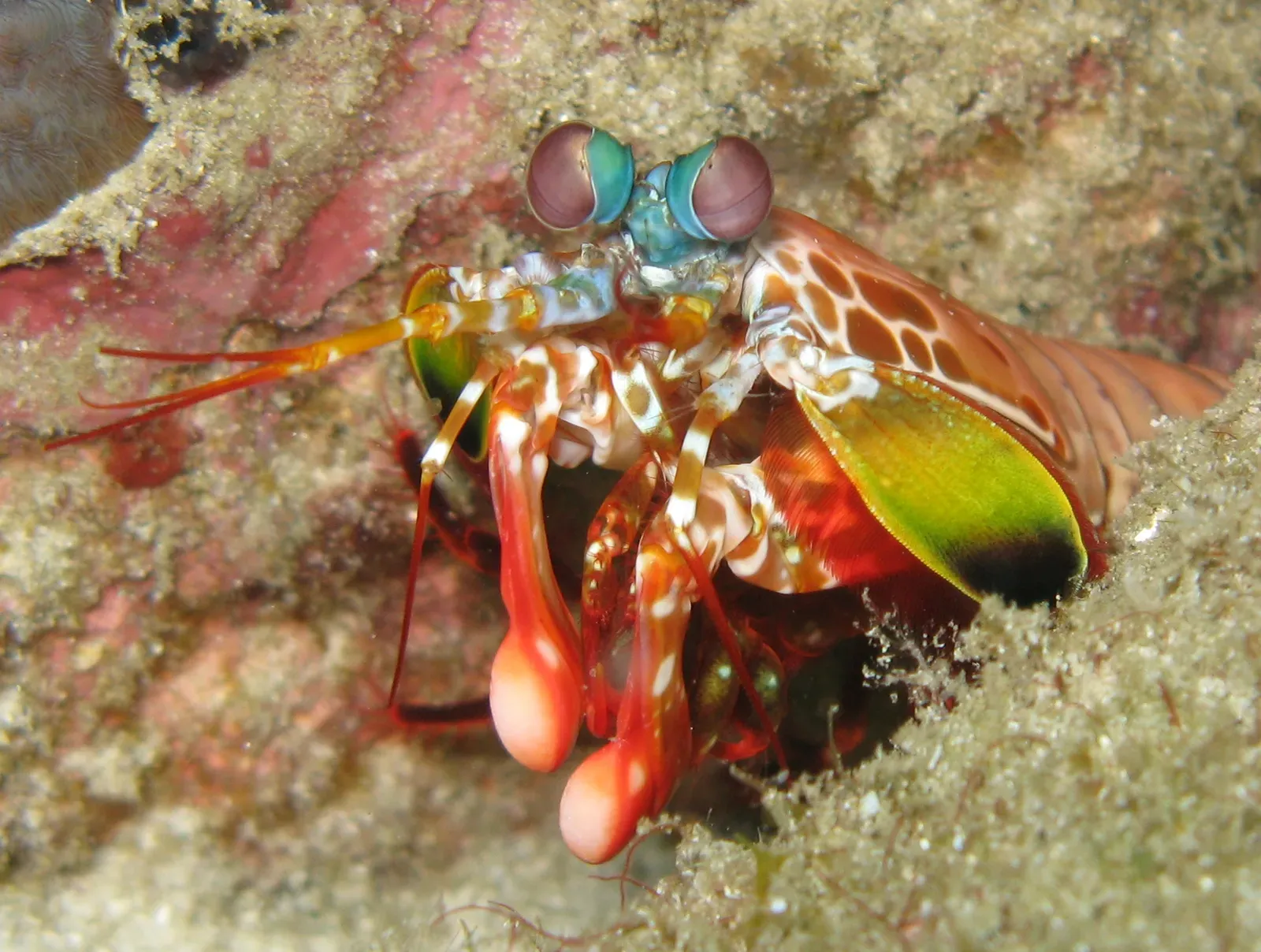
Imagine a world where you could see colors that don’t exist in your current reality. With as many as 16 types of color-sensitive cone cells in their retinas compared to humans’ three, their color vision capabilities surpass those of any other animal. The mantis shrimp’s eyes are compound structures that can rotate independently in three dimensions, giving them a visual experience we cannot even begin to comprehend.
They have up to 16 photoreceptors and can see ultraviolet, visible and polarised light, and they are the only animals known to detect circularly polarised light, plus they can perceive depth with one eye and move each eye independently. What defies explanation is that despite having far more color receptors than humans, they’re actually quite poor at discriminating between similar colors. Their vision allows for rapid color recognition without the need to discriminate between wavelengths within a spectrum, giving them an evolutionary advantage as both predator and prey. Scientists still debate why evolution granted them such elaborate visual systems.
The Platypus and Its Electric Sixth Sense
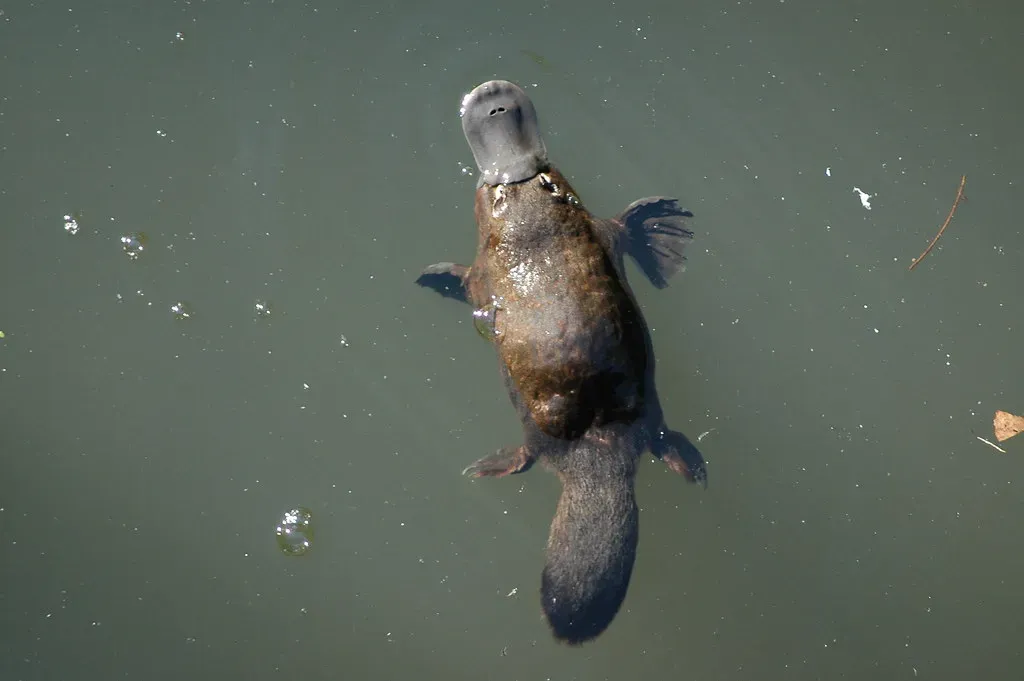
With its mash-up of traits, the platypus may be one of the strangest mammals on Earth today, and along with echidnas, this semi-aquatic animal is one of only five mammalian species that lays eggs, and these monotremes share another characteristic: a so-called sixth sense called electroreception. When the platypus dives into murky Australian rivers to hunt, it closes its eyes, ears, and nose completely. Yet it catches prey with deadly accuracy.
This super-sensory organ is packed with three distinct receptor cells that help detect movements and subtle electric fields produced by prey, with push-rod mechanoreceptors detecting changes in pressure and motion while electroreceptors track electrical signals produced by muscular contractions of small prey, and using a side-to-side motion of its head, the platypus gauges direction and distance by collecting and combining these flows of sensory information. The electroreceptors can detect extremely slight electric fields with strengths as low as 20 microvolts per square centimeter, meaning they could detect a signal less than a millionth of the voltage of one AA battery. How their brains process this electrical sensory data into a cohesive three-dimensional map remains only partially understood.
Naked Mole Rats That Don’t Age Normally
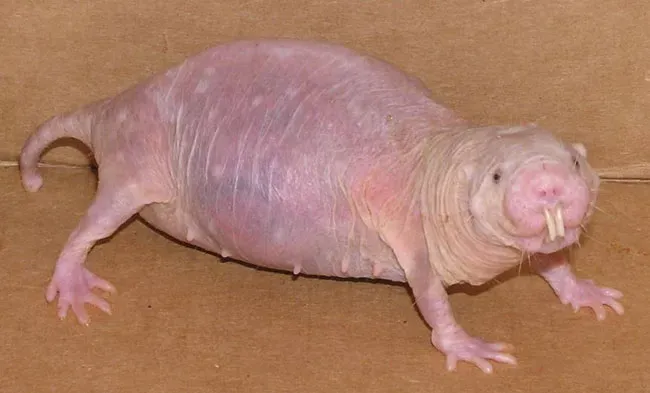
Native to East Africa’s low-oxygen underground tunnels, this wrinkled rodent can endure up to 18 minutes without any oxygen by switching its metabolism from glucose to fructose-driven glycolysis, a process more commonly found in plants, allowing vital organs like the brain and heart to function even when air runs out. Let’s be real, these creatures aren’t winning any beauty contests. Their wrinkled, hairless appearance has earned them comparisons to, well, tiny geriatric fingers with teeth.
Equally remarkable is their longevity, as naked mole rats live for over 30 years, roughly ten times longer than similar-sized rodents, and show an extraordinary resistance to cancer, with scientists attributing this to their tissues being rich in high-molecular-mass hyaluronan, a sugar-like molecule that prevents uncontrolled cell growth, making them a biological anomaly where oxygen is scarce, cancer is rare, and age seems to slow down. Researchers still can’t fully explain why these rodents seem exempt from typical mammalian aging processes. Their cells should theoretically accumulate damage like any other organism, yet they don’t.
Wood Frogs That Freeze Solid and Survive
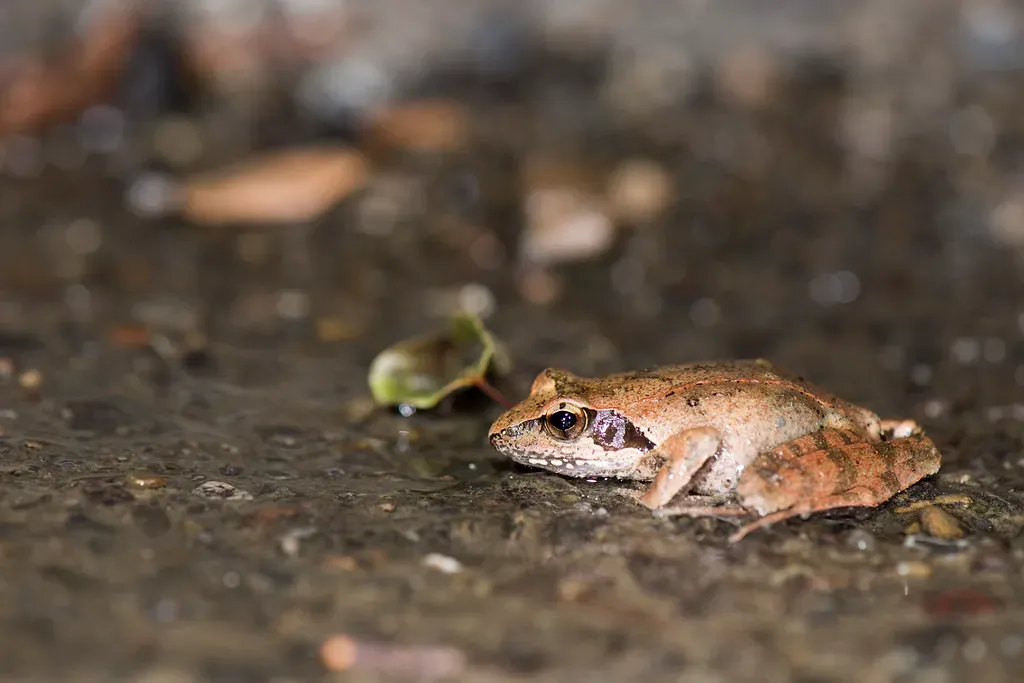
The wood frog can freeze nearly solid and survive, as temperatures drop and it floods its cells with glucose as a natural antifreeze, with ice forming between its cells and its heart and lungs stopping as the frog enters a sort of suspended animation, and when warmth returns, it thaws and hops away. Picture a frog sitting motionless in leaf litter as winter descends. Its heart stops beating. Its breathing ceases. Ice crystals form throughout its body.
These remarkable amphibians survive winter by becoming conscious ice cubes, and as temperatures drop, they allow up to 65 percent of their total body water to freeze solid, with their hearts stopping completely and no brain activity, breathing, or detectable metabolism. The frog is, by any medical definition, dead. Then spring arrives, temperatures rise, and the frog simply thaws out and goes about its business as if nothing happened. Scientists understand the basic mechanism involving glucose as an antifreeze, but the deeper mystery remains: how do cells survive ice crystal formation without rupturing? How does the brain reboot without damage after being frozen for months? Nature keeps some secrets locked tight.
The Pistol Shrimp’s Sonic Weapon
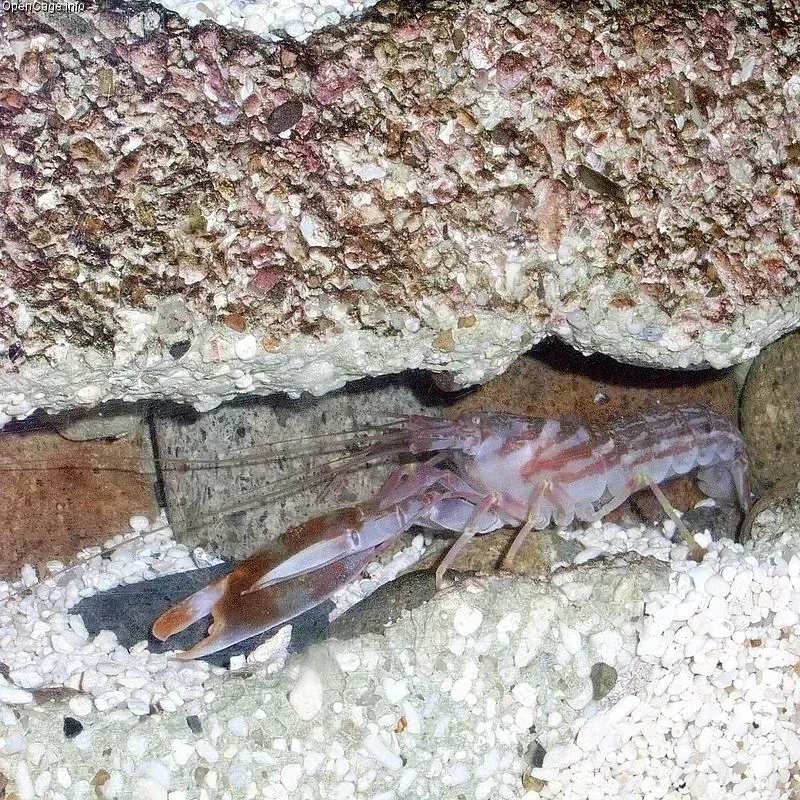
This unassuming shrimp wields a claw that snaps shut so fast it creates a cavitation bubble hotter than the sun’s surface, and when the bubble collapses, it produces a shockwave that kills or stuns nearby prey, with the resulting sound exceeding 200 decibels and rivaling a gunshot. It’s barely two inches long, yet it possesses one of nature’s most powerful weapons. The pistol shrimp’s oversized claw operates like an underwater gun.
The underwater gunfire is so intense that large colonies can disrupt sonar equipment, and the shrimp uses this sonic energy to communicate, proving that power and finesse can exist in even the smallest creatures. The cavitation bubble it creates reaches temperatures comparable to the surface of the sun for a fraction of a second, generating light in a process called sonoluminescence. Honestly, the physics involved shouldn’t even be possible at such a small scale. Scientists still debate exactly how such a tiny creature generates forces that should require industrial machinery, and how its own body withstands the repeated shockwaves without damage. The pistol shrimp makes physicists scratch their heads and marine biologists shake theirs in disbelief.
Conclusion
These seven animals remind us how little we truly understand about the limits of life. Each one breaks rules we thought were fundamental, demonstrating abilities that seem more fiction than fact. From jellyfish that can potentially live forever to shrimp that weaponize physics itself, nature continues to engineer solutions that make our most advanced technology look primitive.
What other creatures are out there, hiding superpowers we haven’t discovered yet? Perhaps the more important question is what these animals can teach us about extending human capabilities or surviving in extreme environments. What do you think about these incredible abilities? Tell us in the comments.