

You might not give it much thought as you go about your day, but deep beneath your feet something remarkable is happening. Our planet’s magnetic field, that invisible shield protecting everything we hold dear, is never truly still. It shifts, wobbles, and occasionally does something that sounds straight out of science fiction: it completely flips. Let’s be honest, most of us learned about the Earth’s magnetic field in school and promptly forgot about it. Yet this dynamic force is far more fascinating and unpredictable than you probably remember. So let’s dive in and explore why this hidden guardian of life on Earth refuses to stay put.
The Churning Engine Deep Within
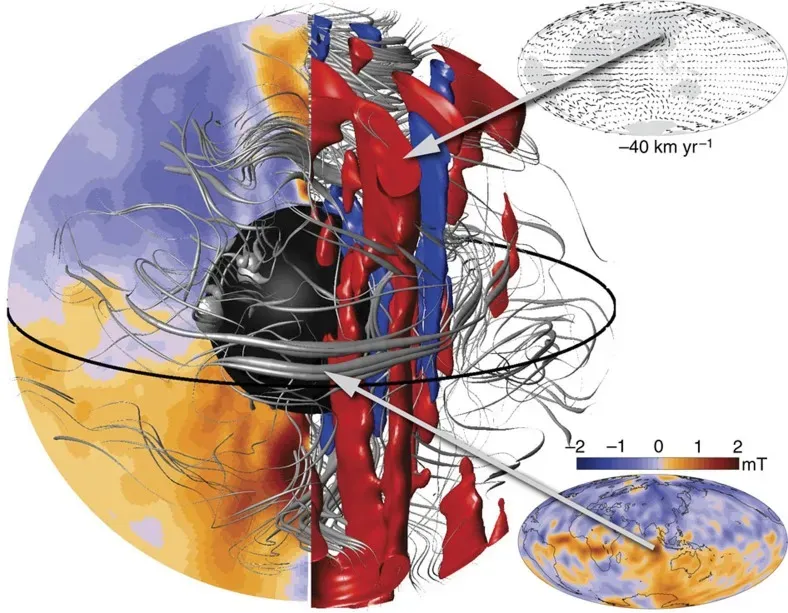
Our planet’s magnetic field is generated by electric currents due to the motion of convection currents of a mixture of molten iron and nickel in Earth’s outer core. Picture a massive ocean of liquid metal roughly three thousand kilometers beneath the surface. It’s hard to say for sure, but the outer core has a remarkably low viscosity, similar to that of a cup of tea.
This isn’t some stagnant pool, though. Hot material in Earth’s outer liquid iron core expands, becoming less dense than its surroundings, and therefore rises, and the Earth’s rotation prevents this from simply sinking back down, so liquid circulates around the core, and friction between its different layers charges them up. Think of it like rubbing a balloon on your sweater, except on a planetary scale with molten metal instead of rubber. These moving electric charges are what keep our magnetic field alive.
When Magnetic North Refuses to Sit Still
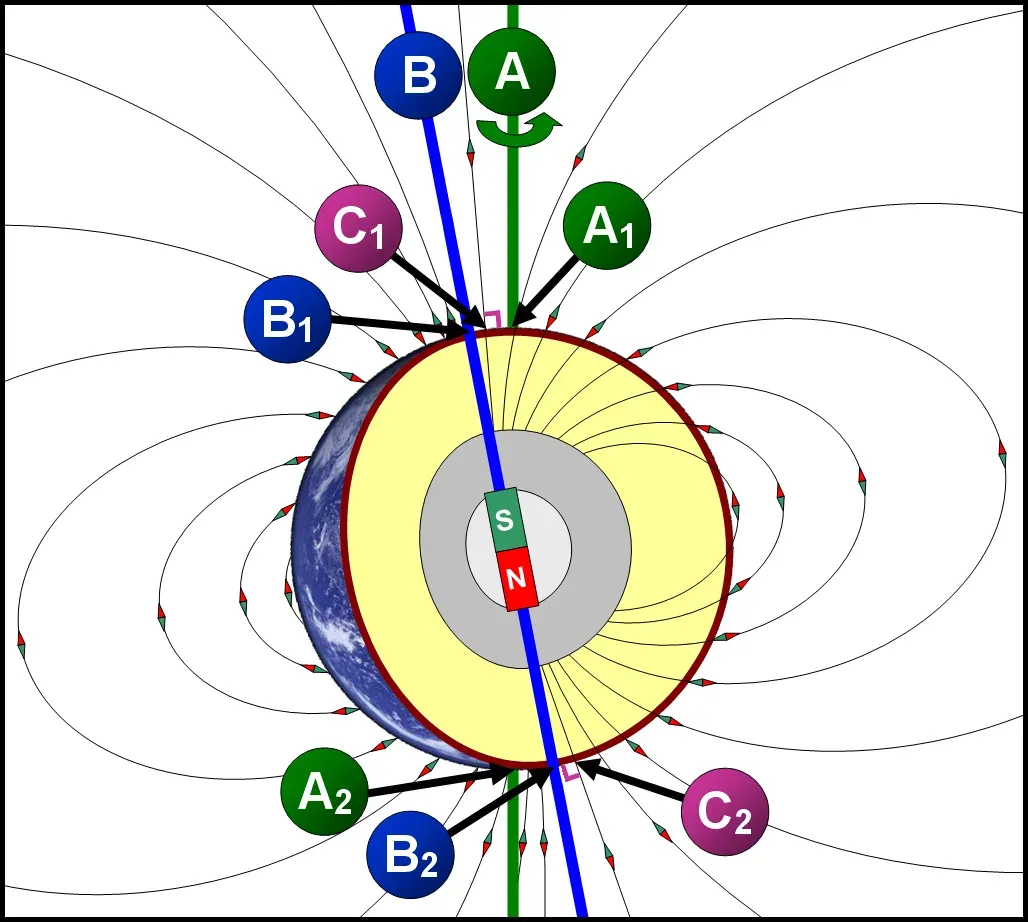
Earth’s magnetic north pole has continued its long-term drift toward Siberia, officially crossing into the Russian hemisphere in 2025. The movement is astonishing when you consider the historical context. Since magnetic north was first precisely located in 1831, it has gradually drifted more than 600 miles, and its forward speed has increased from about 10 miles per year to about 34 miles per year.
Here’s where it gets wild. Between 1990 and 2020, pole velocity increased markedly, reaching peak migration rates of approximately 60 km per year, and then something unexpected happened. In the last five years, the rate of movement has slowed significantly to about 22 miles per year, which represents the biggest deceleration in speed we’ve ever seen. Scientists describe the current behavior of magnetic north as something that we have never observed before.
The Battle Between Magnetic Titans
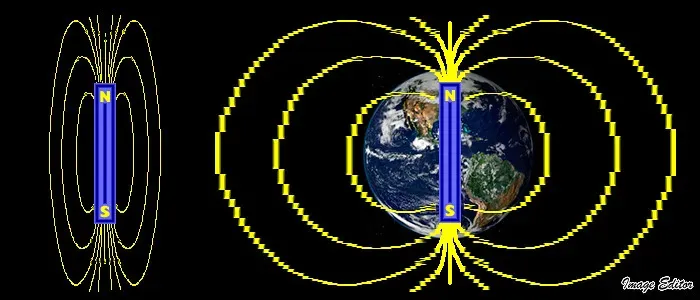
The wandering of magnetic north isn’t random chaos. Since Swarm has been in orbit the magnetic field over Siberia has strengthened while it has weakened over Canada, with the Canadian strong field region shrinking by an area almost the size of India, while the Siberian region has grown by an area comparable to the size of Greenland, and this shift is associated with the northern magnetic pole moving towards Siberia.
What’s causing this tug of war? Models based on satellite observations have shown that the present wandering is the result of a battle between blobs of unusually intense magnetic fields deep inside the planet. It sounds bizarre, but competing regions of intense magnetism thousands of kilometers below the surface are literally pulling the pole in different directions.
The Mystery of Gigantic Rock Structures Influencing the Field
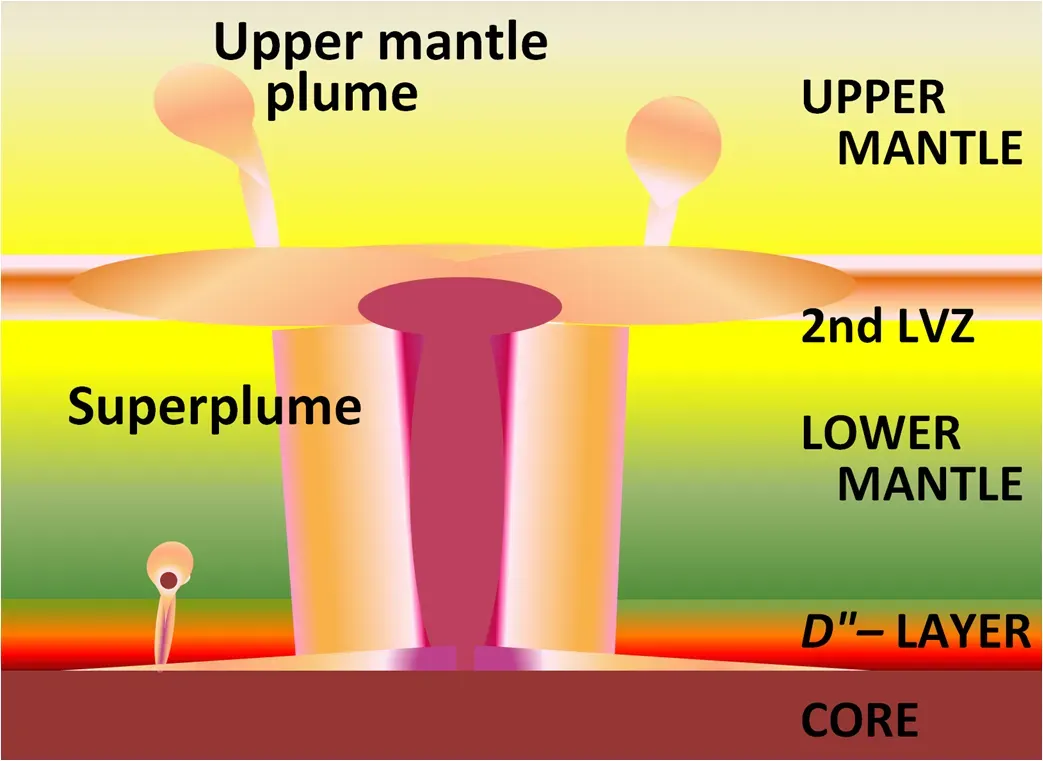
Deep inside Earth, two massive hot rock structures have been quietly shaping the planet’s magnetic field for millions of years, and scientists discovered that these formations influence the movement of liquid iron in Earth’s core. This discovery represents a major breakthrough in understanding field behavior.
The lowermost mantle is characterized by two large low velocity provinces located in antipodal positions close to the equator separated by a girdle of faster than average seismic velocities, and this region probably contains substantial lateral variations in temperature with these structures hotter than the surrounding area. These continent sized blobs of unusual rock essentially create hot and cold spots at the core mantle boundary. The results showed that the upper boundary of the outer core does not have a uniform temperature, but instead contains sharp thermal contrasts, with localized hot zones sitting beneath the continent sized rock structures.
Reversals Take Longer Than Anyone Thought
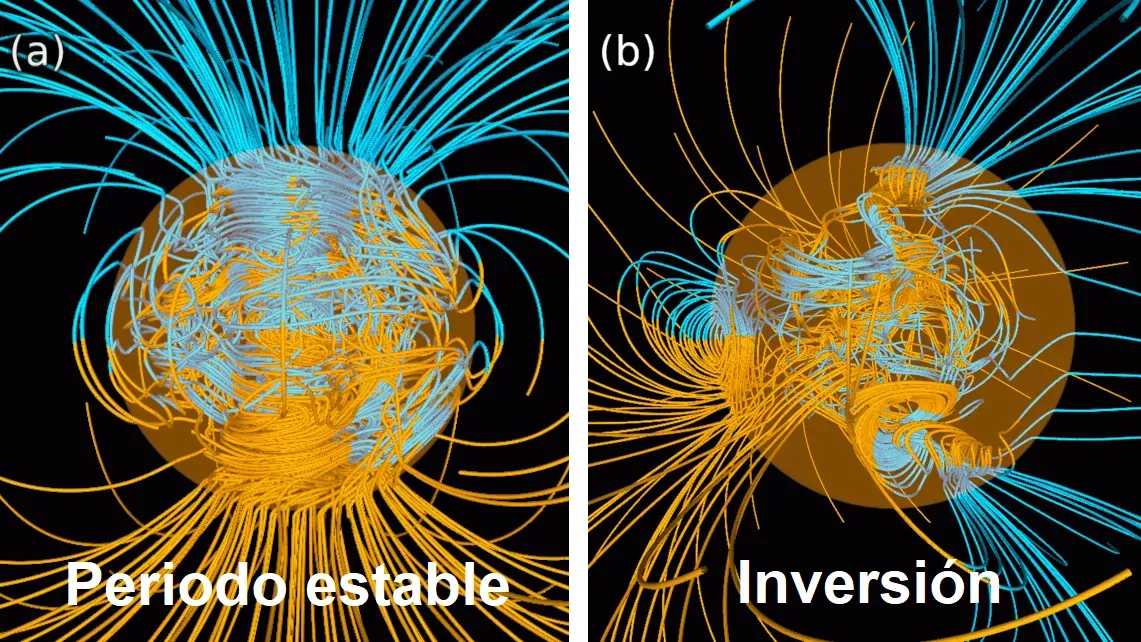
Over the past 170 million years, the magnetic poles have reversed 540 times, with the reversal process typically taking around 10,000 years to complete each time. That’s already mind bogglingly slow from a human perspective. Yet recent research uncovered something even stranger.
A new study documented instances 40 million years ago where the reversal process took upwards of 70,000 years. Computer models of Earth’s geodynamo had indicated reversals’ durations vary, with many short ones, but also occasional long, drawn out transitions, some lasting up to 130,000 years. Scientists hadn’t caught this in the rock record until now. During these prolonged transitions, extended periods of reduced geomagnetic shielding likely influenced atmospheric chemistry, climate processes and the evolution of living organisms, and if you are getting more solar radiation coming into the planet, it will change organisms’ ability to navigate.
The South Atlantic’s Growing Weak Spot
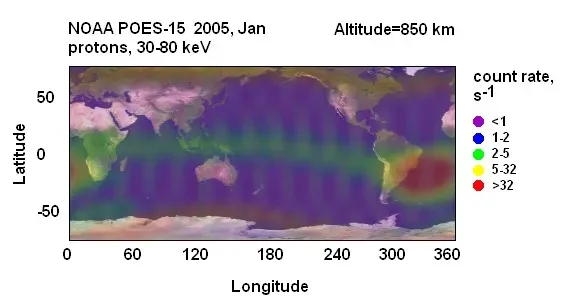
There’s a massive vulnerability in our magnetic shield, and it’s getting worse. A weak zone in Earth’s magnetic field over the South Atlantic, called the South Atlantic Anomaly, has grown by an area nearly half the size of continental Europe since 2014. Honestly, that’s a staggering expansion in just over a decade.
Data from the Swarm mission show that the South Atlantic Anomaly expanded steadily between 2014 and 2025, and since 2020, the magnetic field has weakened even more rapidly in a region of the Atlantic Ocean southwest of Africa. Beneath the South Atlantic Anomaly we see unexpected areas where the magnetic field, instead of coming out of the core, goes back into the core, and thanks to the Swarm data we can see one of these areas moving westward over Africa. These reverse flux patches are behaving in ways that have scientists scratching their heads.
Why Full Reversals Might Be Overdue

Paleomagnetic records tell us Earth’s magnetic poles have reversed 183 times in the last 83 million years, and the time intervals between reversals have fluctuated widely, but average about 300,000 years, with the last one taking place about 780,000 years ago. If you’re doing the math, yes, we’re roughly half a million years past the average interval.
Reversals are believed to take place over 1,000 to 10,000 years, during which time the field shrinks before growing again with the opposite polarity. During a pole reversal, the magnetic field weakens but doesn’t completely disappear, and the magnetosphere, together with Earth’s atmosphere, continue protecting Earth from cosmic rays and charged solar particles, though the magnetic field becomes jumbled, and multiple magnetic poles can emerge in unexpected places. The notion that we’re overdue is somewhat misleading, though, since reversals don’t follow a predictable schedule.
Predicting the Unpredictable Future
Can we forecast what comes next? Scientists are still unsure why the magnetic north pole’s speed changed so dramatically, though some researchers believe that changes in the strength of the magnetic field near Canada and Siberia could be influencing the shift. The honest answer is that prediction remains incredibly difficult.
In the past 200 years, Earth’s magnetic field has weakened about nine percent on a global average, and some people cite this as evidence a pole reversal is imminent, but scientists have no reason to believe so, and in fact paleomagnetic studies show the field is about as strong as it’s been in the past 100,000 years, and while some scientists estimate the field’s strength might completely decay in about 1,300 years, the current weakening could stop at any time. The South Atlantic Anomaly, for instance, resembled past weak field patterns that subsequently strengthened again after some time and the anomaly disappeared.
What we do know is that the field will continue shifting, strengthening in some regions while weakening in others, following patterns driven by the turbulent dance of molten metal far below. The magnetic field has protected life on Earth for billions of years through countless reversals and excursions. Whatever happens next, it’s a reminder that our planet is far more dynamic and restless than the solid ground beneath our feet suggests. What do you think about the idea that magnetic north might one day point toward Antarctica? Tell us in the comments.