
You probably know that feeling when you’re in a new city, fumbling with your phone’s GPS to figure out which direction to walk. Here’s the thing though, plenty of creatures on this planet never need a smartphone app or a paper map to know exactly where they’re going. They’ve got something far more elegant built right into their bodies: an ability to sense the invisible magnetic field that wraps around our planet like a force field.
Think about it for a second. The Earth produces its own magnetic field, generated deep in its liquid outer core. While we humans typically can’t feel it without a compass, countless animals tap into this hidden resource to navigate across oceans, continents, and skies with astonishing precision. Let’s dive into the fascinating ways five different groups of . Be prepared to be amazed by what evolution has cooked up.
Sea Turtles Navigate With an Inherited Magnetic Map
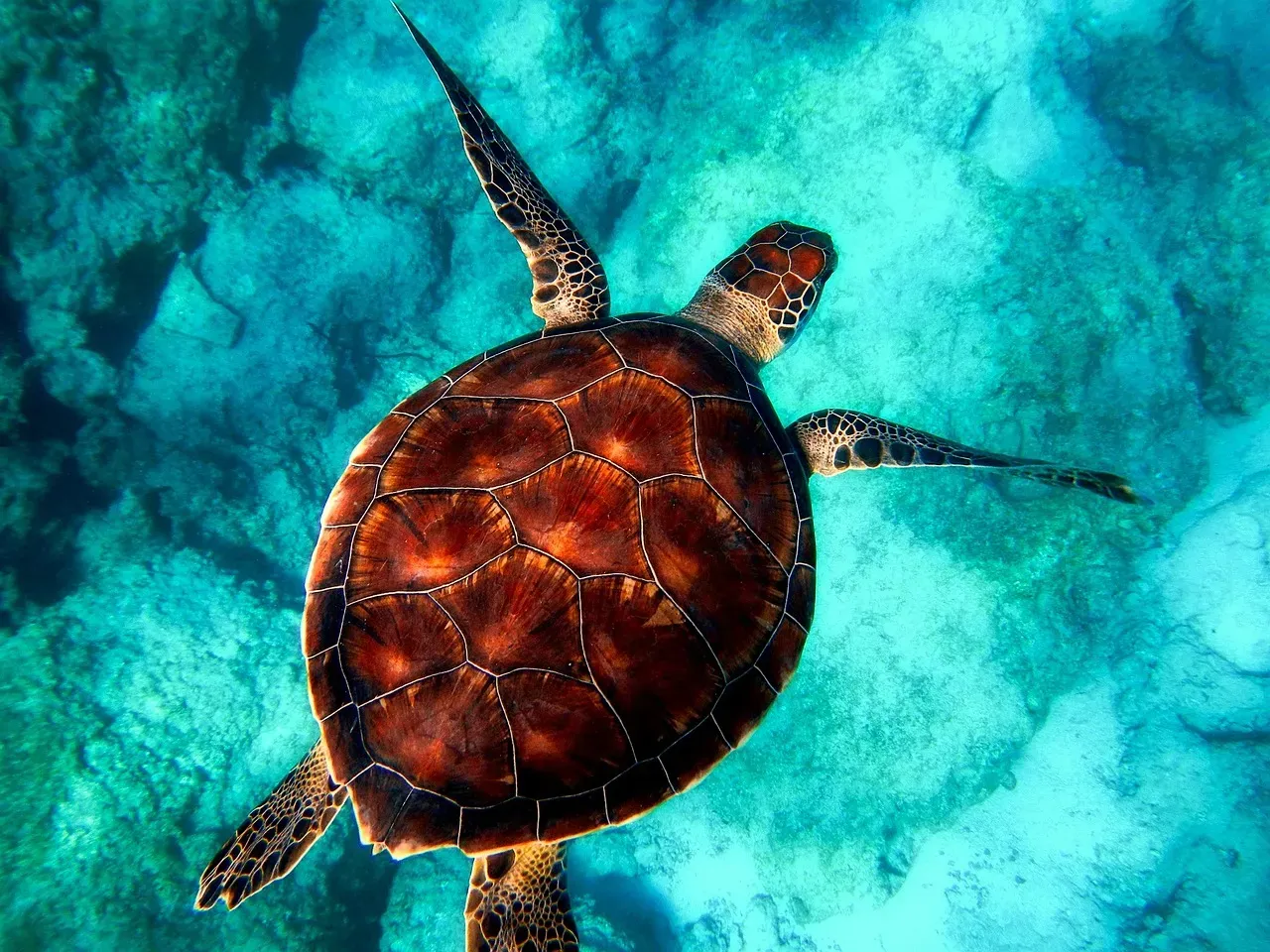
Loggerhead turtles are famous for their extraordinary migrations, guided by an internal magnetic map that enables them to determine their location by detecting variations in Earth’s magnetic field. When baby loggerheads first scramble out of their sandy nests and head toward the ocean, they’re already equipped with an extraordinary navigation system. As newly hatched turtles leave the beach and enter the sea for the first time, they use the earth’s magnetic field and the direction of ocean waves as crude compasses to guide them offshore into deeper waters favorable for growth and development.
What really blows my mind is that hatchling loggerheads emerge from their nests programmed to recognize specific magnetic addresses in the ocean and to swim innately in directions that keep them safe, and as the turtles age, they move beyond those innate responses and learn to use the spatial patterns of Earth’s magnetic field as a map, thereby allowing them to sense their current magnetic addresses and set course for the magnetic addresses of their destinations. It’s like they’re born with a basic GPS already programmed in, and then they upgrade it as they grow older. Recent research even confirms that loggerhead sea turtles can learn and remember the unique magnetic signatures of different geographic regions. Talk about a built-in superpower.
Migratory Birds Use Quantum Effects in Their Eyes
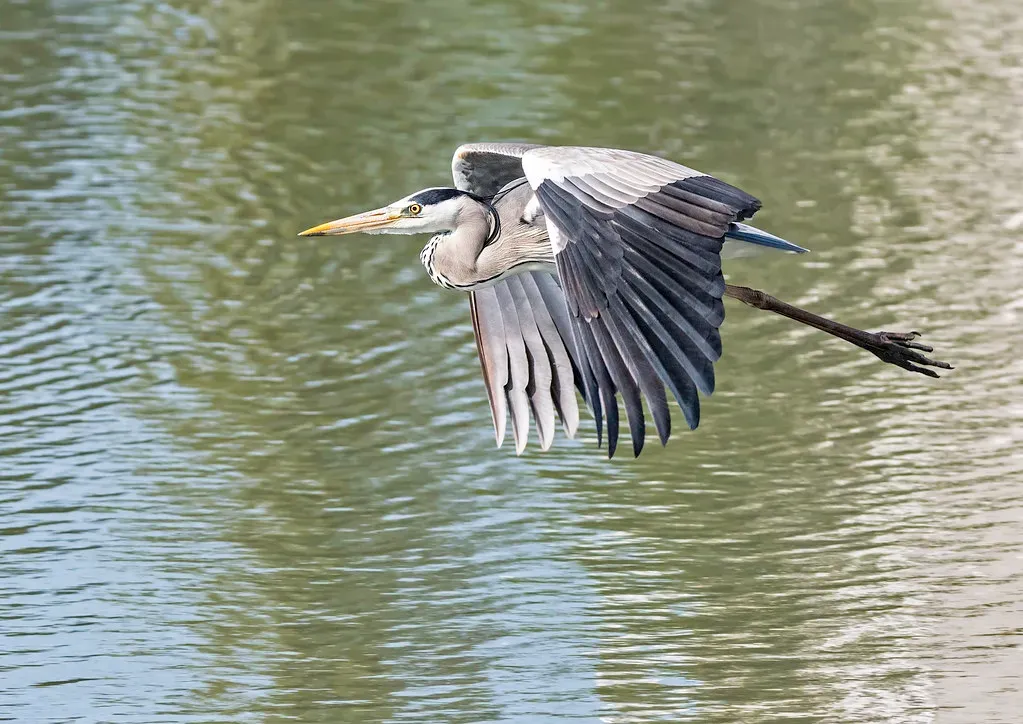
Birds navigating thousands of miles during migration need reliable directional information. Experiments on migratory birds provide evidence that they make use of a cryptochrome protein in the eye, relying on the quantum radical pair mechanism to perceive magnetic fields. Let’s be real, that sounds like science fiction, but it’s actually happening inside the eyes of robins and warblers as they fly at night.
Our experimental evidence suggests something extraordinary: a bird’s compass relies on subtle, fundamentally quantum effects in short-lived molecular fragments, known as radical pairs, formed photochemically in its eyes. These radical pairs form when blue light hits cryptochrome proteins in the retina, creating a chemical reaction that’s sensitive to magnetic fields. The avian compass is an inclination compass, not sensitive to the polarity of the magnetic field; instead it senses the axial course of the field lines and interprets their inclination in space, and it thus does not distinguish between magnetic North and South, but between ‘poleward’, where the field lines run downward, and ‘equatorward’, where they run upward. It’s a completely different way of sensing direction than our human compasses use. This light-dependent system works even under dim starlight, helping nocturnal migrants stay on course across continents.
Salmon Lock in Their Birth Location and Return Years Later
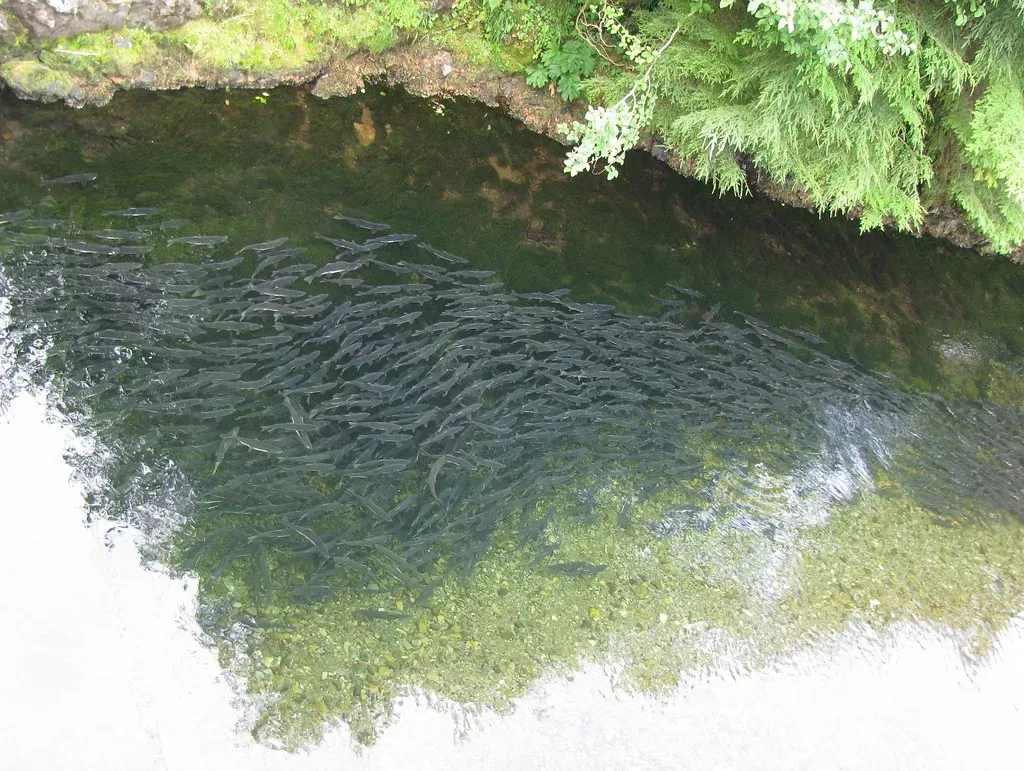
Scientists believe that salmon navigate by using the earth’s magnetic field like a compass. But salmon don’t just use magnetism for direction, they actually use it as a sophisticated map. A new study into the life cycle of salmon, involving magnetic pulses, reinforces one hypothesis: The fish use microscopic crystals of magnetite in their tissue as both a map and compass and navigate via the Earth’s magnetic field.
Here’s where it gets really interesting. When they hit salt water, they switch over to geomagnetic cues and lock in that latitude and longitude, knowing they need to come back to those coordinates, and when they decide to come back, it’s months in advance because they’re halfway to Japan. Honestly, I find that remarkable. These fish memorize the magnetic signature of where they entered the ocean, then spend years wandering the open sea before returning to spawn in the exact stream where they hatched. Experiments showed that when the fish were exposed to fields like those at the northernmost parts of their usual range, they wanted to swim south to return to the center of their ranges, and conversely, fish exposed to a southern-range magnetic field tended to orient themselves northward. The salmon essentially carry an invisible map of magnetic coordinates in their brains.
Spiny Lobsters Use a Magnetic Compass for Homing Behavior
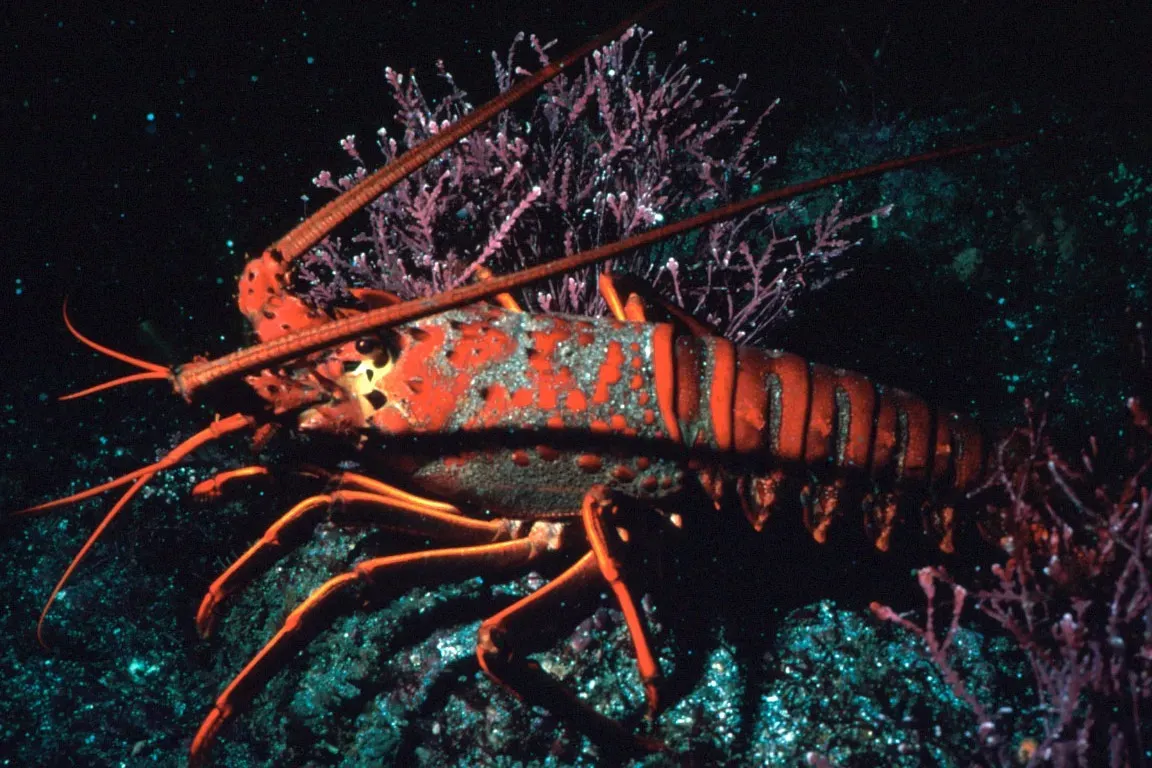
While lobsters might not seem like champion navigators, the western Atlantic spiny lobster Panulirus argus undergoes an annual migration and is also capable of homing to specific dens in its coral reef environment. Researchers discovered something unexpected when they tested these creatures underwater with magnetic coils. Lobsters subjected to the horizontal field reversal deviated significantly from their initial courses, but in contrast, control lobsters and those subjected to the reversed vertical field did not.
These results demonstrate that spiny lobsters possess a magnetic compass sense, and because inverting the vertical component of the earth’s field had no effect on orientation, the results suggest that the lobster compass is based on field polarity and thus differs from the inclination compasses of birds and sea turtles. In other words, lobsters navigate differently than birds and turtles do, using the actual magnetic polarity rather than the angle of field lines. The spiny lobster Panulirus argus oriented reliably towards a capture site when displaced 12–37 km to unfamiliar locations, even when deprived of all known orientation cues en route. That’s true navigation, folks, the ability to know where you are and how to get back home even in completely unfamiliar territory.
Diverse Animals Rely on Magnetite Crystals as Internal Compasses
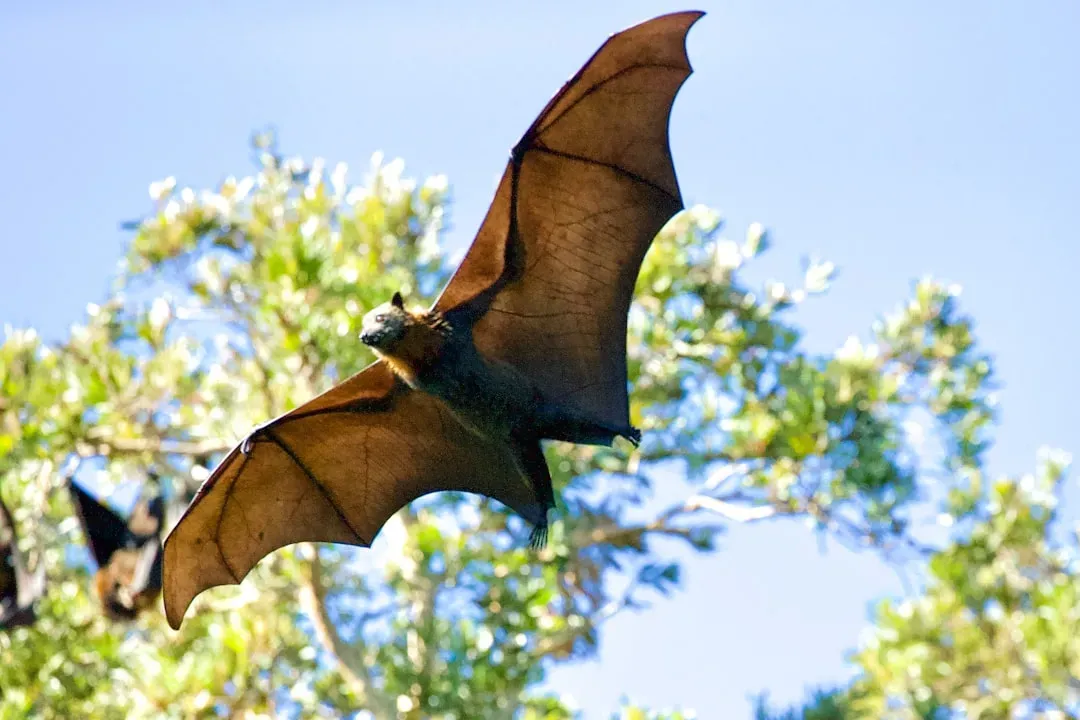
Across multiple species, tiny magnetic crystals seem to be the secret ingredient. In trout, magnetite has been found in the nose and appears to be closely associated with a nerve that responds to magnetic stimuli, and magnetite isolated from fish and other animals has mainly been in the form of single-domain crystals similar to those in bacteria. These microscopic crystals are naturally magnetic and will try to align with the Earth’s field if they can rotate freely.
Single-domain crystals are tiny (about 50 nanometers in diameter), and each is a permanent magnet that will align with Earth’s magnetic field if permitted to rotate freely, and such magnetite crystals might activate secondary receptors (such as hair cells, stretch receptors, or mechanoreceptors) as the particles try to align with the geomagnetic field. It’s hard to say for sure how exactly this mechanism works at the cellular level, but experiments with magnetic pulses consistently show that animals with magnetite change their behavior when their magnetite gets disrupted. Magnetic pulses are known to alter magnetic orientation behavior in a range of terrestrial and aquatic animals, among them mole rats, bats, birds, sea turtles and lobsters. This suggests that magnetite-based detection is widespread across the animal kingdom.
Conclusion

The natural world operates on levels we’re only beginning to comprehend. From baby sea turtles memorizing magnetic coordinates as they paddle away from their birth beaches, to birds detecting quantum chemical reactions in their eyes mid-flight, to salmon remembering oceanic locations for years, these navigation systems are nothing short of extraordinary. Lobsters crawling along the seafloor have their own magnetic compass, and countless creatures carry microscopic magnetic crystals that function as biological navigation tools.
Diverse animals ranging from lobsters to birds are now known to use magnetic positional information for a variety of purposes, including staying on track along migratory pathways, adjusting food intake at appropriate points in a migration, remaining within a suitable oceanic region, and navigating toward specific goals. Evolution has crafted multiple solutions to the same problem: how to navigate across a vast, often featureless planet. While we rely on satellites and smartphones, these animals have been navigating with Earth’s invisible magnetic field for millions of years.
What do you think is more impressive, the technological GPS in your pocket or the biological magnetoreception these animals possess? Let us know your thoughts in the comments.