

You probably don’t think about physics when you’re reaching for your morning coffee or chemistry when you’re scrubbing a dirty pan. Most of us move through our days without realizing that every single action, every routine task, is governed by invisible scientific laws working quietly in the background. From the moment you wake up to the alarm clock buzzing on your nightstand to the instant you drift off to sleep, science is choreographing your entire existence.
The truth is, we take these natural phenomena for granted. We flip a light switch expecting brightness, we walk confidently on solid ground without slipping, and we cook dinner without pausing to marvel at the molecular transformations happening in our pots and pans. Yet beneath this comfortable familiarity lies a universe of fascinating principles that make modern life not just possible, but truly extraordinary. Let’s pull back the curtain and discover the hidden science that’s been there all along.
Your Morning Alarm Clock Is Actually a Sound Wave Generator

That irritating buzz that jolts you awake each morning is actually the result of vibrations generating sound waves through acoustics, a branch of physics. Your alarm clock converts electrical energy into mechanical vibrations, which then travel through the air as pressure waves that eventually reach your eardrums. It’s a perfect example of energy transformation happening right on your bedside table.
Physics studies the origin, transmission, and properties of sound, and your alarm demonstrates all three. The really interesting part? You can’t see sound waves, yet they have the power to drag you out of a deep sleep every single morning. These sound waves travel through the air and we listen to them in our ears, completing a journey that takes mere fractions of a second yet feels impossibly loud at six in the morning.
Walking Without Slipping Is Thanks to Friction

When you walk or run, physics is at play through the frictional force that helps you maintain balance and avoid slipping, with the friction between your shoes and the ground providing the grip needed for stability and control. Without this invisible force pushing back against your feet, you’d be sliding around like you’re constantly on ice. It’s remarkable how something we never consciously think about is actually essential for basic human movement.
The act of walking has mechanics based on physics, with the friction between our feet and ground preventing slipping, while Newton’s laws of motion explain how we are propelled forward. Every step you take involves a complex interaction between your body weight, the surface texture beneath you, and the force you apply with each stride. Children learning to walk are essentially mastering applied physics without realizing it.
Your Smartphone Runs on Multiple Scientific Principles Simultaneously

Smartphones work on the principle of electricity and the electromagnetic spectrum, the wavy patterns of electricity and magnetism. Every time you swipe your screen, send a text, or scroll through social media, you’re interacting with a device that’s basically a portable science laboratory. The touchscreen itself responds to the electrical properties of your fingertips, while the wireless signals connecting you to the world travel as electromagnetic waves at the speed of light.
The function of smartphones involves different physics concepts, which are electricity, magnetism, and optics. The camera uses principles of light refraction and digital sensors, the battery stores chemical energy converted to electrical energy, and the processor manages billions of calculations per second through semiconductor physics. Honestly, it’s a bit overwhelming when you really stop to think about the scientific complexity you’re casually holding in your hand.
Cooking Transforms Raw Ingredients Through Chemical Reactions

Heat energy is transformed to the cooking vessel in the form of radiation, conduction and convection, after which various ingredients like salt, sugar or any edible material start breaking bonds and forming new bonds which gives us delicious food. Your kitchen is essentially a chemistry lab where you’re constantly conducting experiments. When you brown meat, caramelize onions, or bake bread, you’re facilitating complex molecular transformations that would make a chemist proud.
Caramelization occurs when sugars are heated creating a rich sweet flavor, while the Maillard reaction happens when proteins and sugars combine under heat producing the browning and complex flavors found in roasted meats and baked goods. These aren’t just cooking techniques; they’re chemical reactions with specific temperature requirements and molecular outcomes. The delicious crust on your steak or the golden surface of fresh bread represents hundreds of different flavor compounds created through heat-induced chemistry.
Cleaning Products Work Because of Molecular Interactions

Acids like vinegar are excellent for removing mineral deposits, while alkaline substances like baking soda are perfect for cutting through grease and neutralizing odors, with knowing when to use each enhancing cleaning efficiency. That fizzy reaction you get when mixing baking soda and vinegar isn’t just satisfying to watch; it’s an acid-base reaction producing carbon dioxide gas, water, and sodium acetate. Chemistry is literally doing the dirty work for you.
Soaps and detergents are chemical products designed to remove dirt and grease through chemical reactions. The surfactant molecules in soap have a water-loving end and a grease-loving end, allowing them to grab onto oils and dirt particles and wash them away with water. It’s hard to say for sure, but I think understanding this makes scrubbing dishes slightly more interesting, though only slightly.
Refrigerators Defy Entropy to Keep Your Food Fresh
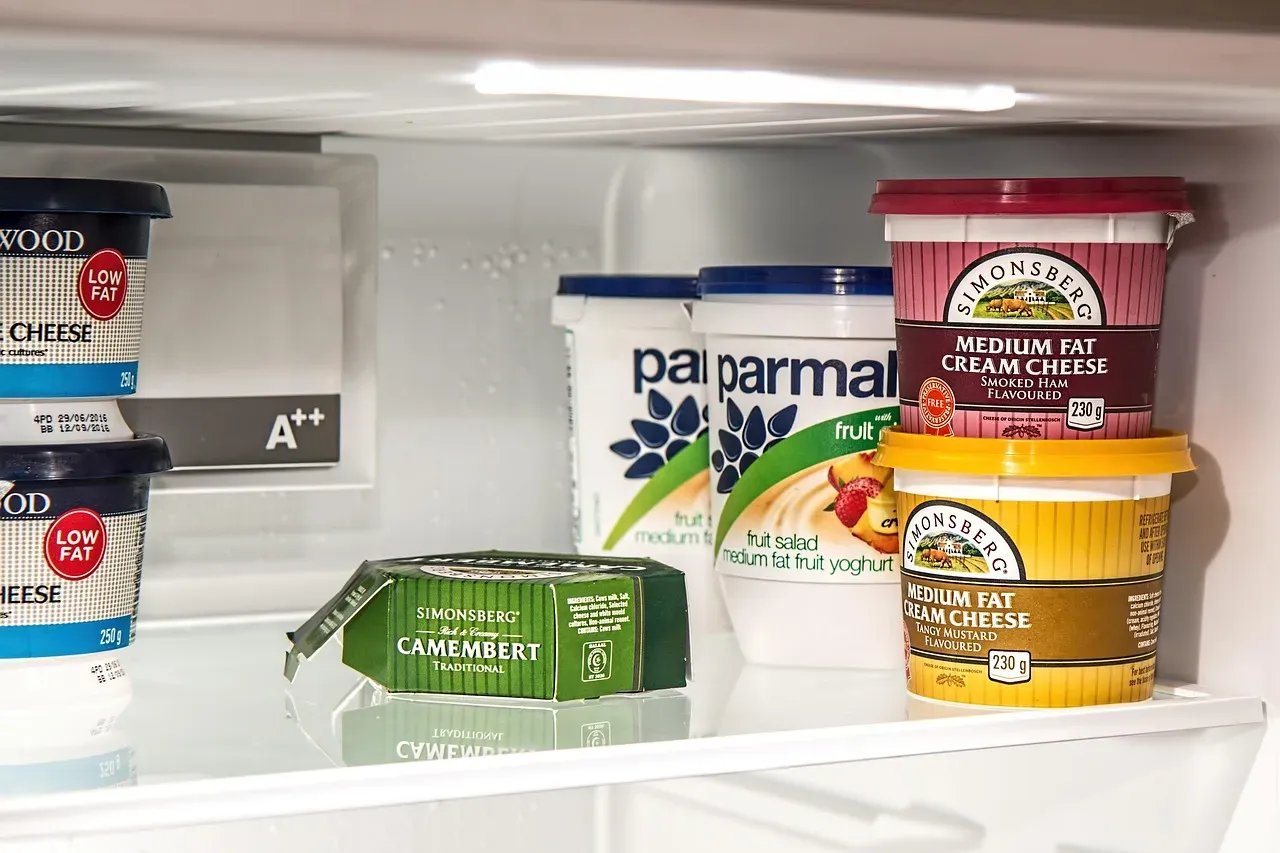
Refrigerators work on the principles of thermodynamics, constantly moving heat from the inside to the outside environment. This might sound backwards since we think of refrigerators as making things cold, but they’re actually heat pumps that extract thermal energy from your food and release it into your kitchen. That’s why the back or bottom of your fridge feels warm even though the inside stays chilled.
The refrigerant inside undergoes repeated cycles of compression and expansion, changing from liquid to gas and back again. Each phase change either absorbs or releases heat, creating a continuous cooling effect. Your leftovers stay fresh because this elegant thermodynamic dance is happening around the clock, fighting against the natural tendency of everything in the universe to reach the same temperature.
Opening Doors Demonstrates the Physics of Torque

If you apply force near the door hinge, the door will not open because it will not be able to rotate around the hinge, but when you apply the same force away from the hinge, the torque will be larger, making you easily open the door without exerting more effort. This is why door handles are always positioned on the edge opposite the hinges rather than in the middle. The greater distance from the pivot point multiplies your applied force into rotational motion.
You’ve probably instinctively known this your entire life without ever calling it torque. Children naturally learn to push doors at their outer edge rather than near the hinges because it just feels easier, which it is. This same principle applies to wrenches, seesaws, and even the pedals on your bicycle, making rotational motion one of the most practical physics concepts you use without thinking about it.
Static Electricity Explains Those Annoying Doorknob Shocks
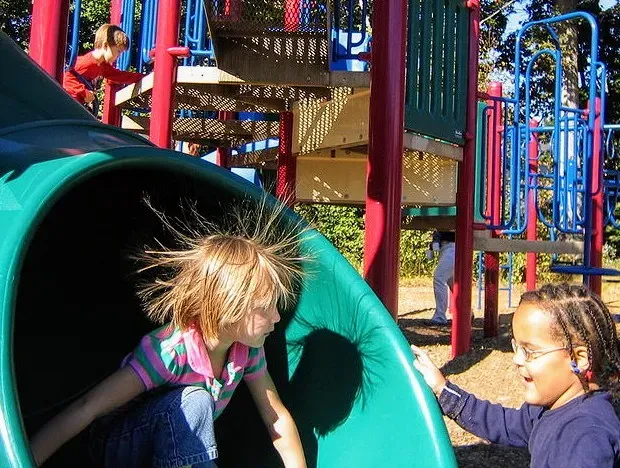
When you experience a small shock touching a doorknob or another person, this is the result of static electricity, where two objects with different electrical charges come into contact or are rubbed together causing electrons to transfer from one object to the other, with the resulting charge imbalance creating static electricity that discharges when a conductor like metal is touched. Those tiny lightning bolts jumping from your finger are electrons desperately trying to equalize their distribution.
Let’s be real, static shocks are annoying, especially in dry winter weather when they become more frequent. The reason you build up charge in the first place usually involves friction between your clothes and your body or between your shoes and carpeted floors. Synthetic fabrics are particularly good at creating these charge imbalances, which is why you might notice more shocks when wearing certain outfits.
Conclusion: The Hidden Laboratory of Daily Life

Every mundane moment contains multitudes of scientific principles working in perfect harmony. You don’t need a laboratory coat or expensive equipment to witness remarkable physics, chemistry, and biology in action. They’re happening constantly in your kitchen, your living room, even in the simple act of taking a breath or turning on a light.
Complex physics and chemistry are embedded in even the simplest household activities, with the forces holding atoms together, the transfer of energy, and the interactions between different compounds being the very fabric of our everyday existence. Once you start seeing the science behind ordinary things, it’s impossible to stop. The world becomes infinitely more fascinating when you understand the invisible mechanisms making everything work.
What everyday activity will you look at differently now? Next time you’re waiting for water to boil or watching ice melt in your glass, remember you’re witnessing fundamental laws of thermodynamics and phase transitions. Science isn’t locked away in universities and research facilities. It’s right there with you, every single day, making the ordinary absolutely extraordinary.