
Reality feels solid, obvious, almost boringly familiar – until science quietly pulls the rug out from under us. Every few decades, a new theory appears that doesn’t just tweak what we know, but threatens to rewrite the very rules of existence: what space is, what time is, even what it means for something to be real. These ideas can feel unsettling, but they’re also strangely exhilarating, like realizing there’s a hidden level in a game you thought you’d already finished.
What follows are five scientific theories that don’t just add a new chapter to the book of knowledge – they’re more like someone suggesting that the book is written in invisible ink, upside down, on paper that can change shape. Some of these ideas are still speculative, some are supported by serious evidence, and none are fully settled. But all of them carry the same quiet, shocking suggestion: the world you think you live in might be only a rough sketch of what’s really there.
Quantum Entanglement and Nonlocality
Imagine two coins on opposite sides of the universe that somehow always land on matching faces the instant you flip them, no matter how far apart they are. That’s the flavor of quantum entanglement: particles that become linked so deeply that measuring one seems to affect the other instantaneously, even across vast distances. This clashes violently with our everyday sense of cause and effect, and it also rubs against the speed limit set by the speed of light. For a long time, even some of the founders of quantum mechanics hoped entanglement was just a weird glitch that would disappear with better understanding.
Instead, experiments over the past few decades have repeatedly confirmed that entanglement is very real, and the universe is more deeply connected than our common sense allows. Tests closing loopholes in so-called Bell experiments strongly suggest that local hidden variables – those comforting, unseen classical causes – don’t explain what we see. That doesn’t mean faster-than-light messaging is possible, but it does hint that our basic ideas of space, separation, and locality might be incomplete. If entanglement is a fundamental feature of reality, then “here” and “there” might be less like separate places and more like different ripples on one shared pond.
The Holographic Principle
The holographic principle sounds like science fiction: the idea that our three-dimensional universe might be a kind of projection of information encoded on a distant, lower-dimensional surface. In more concrete terms, it suggests that everything we experience – galaxies, people, thoughts – could be described by data living on a cosmic boundary, much like a hologram carries a 3D image on a flat film. This idea emerged from trying to make sense of black holes, where information, gravity, and quantum mechanics crash into each other in a mess of paradoxes.
Physicists found that the information content of a black hole seems to scale with its surface area, not its volume, which is deeply counterintuitive if you picture information being stored inside like books in a library. Extrapolating that insight leads to the wild suggestion that reality, at a fundamental level, might work similarly. While nobody has proved that our universe absolutely is holographic, mathematical models in certain types of spacetimes strongly support the principle. If something like this is true for our cosmos, then what we think of as “space inside” might be more like a clever encoding of information “on the edge” – a twist that turns our sense of inside and outside completely inside out.
Many-Worlds Interpretation of Quantum Mechanics
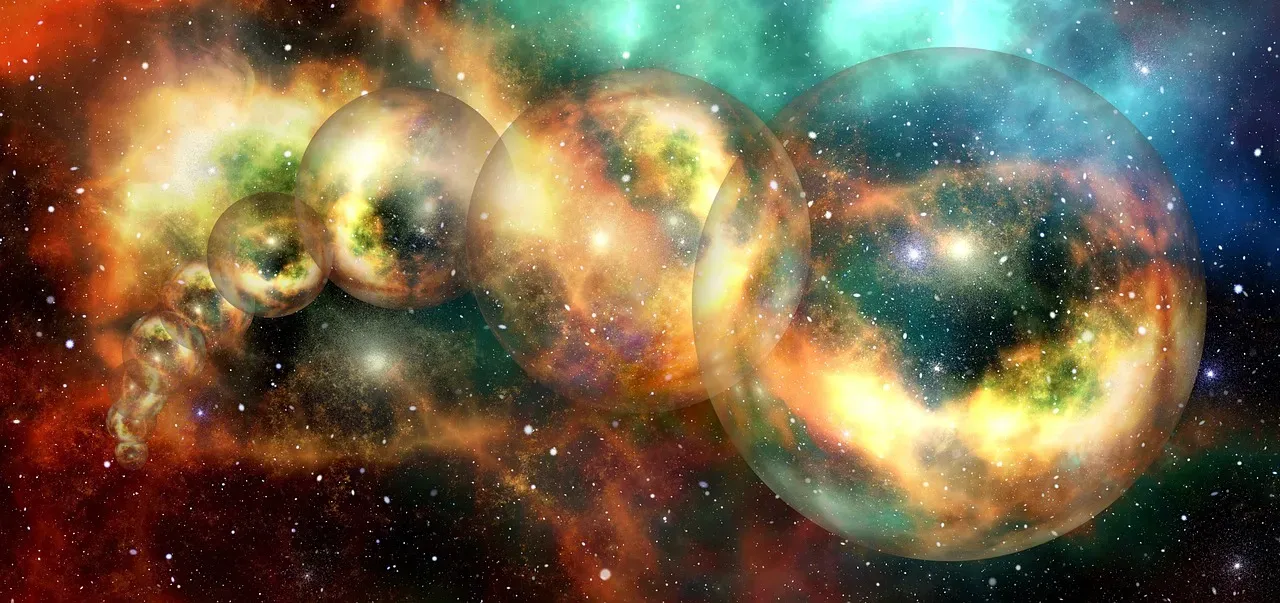
When you hear “many worlds,” it’s hard not to picture endless copies of yourself in slightly different outfits making slightly different choices. The many-worlds interpretation of quantum mechanics proposes something even stranger: that every quantum event splits reality into branches where all possible outcomes occur. In such a picture, the uncertainty of a particle’s state isn’t resolved by one outcome becoming “real” and the others vanishing; instead, the universe evolves into a superposition of different histories, each one as real as the one you’re experiencing now. There’s no collapse, just relentless branching.
Many-worlds is controversial because it multiplies realities in a way that some people find philosophically extravagant, even if it’s mathematically straightforward. It also raises unsettling questions about identity, probability, and what it means to say something “happens.” Yet it solves certain conceptual headaches of quantum theory without adding extra mechanisms, which is why some physicists take it seriously. If this view is even approximately right, then your life is not a single line but one visible strand in a vast, unseen multiverse tapestry, and “what really happened” becomes a more complicated question than we’re used to asking.
Emergent Spacetime and the Idea That Space Is Not Fundamental
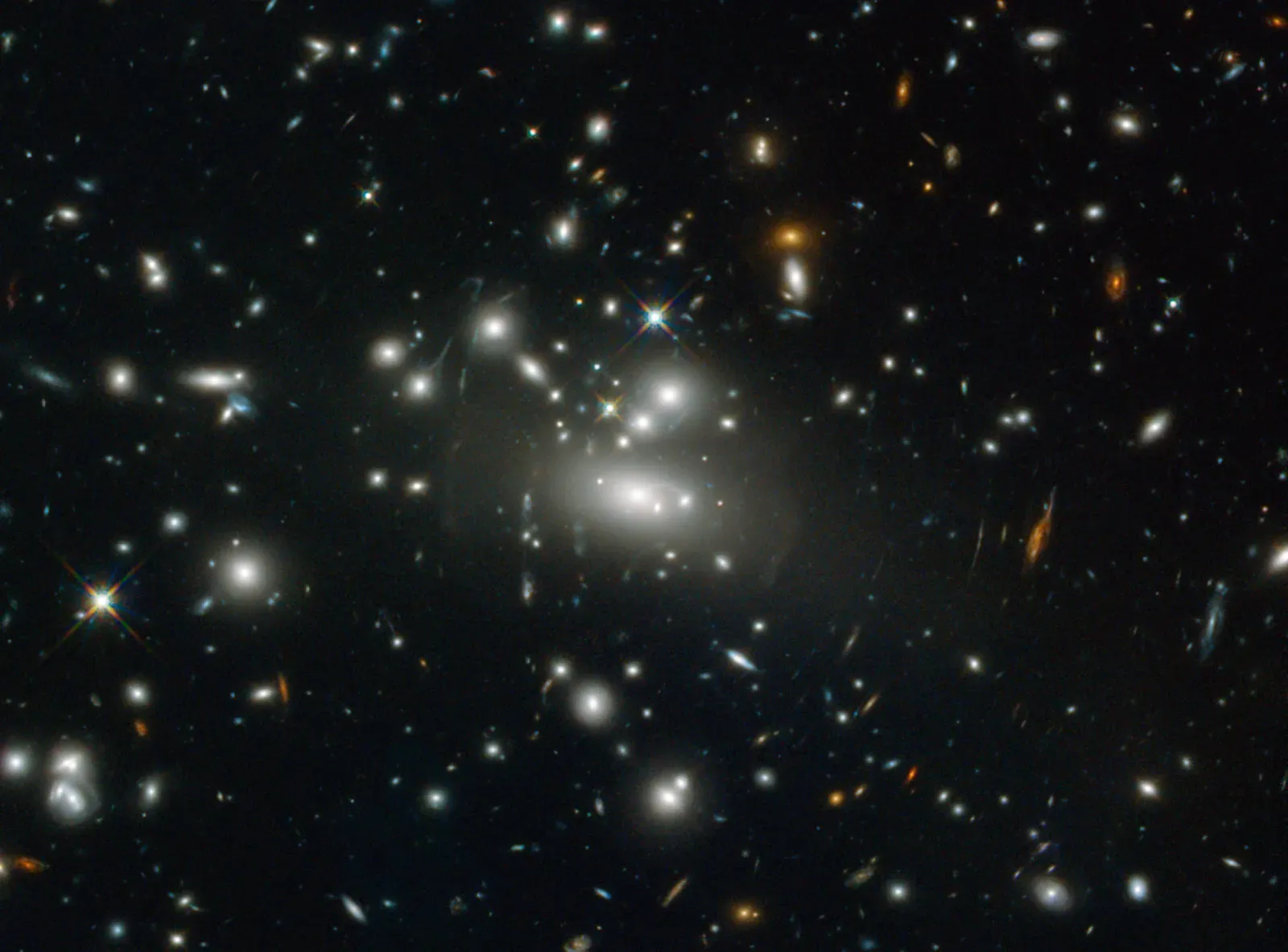
We grow up thinking of space as the ultimate backdrop: the stage on which everything else plays out. But a growing body of theoretical work suggests that spacetime itself might not be fundamental at all – it could be something that emerges from a deeper layer of reality, the way temperature emerges from the motion of countless microscopic particles. In some of these approaches, spacetime is not a smooth continuum but built from more basic ingredients: networks of relations, quantum bits of information, or fundamentally discrete structures. From far away it looks like a continuous stage, but up close it might be more like a woven fabric of simpler threads.
This perspective helps connect gravity, quantum theory, and information in surprising ways. For example, ideas from quantum information theory have been used to model how entanglement patterns might “knit” spacetime together, with geometry emerging from the way information is shared. If space and time are not basic but emergent, then asking what “space is made of” becomes a bit like asking what a wave is made of: it’s not a thing on its own, but a pattern in something deeper. That shift in viewpoint could completely rewrite how we think about distance, causality, and even the origin of the universe.
Panpsychism and the Possibility That Consciousness Is Fundamental
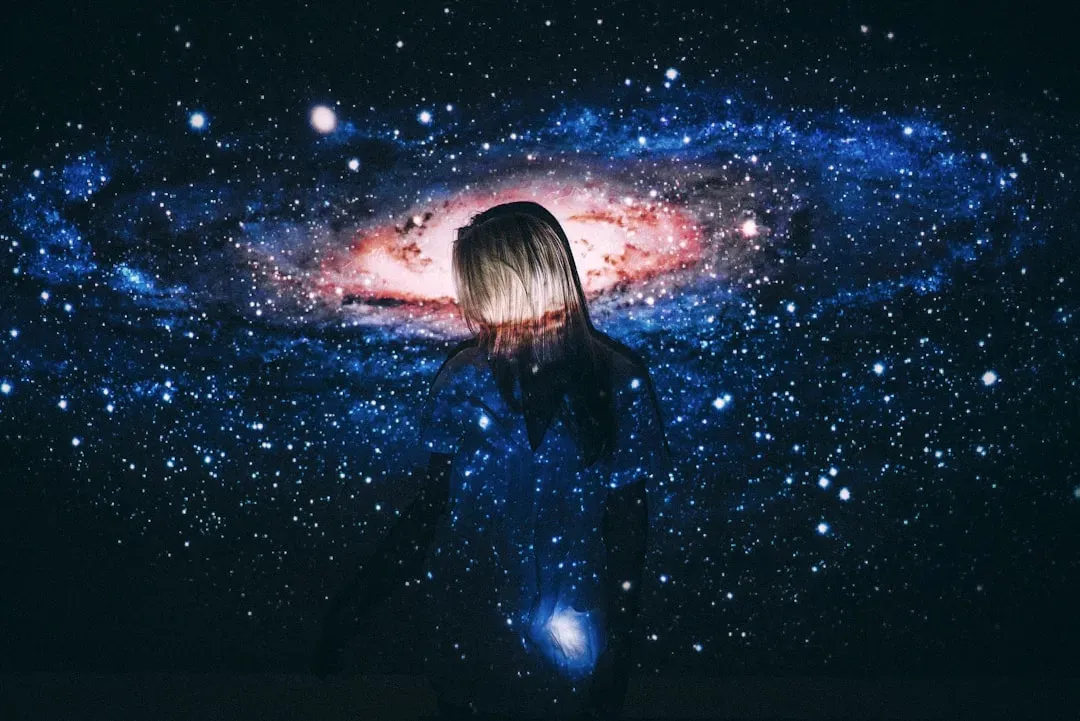
Most of us are taught to think of consciousness as something that appears late in the cosmic story, a rare side effect of complicated brains. Panpsychism flips that script and suggests that, in some form, mindlike properties might be woven into the fabric of reality from the start. This doesn’t mean that rocks secretly have human-style thoughts, but rather that the basic building blocks of the universe may have primitive, proto-experiential aspects. Under this view, complex consciousness like ours arises not from absolute nothing, but from combinations and organizations of simpler experiential ingredients.
What makes this more than just a philosophical daydream is the stubborn difficulty of explaining subjective experience in purely physical terms, even as neuroscience maps out brain activity in incredible detail. Panpsychism doesn’t yet offer testable predictions the way physics theories do, and that’s a real weakness. Still, by insisting that consciousness might be a basic feature of reality rather than a late-stage accident, it pushes science and philosophy to rethink what counts as “fundamental.” If something like this is on the right track, our usual story about a dead, indifferent universe that accidentally wakes up in a few brains could be badly incomplete, and mind might belong in the same category as space, time, and matter – not as an afterthought, but as a starting point.
Each of these theories pulls at a different thread in the fabric of reality, and in doing so, hints that the picture we live with day to day is only a rough draft. Whether or not all of them survive future scrutiny, they expand the range of what we’re able to imagine about existence itself. Which of these possibilities feels most unsettling – and which one, deep down, feels oddly right to you?