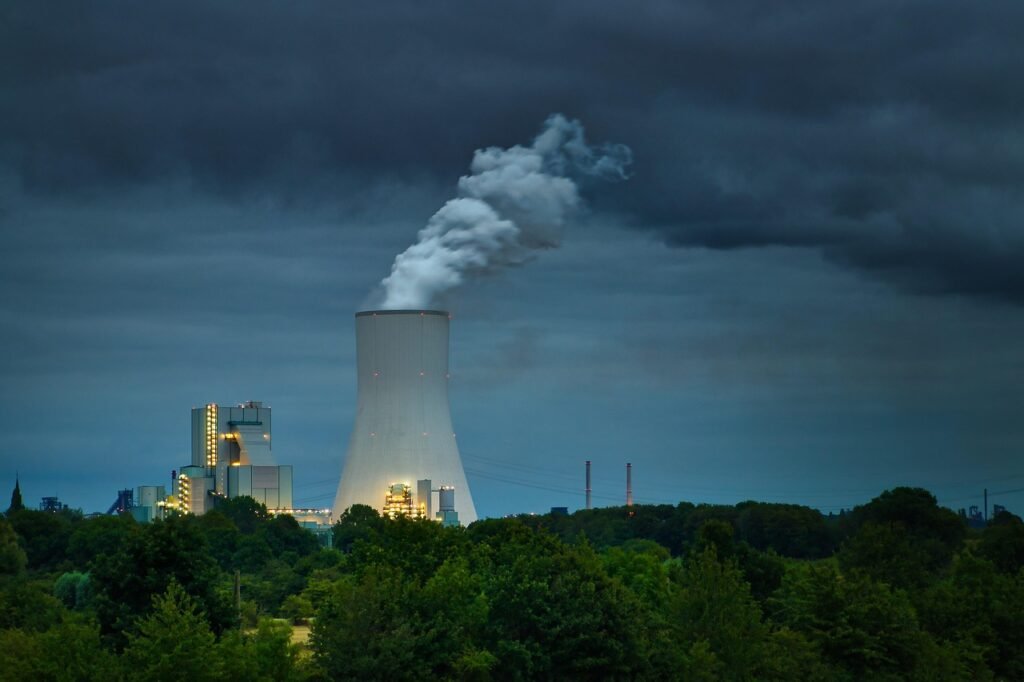
Data Centers Ignite Record Power Hunger (Image Credits: Pixabay)
Georgia – State regulators last month unanimously endorsed Georgia Power’s sweeping plan to bolster the power grid with nearly 10 gigawatts of new capacity, fueled primarily by the relentless rise of data centers.[1][2]
Data Centers Ignite Record Power Hunger
Electricity demands from sprawling data centers threaten to overwhelm Georgia’s grid, prompting an unprecedented buildout that rivals the output of multiple massive dams.[3] The utility projects these facilities will claim about 80 percent of the fresh capacity, enough to light up roughly 4 million homes. This surge stems from artificial intelligence operations and cloud computing giants racing to establish footprints in the state.
Georgia Power highlighted over $26 billion in recent economic investments and nearly 30 large-load projects already underway or in negotiation. Regulators viewed the expansion as essential to capture this growth and sustain jobs. Yet projections rely on proprietary models that drew skepticism from analysts, who pegged the odds of full demand materializing at under one percent in some simulations.[4]
Breakdown of the $16 Billion Blueprint
The approved portfolio mixes fossil fuels with emerging technologies to deliver around 9,900 megawatts by the early 2030s. Construction costs alone top $16.3 billion, with lifetime expenses potentially reaching $60 billion including financing and returns.[5] Five new natural gas combined-cycle units will anchor the effort, targeting sites at Plants Bowen, McIntosh, and Wansley.
- More than 3,600 MW from new natural gas generation
- Over 3,000 MW in battery energy storage systems
- 350 MW combining batteries and solar
- More than 2,800 MW via power purchase agreements, likely renewables
This blend aims for reliability amid peak loads, though gas forms the reliable baseload. The utility committed to quarterly updates on large-load contracts, with over 3 gigawatts already secured.[2]
Fossil Fuel Lock-In Raises Emission Alarms
New methane gas plants promise decades of service, potentially until 2075, cementing higher carbon outputs at a time when global efforts target reductions. Critics from groups like the Southern Environmental Law Center warned these facilities would pollute air and water while amplifying climate risks through CO2 and methane releases.[3] Though gas emits less than lingering coal operations, the scale multiplies the footprint.
Environmental advocates pushed for more renewables or nuclear but found the commission unmoved. The plan keeps some coal plants running past 2030 for stability. Opponents highlighted a lose-lose scenario: ballooning emissions to serve tech behemoths amid uncertain long-term benefits.[4]
Ratepayer Relief or Hidden Risks?
Georgia Power pledged at least $102 in annual savings for typical households, translating to $8.50 monthly downward pressure on bills from 2029 through 2031. Large users shoulder extra costs, easing the burden on homes and small firms during a base rate freeze. The utility will absorb shortfalls if data center revenue lags until that window.
Skeptics countered that promises lack ironclad guarantees, citing past spikes like a $2 billion gas cost surge that hiked average bills by $16 monthly. Lower-income families, using 36 percent more power for essentials, face disproportionate hits. Total exposure could strand billions if the AI frenzy fades or centers bolt elsewhere.[1]
Georgia stands at a crossroads, harnessing tech-driven prosperity while grappling with its environmental toll. The expansion secures short-term gains but underscores tensions between innovation and sustainability.[2]
- Nearly 10 GW added, with gas comprising over a third directly.
- Data centers drive 80% of demand; $16B upfront cost.
- Promised $102 yearly residential savings, yet risks linger for decades.
What risks does this pose for Georgia’s future? Share your thoughts in the comments.