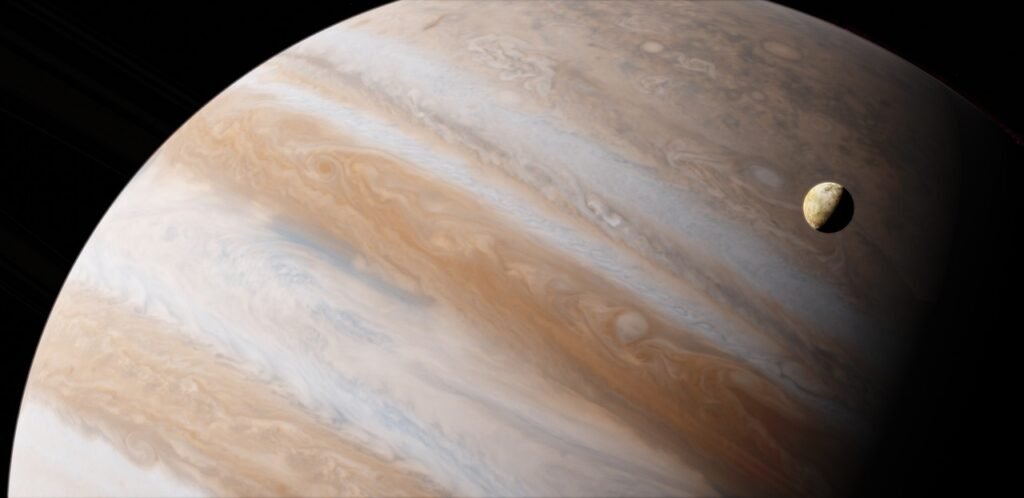

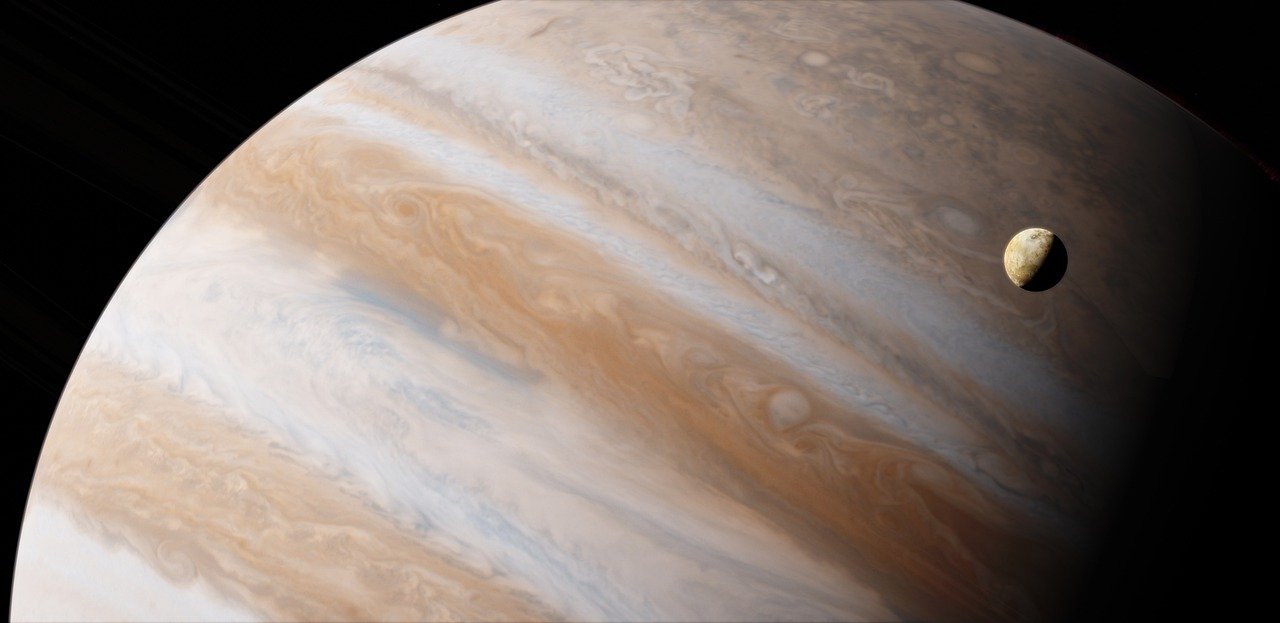
Juno Witnesses Unprecedented Eruptions (Image Credits: Pixabay)
NASA’s Juno spacecraft unveiled a breathtaking display of nature’s power on Jupiter’s moon Io late last year, capturing five volcanoes erupting in unison.
Juno Witnesses Unprecedented Eruptions
During a flyby in December 2024, the probe detected an enormous lava flow near Io’s south pole.[1][2] Planetary scientists initially focused on one massive outburst, but closer examination revealed four additional hotspots igniting at the same time.
The lava flow spanned roughly 65,000 square kilometers, releasing more energy than any prior eruption recorded on the moon.[2] This event marked the largest volcanic display Juno had observed on Io to date.
The Puzzle of Synchronized Fireworks
Io, slightly larger than Earth’s moon, hosts over 400 active volcanoes, driven by intense tidal heating from Jupiter and its neighboring moons.[2] Yet the simultaneity of these five eruptions stood out, suggesting deep connections beneath the surface.
Jani Radebaugh, a planetary scientist at Brigham Young University, described the scene vividly: “There was this one gigantic eruption and lava flow, and that’s what first caught our eye. But on second look, all these other hotspots lit up as well. There’s so much magma that we can’t quite wrap our minds around it.”[1][2]
- The primary lava flow dominated initial images from Juno.
- Four companion hotspots activated concurrently.
- Total energy output surpassed previous Io records.
- Surface changes included vast new lava deposits.
- Observations came from infrared data during the polar flyby.
Unraveling Io’s Spongy Secrets
Researchers now propose that Io lacks a global magma ocean, as once hypothesized. Instead, a porous network of magma-filled chambers – dubbed a “magma sponge” – likely permeates large regions under the crust.[2] This structure allows molten rock to migrate and erupt through multiple vents simultaneously, fueling Io’s relentless volcanism.
Radebaugh painted a dramatic picture: “Picture standing at the edge of one of these features, and the valley that has been cold suddenly fills up with an entire lake of lava. As it fills up, you turn and look over your shoulder, and another massive crack opens up in the ground and fills with lava at exactly the same time. It would be terrifying, and so beautiful.”[2] The findings appeared in the Journal of Geophysical Research: Planets.[2]
Insights into Cosmic and Earthly Volcanism
Io’s activity offers a glimpse into early Earth’s hotter, more explosive geological era. Radebaugh noted, “This is actually like early Earth when it was much hotter and more active, so Io can tell us a lot about our past.”[2] Understanding these processes could refine models for volcanic worlds beyond our solar system.
Key Takeaways:
- Five synchronized eruptions signal interconnected magma reservoirs.
- No global ocean, but a spongy subsurface magma network.
- Juno’s data challenges prior theories on Io’s interior.
These revelations from Io underscore the dynamic forces shaping distant moons, prompting questions about hidden lava factories across the cosmos. What secrets might future missions uncover next?