

Quantum physics sounds like something that belongs in giant underground labs and dense textbooks, not in your pocket, on your desk, or in your living room. But the strange rules that govern atoms and subatomic particles quietly power a huge part of modern life. You bump into quantum technology so often that, if it suddenly vanished, your day would fall apart in minutes.
Once you start spotting it, you can’t unsee it: from the glow of your TV to the way your phone finds its way across town, quantum effects are working behind the scenes. Let’s pull back the curtain and look at seven completely ordinary objects that only work because the universe, deep down, plays by very weird rules.
1. Smartphones: Quantum Devices Hiding in Plain Sight

Take your phone out of your pocket and you’re holding a dense bundle of quantum technology. The tiny chips inside are made from semiconductors, materials whose behavior depends directly on quantum rules about how electrons can occupy specific energy levels. Those rules are what make it possible to turn electrical current on and off in a controlled way, which is exactly what billions of microscopic transistors inside your processor are doing every second.
On top of that, your phone’s camera sensor relies on the photoelectric effect: when individual photons hit the sensor, they knock electrons loose in a controlled way, creating a measurable signal. That effect is fundamentally quantum, because it depends on light behaving like packets of energy, not a smooth wave. Every time you snap a selfie or scan a QR code, you’re literally counting photons one by one, even though it feels as casual as opening a messaging app.
2. GPS Navigation: Time Dilation in Your Car
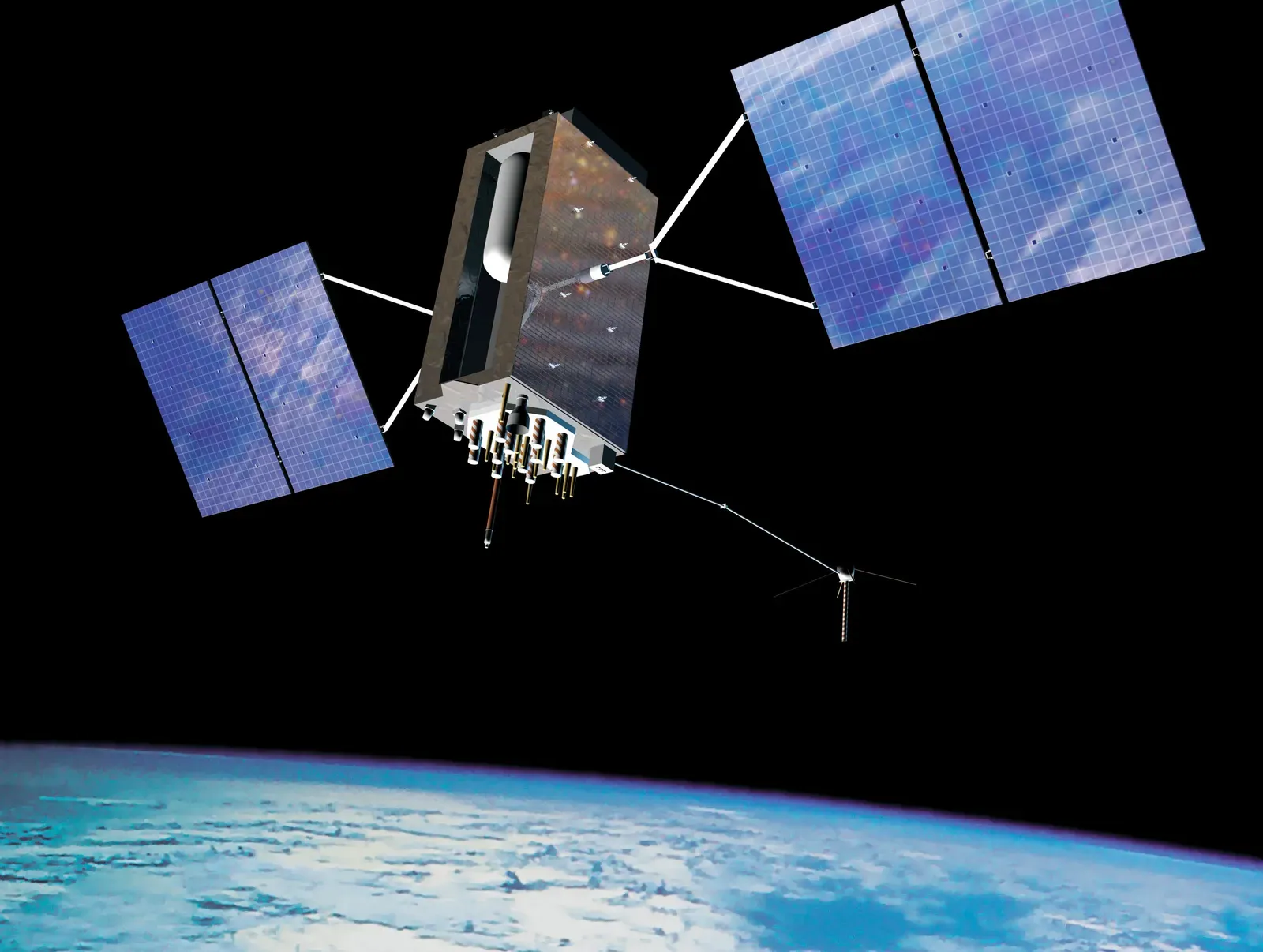
When you follow directions on your phone or in your car, you’re trusting a network of satellites that orbit the Earth and constantly broadcast their position and time. Those precise time signals depend on atomic clocks, which in turn rely on quantum transitions in atoms. Inside those clocks, electrons jump between extremely specific energy levels, ticking off time with a regularity that ordinary mechanical clocks can’t even come close to.
Here’s the twist: without quantum-level precision, GPS would drift so badly that your location could be off by many meters, even in a few minutes. And because the satellites are moving fast and high above the Earth, tiny relativistic corrections also have to be applied to those quantum-based clocks. So when you casually ask your phone to find a coffee shop, you’re leaning on a fusion of quantum physics and relativity just to avoid missing a turn.
3. LED Lights: Colors Written by Quantum Rules

The soft, cool glow of LED bulbs in your home looks completely ordinary, but the way they produce light is a classic quantum story. LEDs use semiconductor materials where electrons can only occupy certain energy bands. When an electron drops from a higher energy band to a lower one, it releases the difference as a photon of light with a specific color, determined by that exact energy gap.
By carefully engineering these band gaps, manufacturers can create LEDs that emit red, blue, or white light with remarkable efficiency. This is why LEDs waste much less energy as heat compared to old incandescent bulbs, which relied more on heating a filament until it glowed. So every time you flip on an LED lamp, what you’re really doing is triggering a carefully tuned quantum cascade, one electron drop at a time.
4. Laser Printers and Barcode Scanners: Coherent Light at Work
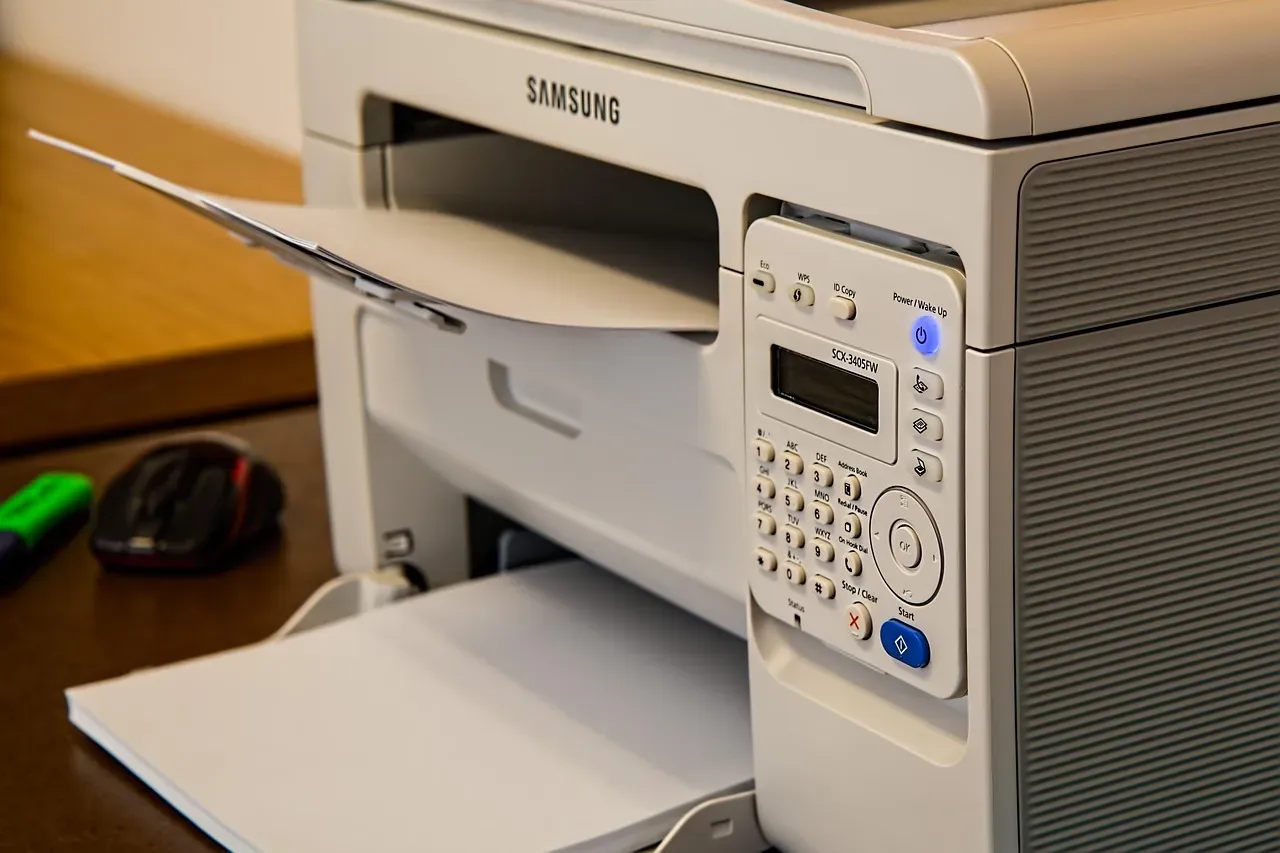
Lasers feel almost mundane today, yet they are pure quantum technology in action. The beam from a laser printer, barcode scanner, or optical drive is produced by a process called stimulated emission, where one photon prompts an excited atom or molecule to emit another photon with exactly the same energy and direction. That only happens because quantum systems have discrete energy states that can be controlled and populated in large numbers.
The result is coherent light: a tight, focused beam where the photons march in lockstep. That precise beam is what lets a laser printer lay down sharp text, or a supermarket scanner read a barcode in a fraction of a second. Under the plastic shell of a checkout scanner or office printer, there’s a tiny, carefully engineered quantum cascade that turns random atomic behavior into a laser you can trust to draw a perfect line.
5. Computer Chips: Quantum Tunnels You Never See
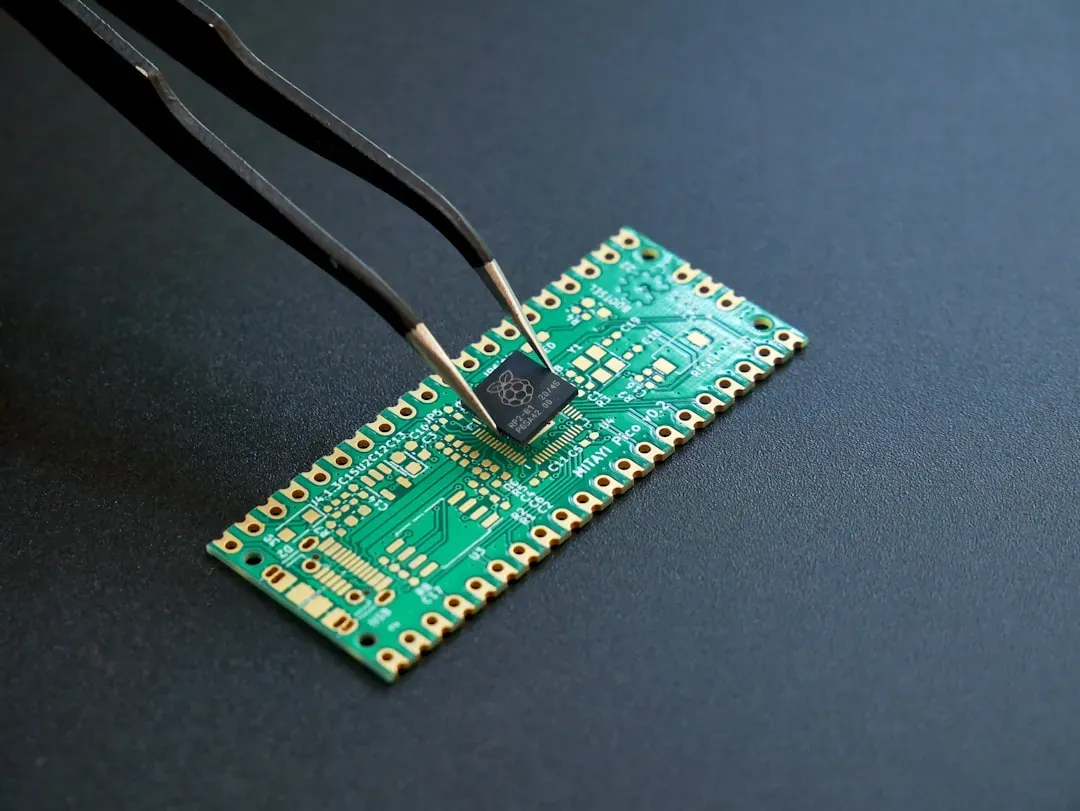
Digital electronics depend on controlling the flow of electrons in circuits that are now only a handful of atoms across in some places. At these scales, classical physics starts to struggle, and quantum effects like tunneling become impossible to ignore. Quantum tunneling is the bizarre phenomenon where particles slip through barriers they don’t have enough energy to cross, simply because their wave-like nature gives them a small chance of appearing on the other side.
Chip designers have to account for this when shrinking transistors, because leak currents and unexpected behavior can show up if tunneling becomes too likely. At the same time, semiconductor operation itself is modeled using quantum mechanics to predict how electrons move in different materials and structures. So even though your laptop just feels “slow” or “fast,” under that experience is a battlefield where quantum effects are both a problem to tame and a tool to exploit.
6. MRI Machines: Quantum Spins Inside Your Body
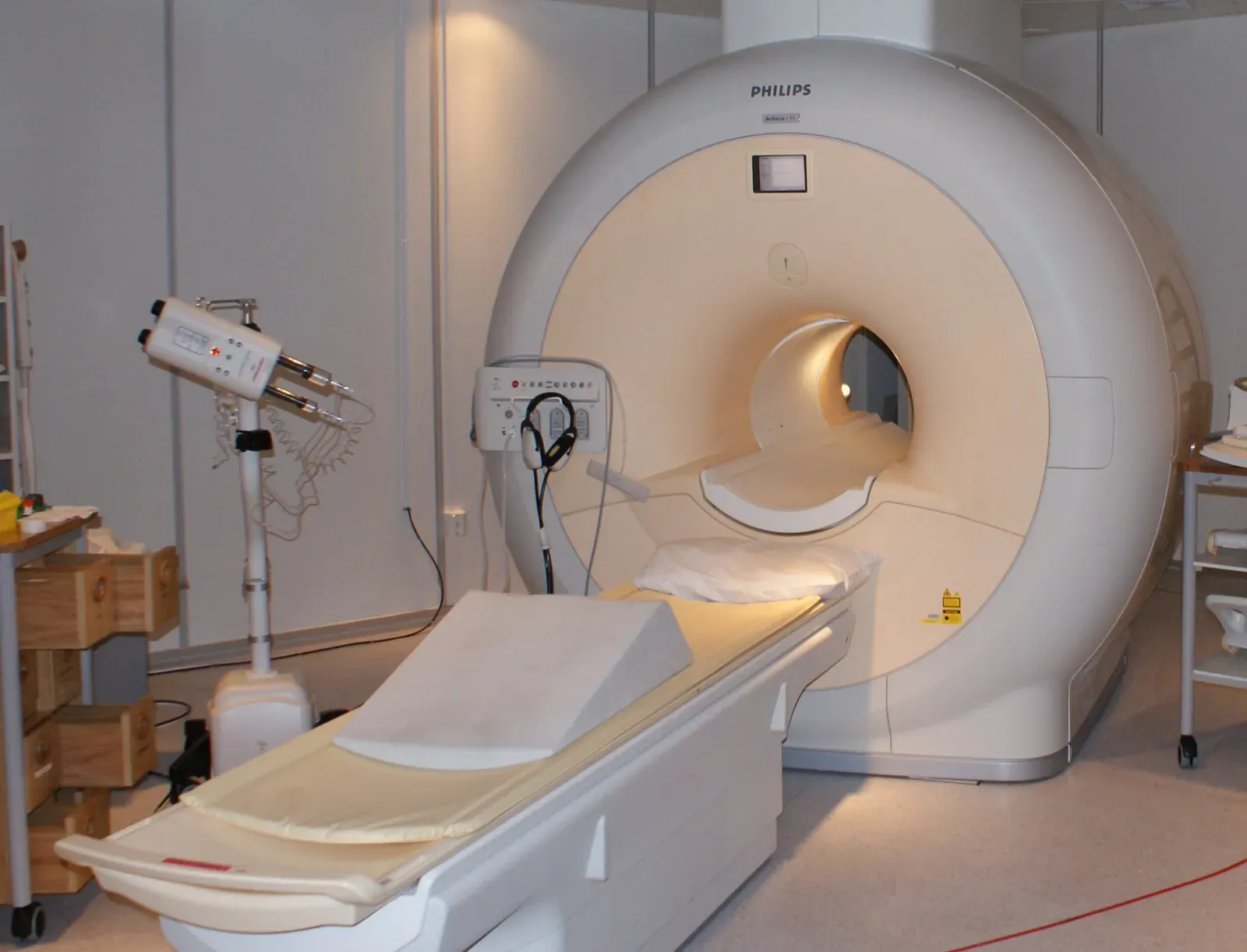
If you’ve ever had an MRI scan, you’ve been inside one of the most direct, large-scale uses of quantum physics in medicine. MRI machines work by aligning the spins of hydrogen nuclei in your body using a powerful magnetic field. Quantum spin isn’t like a tiny ball literally spinning; it’s a purely quantum property that can only take on certain values and orientations relative to a magnetic field.
When the MRI machine applies radiofrequency pulses, it nudges these spins away from alignment, and as they relax back, they emit signals that can be measured. Subtle differences in local environments change how those spins behave, and that information is turned into detailed images of soft tissue. The fact that doctors can look inside your brain or joints without cutting you open relies directly on the strange, all-or-nothing nature of quantum spin states.
7. Solar Panels: Capturing Light One Photon at a Time

Solar panels on roofs or in fields might look like simple dark rectangles, but they’re quietly performing quantum alchemy all day long. When sunlight hits a solar cell, photons with enough energy can knock electrons out of their bound states in a semiconductor, creating electron–hole pairs. That’s the same photoelectric effect that underlies digital cameras, and it only makes sense if light is made of individual packets of energy.
By adding electric fields and layering materials, solar cells steer those freed electrons in a preferred direction, creating a usable current. The efficiency of a panel depends heavily on how well its materials line up with the quantum energy levels of incoming photons. So whenever a house runs on solar power, it’s essentially being fueled by a quantum bookkeeping process that carefully tracks how many photons have paid the energy toll.
Quantum Weirdness Is the New Normal
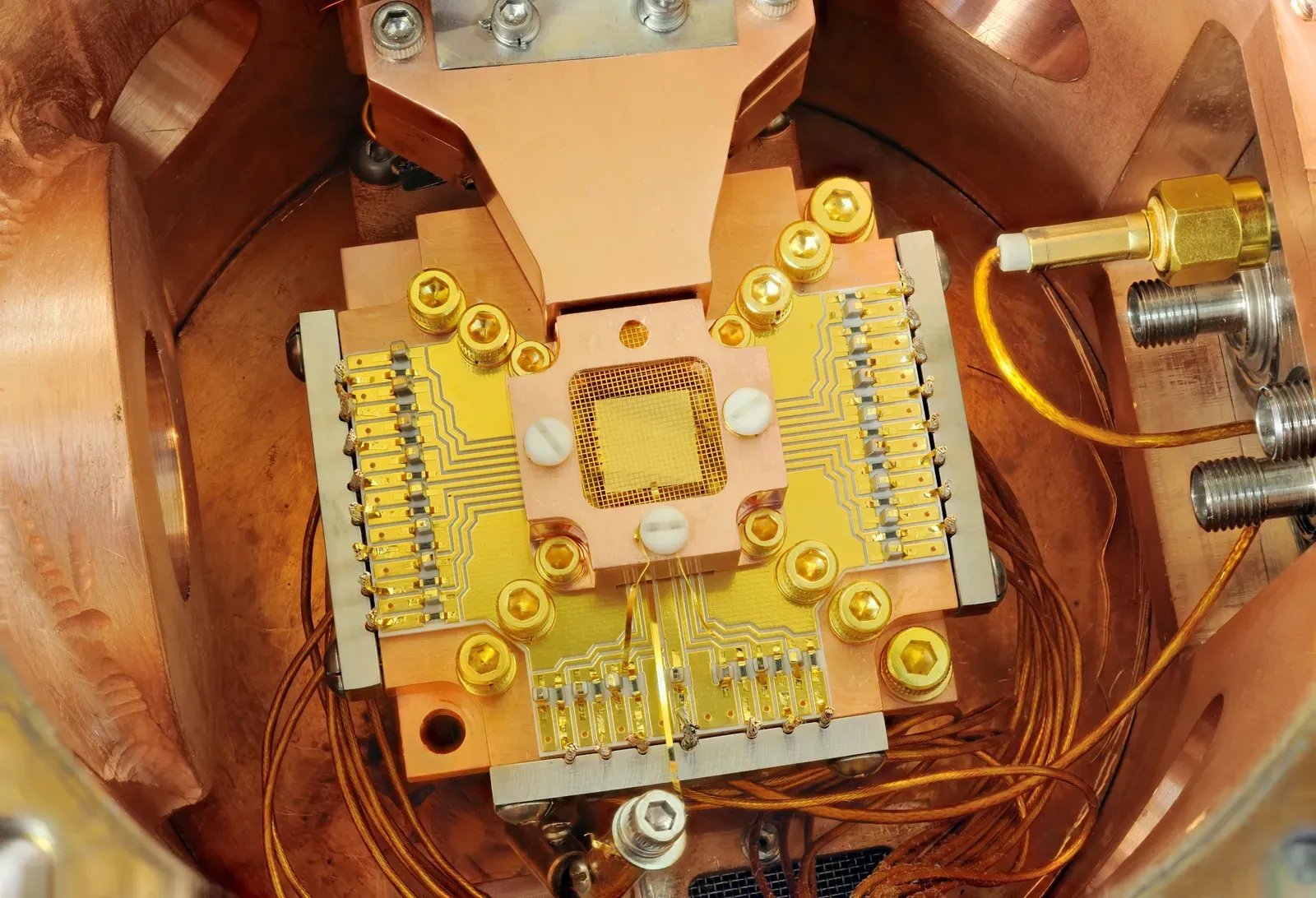
Quantum physics can feel distant and abstract, but it’s quietly wired into the backbone of daily life, from the light above your head to the phone in your hand. The objects that feel most familiar are often the ones that lean hardest on effects like discrete energy levels, spin, tunneling, and the particle nature of light. Once you notice that, it’s hard not to feel a bit of awe when you press a button or open an app.
As engineers keep pushing technology into smaller scales and higher precision, quantum rules will matter even more, not less. Tomorrow’s “ordinary” gadgets may include things like quantum sensors in cars or secure communication chips in laptops. The next time your GPS quietly guides you home or your LED lamp flicks on without fuss, it’s worth pausing for a second and remembering: under all that everyday convenience, the universe is behaving in a way that still surprises even the experts.