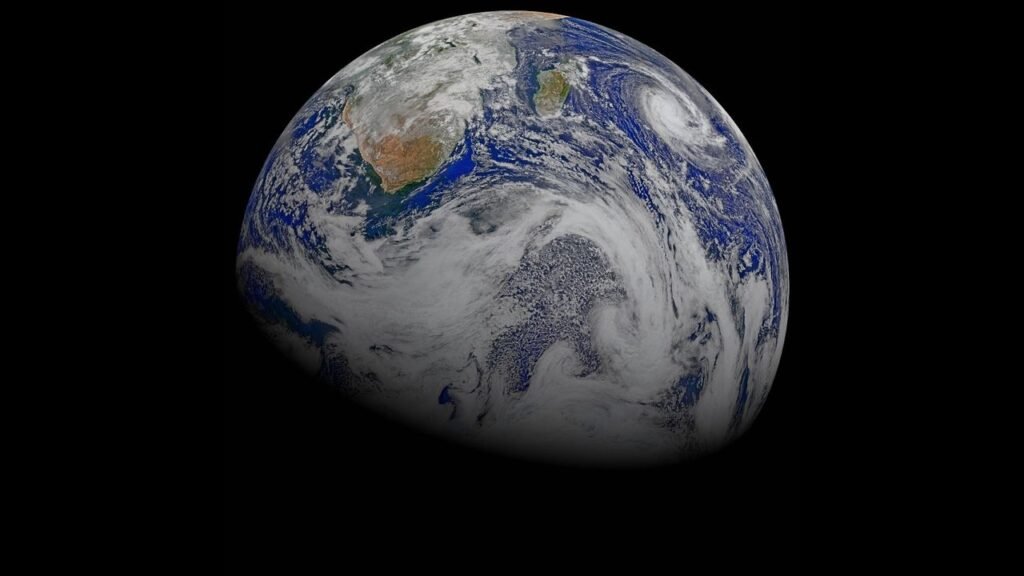
New Insights Challenge Old Assumptions (Image Credits: Cdn.mos.cms.futurecdn.net)
Earth’s climate has alternated between frigid icehouse eras and balmy greenhouse conditions over vast stretches of geological time, with atmospheric carbon dioxide levels at the heart of these swings.
New Insights Challenge Old Assumptions
Researchers recently unveiled a study that reframes the role of tectonic plates in regulating global climate. Previously, scientists emphasized volcanic arcs at converging plate boundaries as prime sources of atmospheric carbon dioxide. The new analysis, however, highlights diverging zones like mid-ocean ridges and continental rifts as equally vital contributors throughout much of Earth’s history.[1]
These findings emerged from computer models tracking carbon movement across 540 million years. The work pinpointed how oceans capture vast amounts of carbon dioxide, locking it into seafloor sediments that tectonic forces then reposition. Subduction zones eventually recycle this carbon, either trapping it deep within the planet or releasing it back to the surface.
The Mechanics of the Deep Carbon Cycle
Oceans absorb most atmospheric carbon dioxide, forming thick layers of carbon-rich rocks over millennia. Tectonic plates ferry these sediments across the seafloor until they reach subduction sites. There, intense heat and pressure determine whether the carbon returns to the mantle or erupts into the air.
Mid-ocean ridges, where plates pull apart, expose fresh mantle rock that reacts with seawater to release stored carbon. Continental rifts operate similarly on land. This process balanced emissions and sequestration to dictate whether Earth entered warming greenhouse phases or cooling icehouse periods.[1]
Mapping Climate Through Tectonic History
The study employed sophisticated models of plate migrations to simulate carbon fluxes. Results matched known climate records: excess releases fueled greenhouses, while dominant sequestration cooled the planet into icehouses. Deep-sea sediments proved pivotal, as their subduction volumes tipped the atmospheric balance.
| Time Period | Dominant Carbon Release Source |
|---|---|
| Before 120 million years ago | Mid-ocean ridges and continental rifts |
| Last 120 million years | Volcanic arcs |
This table illustrates the shift, underscoring how tectonic configurations evolved alongside biological factors.
Biological Boost Amplifies Tectonic Effects
A turning point arrived around 120 million years ago. Planktic calcifiers – tiny phytoplankton that convert dissolved carbon into calcite shells – proliferated after evolving 200 million years earlier. Their remains formed abundant seafloor carbonates, amplifying carbon returns via volcanic arcs.
- Oceans sequestered more carbon through these organisms.
- Subducted sediments grew richer, boosting arc emissions.
- Earlier eras relied more on direct ridge and rift degassing.
- Tectonics set the stage; biology intensified the cycle.
- Models confirmed these dynamics over Phanerozoic eons.
Implications for Modern Climate Understanding
The research underscores that climate stems from an interplay of surface emissions and oceanic trapping, not isolated atmospheric changes. Tectonic speeds and positions continue to influence this equilibrium today.
- Diverging plates drove carbon cycles more than converging ones for most of the past 540 million years.
- Deep-sea sediments and subduction control greenhouse versus icehouse transitions.
- Planktic calcifiers shifted dominance to volcanic arcs in recent geological time.
These revelations refine climate models, offering deeper context for human-induced carbon rises amid Earth’s ancient regulatory systems. As plates grind onward, their subtle motions remind us of nature’s long-term thermostat. What role do you see tectonics playing in future climate forecasts? Share your thoughts in the comments.