
Some people leave behind monuments, laws, and libraries of letters. Others leave behind almost nothing – and yet they haunt our imagination far more. History is full of names that feel half-real, half-legend, as if they wandered in from a myth and never completely stepped into the light of fact. These are the people who make you wonder how much of the past we actually know and how much we’re just guessing at.
What makes them so compelling isn’t just what they did, but what we still can’t prove. Missing bodies, lost diaries, vanished ships, confusing records, and stories that contradict one another – together they create a kind of fog around their lives. As you’ll see, the unknown parts are often what make these seven figures unforgettable. You think you’re about to learn who they really were, and then the trail just… stops.
Jack the Ripper: The Killer London Never Identified
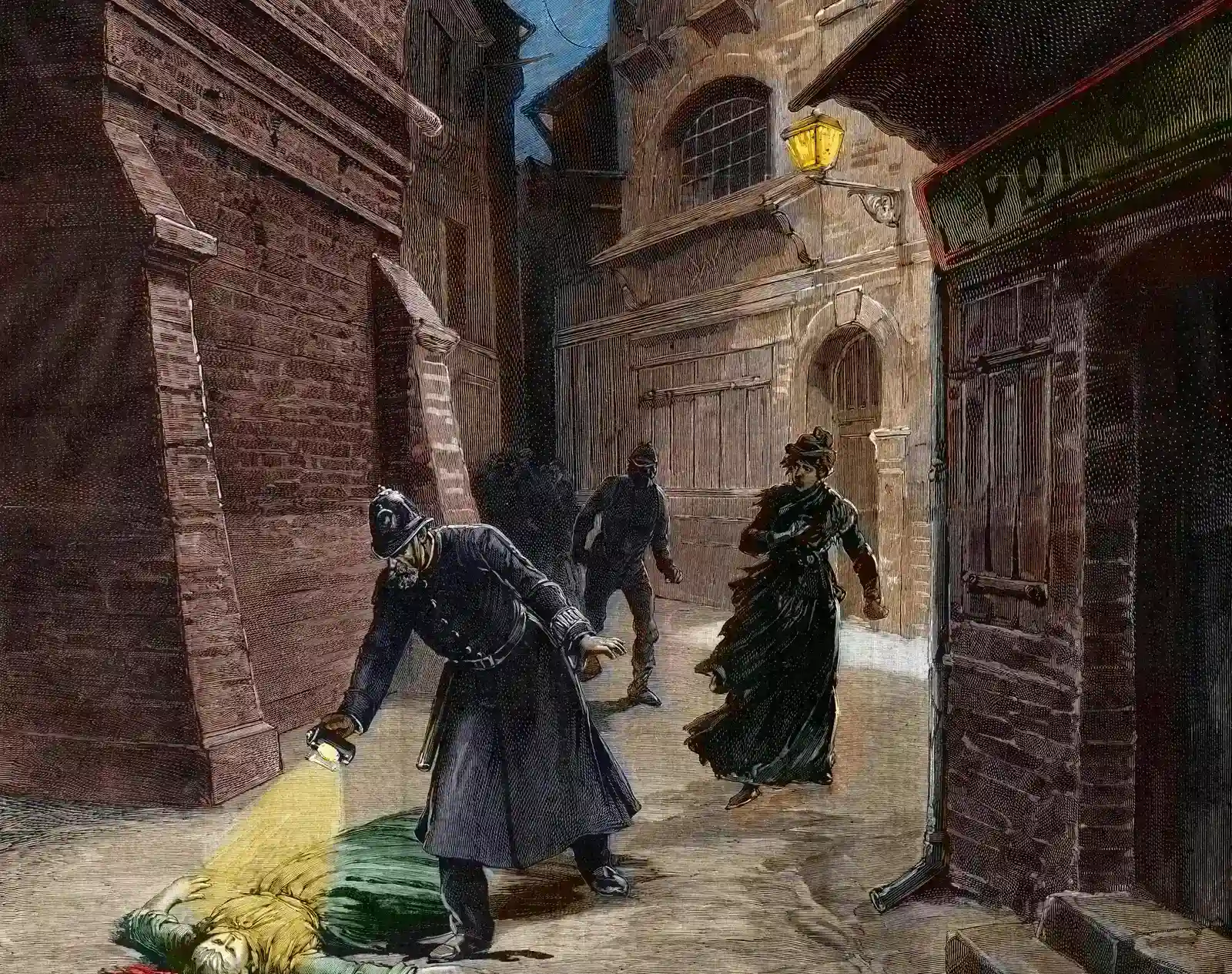
Imagine an entire city gripped by fear, newspapers screaming with lurid headlines, detectives working by lamplight, and yet more than a century later, nobody can say with certainty who the killer was. That’s the hold Jack the Ripper still has on London and on the world. In the late eighteen eighties, someone brutally murdered a series of women in the Whitechapel district, and the crimes were so shocking that they helped shape the modern idea of a serial killer.
Over the years, people have accused doctors, artists, butchers, royals, and complete nobodies – sometimes with elaborate “proof” that falls apart as soon as historians look closely. Letters allegedly from the killer may have been hoaxes, police files went missing, and crucial evidence wasn’t preserved properly. Modern DNA analysis has been tempting, but so far it hasn’t delivered a universally accepted answer. The mystery has survived sensational books, documentaries, and endless online debates, and it still leaves the same chilling question hanging in the air: how can someone so infamous remain faceless?
The Princes in the Tower: Victims, Survivors, or Political Pawns?
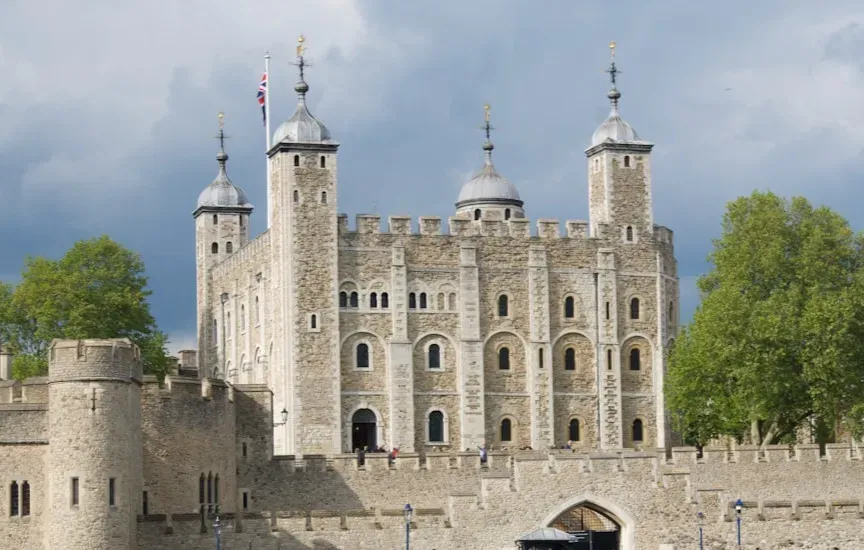
Two boys go into a royal fortress and are never seen in public again – that’s the dark fairy-tale core of the mystery of the Princes in the Tower. Edward V of England and his younger brother Richard were placed in the Tower of London in fourteen eighty three, supposedly for their own safety, after their father, King Edward IV, died. Soon after, their uncle took the throne as Richard III, and the boys quietly vanished from the record.
For centuries, many assumed Richard III had them killed to secure his crown, and later discoveries of child skeletons in the Tower only deepened the horror. Yet historians still argue fiercely over what really happened: Were the bones actually theirs? Could a later king, like Henry VII, have ordered their deaths instead? Or did one of the princes survive and reappear as a pretender? The sources from the period are biased, politically loaded, and frustratingly vague. The gap between what we think we know and what we can prove is just wide enough to keep this tragedy from ever fully closing.
Amelia Earhart: Pilot, Icon, and Vanished Trailblazer

Amelia Earhart wasn’t just a daring pilot; she was a symbol of possibility in a world that kept trying to shrink women’s horizons. In the nineteen thirties, she broke records, crossed oceans, and became one of the most famous people on the planet. In nineteen thirty seven, during an attempt to fly around the world with navigator Fred Noonan, her plane disappeared over the Pacific Ocean somewhere near Howland Island, and that’s where certainty ends.
What followed has been a dizzying storm of theories. Some believe her Lockheed Electra ran out of fuel and crashed into the sea, sinking beyond easy reach. Others suspect she landed on a remote island and died as a castaway, pointing to scattered artifacts that might be linked to her. More speculative ideas suggest she was captured by Japanese forces or returned to the United States under a new identity, but those lack solid evidence. Despite sonar searches, deep-sea expeditions, and intense research running into the twenty twentys, no universally accepted wreckage has been found, leaving her final hours as open and vast as the ocean she flew over.
The Man in the Iron Mask: A Prisoner with No Clear Name

Few mysteries feel as tailor-made for intrigue as the Man in the Iron Mask, a prisoner held in French custody in the late seventeenth and early eighteenth centuries. Records show that a highly secretive detainee, always masked, was transferred between several prisons, including the infamous Bastille. The mask was probably made of velvet rather than iron, but the image of an anonymous prisoner forever hidden behind metal caught the public imagination and never let go.
Even now, historians can’t agree on who he actually was. Some suggest a disgraced officer or a relative of a powerful official; others lean toward a valet involved in a sensitive scandal. Wild theories have claimed he was the king’s secret twin brother or an important political rival, but reliable evidence is thin. What we do know is that secrecy around him was unusually intense, even by the standards of absolute monarchy. The combination of sparse documents and centuries of speculation has turned him into a blank screen onto which every generation projects its own favorite conspiracy.
Nefertiti: The Queen Whose Face Is Famous but Fate Is Unknown
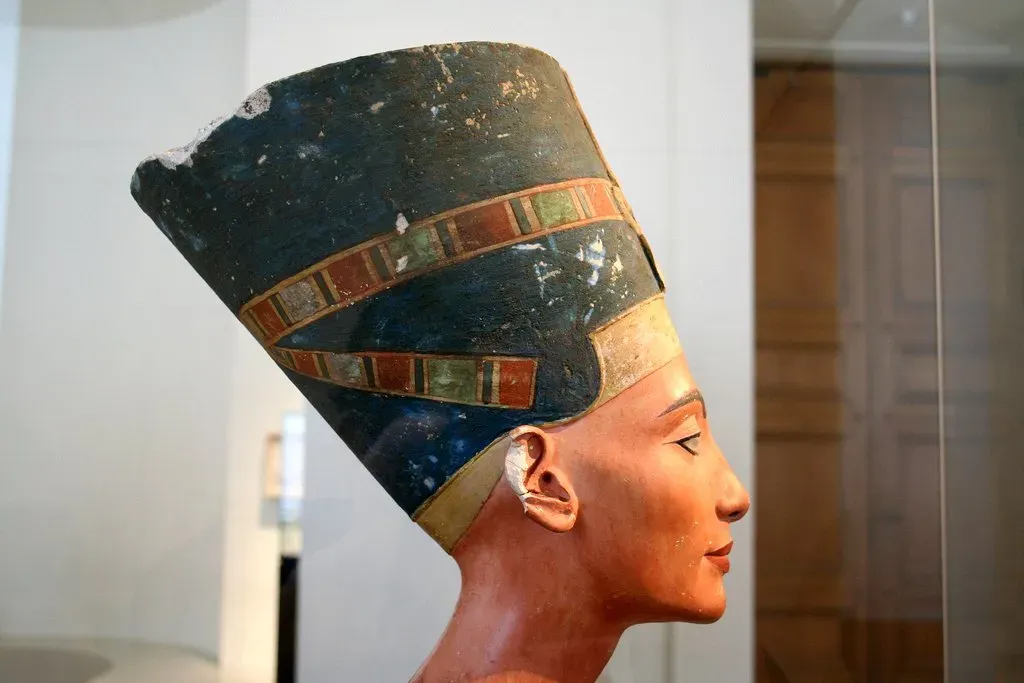
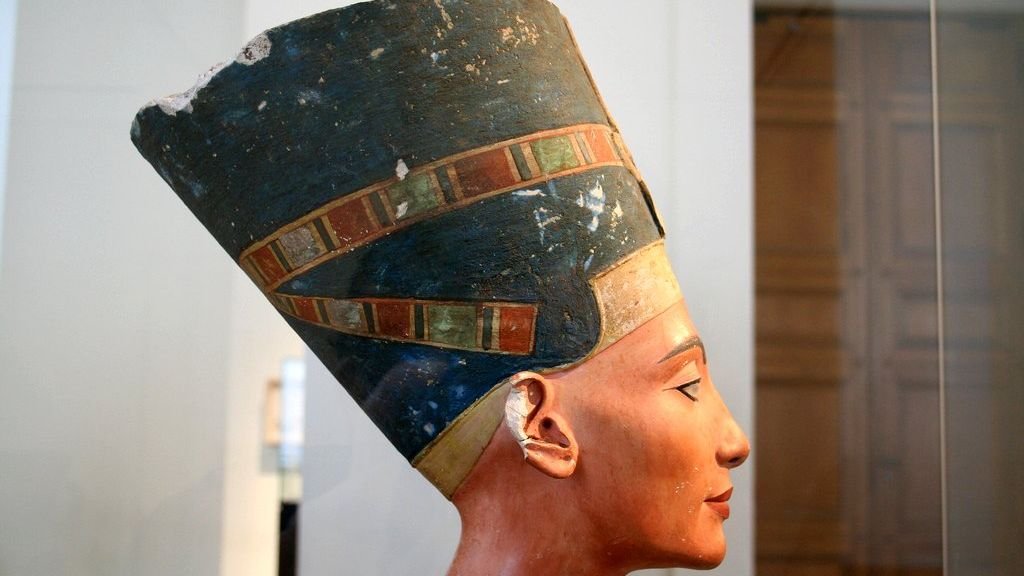
Most of us know Nefertiti’s face before we know anything about her story – the elegant bust discovered in Egypt in nineteen twelve is one of the most recognizable images in the world. She lived in the fourteenth century BCE, alongside the pharaoh Akhenaten, during a period of radical religious change when traditional Egyptian gods were set aside in favor of a focus on the sun disc Aten. For a while, she seems to have stood very close to power, appearing prominently in art and inscriptions, which was unusual for a queen.
Then, almost abruptly, she fades from the historical record. Did she die early, fall from favor, or possibly rule in her own right under another name? Archaeologists have argued over whether a particular mummy or tomb might be hers, with each new study sparking excitement and then fresh doubt. Even the question of whether she was the mother or stepmother of Tutankhamun is not completely settled. We have her face in sharp detail but her life only in fragments, like a movie where the main character walks off screen just before the final act.
Prester John: A Powerful Christian King Who Probably Never Existed
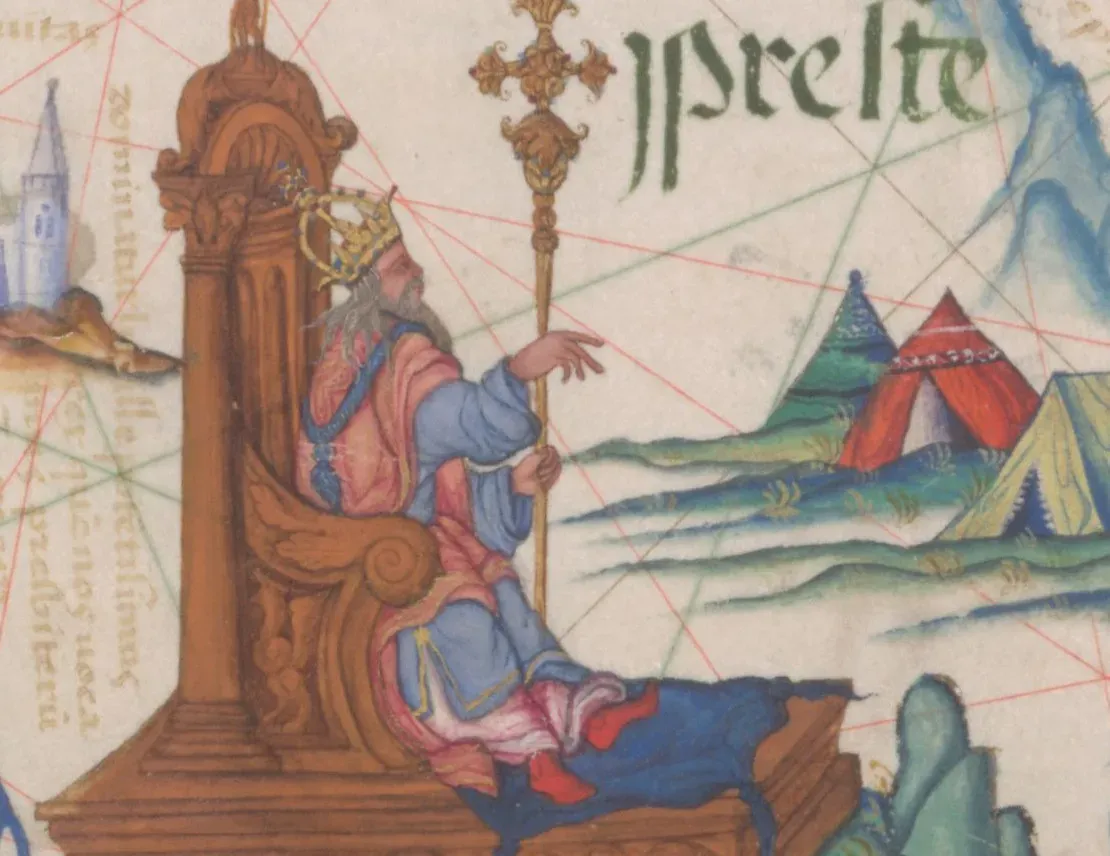
Prester John might be the strangest figure on this list, because he sits on the blurry line between historical person and pure legend. Starting in the twelfth century, European stories spread about a mighty Christian king somewhere in the East, ruling a rich and peaceful kingdom surrounded by non-Christian powers. People described his lands as full of wonders – rare animals, strange rivers, and endless treasures – which made him sound like a mix of a monarch and a fantasy character.
Letters appeared claiming to be from him, and envoys were dispatched to find his court, first in Asia and later in Africa. These missions never turned up a real Prester John, but they did influence how Europeans explored and imagined the wider world. Some historians think the legend might have grown out of vague knowledge of real Christian communities in places like Ethiopia or Central Asia, combined with wishful thinking and distorted reports. Whoever he was – or wasn’t – Prester John shows how powerful a made-up figure can be when people desperately want him to exist.
D. B. Cooper: The Skyjacker Who Jumped into Thin Air

On a rainy day in nineteen seventy one, a man using the name Dan Cooper hijacked a commercial flight in the United States, calmly demanded ransom money and parachutes, and then jumped out of the plane into the night over the Pacific Northwest. He wasn’t violent, seemed oddly polite, and vanished so completely that even the FBI, with decades of investigation, never found him. The media misreported his name as D. B. Cooper, and that was the one that stuck.
A few bundles of the ransom cash were found years later near a riverbank, badly decayed, hinting that at least some of the money ended up on the ground – but not telling us whether Cooper survived the jump. Theories range from a fatal landing in thick forest to a meticulously planned escape with accomplices, and every few years a new suspect is pushed into the spotlight and then quietly ruled out. In twenty sixteen, the FBI suspended its active investigation, effectively admitting that the trail had gone cold. Cooper’s cool, almost cinematic crime and total disappearance turned him into a modern folk figure, the kind of outlaw people argue about over late-night drinks.
Why These Shadows Refuse to Fade
What ties these figures together isn’t just that we don’t know the full story – it’s that the gaps in their stories are exactly where our curiosity latches on. Each of them sits at a crossroads of fear, hope, power, or adventure, and the missing pieces leave just enough space for us to keep asking what really happened. In a way, the uncertainty makes them feel more alive than some fully documented kings and presidents whose every movement was recorded and filed.
The more we search archives, dig into the ground, and scan the ocean floor, the clearer it becomes that some mysteries may never be completely solved, and maybe that’s part of their strange appeal. These people – and in one case, maybe a pure legend – remind us that history isn’t a neat, finished story but a messy puzzle with entire corners gone. We live in a time that worships data and facts, yet these unanswered questions stubbornly refuse to close, asking us quietly: how much of the past will we ever truly know?