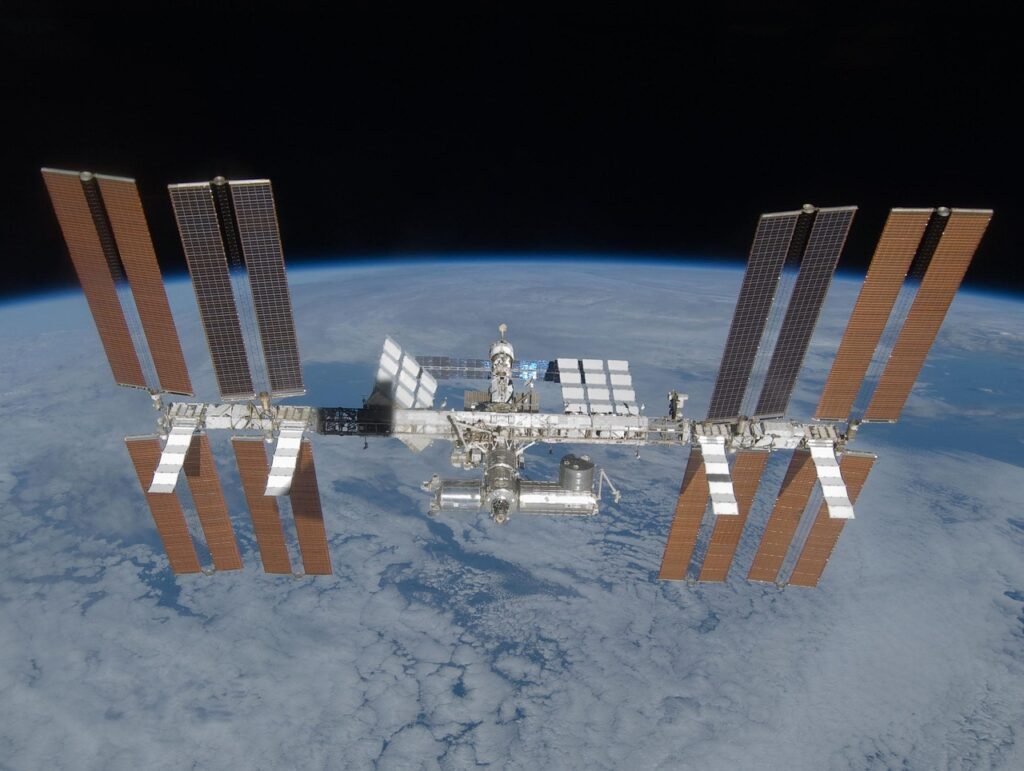
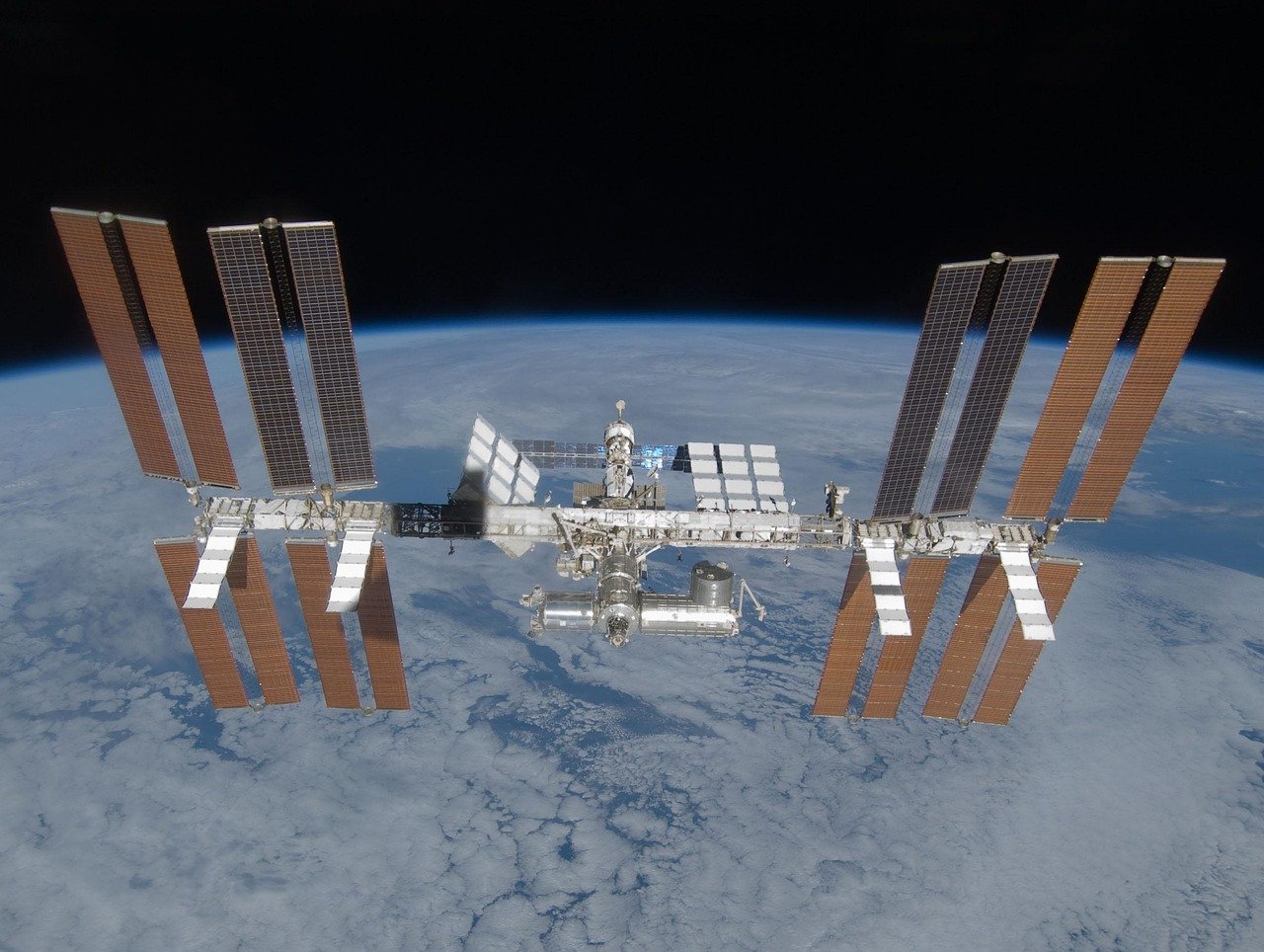
Three Decades of Unbroken Orbital Vigil (Image Credits: Pixabay)
The International Space Station will meet its planned end in 2030 through a controlled descent into a remote Pacific Ocean site, capping more than 25 years of uninterrupted human presence in orbit.[1][2]
Three Decades of Unbroken Orbital Vigil
Construction of the ISS began in 1998 with the launch of Russia’s Zarya module, followed quickly by the U.S. Unity node.[3] The first resident crew arrived in November 2000 aboard a Soyuz spacecraft, initiating continuous habitation that persists today.[1]
Astronauts and cosmonauts have circled Earth at speeds nearing 8 kilometers per second, completing 15.5 orbits daily from an altitude of about 400 kilometers.[3] This football field-sized complex, stretching 109 meters long, demanded over 159 spacewalks totaling more than 1,000 hours for assembly.[3] Maintenance continues amid challenges from aging components and orbital decay.
Forged in Post-Cold War Collaboration
The ISS emerged from a 1993 U.S.-Russia pact, merging plans for Space Station Freedom and Mir-2 into a shared venture.[3] Five principal space agencies committed resources: NASA led the U.S. Orbital Segment, Roscosmos provided propulsion and modules, ESA contributed the Columbus lab, JAXA the Kibo facility, and CSA the Canadarm2 robotic arm.[2]
More than 290 people from 26 nations have visited, embodying diplomacy 400 kilometers above Earth.[3] Crews rotated through expeditions, blending cultures and expertise despite geopolitical tensions.
| Partner Agency | Key Contributions |
|---|---|
| NASA (U.S.) | U.S. Orbital Segment, labs, truss |
| Roscosmos (Russia) | Zarya, Zvezda, propulsion |
| ESA (Europe) | Columbus module, ATV |
| JAXA (Japan) | Kibo lab, HTV |
| CSA (Canada) | Canadarm2, Dextre |
Milestones in Microgravity Research
Researchers conducted over 4,000 experiments, yielding more than 4,400 peer-reviewed papers on topics from cancer drug crystallization to DNA sequencing in space.[1] Studies advanced knowledge of bone loss, muscle atrophy, and fluid shifts in humans during long missions.
Instruments like the Alpha Magnetic Spectrometer probed cosmic rays and dark matter hints, while Earth-observing tools tracked climate patterns and weather.[3] These efforts tested technologies for lunar and Mars voyages, from remote medicine to plant growth.
- Over 25 years of nonstop human occupancy.
- Thousands of scientific payloads across disciplines.
- Preparation for deep-space human exploration.
- Global education outreach via student experiments.
Shift to Private Space Stations
NASA contracted SpaceX in 2024 to build a U.S. Deorbit Vehicle for the 2030 maneuver, ensuring safe disposal after operations cease.[2] Meanwhile, the agency awarded over $400 million to companies developing successor stations to sustain low-Earth orbit research.[1]
Recent U.S. legislative moves urge NASA to study parking the ISS in a higher orbit as an alternative, citing its value despite risks like debris generation.[4] Commercial platforms promise a vibrant economy, with NASA as one customer among many.
Key Takeaways
- The ISS deorbit in 2030 prioritizes safety with targeted ocean impact.
- Its legacy spans unmatched international teamwork and scientific breakthroughs.
- Commercial stations will carry forward microgravity research uninterrupted.
The ISS leaves an indelible mark as space’s enduring emblem of harmony amid division. As private ventures take the helm, the focus turns outward to the Moon and beyond – what role will you see for humanity’s next orbital chapter? Share your thoughts in the comments.