
One Transit Changes Everything (Image Credits: Unsplash)
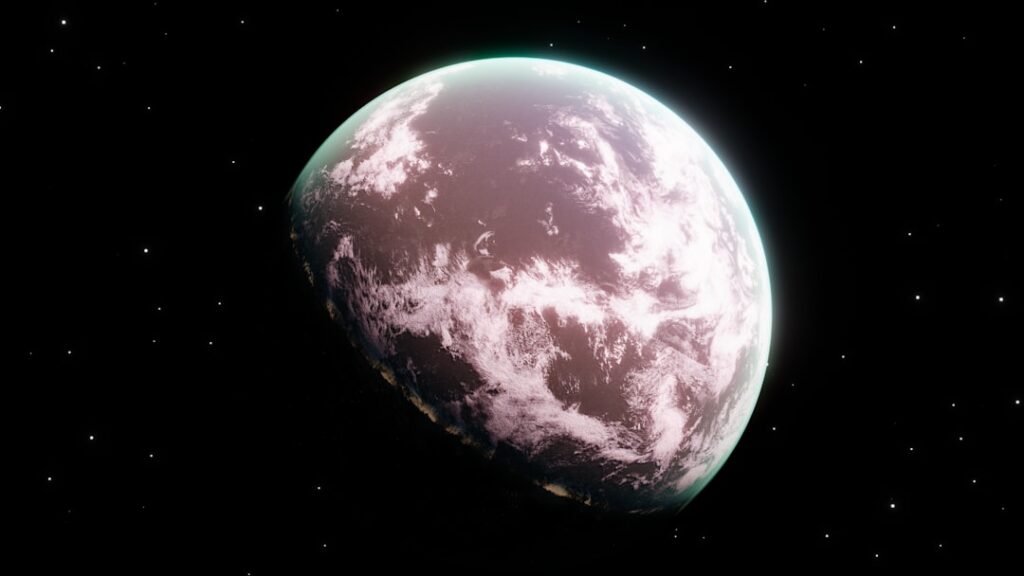
Astronomers have pinpointed HD 137010 b, a candidate exoplanet 146 light-years distant that may hold temperatures even lower than those on Mars.[1]
One Transit Changes Everything
A single observed transit in archival data from NASA’s Kepler Space Telescope sparked the discovery of this intriguing world. Researchers sifted through K2 mission observations, which ended in 2018, and combined them with high-resolution speckle imaging, radial velocity measurements from HARPS, and astrometry from Hipparcos and Gaia. This multi-faceted approach ruled out false positives, leaving a transiting planet as the leading explanation.[1]
The event marked just one pass of the planet in front of its star, yet it revealed key traits. HD 137010 b appears rocky and slightly larger than Earth, with an orbital period akin to our own planet’s year-long journey.[1]
Chilling Conditions Around a Dim Star
The host star, a 10th-magnitude K-dwarf cooler and fainter than the sun, bathes HD 137010 b in less than a third of the heat and light Earth receives. Equilibrium temperature models suggest surface conditions around -90 degrees Fahrenheit (-68 degrees Celsius), dipping below Mars’ average of -85 degrees Fahrenheit (-65 degrees Celsius).[1]
Despite the cold, the planet orbits near the outer boundary of its star’s habitable zone, where liquid water might exist under the right atmospheric conditions. A carbon dioxide-rich blanket could warm the surface, potentially making it more temperate than initial estimates indicate.[1]
| Feature | HD 137010 b | Earth | Mars |
|---|---|---|---|
| Size | Slightly larger than Earth | Earth baseline | ~Half Earth’s diameter |
| Est. Avg. Temp | -90°F (-68°C) | 59°F (15°C) | -85°F (-65°C) |
| Heat from Star | <1/3 Earth’s | Full solar | ~43% Earth’s |
Uncertain Path to Confirmation
The international team published their findings in The Astrophysical Journal Letters on January 27, 2026. They classified HD 137010 b as a candidate due to the single transit observation. Further transits could confirm its existence through upcoming missions like NASA’s TESS or ESA’s CHEOPS.[1]
Probabilities for habitability vary: a 40 percent chance lies within the conservative habitable zone, 51 percent in the optimistic zone, and 50 percent outside entirely. Atmospheric composition remains unknown, adding layers of intrigue to this distant prospect.[1]
- Transit method validated by multiple datasets.
- Rocky composition inferred from size and density models.
- Earth-like orbit around a stable K-dwarf star.
- Potential for greenhouse warming if CO2 atmosphere present.
- Requires additional observations for full validation.
Implications for Cosmic Habitability
This candidate expands the search for Earth analogs, highlighting worlds at habitable zone fringes. Even if frigid, HD 137010 b challenges assumptions about where life might endure. Future telescopes could reveal atmospheres or surface features, refining our understanding of exoplanetary climates.[1]
Key Takeaways:
- HD 137010 b orbits 146 light-years away, detected via Kepler K2 data.[1]
- Possible temperatures colder than Mars, yet habitable zone placement offers hope.
- Confirmation hinges on spotting more transits with TESS or CHEOPS.
HD 137010 b stands as a reminder that the universe teems with extremes, where cold frontiers might harbor surprises. What do you think about this icy contender – prime real estate or too frigid? Tell us in the comments.