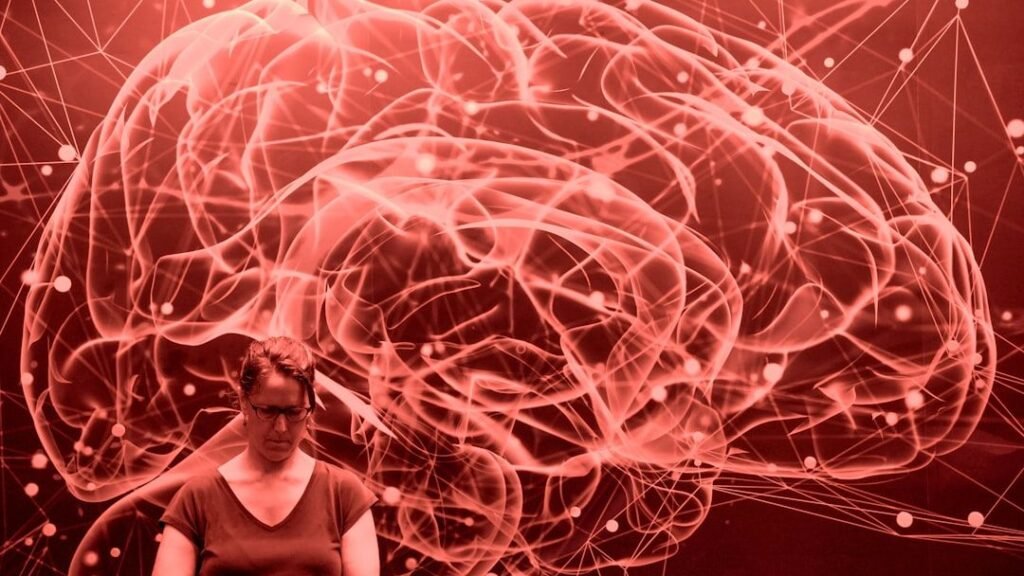

You’re reading this right now, experiencing the words as thoughts unfolding in your mind. You sense yourself as an observer, a thinker, someone who exists. Yet here’s the puzzling part: no one can fully explain where this feeling comes from or how it happens. Despite decades of neuroscience breakthroughs and brain imaging advancements, the experience of being you remains one of the most confounding puzzles in all of science.
Think about it for a moment. Scientists can tell you which neurons fire when you see the color red. They can map the pathways that carry signals from your eyes to your brain. They can even predict what you’re looking at based on your brain activity patterns. What they still cannot tell you is why any of this produces the actual sensation of redness, that rich, vivid quality you experience when you look at a stop sign or a rose.
The Hard Problem That Won’t Go Away
Philosophers call this the hard problem of consciousness, which asks why and how humans have subjective experience. It stands apart from what researchers call the easy problems, which include figuring out how your brain processes information, focuses attention, or coordinates movement. Sure, those tasks are incredibly complex. Yet they’re approachable because scientists can break them down into mechanical steps and neural pathways.
The hard problem persists because researchers still do not fully understand how physical brain tissue gives rise to thoughts, emotions, and subjective experience. You can describe every chemical reaction, every electrical pulse racing through neural networks, and still be left with that nagging question: why does it feel like something to be you? According to a survey, roughly two thirds of philosophers believe the hard problem is genuine, while nearly a third say it doesn’t exist.
When Brain Activity Meets Inner Experience
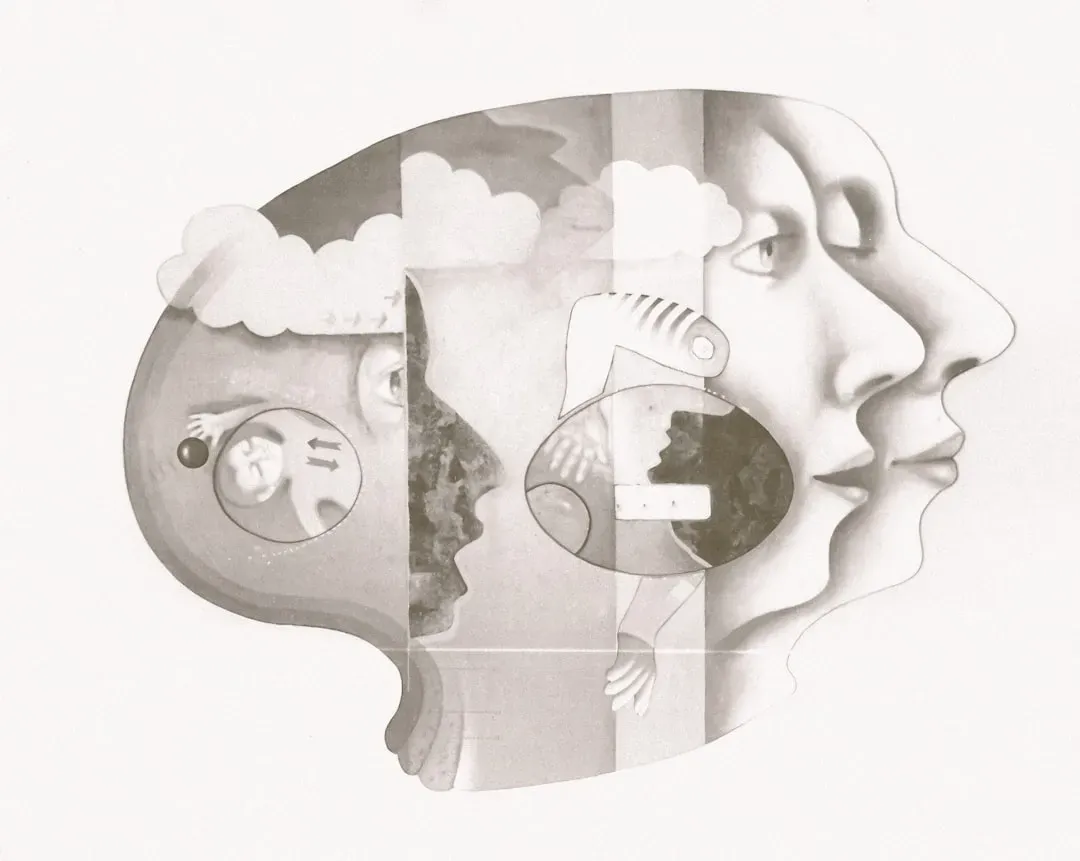
Scientists have made remarkable progress mapping what they call neural correlates of consciousness. These are specific patterns of brain activity that consistently show up alongside conscious experiences. When you’re awake and aware, certain regions light up. When you’re unconscious or deeply asleep, those patterns vanish or change dramatically.
Yet the most basic question remains unanswered: how does physical brain activity become subjective experience? Imagine trying to explain the taste of chocolate to someone who’s never tasted anything. You could describe the molecules, the way they bind to receptors on your tongue, how signals travel to your brain. Yet none of that captures what chocolate actually tastes like to you. That gap between physical description and felt experience is what makes consciousness such a stubborn .
Recent brain studies suggest consciousness is more about perception than planning, with how we see being more central than how we think. Intelligence involves doing tasks and solving problems. Consciousness, though, is about simply being and experiencing.
The Elusive Nature of Qualia
Qualia are the subjective or qualitative properties of experiences, like how seeing a red rose feels different from seeing a yellow rose. They’re the raw feels of conscious life, the stuff that makes your experiences uniquely yours. When you stub your toe, there’s a distinctive quality to that pain sensation that no brain scan can fully capture or convey.
Perhaps the most difficult biological question is how and why neuronal activity generates subjective conscious experience, as how the redness of red emerges from sensory processing is utterly mysterious. Scientists can track every step from light hitting your retina to neurons firing in your visual cortex. What they cannot explain is that final leap to the vivid sensation you experience.
Some researchers argue that qualia don’t exist as separate properties at all, that they’re illusions created by how we think about our own minds. Others insist they’re the most real things we know, more concrete than abstract theories or distant objects. Let’s be real, your own feelings and perceptions are all you directly have access to.
New Tools Probing Deeper Brain Regions
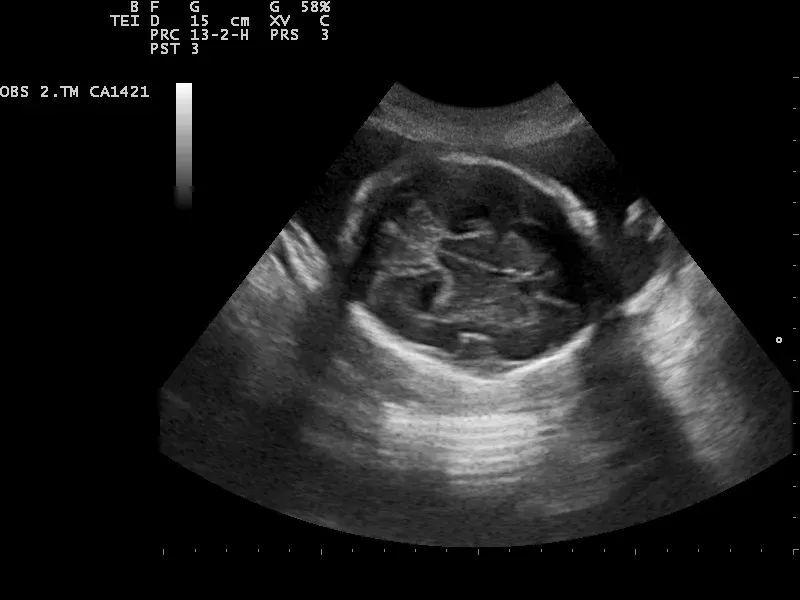
Researchers at MIT are exploring transcranial focused ultrasound, a noninvasive technology that can precisely stimulate deep regions of the brain, and in a roadmap paper they explain how this method could finally let scientists test cause-and-effect in consciousness research. This represents a genuine shift in approach. For years, neuroscientists could only observe correlations, watching which brain areas became active during conscious experiences.
The technology works by sending acoustic waves through the skull to target specific brain regions just millimeters wide. One researcher notes it’s the first time in history that one can modulate activity deep in the brain, centimeters from the scalp, examining subcortical structures with high spatial resolution. Those deep emotional circuits that influence consciousness were essentially off-limits outside of surgery.
This tool could help address the hard problem of consciousness and probe where in the brain are the neural circuits that generate sensations like pain, vision, or even human thought. Testing causal relationships rather than just observing patterns could finally move the field forward.
Competing Theories Face Off

An experiment seven years in the making has challenged two prominent theories, Integrated Information Theory and Global Neuronal Workspace Theory, with findings marking a pivotal moment in understanding consciousness origins. The massive study involved over two hundred subjects, unprecedented for this type of research. Scientists showed participants visual stimuli while measuring their brain activity through multiple methods.
Neither theory emerged as the clear winner, honestly. Researchers found that no single experiment would decisively refute either theory, as the theories differ too much in their assumptions and explanatory goals, and available experimental methods remain too coarse. Still, valuable insights emerged from the collaboration.
The findings suggest that while the prefrontal cortex is important for reasoning and planning, consciousness itself may be linked more with sensory processing and perception. The back of the brain appears crucial for holding specific visual details. This challenges assumptions about where consciousness actually resides in the brain.
Why Understanding Consciousness Matters Now
Scientists warn that rapid advances in AI and neurotechnology are outpacing our understanding of consciousness, creating serious ethical risks. We’re building increasingly sophisticated artificial intelligence systems without knowing whether they could ever become conscious. We’re developing brain organoids in labs, miniature brain-like structures, without clear guidelines for determining if they experience anything at all.
Progress in AI and neurotechnology is moving faster than scientific understanding of consciousness, and this gap could lead to serious ethical problems if not addressed. Picture a scenario where an AI system develops something resembling consciousness but nobody realizes it. Or consider patients in vegetative states who might retain hidden awareness that current tests miss.
Better measures of consciousness could transform care for patients with severe brain injuries, advanced dementia, or disorders of consciousness, helping doctors determine whether patients are experiencing anything at all. The practical stakes extend to animal welfare, end-of-life care, mental health treatment, and emerging brain-computer interface technologies.
Quantum Mysteries and Consciousness
Some researchers propose that consciousness connects to quantum physics in unexpected ways. A new theory suggests that consciousness might arise from macroscopic interactions between the zero-point field, which permeates all space, and glutamate, the brain’s most abundant neurotransmitter. These ideas remain controversial and speculative, pushing into territory where neuroscience meets fundamental physics.
One paper argues that conscious states may arise from the brain’s capacity to resonate with the quantum vacuum, and that macroscopic quantum effects are at play inside our heads. If true, this would mean consciousness emerges not just from neural firing patterns but from the brain’s resonant coupling to something far more fundamental in nature.
Critics point out that quantum effects typically wash out at the warm, wet scale of the brain. Defenders argue that specialized brain structures might protect quantum coherence long enough to matter. It’s hard to say for sure, but the debate highlights how far researchers are willing to reach for answers.
Where the Leads Us
Consciousness research is at a turning point, shifting from identifying neural correlates toward building testable theories. The field has matured enough to move beyond simply cataloging which brain regions correlate with awareness. Researchers now want explanations that can be tested, challenged, and refined through experimentation.
Future breakthroughs will likely result from adversarial collaborations, large-scale multi-laboratory studies, new research methods including computational approaches, and naturalistic experimental designs. Getting scientists with competing views to work together tests ideas more rigorously than researchers working alone to support their pet theories.
The stakes extend far beyond neuroscience or philosophy, as explaining consciousness could reframe existence just as past discoveries reshaped our view of life, time, and the cosmos. Solving this wouldn’t just close a scientific gap. It would fundamentally alter how we understand our place in reality and what it means to be human. Whether consciousness emerges purely from neural complexity, requires special quantum effects, or connects to something even stranger remains to be seen. What’s certain is that the puzzle continues to captivate researchers who sense they’re closing in on answers, even if the full picture remains frustratingly out of reach.
What strikes you as most puzzling about your own conscious experience? The fact that science still can’t fully explain it should give us all pause to reflect on how much still surrounds the very thing that makes us who we are.