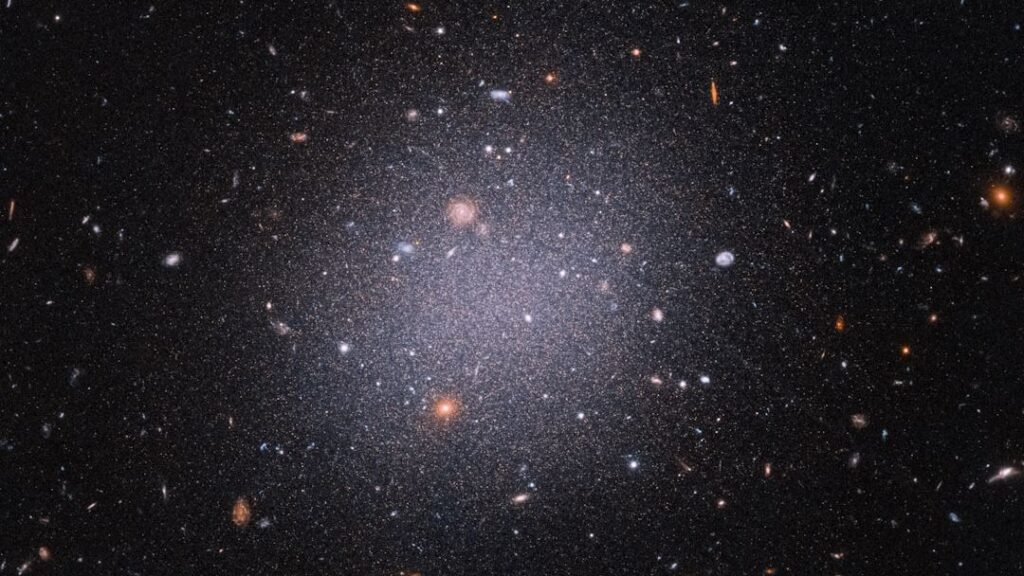

Have you ever wondered what really holds the universe together? You might be surprised to learn that everything you’ve ever seen, touched, or experienced only represents a tiny fraction of what’s actually out there. The stars, planets, and galaxies we observe through our most powerful telescopes account for less than five percent of the cosmos. The rest? An invisible, enigmatic substance that scientists have been chasing for nearly a century. It’s called dark matter, and honestly, it might be the most important thing in the universe that we can’t see.
Let’s be real here. Dark matter doesn’t glow, doesn’t absorb light, and doesn’t reflect anything back at us. Yet it’s everywhere, weaving through space like an invisible web that shapes everything we know. Without it, galaxies would fly apart, stars would never have formed, and you wouldn’t be here reading this. The universe as we understand it simply wouldn’t exist.
What Exactly Is Dark Matter?

Dark matter is the invisible glue that holds the universe together, and this mysterious material is all around us, making up most of the matter in the universe. Think about that for a moment. We live in a cosmos where the vast majority of matter is completely invisible to us.
Unlike normal matter, dark matter does not interact with the electromagnetic force, which means it does not absorb, reflect or emit light. This makes it extremely hard to spot directly. Dark matter makes up 85% of the universe’s mass yet remains invisible and undetected. Scientists can only infer its existence through its gravitational pull on ordinary matter.
Here’s the thing though. Just because we can’t see it doesn’t mean we can’t study it. While dark matter is invisible, it does have some things in common with ordinary matter: it takes up space and it holds mass, which means we can see how it interacts with and influences ordinary matter throughout the universe.
The Discovery That Changed Everything
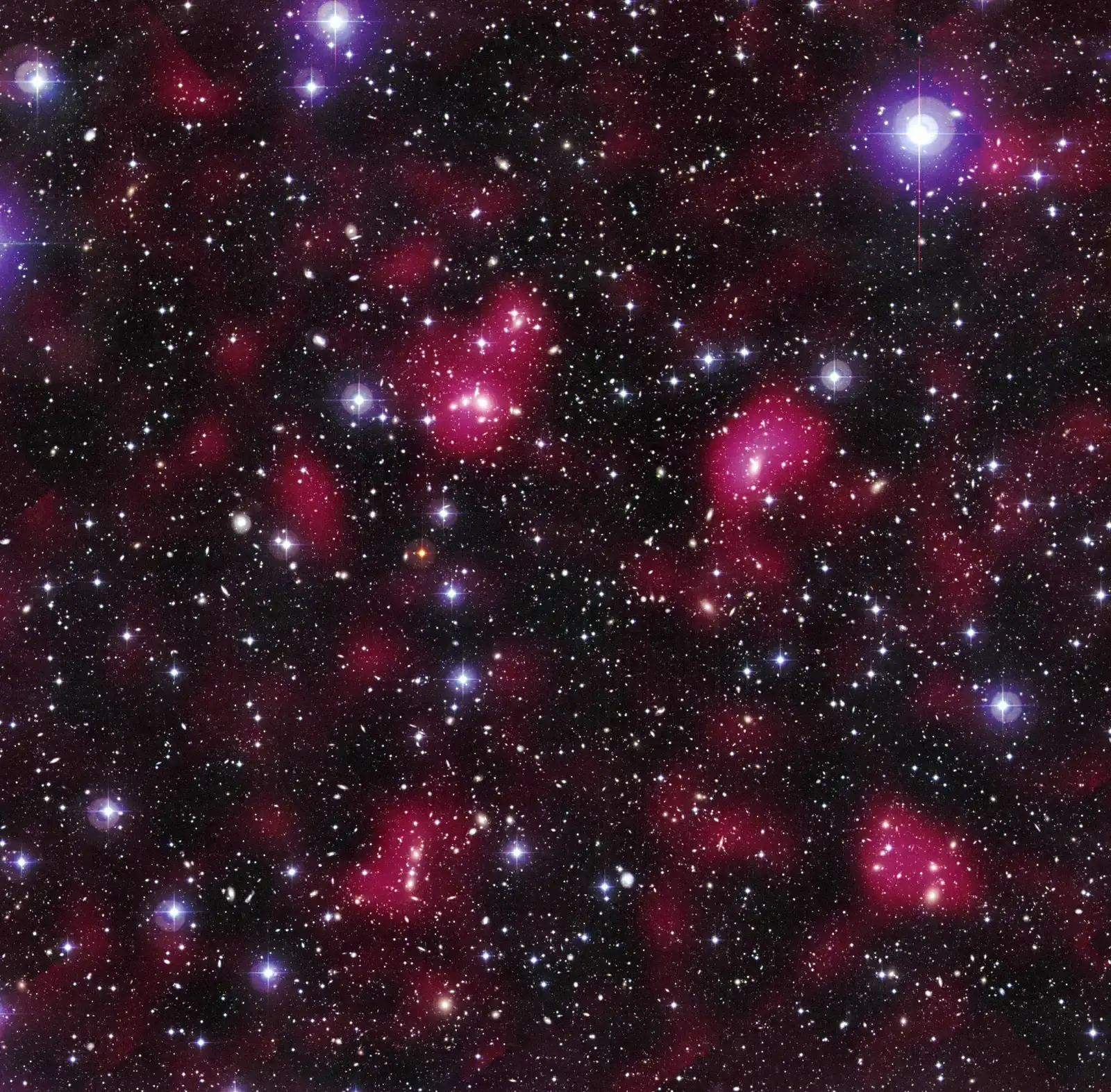
The term dark matter was coined in 1933 by Fritz Zwicky of the California Institute of Technology to describe the unseen matter needed to explain the fast-moving galaxies in the Coma Cluster. Zwicky noticed something strange. Galaxies in this cluster were moving so fast that they should have torn themselves apart long ago, unless something invisible was holding them together.
For decades, this observation remained somewhat controversial. While these early investigations sparked ideas and curiosity around dark matter, it was still seen as a fringe concept without sufficient evidence to support it, but that changed in the 1970s when American astronomer Vera Rubin observed this “missing matter” problem in spiral galaxies.
Rubin looked at the stars on the outer edges of spirals, and to explain why these stars moved as fast as they did without flying into intergalactic space, there had to be a large amount of matter holding them in place, but not seeing any of this matter, Rubin concluded that these galaxies must be held together by dark matter. Her work provided such compelling evidence that the scientific community could no longer ignore this invisible architect of the cosmos.
Dark Matter’s Role as the Universe’s Scaffolding
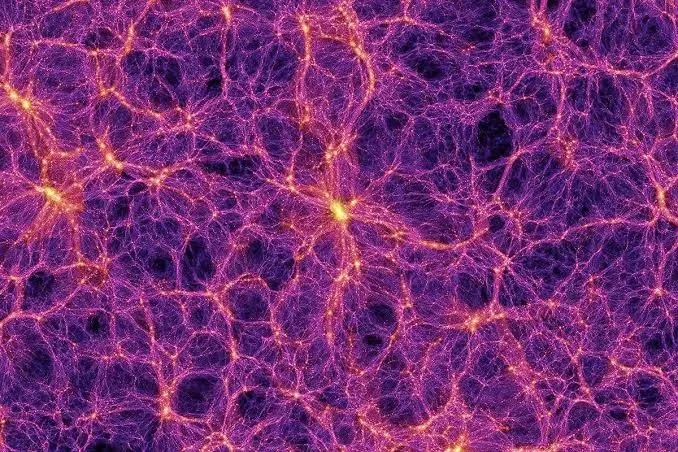
Dark matter is thought to serve as gravitational scaffolding for cosmic structures, and after the Big Bang, dark matter clumped into blobs along narrow filaments with superclusters of galaxies forming a cosmic web. Imagine the universe as a vast construction site, with dark matter providing the invisible framework upon which everything else is built.
Dark matter begins to collapse into a complex network of dark matter halos well before ordinary matter, which is impeded by pressure forces, and without dark matter, the epoch of galaxy formation would occur substantially later in the universe than is observed. This is crucial. Without dark matter setting the stage early in cosmic history, the universe would look completely different today.
Dark matter provides a solution because it is unaffected by radiation, therefore its density perturbations can grow first, and the resulting gravitational potential acts as an attractive potential well for ordinary matter collapsing later, speeding up the structure formation process. In simpler terms, dark matter created the gravitational pockets where regular matter could gather and eventually form the first stars and galaxies.
The Cosmic Composition Puzzle

The universe’s makeup is genuinely mind-boggling. Roughly 95% of the cosmos is made up of dark matter and dark energy, leaving just 5% as the familiar matter we can see around us. That means everything we’ve ever studied in detail represents only a sliver of reality.
Scientists estimate that ordinary matter makes up only about 5% of the universe, while dark matter makes up about 27%, and the rest is thought to be dark energy, which is its own mystery. Dark energy is even stranger than dark matter, driving the accelerated expansion of the universe in ways we still don’t fully understand.
It’s hard to say for sure, but roughly about one quarter of the universe consists of this invisible substance we’re trying desperately to understand. Dark matter makes up about 85 percent of the total matter in the universe, accounting for more than five times as much as all ordinary matter, and dark matter played an important role in the formation of galaxies and the evolution of the universe.
The Cutting Edge Hunt for Dark Matter
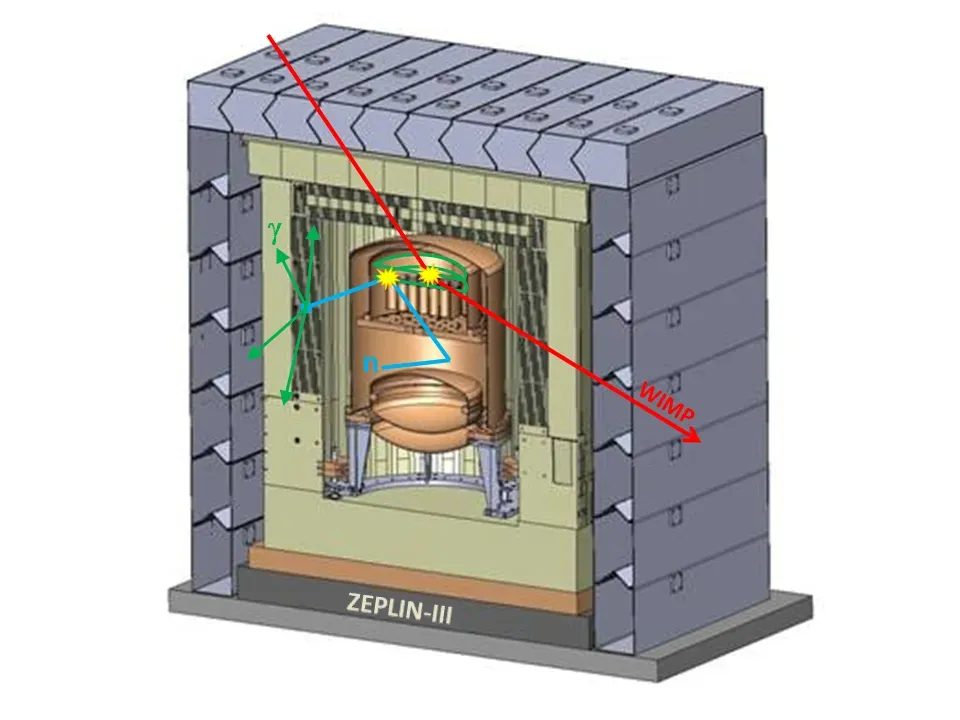
Scientists are developing detectors so sensitive they can spot particle interactions that might occur once in years or even decades, and these experiments aim to uncover what shapes galaxies and fuels cosmic expansion. The challenge is enormous because you’re essentially trying to catch ghosts.
The latest analysis, based on 417 live days of data collected between March 2023 and April 2025, found no evidence of WIMPs in the low-mass range between 3 and 9 GeV/c², and this is the first time LZ researchers have explored this lighter range, with the results setting record-setting limits above 5 GeV/c². The LUX-ZEPLIN experiment represents one of the most sophisticated attempts yet to directly detect dark matter particles.
At the heart of LZ is a 10-tonne chamber filled with ultrapure, ultracold liquid xenon, and if a dark matter particle hits a xenon nucleus, it releases energy, causing the atom to recoil and emit light and electrons, while highly sensitive sensors around the chamber capture these signals. The experiment operates nearly a mile underground to shield it from cosmic rays that could mask potential dark matter signals.
The Leading Candidates: WIMPs and Axions
Many researchers believe that dark matter is made of weakly interacting massive particles, or WIMPs, and these particles are thought to be heavier than protons and interact so weakly with normal matter that they are extremely difficult to detect. For decades, WIMPs were considered the most promising explanation for dark matter.
However, after extensive searches, no WIMPs have been definitively found. This has led scientists to increasingly focus on another candidate. Although WIMPs have been the main search candidates, axions have drawn renewed attention, and axions as a dark matter candidate have gained in popularity in recent years because of the non-detection of WIMPs.
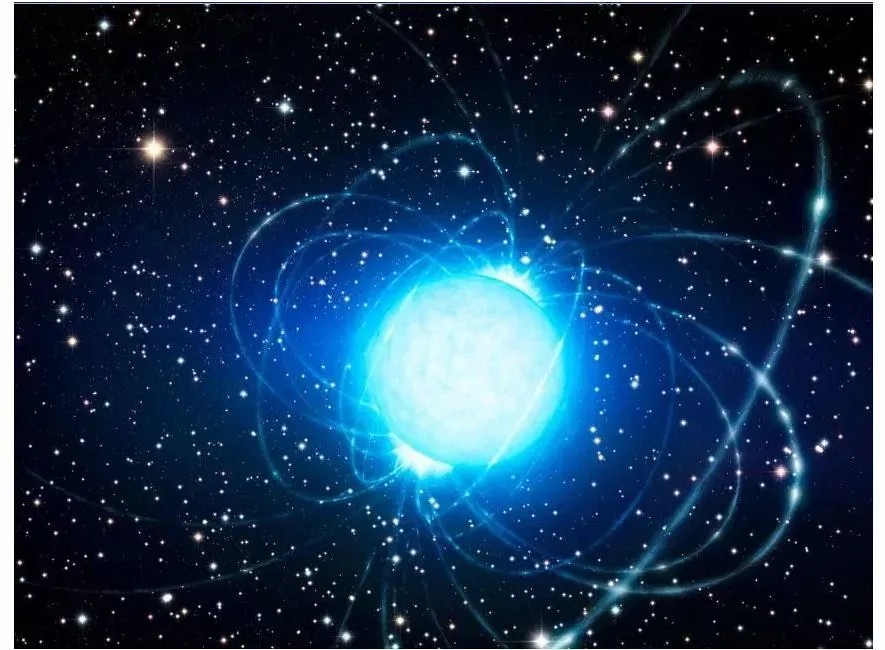
Axions are predicted to be lighter than WIMPs and to interact with matter via the electromagnetic force and gravity rather than the weak force, and experiments to directly detect axions use magnetic fields because in their presence an axion can transform into a photon. The hunt for axions requires completely different technology than WIMP searches, involving sensitive cavities and powerful magnets rather than massive liquid xenon chambers.
Recent Breakthroughs and Tantalizing Hints
Late in 2025, something intriguing happened. Astronomers detected a high-energy gamma ray signal that fits the expected footprint of dark matter particles, and the discovery could represent humanity’s first direct observational evidence of this long-hidden cosmic material. The scientific community reacted with cautious excitement.
Using new data from the Fermi Gamma-ray Space Telescope, Professor Tomonori Totani of the University of Tokyo believes he has identified the predicted gamma ray signal associated with dark matter particle annihilation. Still, other researchers will need to verify these findings before we can claim a true detection.
The analysis showed a new look at neutrinos from a particular source: the boron-8 solar neutrino produced by fusion in our sun’s core, and this data is a window into how neutrinos interact and the nuclear reactions in stars that produce them. Interestingly, this neutrino signal creates what researchers call the “neutrino fog,” a background noise that mimics potential dark matter interactions and complicates the search.
What This All Means for Our Understanding
Cracking this mystery could transform our understanding of the laws of nature. That’s not hyperbole. If we can identify what dark matter actually is, it would represent one of the most significant discoveries in the history of science, fundamentally changing how we understand matter, energy, and the forces that govern the cosmos.
Dark matter may be invisible, but scientists are getting closer to understanding whether it follows the same rules as everything we can see. Recent technological advances have pushed detector sensitivity to unprecedented levels. Researchers like Dr. Rupak Mahapatra are designing advanced semiconductor detectors equipped with cryogenic quantum sensors, and these technologies support experiments around the world and are helping researchers push deeper into one of science’s greatest mysteries.
The implications extend beyond pure science. Decades of search for dark matter have yielded great scientific and technological advances, including developments in new materials, hypersensitive sensors, cryogenics and superconductivity, and algorithms for high-performance supercomputers, quantum computers, and artificial intelligence. Sometimes the journey matters as much as the destination.
Looking Ahead: The Future of Dark Matter Research
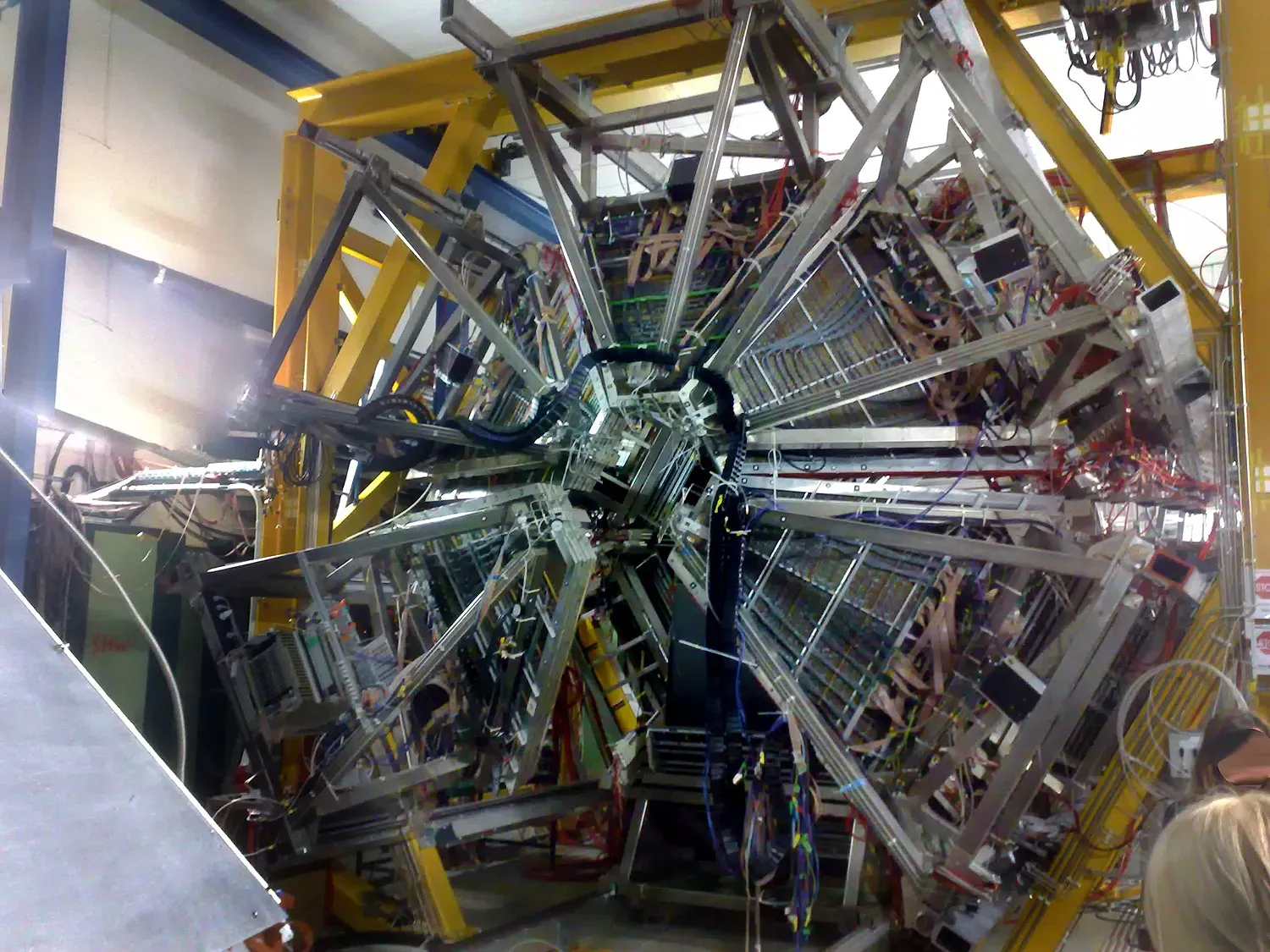
Researchers are planning XLZD, a next-generation experiment that will combine technologies from LZ and other projects to further expand the search for dark matter, and XLZD will be the flagship Rare Event Observatory for dark matter and neutrino physics. This ambitious project aims to be roughly ten times larger than current detectors, dramatically increasing sensitivity.
Quantum sensors leveraging quantum mechanical effects can enhance the detection of light dark matter, particularly particles with masses below 1 eV, and by using spatially extended quantum sensor arrays, it is possible to measure both the velocity and direction of dark matter. New approaches using quantum technology may open entirely fresh avenues for detection that previous generations couldn’t have imagined.
Scientists are exploring multiple strategies simultaneously. Some are building ever-larger underground detectors. Others are scanning the skies for gamma rays or other signals from dark matter annihilation. Still others are designing quantum sensors or magnetic cavity experiments to hunt for axions. It’s a coordinated global effort involving hundreds of researchers across dozens of institutions.
The universe has kept its greatest secret remarkably well hidden for billions of years. Yet with each passing year, our technology improves, our understanding deepens, and we inch closer to finally unmasking the invisible architect that shaped everything we see. Whether dark matter turns out to be WIMPs, axions, or something completely unexpected, discovering its true nature will mark a pivotal moment in human knowledge. What do you think we’ll find when we finally catch a glimpse of this cosmic phantom? The answer might be stranger than any of us can imagine.