
Have you ever wondered what secrets our planet still keeps from us? Despite centuries of scientific breakthroughs and cutting-edge technology, there are natural phenomena that continue to make even the brightest minds scratch their heads in bewilderment. We’re living in an era where we can map the cosmos and decode DNA, yet some of Earth’s most puzzling mysteries still refuse to reveal their secrets.
These aren’t ancient riddles gathering dust in forgotten libraries. They’re happening right now, all around us. From glowing orbs that dance through thunderstorms to mysterious sounds that only certain people can hear, our world is stranger than you might imagine. Ready to explore what science can’t explain yet? Let’s dive into seven natural mysteries that keep researchers awake at night.
The Glowing Enigma of Ball Lightning
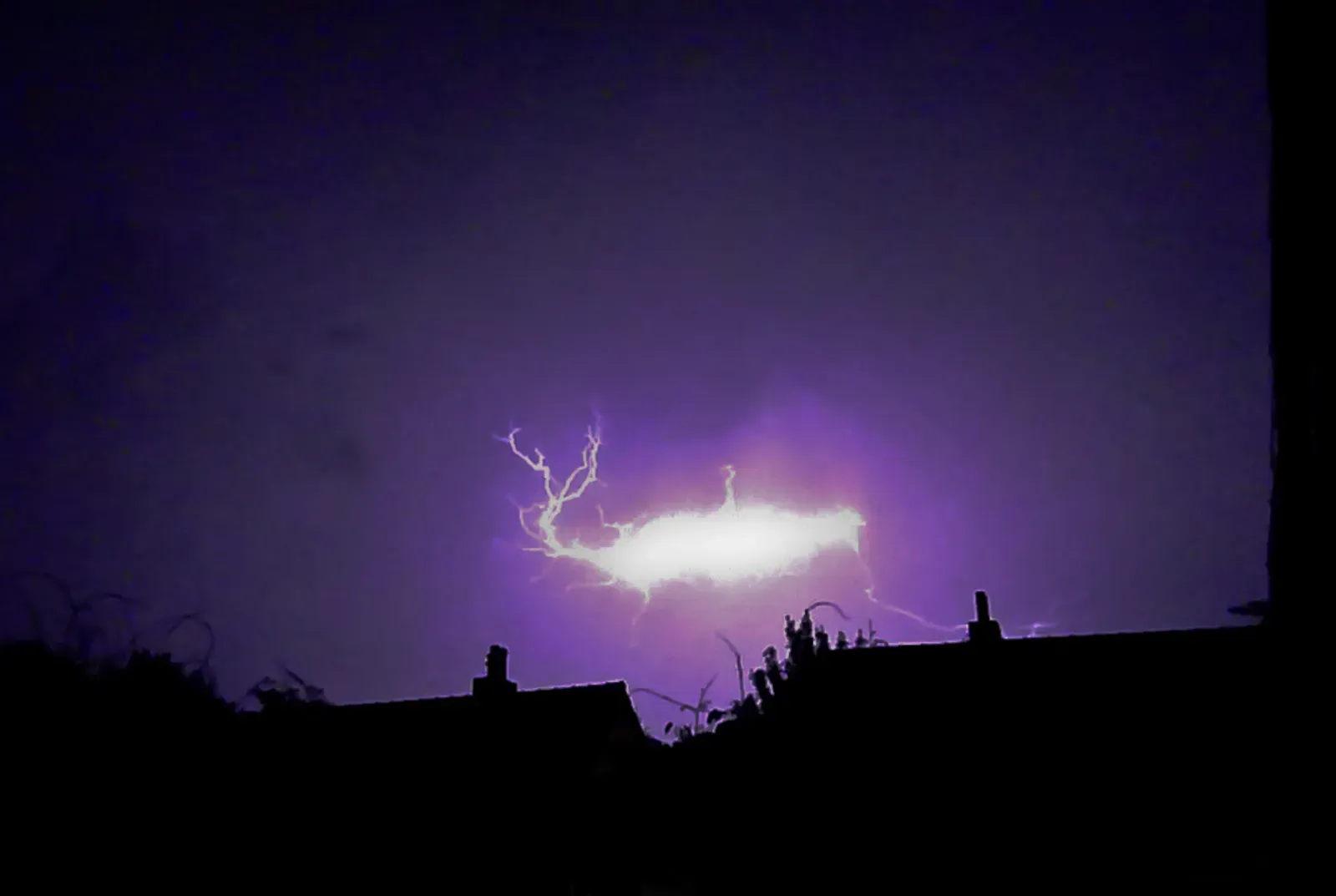
Picture a calm evening suddenly interrupted by a glowing sphere of electricity floating eerily across the sky. That’s the bizarre reality of ball lightning, one of nature’s most perplexing spectacles. This rare and unexplained phenomenon is described as luminescent spherical objects that vary from pea-sized to several meters in diameter. Witnesses throughout history have reported these glowing spheres drifting through the air, sometimes even passing through windows and walls.
What makes ball lightning so frustrating for scientists? Despite countless eyewitness accounts spanning centuries, scientific data on ball lightning remain scarce, and although laboratory experiments have produced effects that are visually similar to reports of ball lightning, how these relate to the phenomenon remains unclear. In 2014, a team of Chinese researchers using spectrometers captured a rare instance of ball lightning in the wild, and their data suggested that the sphere contained silicon, iron, and calcium. Still, this single recording barely scratches the surface of understanding why these mysterious orbs appear, how they sustain themselves, or why they vanish so abruptly.
Fairy Circles in the Desert

Imagine walking through the Namib Desert and encountering thousands of perfectly circular patches of barren ground, each surrounded by a ring of lush grass. Sounds like something out of a fantasy novel, right? Fairy circles are enigmatic, regularly spaced barren patches surrounded by grass, found primarily in Namibia and parts of Australia, and their precise origins remain debated within the scientific community.
Some researchers suggest termites create the circles, while others argue that plant competition for water is responsible, but despite extensive study, no single explanation accounts for all fairy circle patterns and locations. Honestly, it’s hard to say for sure what causes these polka-dotted landscapes. Recent research indicates the answer might involve both theories working together, but the mystery isn’t fully solved. Rising temperatures in Namibia may have fueled increased competition between plants, causing more of them to die and creating more fairy circles. These strange formations continue to challenge our understanding of desert ecosystems.
The Taos Hum That Only Some Can Hear

Here’s where things get really weird. In the small town of Taos, New Mexico, only 2% of the population can hear a strange and mysterious hum that has no known origin and was first reported in the early 1990s. Imagine living in a place where a persistent, low-frequency sound drives you to distraction, but your neighbors insist they hear nothing at all.
Following public concern, a multi-lab study monitored acoustic, seismic, and electromagnetic environments around Taos, but despite active reports during measurements, researchers found no unusual acoustic or seismic source in the affected areas. Let’s be real: that’s incredibly frustrating for the people who experience it. The study found that 161 of the 8,000 surveyed residents in Taos could hear the hum, but for some it was a whir, others a buzz, and some people got the traditional hum experience. Similar mysterious hums have been reported worldwide, from Bristol in the UK to Windsor in Canada, making this a global puzzle that affects a small but significant number of people.
Mass Whale Strandings

Scientists have proposed a range of theories for mass whale strandings, such as navigation errors due to geomagnetic disturbances or hunting endeavors gone awry, and another possibility is that creatures unintentionally beach themselves by following the distress calls of a single troubled whale, but with multiple complex factors at play, a single definitive cause remains elusive.
These heartbreaking events occur when dozens or even hundreds of whales beach themselves simultaneously, often resulting in death. It’s one of those phenomena that makes you wonder what we’re missing about how these magnificent creatures navigate their world. Some experts believe underwater sonar from naval activities might disorient the whales, while others point to illness or extreme weather. The truth is probably more complicated than any single explanation. What we do know is that these intelligent animals possess navigation systems we barely comprehend, and when something disrupts them, the consequences can be devastating.
Hessdalen Lights in Norway
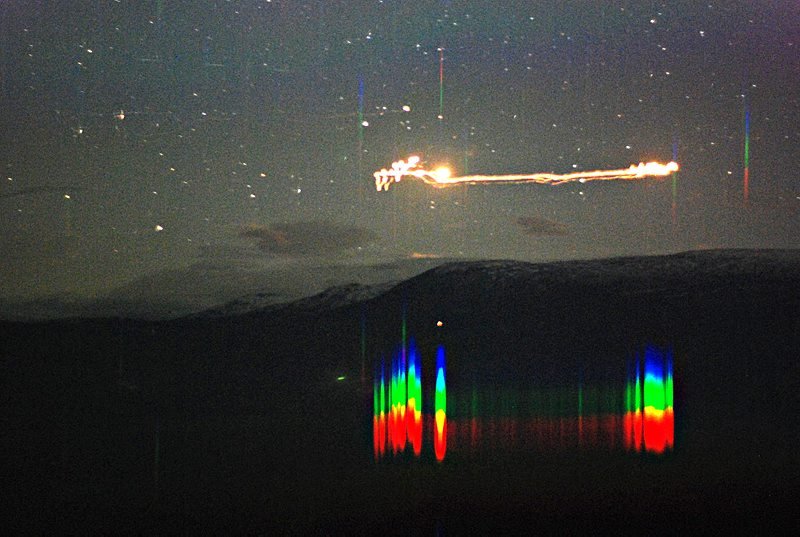
In the remote valley of Hessdalen, Norway, mysterious lights dance across the sky, captivating locals and scientists alike, manifesting as floating orbs of light changing colors and intensity, and unlike other light anomalies, the Hessdalen Lights are relatively frequent, with sightings recorded several times a year.
Despite numerous studies, including electromagnetic and spectroscopic analysis, their origin remains elusive, and some researchers speculate that the lights result from ionized gas or plasma interacting with atmospheric elements, but no definitive explanation has been established. During the 1980s, these lights appeared with such regularity that UFO enthusiasts flocked to the valley. The phenomenon has calmed somewhat since then, but the lights still appear often enough to keep the mystery alive. Think of it as nature’s light show with no explanation included in the program notes.
Earthquake Lights
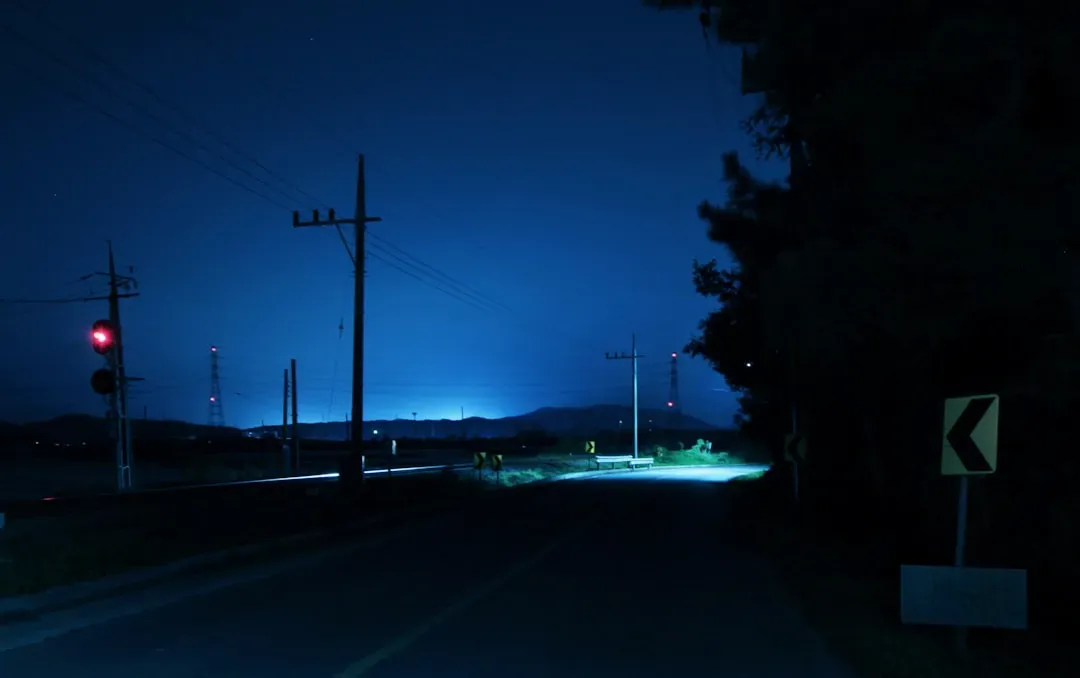
These mysterious luminescent phenomena have been reported to sometimes occur before or during an earthquake, and they typically appear as bright flashes in the sky and, in some cases, have been observed weeks ahead of the actual earthquakes. Imagine seeing strange glows in the sky and realizing days later that they were warning signs of a major seismic event.
For centuries, these lights have confounded scientists, but one possible explanation is that they are caused by earthquake-induced stress, which releases electrical charges from certain types of rocks, and these charges then travel up into the atmosphere, where they interact with the air and produce light. The phenomenon remains so rare and unpredictable that capturing it on camera feels like winning the scientific lottery. If researchers could reliably predict when and where these lights appear, they might provide an invaluable early warning system for earthquakes. For now, though, earthquake lights remain one of geology’s most photogenic mysteries.
The Mpemba Effect

Under some conditions, hot water appears to freeze faster than cold water, and modern studies keep finding that the effect is real sometimes, but maddeningly sensitive to setup. I know it sounds crazy, but this kitchen-table paradox has stumped scientists for decades. You’d think cold water would always freeze first, but nature apparently didn’t read the rulebook.
Supercooling, evaporation, convection, dissolved gases, container geometry, and freezer cycling all change the race, and some recent experiments argue the win often comes from stochastic freezing times near the nucleation point, with the upshot for 2025 being that there’s no single mechanism. Rather, a bundle of competing processes can occasionally give the hotter sample a head start. It’s a centuries-old curiosity now probed with high-speed cameras and statistical physics, still refusing a final verdict.
Our planet remains a place of wonder and mystery, reminding us that for all our scientific achievements, nature still holds cards close to its chest. These seven phenomena prove that the natural world can still surprise us, baffle us, and inspire us to keep searching for answers. From glowing orbs in thunderstorms to mysterious sounds that only some can perceive, each unsolved mystery represents a frontier of knowledge waiting to be explored. Perhaps one day we’ll understand them all, but until then, they serve as humbling reminders that Earth still has secrets worth discovering. What mysteries do you think will be solved first?