
You’ve probably never thought about it this way, but your morning routine is basically a physics demonstration. Every single thing you touch, see, or do involves principles that scientists spent centuries figuring out. The coffee mug warming your hands, the friction that keeps you from slipping on the bathroom tiles, even the annoying alarm clock that dragged you out of bed. Physics isn’t just happening in laboratories with people in white coats. It’s happening right now, all around you, in ways that might genuinely surprise you.
The world around us is a magnificent tapestry woven from the threads of physics, governing every interaction and phenomenon we encounter. Let’s be real, most of us sailed through school thinking physics was about formulas and experiments we’d never use again. Turns out, we were completely wrong. So let’s dive in and uncover the hidden science that makes your everyday life actually work.
Why Your Morning Alarm Actually Wakes You Up

The irritating sound that wakes you awake is one of the best examples of physics phenomena in everyday life. You can’t see sound, yet it has the power to jolt you from deep sleep. Alarm clocks use the principles of mechanical energy conversion, where a coiled spring stores potential energy when the clock is wound up, and when the spring unwinds, its potential energy is transformed into kinetic energy. The result? Those high-frequency sound waves that make you wish you’d gone to bed earlier.
It’s honestly fascinating when you think about it. Sound is something you can’t see, but hear or experience, and physics studies the origin, propagation, and properties of sound. The vibrations travel through the air as waves, hit your eardrums, and your brain translates them into that awful beeping noise. Next time you hit snooze, at least you’ll know exactly what’s happening on a molecular level.
The Simple Genius of Walking Without Falling

While walking on a tar road, you have a good grip without slipping because of roughness or resistance between the soles of your shoes and the surface of the road, and this resistance is called friction or traction. Ever stepped on a banana peel or a wet floor and suddenly found yourself doing an involuntary dance? That’s physics withdrawing its support. When a banana peel comes under your foot, you suddenly fall due to the reduced friction between your shoes and the surface of the road.
Without friction, you’d be sliding around like you’re on an ice rink all day long. Think about it: every step you take requires your shoe to push backward against the ground while the ground pushes forward on you. Newton would be proud. The texture of your shoe sole, the surface you’re walking on, even your body weight all play into this delicate balancing act that you probably haven’t appreciated since you were a toddler learning to walk.
How Your Refrigerator Keeps Things Cold

Refrigerators work on thermodynamic and heat transfer principles, using the process of heat transfer to remove the heat from inside and release it outside. Here’s the thing: your fridge isn’t actually making things cold. It’s stealing heat from inside and dumping it outside. Sneaky, right? The refrigerator’s continual sequence of compression, condensation, expansion, and evaporation allows it to keep a low temperature and preserve food and beverages.
These devices transfer thermal energy from the inside to the outside environment, and this process relies on the compression and expansion of gases, which causes a phase change that removes heat from the air. That humming sound you hear? That’s the compressor working overtime to keep your leftovers fresh. The next time you grab a cold drink, take a second to appreciate the thermodynamic miracle happening in your kitchen.
The Hidden Physics in Your Smartphone

The technology behind smartphones is one of the most significant examples of physics in our daily lives, relying on electromagnetism, quantum mechanics, and wave physics. Your phone is basically a physics laboratory that fits in your pocket. Wireless communication technologies transmit electromagnetic waves through the air, allowing devices to communicate without wires, and touchscreens use electrostatics to register input. Think about that for a moment: invisible waves carrying your messages, photos, and memes through the air at the speed of light.
The touchscreen makes use of changes in electrical charge for user interaction, while wireless communication involves the transmission of electromagnetic waves. Every swipe, every tap, every video call involves principles that would blow the minds of scientists from just a few decades ago. We carry around quantum mechanics in our pockets and barely even think about it.
Why Cooking Is Actually Chemistry and Physics Combined

Cooking is full of science lessons, explaining how heat transfers from a stove to a pot through conduction, and how water boils, changing state from liquid to gas. When you boil water for pasta, you’re watching a phase transition in real time. The heat energy from your stove increases the kinetic energy of water molecules until they break free from liquid form and escape as steam. When you use a stove, the coil, flame, or cooktop transfers heat energy to the pot or pan set on top of it, then the heat from the pot or pan is transferred to the food inside.
Chemistry explains the chemical reactions that occur when we cook, such as the Maillard reaction that browns meat or the caramelization of sugar, and understanding these reactions helps control flavor and texture. That golden-brown crust on your steak? That’s not just delicious. It’s the Maillard reaction, where amino acids and sugars are having a party at high temperatures. Every meal you cook is basically a science experiment you get to eat.
The Secret Life of Your Washing Machine
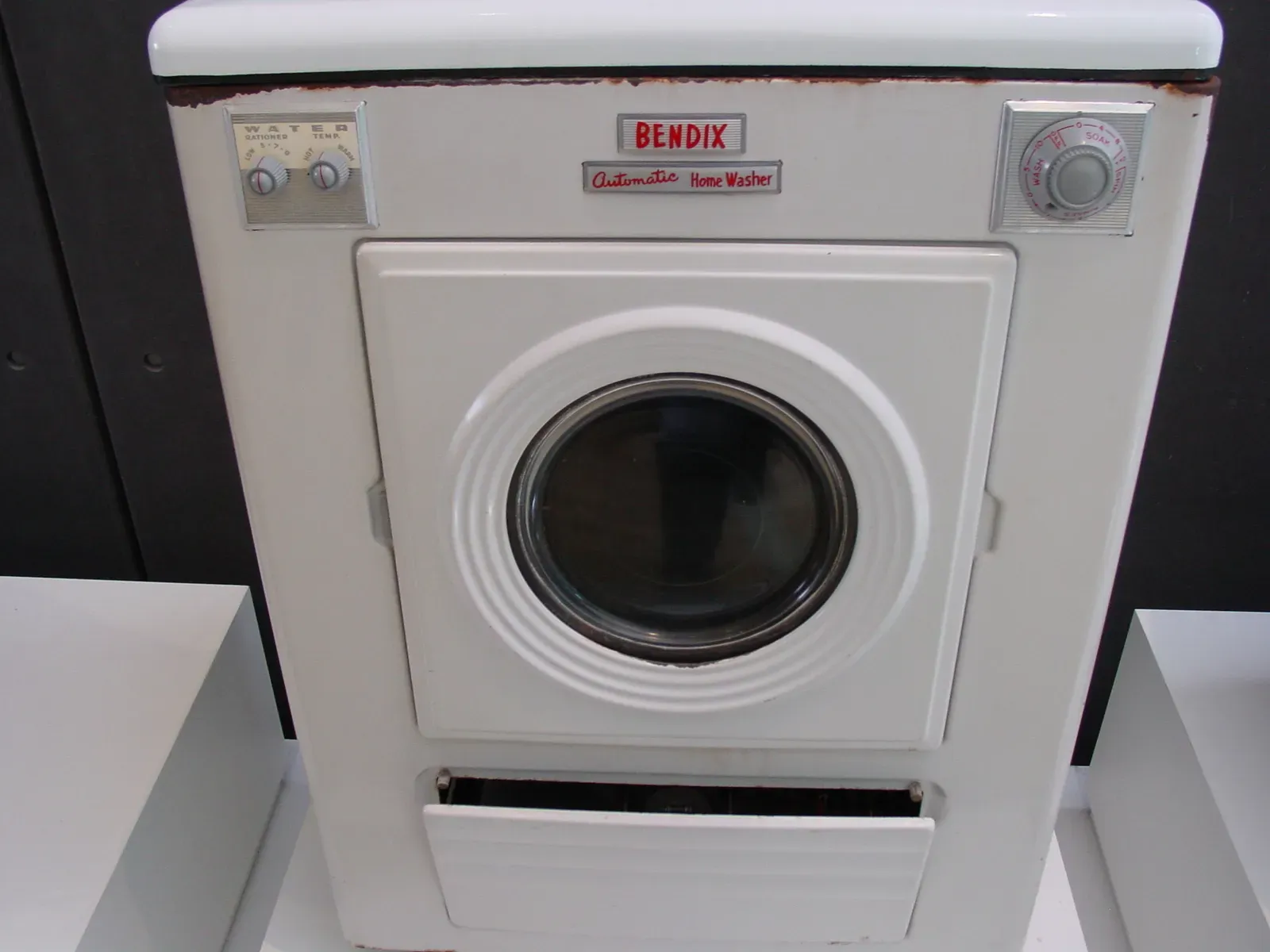
Washing machines spin at high speeds to create centripetal force, and as the drum rotates, water is flung outward and drained away, separating it from the clothes. The same force that keeps planets orbiting the sun is what gets your clothes dry. In the spin cycle, inertia wants to push the clothes out, but the drum’s wall redirects that motion, forcing the water to escape while the clothes stay in place, which is applied rotational mechanics. It’s honestly pretty wild when you think about it.
Dryers generate heat through electric resistance or gas combustion, then push hot air through a rotating drum, and as clothes tumble, warm air increases the kinetic energy of water molecules trapped in the fabric, allowing them to escape as vapor through conduction, convection, and evaporation. Your laundry room is basically a physics playground. Who knew doing chores could be so scientifically sophisticated?
How Light Bulbs Illuminate Your World
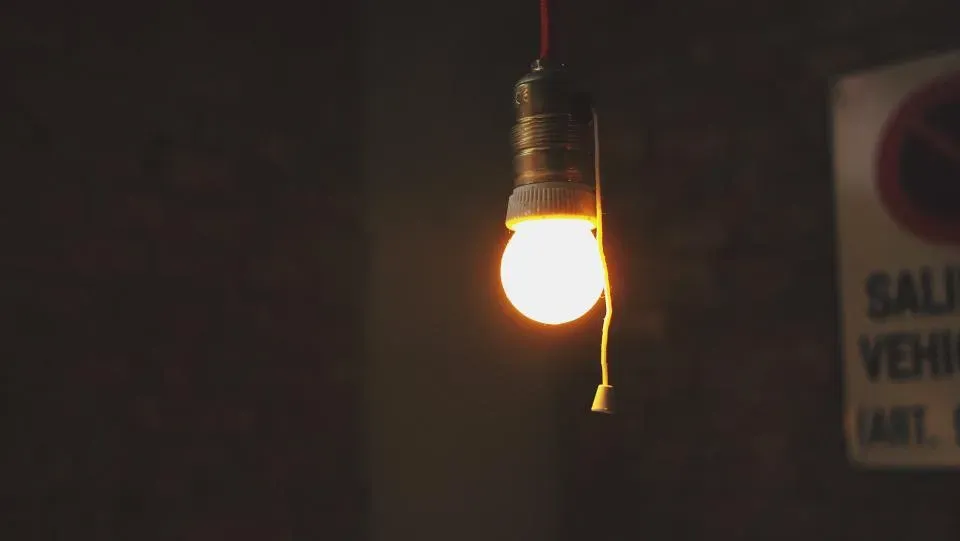
Twinkle lights used as decoration pass electricity from an outlet or battery through the wire to light all the little bulbs attached, and a toaster uses electricity to create heat in the coils. When you flip a light switch, electrons race through wires at incredible speeds to power the bulb. Traditional incandescent bulbs work by heating a filament until it glows. LED bulbs, on the other hand, use quantum mechanics to produce light more efficiently. In LED and LCD TVs, tiny crystals and light-emitting diodes receive electrical signals and change state to produce color, modulating light using filters and voltage changes.
Light itself is pretty weird when you dig into it. It behaves as both a wave and a particle, which confused physicists for decades. You’re benefiting from that confusion every time you turn on a lamp. The fact that we can create artificial light on demand is something humans dreamed about for thousands of years, and now we do it without thinking twice.
The Physics Behind Your Comfortable Ride

Physics plays a vital role in transportation, and a car’s braking system relies on friction to stop motion, while the engine operates on thermodynamics, converting chemical energy from fuel into mechanical energy to power the vehicle. Every time you press the gas pedal, you’re initiating a controlled explosion inside your engine. When you tighten your car seat belt, it works on the concept of inertia, and in case of a car collision, your seat belt helps prevent your body from moving in a forward direction as your body resists being stopped because of inertia of motion. Your car is basically a rolling physics demonstration.
Several physics ideas are incorporated into automobiles, and the engine uses combustion and thermodynamic principles to transform fuel into mechanical energy. The suspension system uses springs and shock absorbers to smooth out bumps. The aerodynamic shape reduces air resistance. Even the rearview mirrors use the reflection of light. From the tires gripping the road through friction to the battery storing electrical energy, every component relies on fundamental physics principles to keep you moving safely.
Conclusion: Physics Is Everywhere, Whether You Notice It or Not
Physics facts are present in all aspects of our lives, and from the pre-scientific past to our modern era, physics is everywhere, whether you are walking, running, jumping, tossing, dancing, or simply doing nothing. The invisible forces, energy transfers, and particle interactions happening around you every second are what make modern life possible. You’re not just living in the world; you’re living in a constant demonstration of physical laws that took humanity centuries to understand.
Science fundamentally shapes our daily lives in modern society, and cutting-edge innovations that enhance how we live, work, communicate, travel, stay healthy, and understand the world all stem from scientific discovery. The next time you grab your phone, turn on a light, or even just walk across a room, maybe you’ll pause for a split second and appreciate the incredible science making it all happen.
So what do you think? Did any of these everyday physics facts surprise you? Tell us in the comments which one caught you off guard the most.