
If you’ve ever had one of those spine-tingling moments where the world feels a little too perfectly timed, you’re not alone. Maybe you thought of an old friend right before they called, or you noticed how the Moon and Sun just happen to look the same size in the sky, making solar eclipses possible. These things feel eerie, almost scripted, as if the universe were winking at us.
Modern physics doesn’t shrug these moments off as “just weird.” It digs in, asking: Are we seeing patterns where there are none, or is there something deeper behind what we call coincidence? From quantum entanglement to the structure of spacetime itself, physics offers some wild, sometimes unsettling, and often beautiful explanations for why reality can feel so improbably aligned.
Quantum Entanglement: When Particles Act Like They’re Sharing a Secret
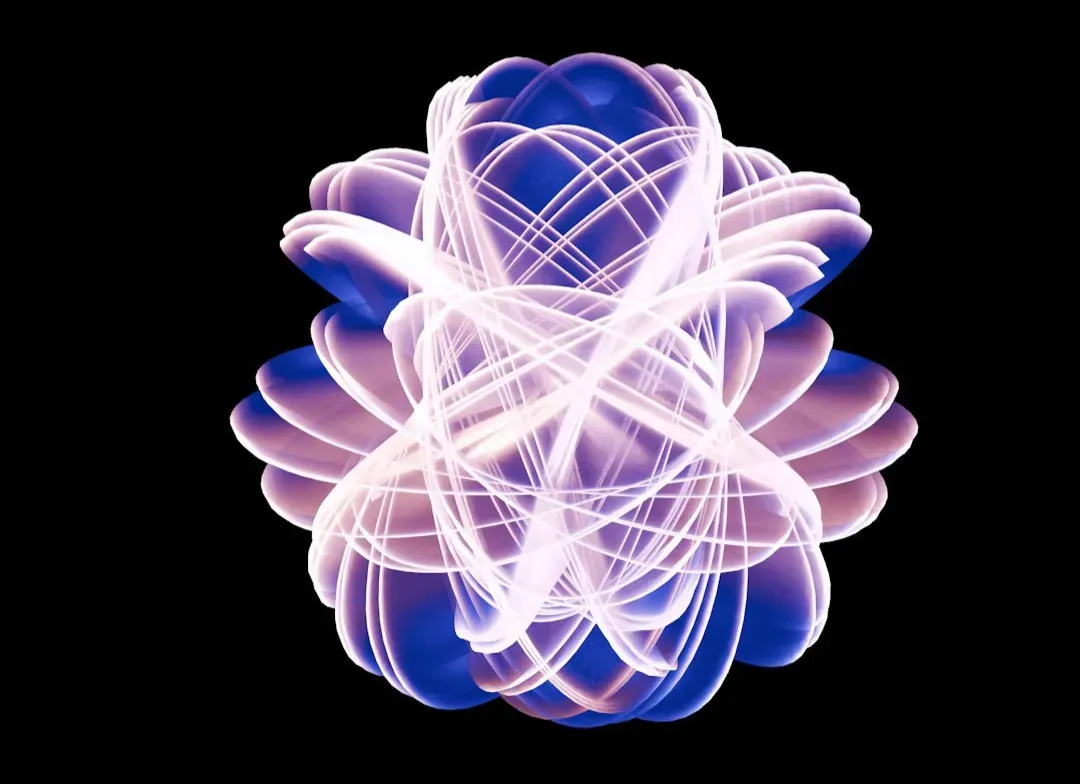
The most famous “impossible coincidence” in physics might be quantum entanglement. Two particles are created in such a way that when you measure one, the other instantly “knows” how to respond, even if it’s on the other side of the galaxy. Their measurements line up in a way that looks like cheating, as if they had agreed on an answer key in advance.
For a long time, even Einstein was deeply uncomfortable with this, calling it a kind of spooky connection. But decades of experiments have shown this isn’t a glitch or misunderstanding; it’s how the universe actually works at the smallest scales. The trick is that the “coincidence” isn’t happening after the fact: the entangled pair is really one shared quantum system, spread out in space. What looks like an impossible alignment is just the universe refusing to behave like separate, independent pieces the way our everyday intuition thinks it should.
The Anthropic Principle: We Notice Coincidences Because We’re Here to Notice Them
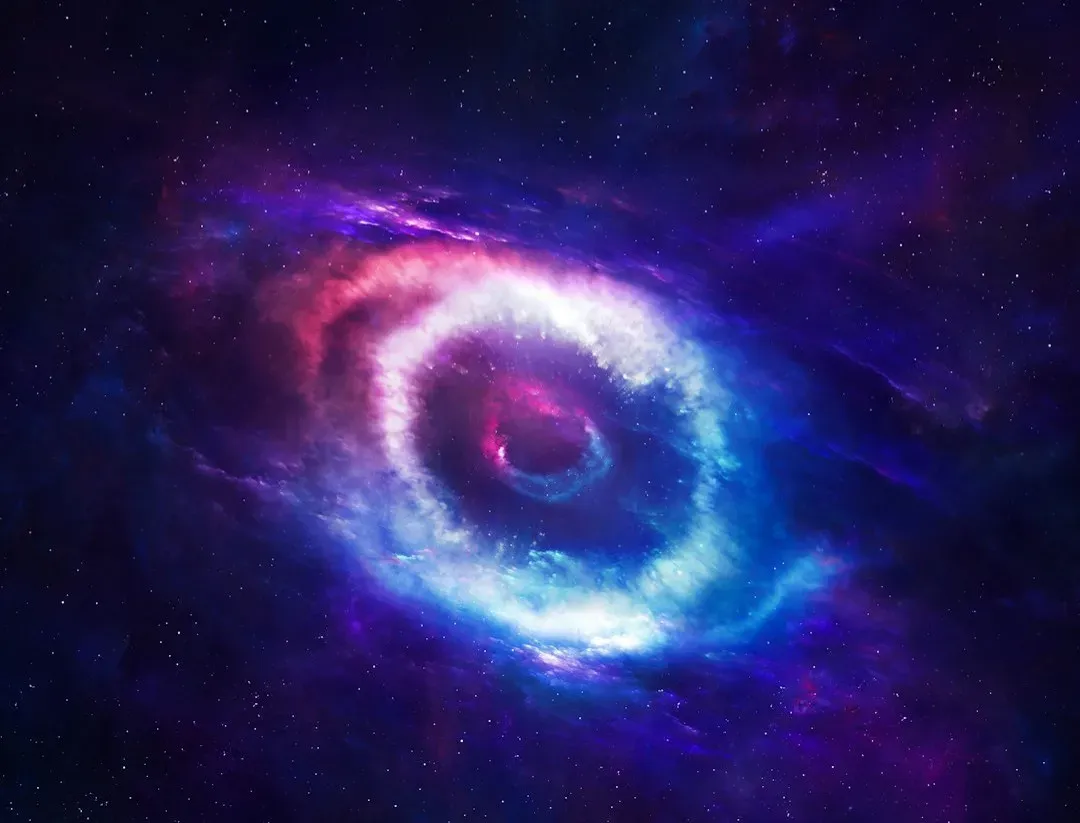
Some of the strangest coincidences aren’t about personal experiences at all, but about the physical constants of nature themselves. The strength of gravity, the charge of the electron, the rate at which the universe expands – if many of these numbers had been even slightly different, stars might never have formed, planets wouldn’t exist, and life as we know it would be impossible. That feels uncomfortably precise, almost like the universe was tuned for us.
The anthropic principle gives a brutally simple answer: of course the universe looks “just right” to support life – because we’re only able to ask the question in a universe where life is possible. In other words, we’re sampling reality with massive bias. It’s like walking into a breathable room and being amazed there’s oxygen, forgetting that if there weren’t, you wouldn’t be standing there to be amazed. Some physicists even extend this to multiverse ideas: if countless universes exist with different physical constants, we inevitably find ourselves in one where the “coincidences” make life possible.
Probability and Large Numbers: Improbable Things Become Inevitable Over Time
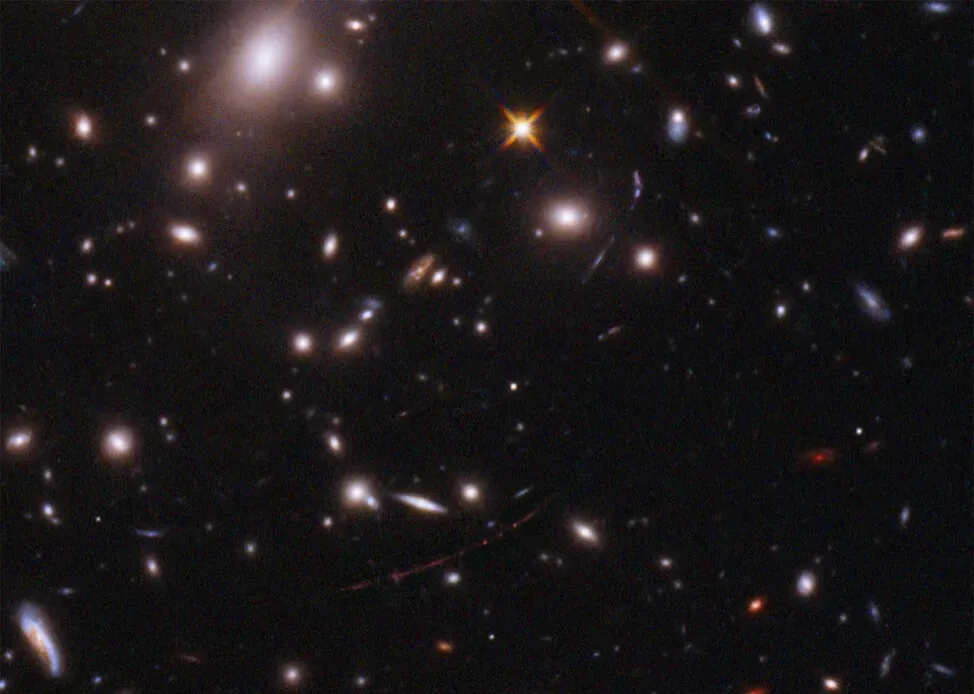
A lot of everyday coincidences – seeing repeated numbers, running into someone you know in a random city, thinking of a song before it plays – feel too unlikely to be chance. But modern probability theory and statistical physics paint a different picture. When you have an enormous number of events, even incredibly rare alignments will eventually show up, just like rolling dice long enough guarantees some strange streaks.
Physics deals with huge numbers of particles and interactions, and it’s very comfortable with the idea that bizarre events are not only possible but guaranteed in large systems. The same mindset applies to your life: you have thousands of thoughts a day, encounter countless faces, hear endless songs and words. Once you do the mental math, occasional eerie overlaps stop looking like messages from the universe and start looking like what you’d expect from a reality that runs on randomness and vast numbers.
Chaos Theory: Tiny Causes, Wildly Coincidental Effects

Chaos theory explains another class of coincidences: those surprising situations where a tiny, almost invisible cause leads to a massive, unexpected outcome. In chaotic systems – like the weather, planetary orbits over long periods, or even traffic patterns – small differences in starting conditions can explode into huge differences later on. This sensitivity makes some events feel fated, even though they’re just consequences of how unstable systems evolve.
Modern physics has shown that chaos is not the same as pure randomness. The underlying equations are often simple and deterministic, but the outcome can be so sensitive that we can’t predict it in practice. So when you look back and see how one tiny decision or event cascaded into a life-changing moment, it can feel like a mind-bending coincidence. In a chaotic world, though, that kind of dramatic chain reaction is not magic; it’s built into the math of how complex systems behave.
Spacetime Geometry: Coincidences Written Into the Shape of Reality
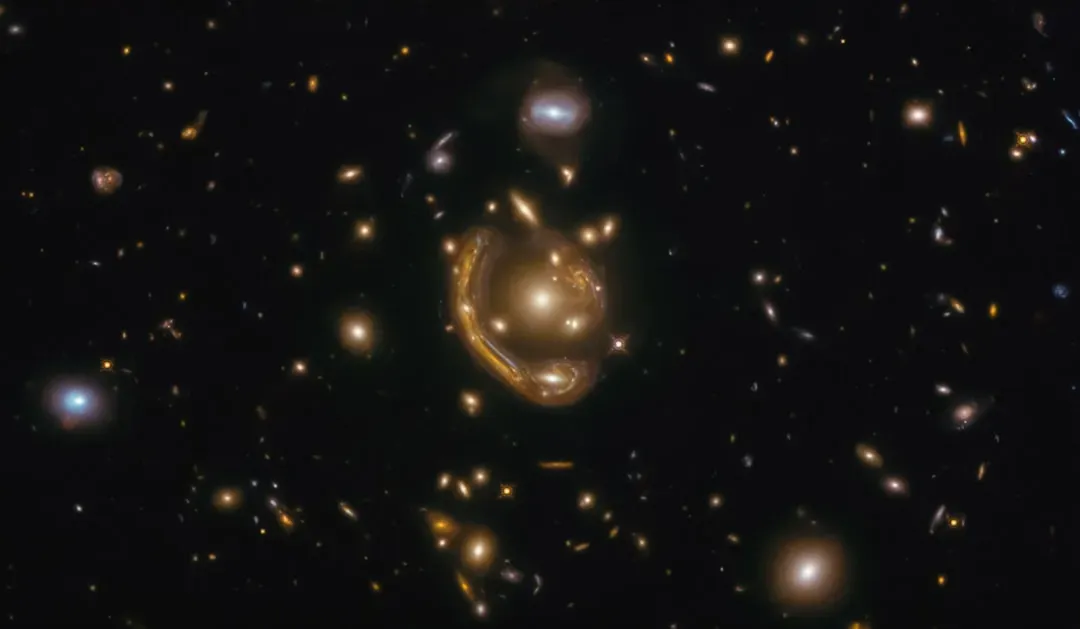
Some coincidences are not really coincidences at all, but consequences of the structure of spacetime. General relativity describes gravity not as a force, but as the curvature of spacetime itself. Objects follow paths in this curved geometry, which means what can meet where and when is constrained in deeply non-obvious ways. Two events that seem staggeringly unlikely to intersect may turn out to be naturally guided together by the geometry they live in.
Think of gravitational lensing, where a massive galaxy cluster bends light from something behind it so that multiple images of the same distant object appear in the sky. To an untrained eye, those matching shapes might look like an incredible coincidence. To physics, they are what you get when geometry and light follow the rules. On human scales, we don’t see spacetime curvature as clearly, but we still live inside those rules, which quietly choreograph which meetings, alignments, and paths are even possible in the first place.
Quantum Fluctuations and Cosmic Structure: Random Seeds, Patterned Universes
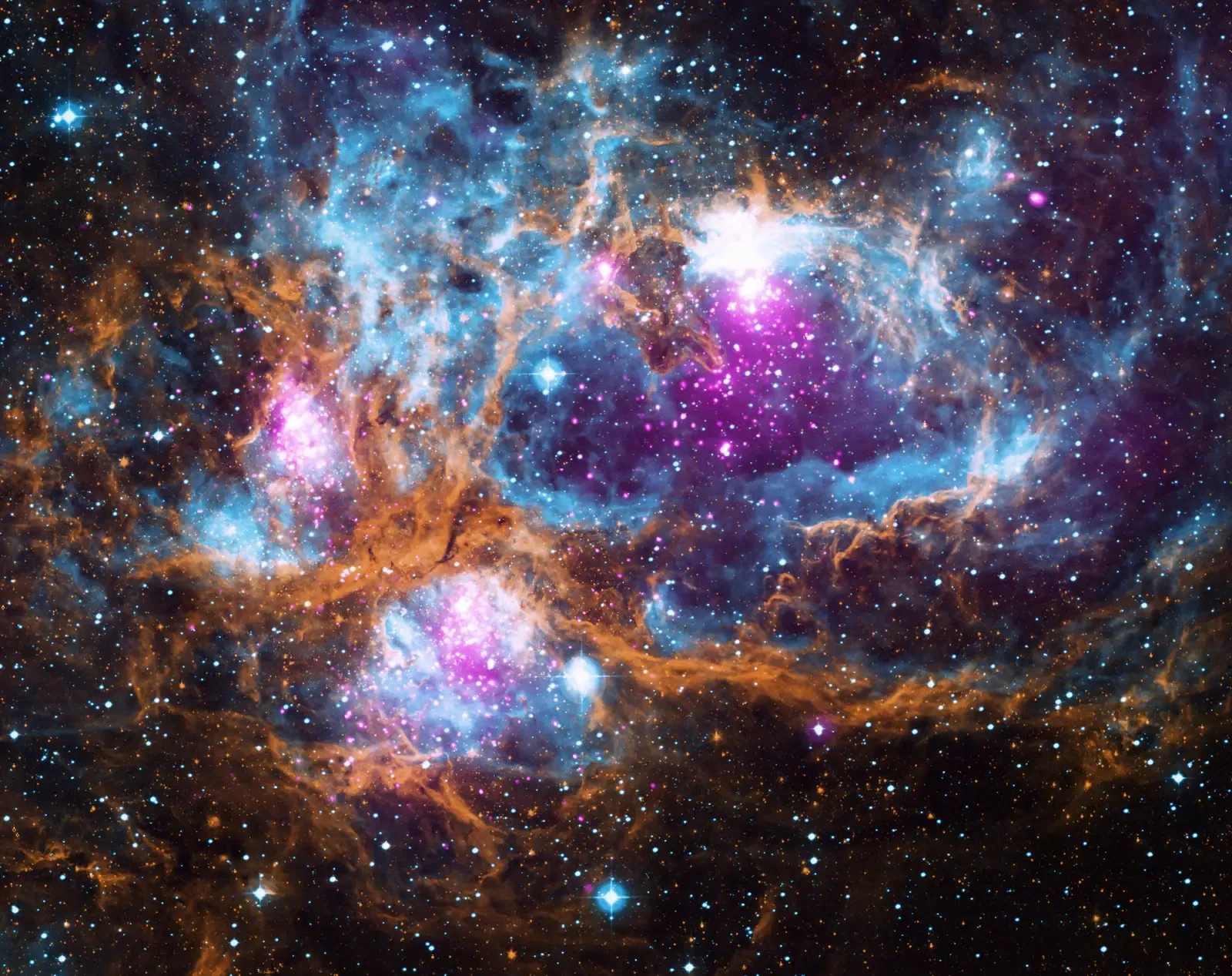
On the largest scales, the universe is full of patterns: filaments of galaxies, clusters, and voids forming a cosmic web. It might feel bizarre that such a huge, structured universe could have grown out of anything random. Yet modern cosmology suggests that the seeds of all this structure came from quantum fluctuations – tiny, random wiggles in energy density in the very early universe, later stretched and amplified as space expanded.
What looks now like an intricate design may have started as microscopic randomness, shaped by the laws of physics into stars, galaxies, and eventually us. Even your existence becomes tied to a chain that began with quantum noise, blown up to cosmic scale. That doesn’t cheapen it; if anything, it connects every personal coincidence – every unlikely meeting or moment – to an ancient story where randomness and law combined to write the universe we inhabit.