
Imagine living in a world where a cat can be both alive and dead, a particle can be in two places at once, and the simple act of looking at something changes what it is. That’s not a sci‑fi movie plot; that’s the everyday headache of quantum physicists. Quantum theory works unbelievably well in practice, yet at a deep, conceptual level it still feels like the universe is playing a private joke on us.
What makes it even stranger is that this isn’t fringe science. These paradoxes sit right at the heart of technologies we rely on today, from lasers to MRI scanners, and now quantum computers. The equations give insanely accurate predictions, but when we try to turn them into a clear, common‑sense picture, things start to wobble. Let’s walk through ten of the most mind‑twisting quantum paradoxes that, even in 2026, still keep brilliant people arguing late into the night.
1. Schrödinger’s Cat: Alive, Dead, or Both?

Here’s the classic one: a cat in a sealed box, linked to a quantum device that has a fifty‑fifty chance of killing it. In the mathematics of quantum mechanics, before you open the box, the cat is not simply alive or dead; it’s described as a superposition of both possibilities. This isn’t just a playful story; it exposes how bizarre it is to stretch quantum rules from tiny particles up to everyday objects.
The paradox is simple to state but hard to shake off: does reality wait for us to look before it decides what’s true? Many interpretations of quantum mechanics have been proposed just to dodge the horror of a half‑dead cat, from multiple universes to hidden variables to consciousness playing a role. None has achieved universal acceptance. The cat, in a way, is still meowing in the middle of physics: is the world definite all along, or does it crystallize when we measure it?
2. Wave–Particle Duality: What Is Light Really Made Of?
In school, we’re told light is a wave. Then we’re also told it’s made of particles called photons. Both are true, but not in any comfortable, everyday sense. In experiments like the double‑slit setup, a single photon behaves like a spread‑out wave that interferes with itself, yet when it hits a detector it shows up as a sharp, localized click, like a tiny bullet.
The paradox is that our basic categories – wave or particle, here or there – just don’t fit what quantum objects do. Electrons, atoms, even massive molecules have all been shown to display this dual behavior. Physicists can write down the equations of the wavefunction and say “it works,” but what that wave actually is remains an unsettled question. Is it a real physical smear of possibility, or just a tool for calculating probabilities?
3. The Measurement Problem: Does Reality Depend on Observation?
Before measurement, a quantum system is described as a superposition of many possible outcomes. After measurement, we see one definite result, and the equations say the wavefunction has “collapsed” to match what we observed. The catch is that the theory doesn’t clearly say when, how, or even if this collapse really happens in a physical sense. It’s like a magic trick built into the laws of nature with no clear mechanism.
This is the measurement problem: where exactly is the line between the fuzzy quantum world and the definite classical world we experience? If every measuring device is ultimately made of atoms, which are themselves quantum, then in principle everything should just entangle with everything else instead of picking one outcome. Competing interpretations try to dodge this by adding hidden variables, branching universes, or objective collapse mechanisms, but no single explanation has won over the field.
4. Quantum Entanglement: Spooky Action Without a Signal
Entanglement links particles so strongly that measuring one instantly determines the outcome for the other, even if they are light‑years apart. Experiments over the last decades, many closing loopholes that skeptics worried about, have repeatedly confirmed that entangled particles violate so‑called Bell inequalities. That means no simple theory with local hidden instructions can reproduce quantum predictions. The correlations are stronger than any classical story of pre‑agreed settings can allow.
The paradox is subtle but brutal: nothing actually travels faster than light, yet the measurement outcomes match in a way that seems as if some invisible coordination happens instantly. Relativity insists that no usable information or signal moves faster than light, and quantum theory respects that at the level of communication. Still, the sheer tightness of the correlations forces us to admit that our usual ideas of separateness and locality are incomplete at a deep level. Space, in that sense, doesn’t quite disconnect things the way we intuitively expect.
5. The EPR Paradox: Is Quantum Theory Complete?

The Einstein–Podolsky–Rosen argument was originally a challenge to quantum mechanics, not a cute puzzle. They considered a pair of particles with perfectly correlated properties and argued: if we can predict the result for one particle by measuring the other, without disturbing it directly, then that property must be real and well‑defined before measurement. If quantum mechanics cannot assign that definite value, they claimed, the theory must be incomplete.
Decades later, experiments showed that the kind of “completion” Einstein wanted – adding local hidden variables – doesn’t work. The universe refuses to fit into a neat story where all properties exist independently and measurements just reveal what was already there. The EPR paradox morphed from a criticism of quantum theory into a spotlight on how strange reality must be if quantum predictions are right. Instead of fixing quantum mechanics, it highlighted how much we need to rethink what we mean by reality itself.
6. The Double‑Slit Experiment: A Single Particle, Two Paths
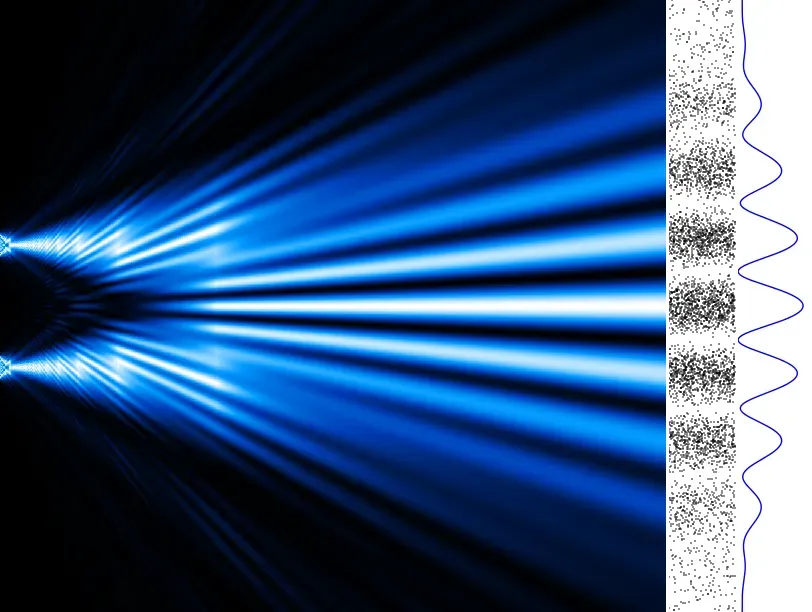
Fire individual electrons or photons at a barrier with two slits, one at a time, and watch where they land on a screen. Over time, they build up an interference pattern, as if each particle went through both slits as a wave and interfered with itself. But when you add detectors to find out which slit a particle actually uses, the interference disappears, and the particles behave like tiny pellets choosing one path.
The paradox hits you right in the gut: how does the particle know whether you’re watching? The standard quantum rule says that if you can, even in principle, obtain which‑path information, the wave‑like interference vanishes. This link between knowledge and physical behavior is deeply unsettling. Is the universe fundamentally about information rather than stuff, or are we just revealing features of a deeper, still‑unknown structure?
7. Wigner’s Friend: When Observers Disagree About Reality

Imagine a friend in a sealed lab performing a quantum measurement on a particle, say spin up or spin down. Inside the lab, the friend sees a definite result and writes it down. Outside, you treat the entire lab, including your friend, as a quantum system in a superposition of “friend saw up” and “friend saw down” until you open the door. Now you have two seemingly valid descriptions of the same situation that completely disagree.
This “observer of an observer” scenario pushes the measurement problem to a new level. If both quantum descriptions are correct, then reality itself becomes observer‑dependent in a disturbing way. Recent thought experiments and even early laboratory versions using photons and small quantum systems have sharpened the paradox: different observers can, in principle, record incompatible facts. That raises a painful question: are facts about the world absolute, or are they somehow relational and perspective‑bound?
8. Quantum Zeno Effect: Watching Something So Hard It Stops
In classical life, staring at a boiling pot doesn’t slow it down; it just makes you impatient. Quantum systems, bizarrely, can behave differently. The quantum Zeno effect predicts that if you measure a system extremely frequently to check whether it has changed, you can effectively freeze its evolution. Experiments with unstable atoms and trapped ions have observed this slowdown, confirming that obsessive measurement can hold a system in place.
The paradox is that “measurement” in quantum theory is not a passive peek; it’s an active, disruptive process. Constantly collapsing the wavefunction into its initial state keeps the system from exploring its other possibilities. This has gone from philosophical oddity to practical tool, for instance in protecting fragile quantum states from decoherence in quantum computing. Still, it’s deeply counterintuitive that simply asking nature the same question over and over can prevent it from moving on.
9. The Quantum Vacuum: Empty Space Full of Something

When we say vacuum, we usually imagine perfect emptiness, an absolute nothing. In quantum field theory, that idea falls apart. Even in what we call the vacuum state, fields are constantly fluctuating, giving rise to virtual particles that blip into and out of existence. These fluctuations leave measurable traces, such as tiny shifts in atomic energy levels and the Casimir effect between closely spaced metal plates.
The paradox is that “nothing” turns out to be a seething, restless something, with energy and structure. At cosmological scales, this collides with the mystery of dark energy and the accelerated expansion of the universe. The naive quantum calculations of vacuum energy overshoot the observed value by an absurd factor, one of the biggest mismatches between theory and experiment in physics. Empty space, which seems so simple, hides one of the deepest unresolved tensions in modern science.
10. The Black Hole Information Paradox: Do Quantum States Disappear?
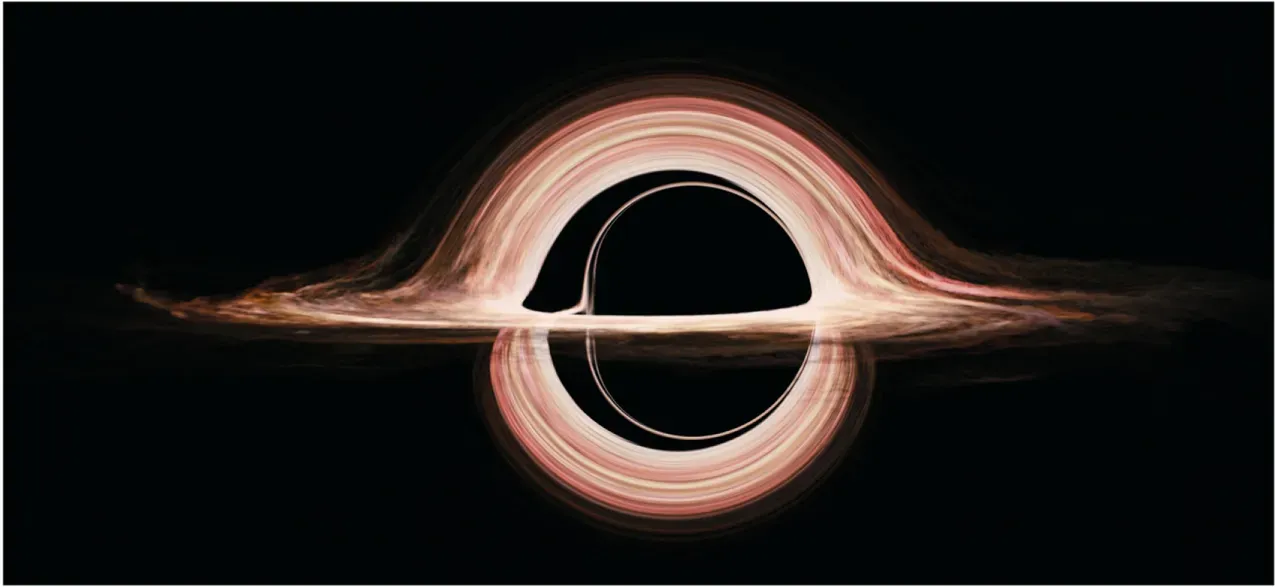
Black holes, according to general relativity, are regions from which nothing can escape, not even light. Quantum theory, on the other hand, allows black holes to emit Hawking radiation and slowly evaporate over immense timescales. The original calculation suggested that the radiation is purely thermal, carrying no detailed imprint of what fell in. If that were strictly true, information about the initial quantum states would be lost forever.
But quantum mechanics is built on the principle that information is never destroyed; the evolution of a closed system is, in principle, reversible. This clash between the two pillars of modern physics has driven a huge amount of research in quantum gravity, holography, and the idea that spacetime itself might emerge from entanglement. Recent progress hints that information might be encoded in subtle correlations in the Hawking radiation, but a complete, universally accepted resolution still isn’t in hand. The paradox sits like a warning label on the frontier between gravity and the quantum world.
When Logic Hits the Quantum Wall

Quantum paradoxes aren’t just party tricks that confuse non‑experts; they expose the fault lines in how we think about reality at the most basic level. Each one forces us to choose which intuition we’re willing to sacrifice: locality, definite properties, absolute facts, or even a clear distinction between observer and observed. The strange part is that no matter which philosophical route you take, the lab results stubbornly stay the same.
As quantum technologies scale up – from prototype quantum chips to networks of entangled devices – these conceptual knots will matter more, not less. We already engineer gadgets using mathematics that we still argue about interpreting, like building skyscrapers with blueprints written in a foreign language we only half understand. Maybe future theories will make today’s paradoxes look as naive as early debates about whether Earth moves around the Sun. Until then, these puzzles remain an uncomfortable reminder: the universe clearly works, but do we really know how?